European and National Constitutional Law Series – serie
Visar alla böcker i serien European and National Constitutional Law Series. Handla med fri frakt och snabb leverans.
5 produkter
5 produkter
817 kr
Kommande
The wider project of which this book is a part, set out to investigate the constitutional structures of the EU Member States. As part of this comparative enterprise this work sheds light on the intricate interconnections which exist between Member State governments and their national parliaments. Although in many cases governments only exist and function as a consequence of parliamentary support, it is the executive that is usually the focal point of political life and that sets the nation's political course and drives forward its legislative agenda. Arguably, this perception is based on the political customs that surround government/parliament relations rather than the constitutional fundament upon which they are built. This book therefore provides an in-depth analysis of how these two institutions, the executive and the legislature, relate to one another from a constitutional law as well as a constitutional politics perspective.To do so this the work takes a comparative approach to examining how electoral laws, government formation processes, legislative practices, executive prerogatives, and the scrutiny of EU legislation shape the role governments and parliaments play and how they interact across the EU's Member States.
1 807 kr
Skickas inom 10-15 vardagar
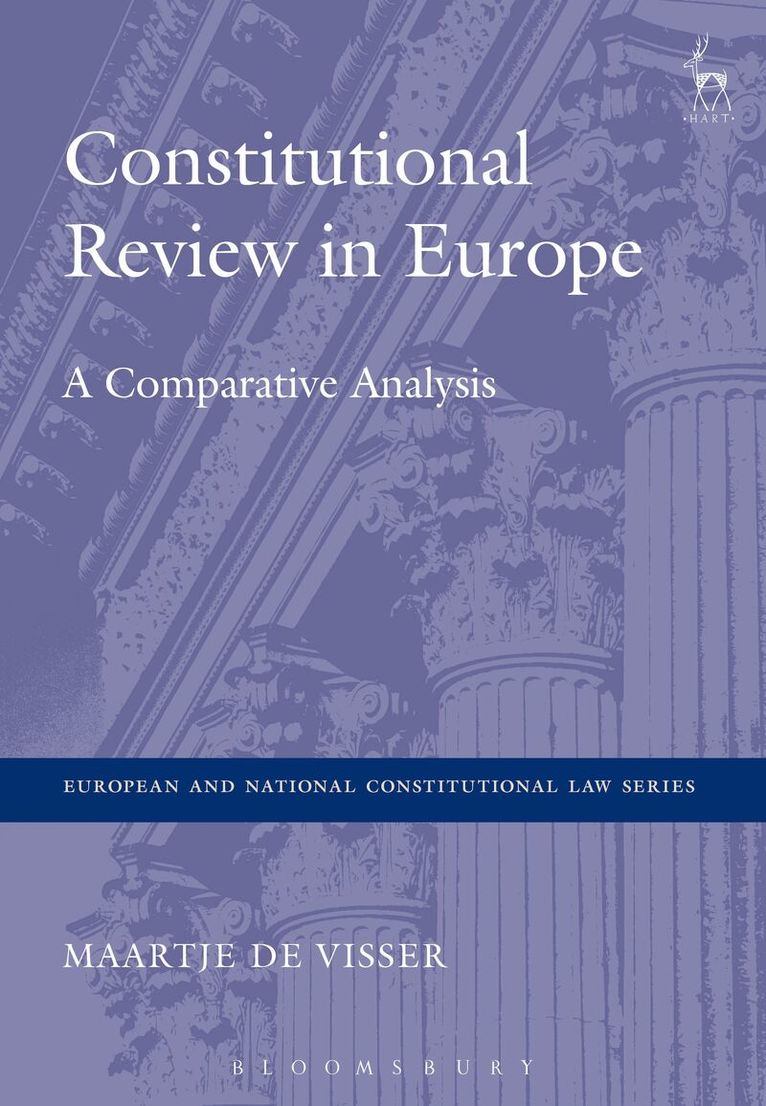
Constitutions serve to delineate state powers and enshrine basic rights. Such matters are hardly uncontroversial, but perhaps even more controversial are the questions of who (should) uphold(s) the Constitution and how constitutional review is organised. These two questions are the subject of this book by Maartje de Visser, which offers a comprehensive, comparative analysis of how 11 representative European countries answer these questions, as well as a critical appraisal of the EU legal order in light of these national experiences. Where possible, the book endeavours to identify Europe's common and diverse constitutional traditions of constitutional review. The raison d'être, jurisdiction and composition of constitutional courts are explored and so too are core features of the constitutional adjudicatory process. Yet, this book also deliberately draws attention to the role of non-judicial actors in upholding the Constitution, as well as the complex interplay amongst constitutional courts and other actors at the national and European level. The Member States featured are: Belgium, the Czech Republic, Finland, France, Germany, Italy, Hungary, the Netherlands, Spain, Poland, and the United Kingdom.This book is intended for practitioners, academics and students with an interest in (European) constitutional law.
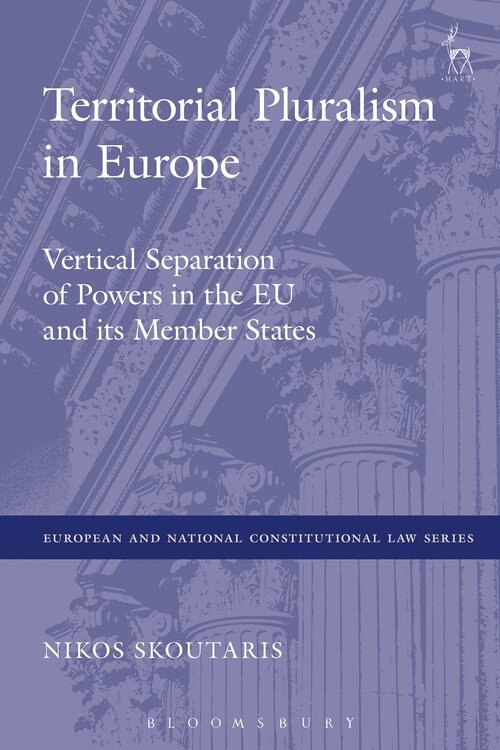
Territorial Pluralism in Europe
Vertical Separation of Powers in the EU and its Member States
Inbunden, Engelska, 2021
1 066 kr
Kommande
Governmental powers can be apportioned vertically at different levels. Five levels of vertical government are distinguishable, moving from purely local to the truly global: (1) local, ie municipal or citywide; (2) substate-regional (3) State; (4) supranational, eg the European Union; (5) and arguably global eg the WTO and the UN. This book focuses on levels (2) (3) and (4). It intends to analyse the interaction of the constitutional and political orders of EU Member States that exhibit varying degrees of territorial pluralism, their sub-state entities and the supranational organisation to which they belong. It does so by comparing the division of competences for internal policies but also for external affairs, the various models of fiscal federalism and the different systems for the effective protection of individual and collective rights within various European multi-level constitutional orders. Following a functional method of comparative constitutional law, on which the ERC-funded European and National Constitutional law project is based, the current book provides for an important study of the application of the federal principle within the European constitutional space.
854 kr
Kommande
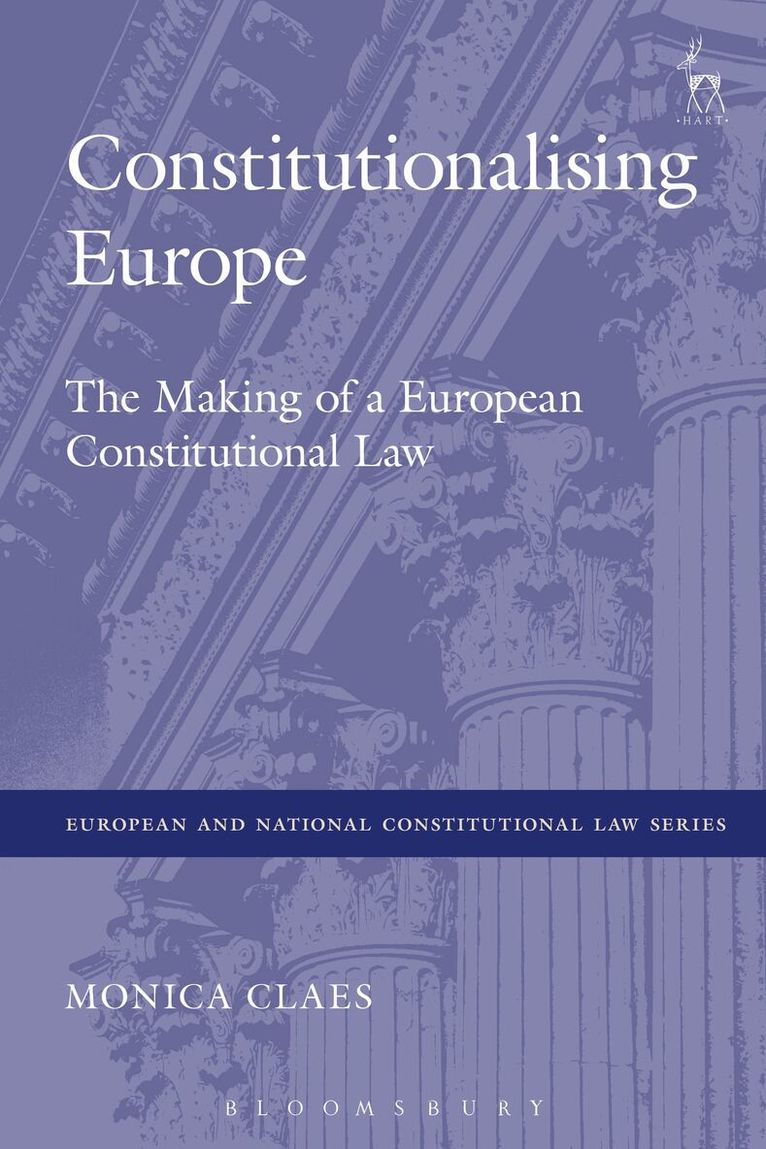
This book discusses the making of a constitutional law for Europe, consisting of constitutional rules and principles which are complemented by those of national constitutions. But it is further multi-layered, informed as it is by international frameworks such as the European Convention of Human Rights. The authors meticulously illustrate these connections and how they interrelate. Drawing on extensive comparative constitutional research, they explore the various dynamics of this composite constitutional structure, uncovering the common heritage on which the European Union is built. The book also examines the rich diversity in constitutional traditions between its Member States. This collection expertly untangles the constitutional complexity at the heart of the European Union.
486 kr
Skickas inom 10-15 vardagar
Adopting a comparative perspective, this book offers a comprehensive study of the institution of constitutional review in 11 European countries (Belgium, the Czech Republic, Finland, France, Germany, Italy, Hungary, the Netherlands, Spain, Poland and the United Kingdom) as well as a critical appraisal of the EU legal order in light of these national experiences. Where possible, the book endeavours to identify Europe’s common and diverse constitutional traditions of constitutional review. More particularly, the raison d’être, jurisdiction and composition of constitutional courts are explored and so too are core features of the constitutional adjudicatory process. Yet, this book also deliberately draws attention to the role of non-judicial actors in upholding the Constitution, as well as the complex interplay amongst constitutional courts and other actors at the national and European level.‘ ... a highly welcome contribution as a well-researched handbook for all those interested in comparative constitutional legal studies in the Member States and the EU constitutional legal order’. Benedikt Pirker, European Law Blog‘ ... this book is a veritable tour de force as it is a tour d’Europe. Comparative analysis of constitutional review from a neutral perspective encompassing eleven states and the EU, is a highly ambitious project, one that de Visser has achieved in accomplishing with great skill and eloquence’. Joelle Grogan, EUtopia Law Blog‘Ultimately, Maartje de Visser’s comparative contribution to the exploration of the constitutional review issue should be warmly welcomed as an even-handed, lucidly written and insightful addition to the ever-swelling body of scholarship in this area … the author has managed to construct, without superficiality and with well-paced order, a comprehensive and credible survey of constitutional review practices across Europe – a survey that is at once a heavy-duty piece of scholarship and a generally fascinating book’. Joseph Tomlinson, Cambridge Law Journal‘[T]his book should be considered the new compulsory starting point for anyone interested in any key aspect of the constitutional adjudicatory process, and wishing to be quickly able to rely on authoritative points of comparison … [I]t is difficult not to be struck by the quality of the research undertaken and the subtle nature of the analysis … Written in an engaging style, which constantly holds the reader’s attention, de Visser’s monograph makes a decisive contribution to our understanding of the institution of constitutional review in Europe. There is little doubt that it will become a classic reference for the practitioners, academics and students of comparative constitutional law’.Laurent Pech, International Journal of Constitutional Law Blog (ICON-NECT)