European Institute for Food Law series – serie
Visar alla böcker i serien European Institute for Food Law series. Handla med fri frakt och snabb leverans.
6 produkter
6 produkter
Del 16 - European Institute for Food Law series
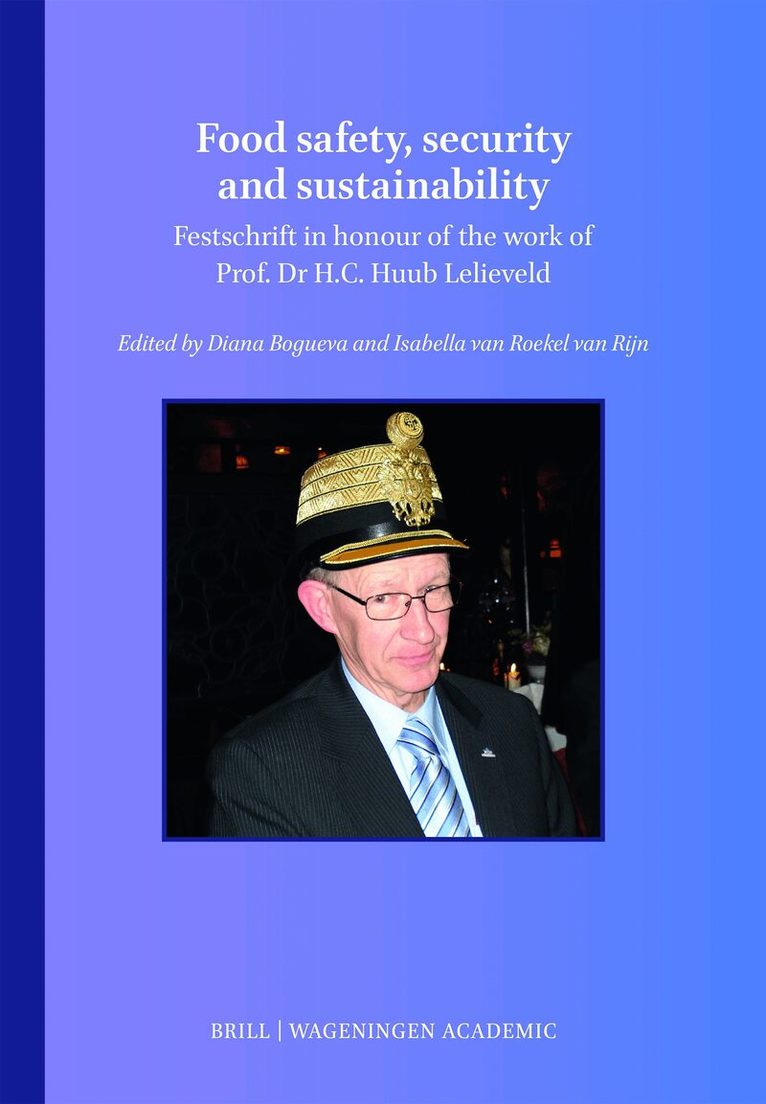
Food safety, security and sustainability
Festschrift in honour to the work of Prof Dr H.C. Huub Lelieveld
Inbunden, Engelska, 2025
1 735 kr
Skickas inom 3-6 vardagar
This Festschrift honors the remarkable career of Prof. Dr.h.c. Huub Lelieveld, celebrating his 80th birthday and the 20th anniversary of the Global Harmonization Initiative (GHI). Spanning a distinguished career across industry, academia, and public service, Huub's dedication to excellence, innovation, and ethics has profoundly impacted all those who have worked with him, from colleagues at Unilever to members of the GHI.This compilation of research papers, contributed by friends and colleagues who have collaborated with Huub, explores diverse and significant topics close to his heart. These include the realization of food culture, nutrition, food safety, religious food regulations during times of conflict, food fortification, novel food technologies like irradiation, improving religious slaughter practices, safe cassava consumption, and sustainable food futures and environmental responsibility and planetary health.Each article serves as a tribute to his vision and legacy, highlighting his lasting influence on global food science and public health.
Del 4 - European Institute for Food Law series
Reconciling food law to competitiveness
Häftad, Engelska, 2009
926 kr
Skickas inom 5-8 vardagar
The food sector is the third most regulated industry in the EU. It is the most important production sector, but its competitiveness and innovativeness are under pressure.This book reports on a legal research into the question if there is a connection between the sector’s declining innovativeness and competitiveness on the one hand and the increasing regulatory burden on the other hand. The aim is to indicate opportunities to remove avoidable obstacles for the food industry in general and small and medium enterprises in particular.The book brings to light several shortcomings in the regulatory framework and makes concrete recommendations for simplifying and improving EU food legislation. The findings are based on fundamental legal analyses. They are combined with the following three empirical case studies:-premarket approval schemes, for novel foods in particular;-the application of the EU food hygiene package in the dairy sector in selected regions in Italy and France; and-private standards in the Dutch dairy sector.The book shows that compliance by the EU legislator and authorities with EU food law principles and requirements is key to improving the position of food businesses.
Del 3 - European Institute for Food Law series
Fed up with the right to food?
The Netherlands' policies and practices regarding the human right to adequate food
Häftad, Engelska, 2009
1 165 kr
Skickas inom 5-8 vardagar
There is no one in this world who would deny the importance of access to adequate food for every human being. In fact, access to food has been declared a human right in 1948 with the Universal Declaration of Human Rights. In spite of the right to food to be more than half a century old, many are not aware, misunderstand or even marginalize this human right. This book serves two purposes and many audiences. First, it is meant for those who want to get a better understanding of the right to food and how this right has been developed in international law. Second, it also explains why this human right has been marginalized by one of the richest countries in the world: the Netherlands. As such this unique collection of articles provides an exciting view on the making of law and policy, with contributions from lawyers, sociologists and human rights defenders.
Del 5 - European Institute for Food Law series
Governing food security
Law, politics and the right to food
Häftad, Engelska, 2010
1 688 kr
Skickas inom 5-8 vardagar
With only five years left until the 2015 deadline to achieve the Millennium Development Goals, food security still is a dream rather than reality: 'a situation that exists when all people, at all times, have physical and economic access to sufficient, safe and nutritious food to meet their dietary needs and food preferences for an active and healthy life'. Political commitments at world summits on food security, market-based agricultural policies, science-based food safety regulation and voluntary guidelines on the right to food have not ended hunger, malnourishment or food safety crises in our world. The question arises whether food insecurity is a situation that exists in spite of these commitments and legal measures, or rather due to them?This book has three purposes. Firstly, it offers insights in how law, politics and the right to food contribute to food security in both positive and negative ways. For this purpose, different theories, concepts and methodologies from legal, political, anthropological and sociological sciences are used and developed. Secondly, the book explains that food security and food policies cannot be treated as given, at one level or in one domain only. This is done in different ways: by pointing out the emergence of new paradigms on food security, human rights and science that shape food policies; by showing how law and policies at one level affect food security at another level; and by treating food security and food policies as linked to governance regimes of agriculture, food, feed, water or property. Finally, the book offers scholarly analysis of paradigms and practices but also presents social science-based ways to indirectly contribute to food security, varying from improving justiciability to building trust, from seeking ways to address non-scientific concerns to creating room for plurality of lifestyles and norms, from unmasking dominant discourse to understanding or strengthening abilities or arrangements to cope with vulnerability.
Del 8 - European Institute for Food Law series
enforceability of the human right to adequate food
A comparative study
Häftad, Engelska, 2013
1 598 kr
Skickas inom 5-8 vardagar
While the right to adequate food is often discussed in the context of developing countries, especially in situations where access to adequate food is a problem on a larger scale, this book focusses on the right to food in two Western countries in which theoretically the circumstances allow this right to be enjoyed by each individual. Through a legal comparative study, the enforceability of the right to food is compared between the Netherlands and Belgium in light of the current UN Human Rights system. There seems to be a difference between what the countries do, what they say they do, and what they should do on the matter. As it appears, the coincidental constitutional circumstances mainly determine the enforceability of the right to food, rather than the content of the human right in itself.This book includes a thorough analysis of suitable comparative legal methodology and the embedment of the right to food in the UN human right system. Furthermore, for both countries, an in-depth analysis of the case law on the right to food (mostly concerning the status of foreigners), the constitutional context in which the Judiciary operates, and the relevant UN reports and subsequent procedures are outlined. Finally, recommendations are made to both countries and the relevant UN Committees.
Del 10 - European Institute for Food Law series
From agricultural to food law
The new scenario
Häftad, Engelska, 2014
1 427 kr
Skickas inom 5-8 vardagar
The differences between agricultural law and food law are becoming progressively blurred. This is only natural because both intend to control that food products placed in the market are safe and respond to a certain standard of quality. In their present form, both are relatively new legal disciplines, evolving and expanding very rapidly and a great number of new and transcendental regulations (and an increasing number of compulsory private rules) are being enacted to respond to new realities.One of these new realities is the legal protection of quality in food. Once almost exclusively applied to a limited number of traditional well-known products and now extended to many products covered by designations of origin or geographical indications. Another area is food safety, a major concern of the legislator. Food alerts, recalls and withdrawals have been carefully regulated to guarantee a rapid and efficient reaction, but these legal mechanisms appear to be less well-designed when dealing with the unwanted consequences of unjustified alerts. A third topic is food prices and trading conditions, an area that cannot always be completely left to unregulated market-forces due to the special nature of the product involved.The above issues are analysed by several experts from different legal backgrounds and countries, a varied approach adequate to the hybrid nature of food law.