Financial Engineering Explained – serie
Visar alla böcker i serien Financial Engineering Explained. Handla med fri frakt och snabb leverans.
13 produkter
13 produkter
Häftad, Engelska, 2014
398 kr
Skickas inom 10-15 vardagar
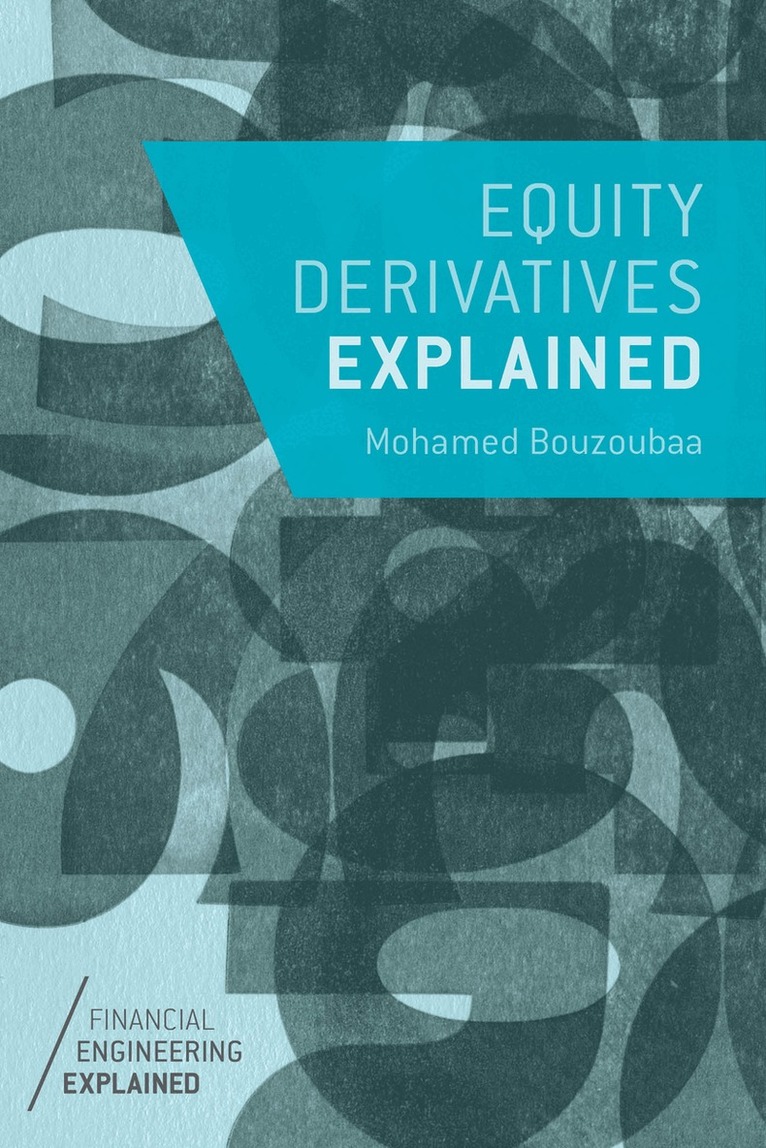
A succinct book that provides readers with all they need to know about the equity derivatives business. It deals with vanilla equity products, their usage, structuring and their risk management. The author efficiently bridges the gap between theory and practice, constantly linking risk management tools with specific business objectives.
Häftad, Engelska, 2014
507 kr
Skickas inom 5-8 vardagar
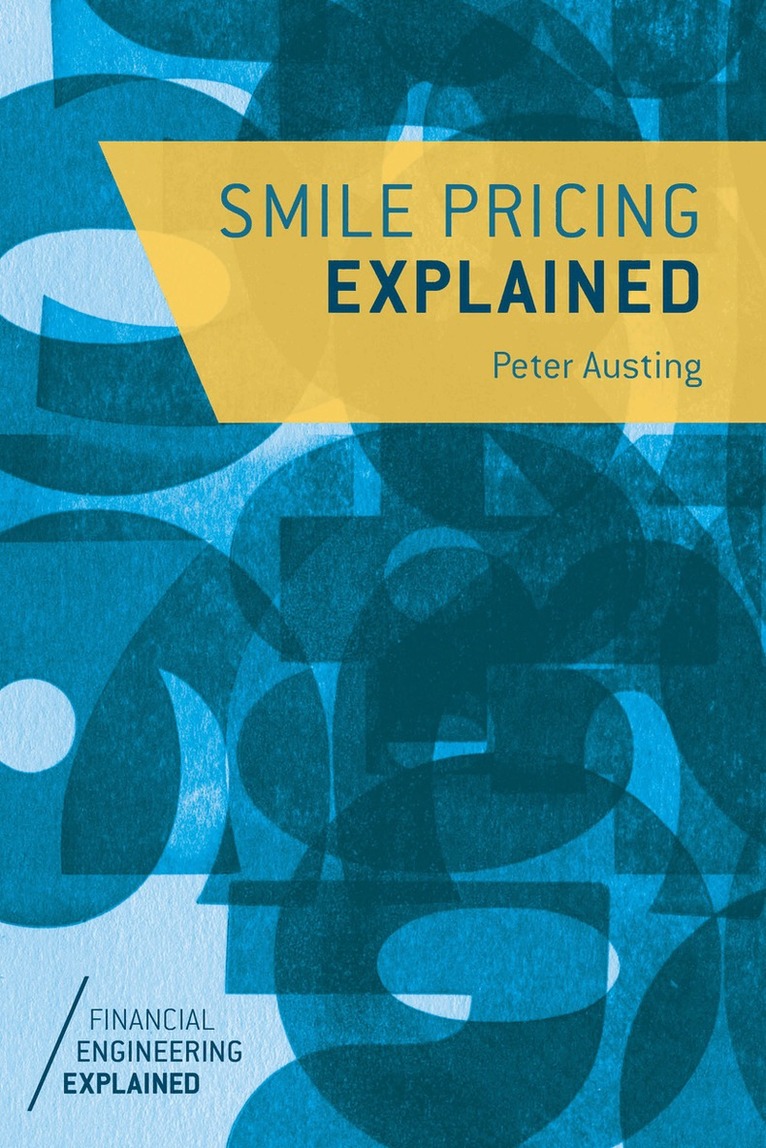
Smile Pricing Explained provides a clear and thorough explanation of the concepts of smile modelling that are at the forefront of modern derivatives pricing. The key models used in practice are covered, together with numerical techniques and calibration.
Häftad, Engelska, 2014
398 kr
Skickas inom 10-15 vardagar
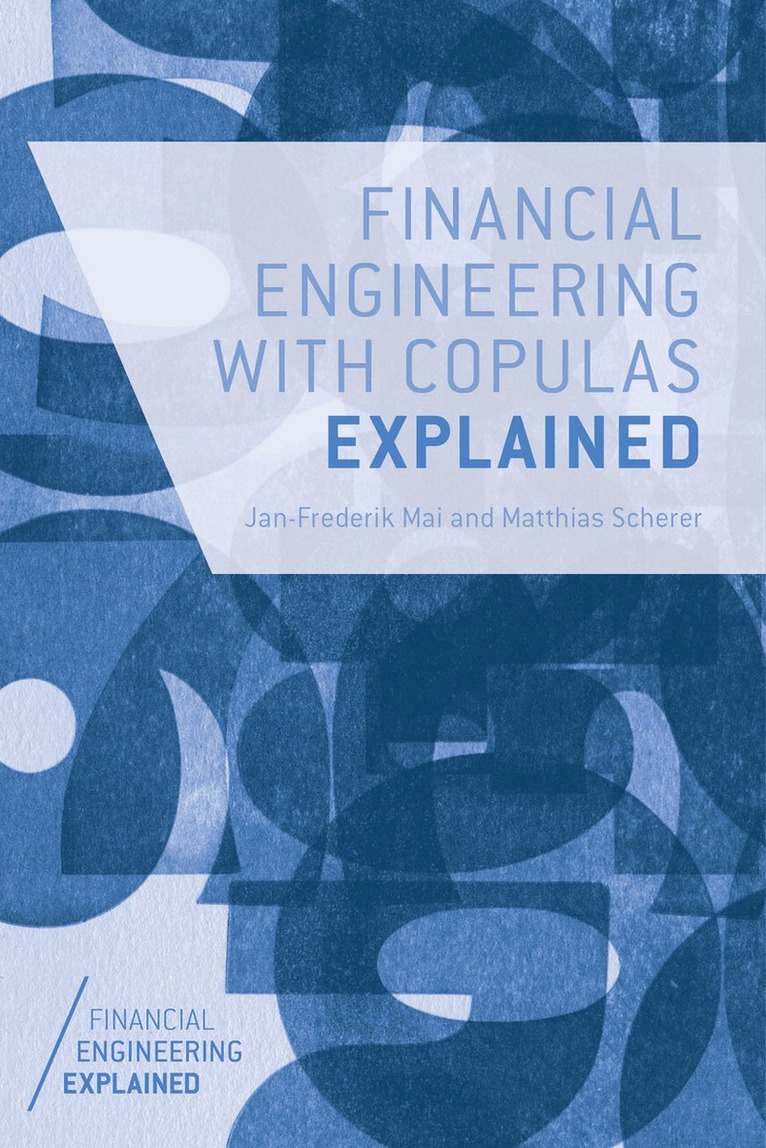
This is a succinct guide to the application and modelling of dependence models or copulas in the financial markets. First applied to credit risk modelling, copulas are now widely used across a range of derivatives transactions, asset pricing techniques and risk models and are a core part of the financial engineer's toolkit.
Häftad, Engelska, 2014
429 kr
Skickas inom 5-8 vardagar
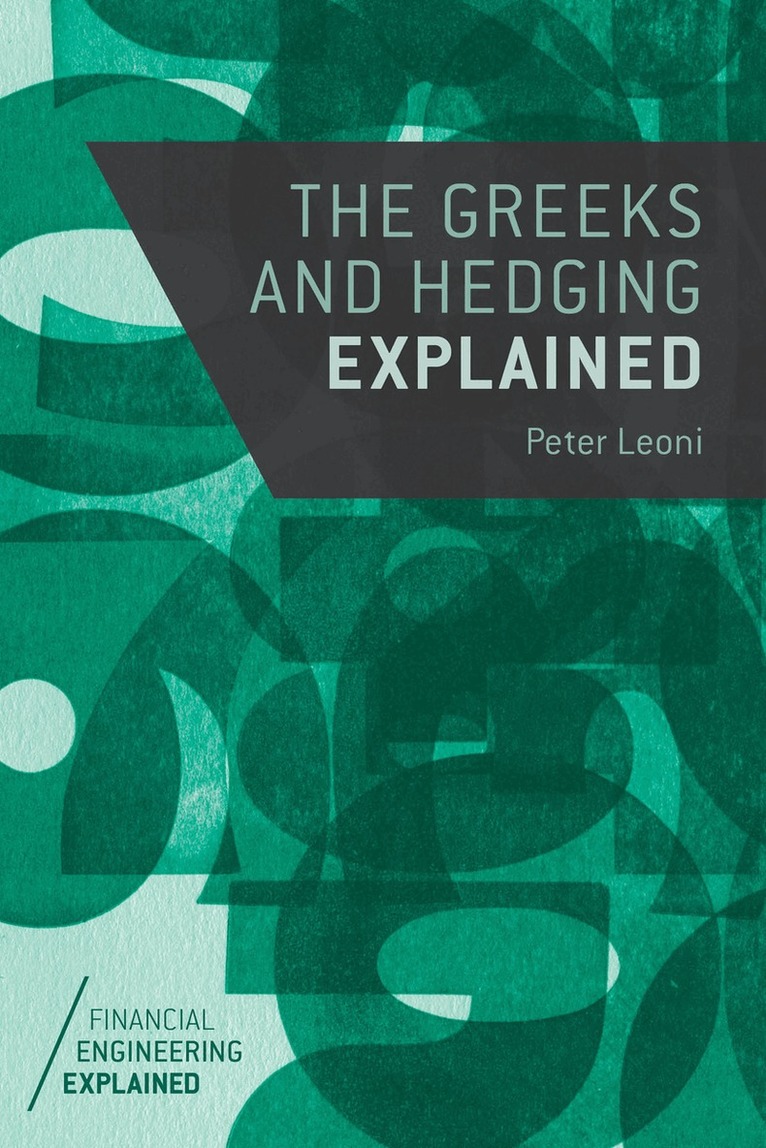
A practical guide to basic and intermediate hedging techniques for traders, structerers and risk management quants. This book fills a gap for a technical but not impenetrable guide to hedging options, and the 'Greek' (Theta, Vega, Rho and Lambda) -parameters that represent the sensitivity of derivatives prices.
Inbunden, Engelska, 2014
509 kr
Skickas inom 10-15 vardagar
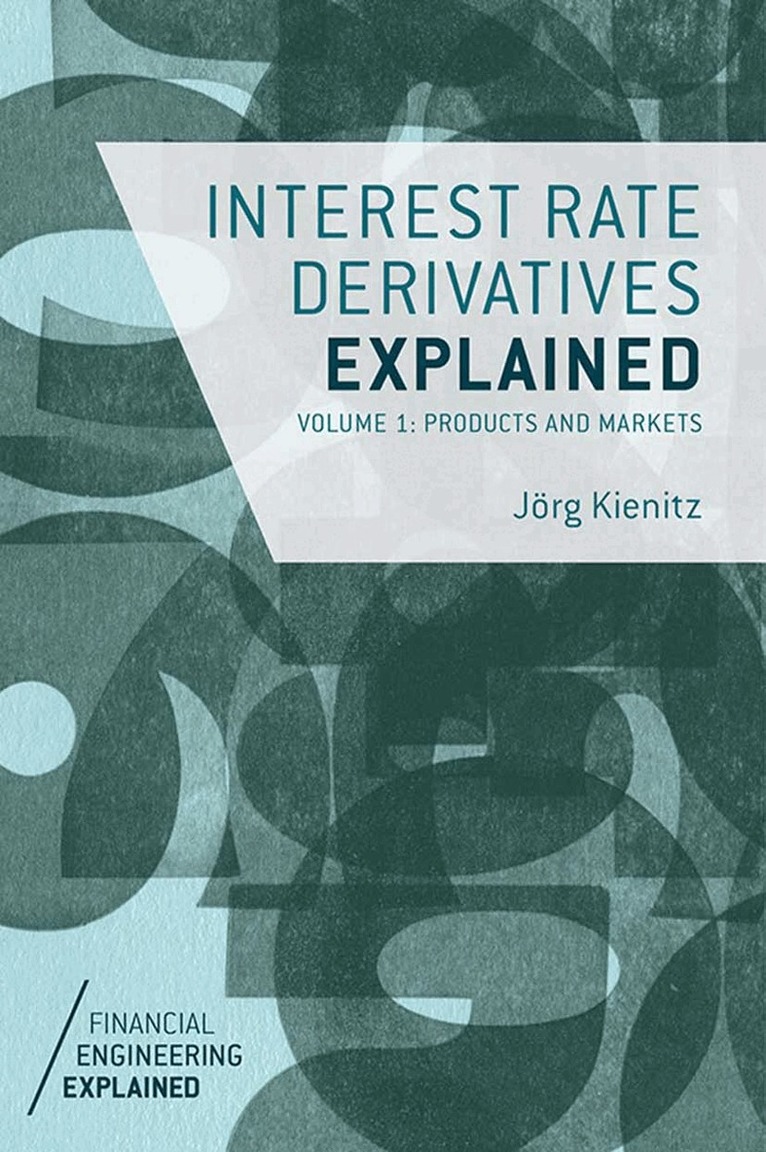
Aimed at practitioners who need to understand the current fixed income markets and learn the techniques necessary to master the fundamentals, this book provides a thorough but concise description of fixed income markets, looking at the business, products and structures and advanced modeling of interest rate instruments.
Inbunden, Engelska, 2017
509 kr
Skickas inom 10-15 vardagar
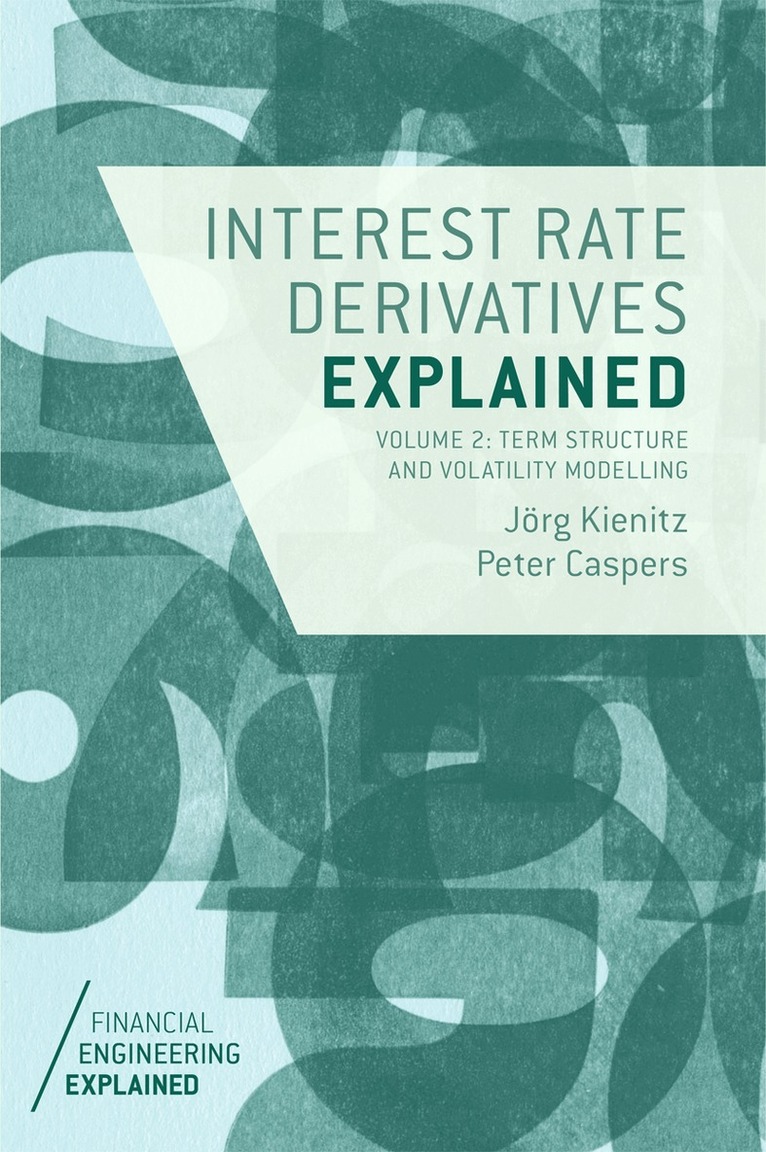
This book on Interest Rate Derivatives has three parts. The first part is on financial products and extends the range of products considered in Interest Rate Derivatives Explained I. In particular we consider callable products such as Bermudan swaptions or exotic derivatives. The second part is on volatility modelling. The Heston and the SABR model are reviewed and analyzed in detail. Both models are widely applied in practice. Such models are necessary to account for the volatility skew/smile and form the fundament for pricing and risk management of complex interest rate structures such as Constant Maturity Swap options. Term structure models are introduced in the third part. We consider three main classes namely short rate models, instantaneous forward rate models and market models. For each class we review one representative which is heavily used in practice. We have chosen the Hull-White, the Cheyette and the Libor Market model. For all the models we consider the extensions bya stochastic basis and stochastic volatility component. Finally, we round up the exposition by giving an overview of the numerical methods that are relevant for successfully implementing the models considered in the book.
Inbunden, Engelska, 2017
454 kr
Skickas inom 10-15 vardagar
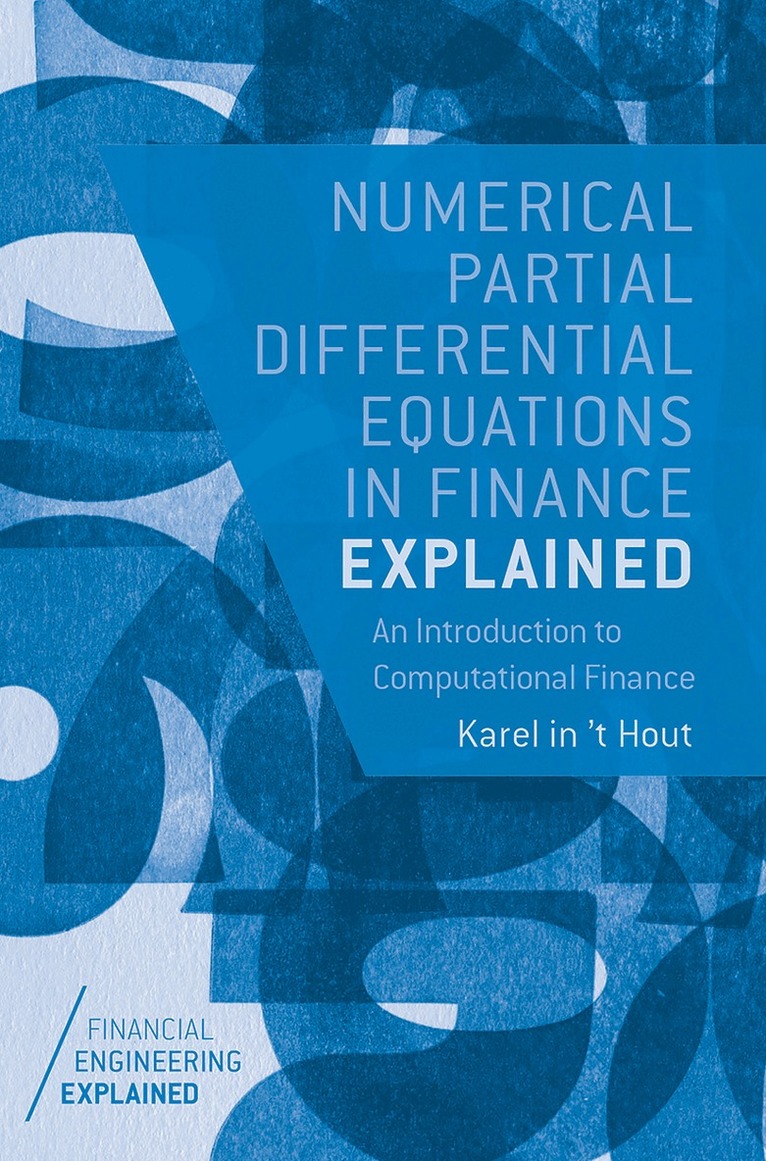
This book provides a first, basic introduction into the valuation of financial options via the numerical solution of partial differential equations (PDEs). It provides readers with an easily accessible text explaining main concepts, models, methods and results that arise in this approach. In keeping with the series style, emphasis is placed on intuition as opposed to full rigor, and a relatively basic understanding of mathematics is sufficient. The book provides a wealth of examples, and ample numerical experiments are givento illustrate the theory. The main focus is on one-dimensional financial PDEs, notably the Black-Scholes equation. The book concludes with a detailed discussion of the important step towards two-dimensional PDEs in finance.
Inbunden, Engelska, 2015
788 kr
Skickas inom 10-15 vardagar
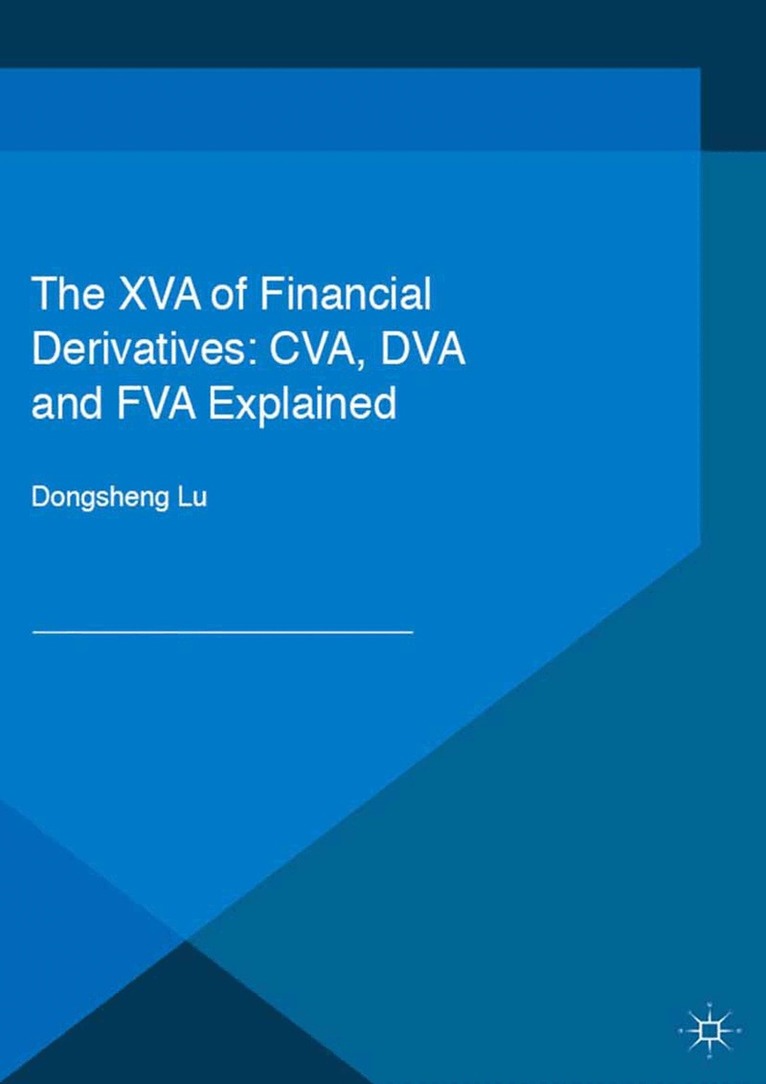
This latest addition to the Financial Engineering Explained series focuses on the new standards for derivatives valuation, namely, pricing and risk management taking into account counterparty risk, and the XVA's Credit, Funding and Debt value adjustments.
Häftad, Engelska, 2019
509 kr
Skickas inom 10-15 vardagar
Aimed at practitioners who need to understand the current fixed income markets and learn the techniques necessary to master the fundamentals, this book provides a thorough but concise description of fixed income markets, looking at the business, products and structures and advanced modeling of interest rate instruments.
Häftad, Engelska, 2018
509 kr
Skickas inom 10-15 vardagar
This book on Interest Rate Derivatives has three parts. The first part is on financial products and extends the range of products considered in Interest Rate Derivatives Explained I. In particular we consider callable products such as Bermudan swaptions or exotic derivatives. The second part is on volatility modelling. The Heston and the SABR model are reviewed and analyzed in detail. Both models are widely applied in practice. Such models are necessary to account for the volatility skew/smile and form the fundament for pricing and risk management of complex interest rate structures such as Constant Maturity Swap options. Term structure models are introduced in the third part. We consider three main classes namely short rate models, instantaneous forward rate models and market models. For each class we review one representative which is heavily used in practice. We have chosen the Hull-White, the Cheyette and the Libor Market model. For all the models we consider the extensions bya stochastic basis and stochastic volatility component. Finally, we round up the exposition by giving an overview of the numerical methods that are relevant for successfully implementing the models considered in the book.
Häftad, Engelska, 2018
453 kr
Skickas inom 10-15 vardagar
This book provides a first, basic introduction into the valuation of financial options via the numerical solution of partial differential equations (PDEs). It provides readers with an easily accessible text explaining main concepts, models, methods and results that arise in this approach. In keeping with the series style, emphasis is placed on intuition as opposed to full rigor, and a relatively basic understanding of mathematics is sufficient. The book provides a wealth of examples, and ample numerical experiments are givento illustrate the theory. The main focus is on one-dimensional financial PDEs, notably the Black-Scholes equation. The book concludes with a detailed discussion of the important step towards two-dimensional PDEs in finance.
Häftad, Engelska, 2019
565 kr
Skickas inom 10-15 vardagar
This latest addition to the Financial Engineering Explained series focuses on the new standards for derivatives valuation, namely, pricing and risk management taking into account counterparty risk, and the XVA's Credit, Funding and Debt value adjustments.
Häftad, Engelska, 2017
359 kr
Skickas inom 5-8 vardagar
This book provides the first practical guide to the function and implementation of algorithmic differentiation in finance. Written in a highly accessible way, Algorithmic Differentiation Explained will take readers through all the major applications of AD in the derivatives setting with a focus on implementation.Algorithmic Differentiation (AD) has been popular in engineering and computer science, in areas such as fluid dynamics and data assimilation for many years. Over the last decade, it has been increasingly (and successfully) applied to financial risk management, where it provides an efficient way to obtain financial instrument price derivatives with respect to the data inputs. Calculating derivatives exposure across a portfolio is no simple task. It requires many complex calculations and a large amount of computer power, which in prohibitively expensive and can be time consuming. Algorithmic differentiation techniques can be very successfully in computing Greeks and sensitivities of a portfolio with machine precision. Written by a leading practitioner who works and programmes AD, it offers a practical analysis of all the major applications of AD in the derivatives setting and guides the reader towards implementation. Open source code of the examples is provided with the book, with which readers can experiment and perform their own test scenarios without writing the related code themselves.