Foundations of Public International Law – serie
Visar alla böcker i serien Foundations of Public International Law. Handla med fri frakt och snabb leverans.
4 produkter
4 produkter
788 kr
Skickas
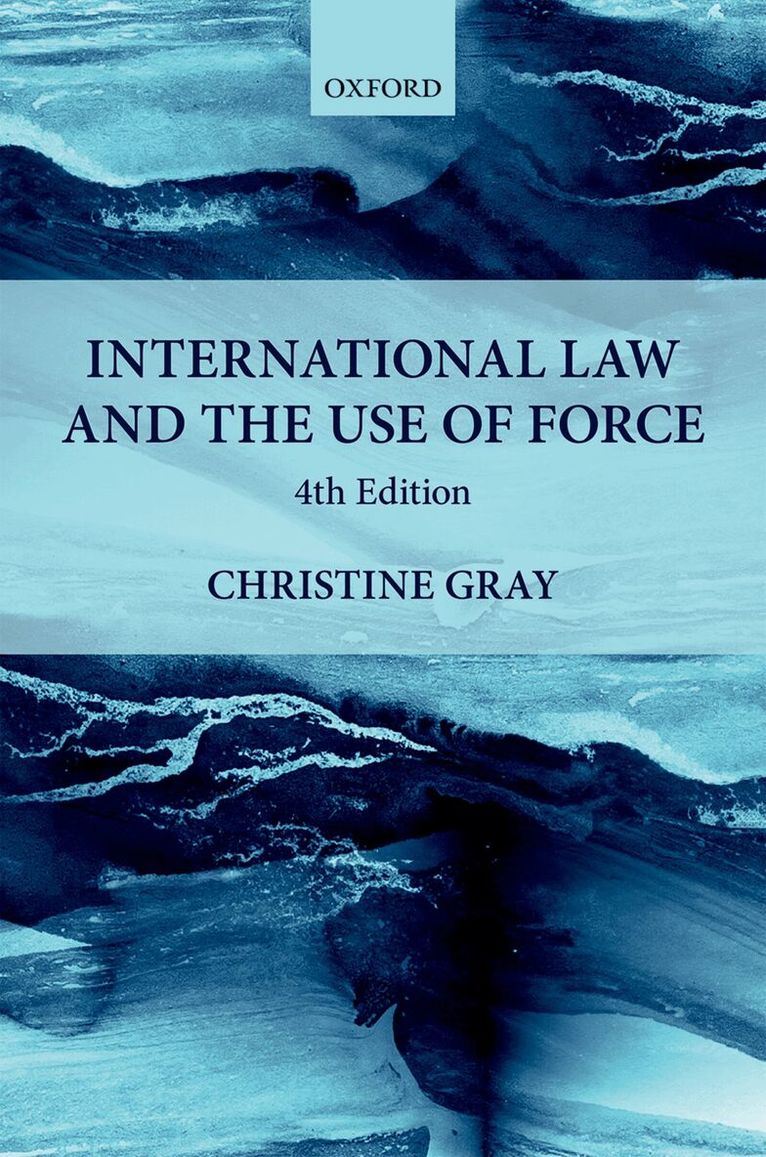
This book explores the large and controversial subject of the use of force in international law. It examines not only the use of force by states but also the role of the UN in peacekeeping and enforcement action, and the increasing role of regional organizations in the maintenance of international peace and security.The UN Charter framework is under challenge. Russia's invasion of Georgia and intervention in Ukraine, the USA's military operations in Syria, and Saudi Arabia's campaign to restore the government of Yemen by force all raise questions about the law on intervention. The 'war on terror' that began after the 9/11 terrorist attacks on the USA has not been won. It has spread far beyond Afghanistan: it has led to targeted killings in Pakistan, Somalia, and Yemen, and to intervention against ISIS in Iraq and Syria. Is there an expanding right of self-defence against non-state actors? Is the use of force effective? The development of nuclear weapons by North Korea has reignited discussion about the legality of pre-emptive self-defence. The NATO-led operation in Libya increased hopes for the implementation of 'responsibility to protect', but it also provoked criticism for exceeding the Security Council's authorization of force because its outcome was regime change. UN peacekeeping faces new challenges, especially with regard to the protection of civilians, and UN forces have been given revolutionary mandates in several African states. But the 2015 report Uniting Our Strengths reaffirmed that UN peacekeeping is not suited to counter-terrorism or enforcement operations; the UN should turn to regional organizations such as the African Union as first responders in situations of ongoing armed conflict.
2 218 kr
Skickas inom 5-8 vardagar
This book explores the large and controversial subject of the use of force in international law. It examines not only the use of force by states but also the role of the UN in peacekeeping and enforcement action, and the increasing role of regional organizations in the maintenance of international peace and security.The UN Charter framework is under challenge. Russia's invasion of Georgia and intervention in Ukraine, the USA's military operations in Syria, and Saudi Arabia's campaign to restore the government of Yemen by force all raise questions about the law on intervention. The 'war on terror' that began after the 9/11 terrorist attacks on the USA has not been won. It has spread far beyond Afghanistan: it has led to targeted killings in Pakistan, Somalia, and Yemen, and to intervention against ISIS in Iraq and Syria. Is there an expanding right of self-defence against non-state actors? Is the use of force effective? The development of nuclear weapons by North Korea has reignited discussion about the legality of pre-emptive self-defence. The NATO-led operation in Libya increased hopes for the implementation of 'responsibility to protect', but it also provoked criticism for exceeding the Security Council's authorization of force because its outcome was regime change. UN peacekeeping faces new challenges, especially with regard to the protection of civilians, and UN forces have been given revolutionary mandates in several African states. But the 2015 report Uniting Our Strengths reaffirmed that UN peacekeeping is not suited to counter-terrorism or enforcement operations; the UN should turn to regional organizations such as the African Union as first responders in situations of ongoing armed conflict.
641 kr
Skickas inom 5-8 vardagar
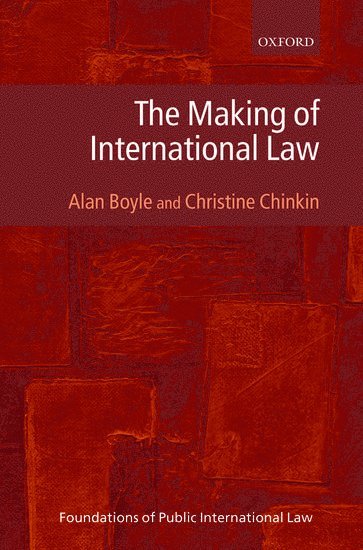
This is a study of the principal negotiating processes and law-making tools through which contemporary international law is made. It does not seek to give an account of the traditional - and untraditional - sources and theories of international law, but rather to identify the processes, participants and instruments employed in the making of international law. It accordingly examines some of the mechanisms and procedures whereby new rules of law are created or old rules are amended or abrogated. It concentrates on the UN, other international organisations, diplomatic conferences, codification bodies, NGOs, and courts. Every society perceives the need to differentiate between its legal norms and other norms controlling social, economic and political behaviour. But unlike domestic legal systems where this distinction is typically determined by constitutional provisions, the decentralised nature of the international legal system makes this a complex and contested issue. Moreover, contemporary international law is often the product of a subtle and evolving interplay of law-making instruments, both binding and non-binding, and of customary law and general principles. Only in this broader context can the significance of so-called 'soft law' and multilateral treaties be fully appreciated. An important question posed by any examination of international law-making structures is the extent to which we can or should make judgments about their legitimacy and coherence, and if so in what terms. Put simply, a law-making process perceived to be illegitimate or incoherent is more likely to be an ineffective process. From this perspective, the assumption of law-making power by the UN Security Council offers unique advantages of speed and universality, but it also poses a particular challenge to the development of a more open and participatory process observable in other international law-making bodies.
1 392 kr
Skickas inom 5-8 vardagar
This is a study of the principal negotiating processes and law-making tools through which contemporary international law is made. It does not seek to give an account of the traditional - and untraditional - sources and theories of international law, but rather to identify the processes, participants and instruments employed in the making of international law. It accordingly examines some of the mechanisms and procedures whereby new rules of law are created or old rules are amended or abrogated. It concentrates on the UN, other international organisations, diplomatic conferences, codification bodies, NGOs, and courts. Every society perceives the need to differentiate between its legal norms and other norms controlling social, economic and political behaviour. But unlike domestic legal systems where this distinction is typically determined by constitutional provisions, the decentralised nature of the international legal system makes this a complex and contested issue. Moreover, contemporary international law is often the product of a subtle and evolving interplay of law-making instruments, both binding and non-binding, and of customary law and general principles. Only in this broader context can the significance of so-called 'soft law' and multilateral treaties be fully appreciated. An important question posed by any examination of international law-making structures is the extent to which we can or should make judgments about their legitimacy and coherence, and if so in what terms. Put simply, a law-making process perceived to be illegitimate or incoherent is more likely to be an ineffective process. From this perspective, the assumption of law-making power by the UN Security Council offers unique advantages of speed and universality, but it also poses a particular challenge to the development of a more open and participatory process observable in other international law-making bodies.