Frontiers of the American South – serie
Visar alla böcker i serien Frontiers of the American South. Handla med fri frakt och snabb leverans.
5 produkter
5 produkter
393 kr
Skickas inom 10-15 vardagar
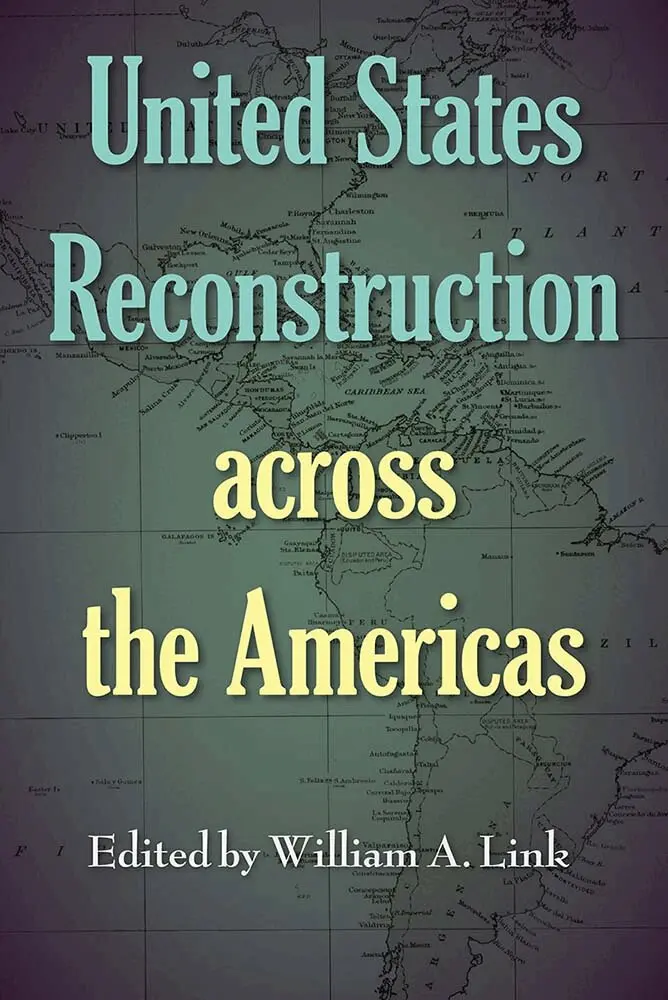
Historians have examined the American Civil War and its aftermath for more than a century, yet little work has situated this important era in a global context. Contributors to this volume open up ways of viewing Reconstruction not as an insular process but as an international phenomenon.Here, three leading international scholars explore how emancipation, nationhood and nationalism, and the spread of market capitalism?issues central to the period in the United States?were interwoven with global patterns of political, social, and economic change. Rafael Marquese explores the integrated trajectories of slavery in the United States and Brazil, tracing connections between the coffee and cotton economies of both countries. Don Doyle discusses how Mexico’s Maximilian regime harbored Confederate exiles after the war ended and posed the threat of a Confederate revival abroad. Edward Rugemer argues that Jamaica’s Morant Bay Rebellion alarmed American politicians and affected Reconstruction policies.This volume will start new discussions about how the Civil War reshaped the United States’s relationship to the world and how large-scale international developments influenced the country’s transition from a slaveholding to a free society. A volume in the series Frontiers of the American South, edited by William A. Link
448 kr
Skickas inom 10-15 vardagar
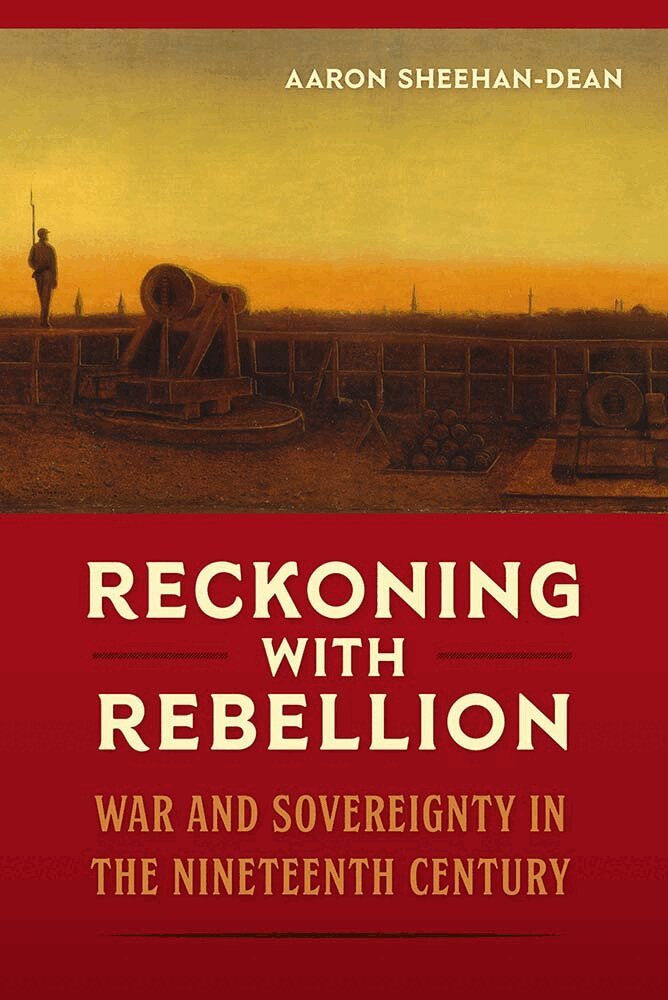
An innovative global history of the American Civil War, Reckoning with Rebellion compares and contrasts the American experience with other civil and national conflicts that happened at nearly the same time—the Indian Rebellion of 1857, the Polish Insurrection of 1863, and China's Taiping Rebellion. Aaron Sheehan-Dean identifies surprising new connections between these historical moments across three continents. Sheehan-Dean shows that insurgents around the globe often relied on irregular warfare and were labeled as criminals, mutineers, or rebels by the dominant powers. He traces commonalities between the United States, British, Russian, and Chinese empires, all large and ambitious states willing to use violence to maintain their authority. These powers were also able to control how these conflicts were described, affecting the way foreigners perceived them and whether they decided to intercede.While the stories of these conflicts are now told separately, Sheehan-Dean argues, the participants understood them in relation to each other. When Union officials condemned secession, they pointed to the violence unleashed by the Indian Rebellion. When Confederates denounced Abraham Lincoln as a tyrant, they did so by comparing him to Tsar Alexander II. Sheehan-Dean demonstrates that the causes and issues of the Civil War were also global problems, revealing the important paradigms at work in the age of nineteenth-century nation-building.A volume in the series Frontiers of the American South, edited by William A. Link
448 kr
Skickas inom 10-15 vardagar
Tracing the development of the field of southern women's history over the past half century, Sisterly Networks shows how pioneering feminists laid the foundation for a strong community of sister scholars and delves into the work of an organization central to this movement, the Southern Association for Women Historians (SAWH).Launched in 1970, the SAWH provided programming, mentoring, fundraising, and outreach efforts to support women historians working to challenge the academic establishment. In this book, leading scholars reflect on their own careers in southern history and their experiences as women historians amid this pathbreaking expansion and revitalization of the field. Their stories demonstrate how women created new archival collections, expanded historical categories to include gender and sexuality, reimagined the roles and significance of historical women, wrote pioneering monographs, and mentored future generations of African American women and other minorities who entered the academy and contributed to public discourse.Providing a lively roundtable discussion of the state of the field, contributors comment on present and future work environments and current challenges in higher education and academic publishing. They offer profound and provocative insights on the ways scholars can change the future through radically rewriting the gender biases of recorded history.
888 kr
Skickas inom 10-15 vardagar
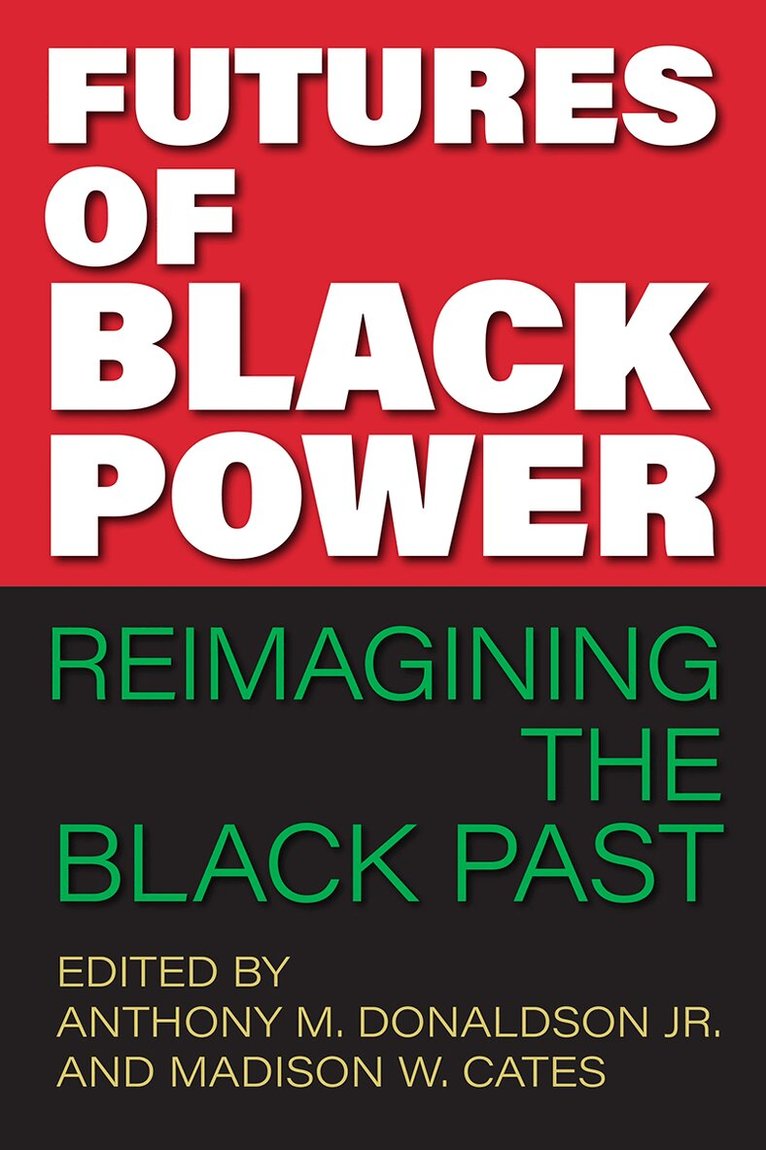
Illustrating new frameworks for recognizing and studying Black Power and Black radicalismRewriting narratives that present Black Power as related but marginal to the Civil Rights Movement, this book uncovers and centers unexpected sites of Black Power activism within the Black freedom struggle. In this collection, leading scholars look at how we study the past and suggest new ways historians can recognize Black Power and Black radicalism in the future.In Futures of Black Power, Ashley Farmer offers a framework for developing Black Power archives, Jasmin Young makes the case for oral history collections dedicated to the study of the movement, and D’Weston Haywood discusses Afrofuturist underpinnings in the Nation of Islam. Interspersed with their essays are oral history interviews with activists Kathleen Cleaver, Mae Mallory, Mabel Williams, and Nikki Giovanni. These essays and primary sources show how today’s scholars of Black Power are incorporating memory studies, gender studies, and intellectual histories, and they point the way forward to new avenues for research and public engagement.They collectively illustrate the need to preserve and remember the variety of voices, actions, and imaginings that constitute Black Power, elements of Black history that are often ignored or forgotten. A volume in the series Frontiers of the American South, edited by William A. Link.Publication of this work made possible by a Sustaining the Humanities through the American Rescue Plan grant from the National Endowment for the Humanities.
296 kr
Skickas inom 10-15 vardagar
Illustrating new frameworks for recognizing and studying Black Power and Black radicalismRewriting narratives that present Black Power as related but marginal to the Civil Rights Movement, this book uncovers and centers unexpected sites of Black Power activism within the Black freedom struggle. In this collection, leading scholars look at how we study the past and suggest new ways historians can recognize Black Power and Black radicalism in the future.In Futures of Black Power, Ashley Farmer offers a framework for developing Black Power archives, Jasmin Young makes the case for oral history collections dedicated to the study of the movement, and D’Weston Haywood discusses Afrofuturist underpinnings in the Nation of Islam. Interspersed with their essays are oral history interviews with activists Kathleen Cleaver, Mae Mallory, Mabel Williams, and Nikki Giovanni. These essays and primary sources show how today’s scholars of Black Power are incorporating memory studies, gender studies, and intellectual histories, and they point the way forward to new avenues for research and public engagement.They collectively illustrate the need to preserve and remember the variety of voices, actions, and imaginings that constitute Black Power, elements of Black history that are often ignored or forgotten. A volume in the series Frontiers of the American South, edited by William A. Link.Publication of this work made possible by a Sustaining the Humanities through the American Rescue Plan grant from the National Endowment for the Humanities.