Geoffrey Brereton on French Tragic and Comic Drama – serie
Visar alla böcker i serien Geoffrey Brereton on French Tragic and Comic Drama. Handla med fri frakt och snabb leverans.
5 produkter
5 produkter
2 195 kr
Skickas inom 10-15 vardagar
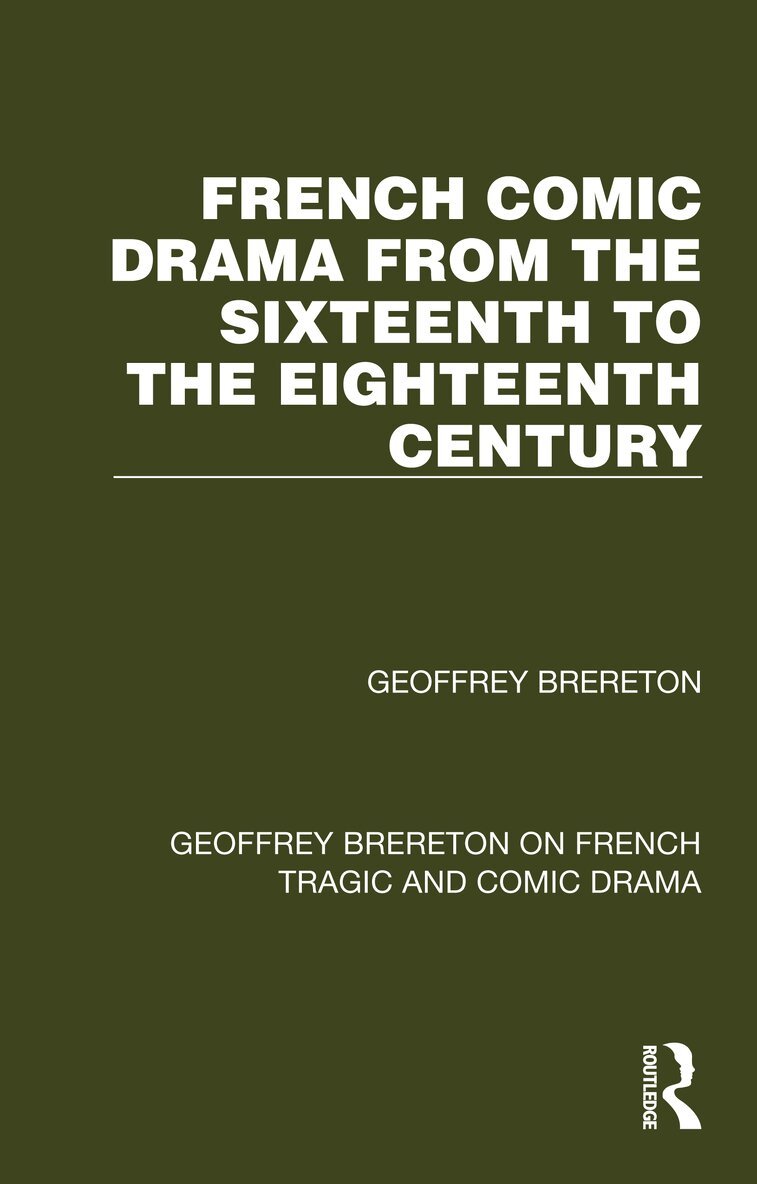
In tracing the course of French comedy from the Renaissance, through the age of Louis XIV and the eighteenth century, to the eve of the Revolution, originally published in 1977, Geoffrey Brereton shows how it evolved from the crude farces and experimental plays of the sixteenth century to become a rich and highly sophisticated dramatic genre.The main emphasis is on the work of the principal dramatists, notably Molière (whose plays and career are given a detailed and enlightening treatment), Corneille, Scarron, Marivaux and Beaumarchais, with some space devoted to the more neglected writers, such as the ‘cynical generation’ of Dancourt, Regnard, Lesage and others; and all the plays are seen in the context of the theatrical conventions that helped to shape them. Different types of comedy are analysed, including comedy of character and of manners, as well as the romantic, burlesque and bourgeois forms and the development of the opéra-comique. At the same time Dr Brereton examines the influences on French comedy – influences as varied as those of the farce, the Italian commedia dell’arte, the Spanish comedia and the eighteenth century drame – and the way in which these were absorbed and exploited by French comic dramatists. Since comedy, more than any other kind of drama, reflects the contemporary social scene, attention is drawn to social conditions and attitudes, and some of the more striking parallels with modern social preoccupations are pointed out.Written in a very lively and readable style, and containing much stimulating and original comment, as well as providing the basic facts, it gives a considerable insight into the nature of French comedy during its most formative and fruitful period. A substantial bibliography and other reference material increase the usefulness of this book to the student of French drama.
539 kr
Skickas inom 10-15 vardagar
In tracing the course of French comedy from the Renaissance, through the age of Louis XIV and the eighteenth century, to the eve of the Revolution, originally published in 1977, Geoffrey Brereton shows how it evolved from the crude farces and experimental plays of the sixteenth century to become a rich and highly sophisticated dramatic genre.The main emphasis is on the work of the principal dramatists, notably Molière (whose plays and career are given a detailed and enlightening treatment), Corneille, Scarron, Marivaux and Beaumarchais, with some space devoted to the more neglected writers, such as the ‘cynical generation’ of Dancourt, Regnard, Lesage and others; and all the plays are seen in the context of the theatrical conventions that helped to shape them. Different types of comedy are analysed, including comedy of character and of manners, as well as the romantic, burlesque and bourgeois forms and the development of the opéra-comique. At the same time Dr Brereton examines the influences on French comedy – influences as varied as those of the farce, the Italian commedia dell’arte, the Spanish comedia and the eighteenth century drame – and the way in which these were absorbed and exploited by French comic dramatists. Since comedy, more than any other kind of drama, reflects the contemporary social scene, attention is drawn to social conditions and attitudes, and some of the more striking parallels with modern social preoccupations are pointed out.Written in a very lively and readable style, and containing much stimulating and original comment, as well as providing the basic facts, it gives a considerable insight into the nature of French comedy during its most formative and fruitful period. A substantial bibliography and other reference material increase the usefulness of this book to the student of French drama.
5 168 kr
Skickas inom 10-15 vardagar
Originally published in 1973 and 1977 respectively, these two volumes, now available together for the first time examine the history of French drama. The first traces tragedy, from its origins in the sixteenth century through to the last years of Louis XVI’s reign. The second covers comedy, from the Renaissance, extending beyond Louis XVI into the eighteenth century and right up to the eve of the Revolution. Accessible to the general reader they would also be particularly useful for students of French drama.
2 195 kr
Skickas inom 10-15 vardagar
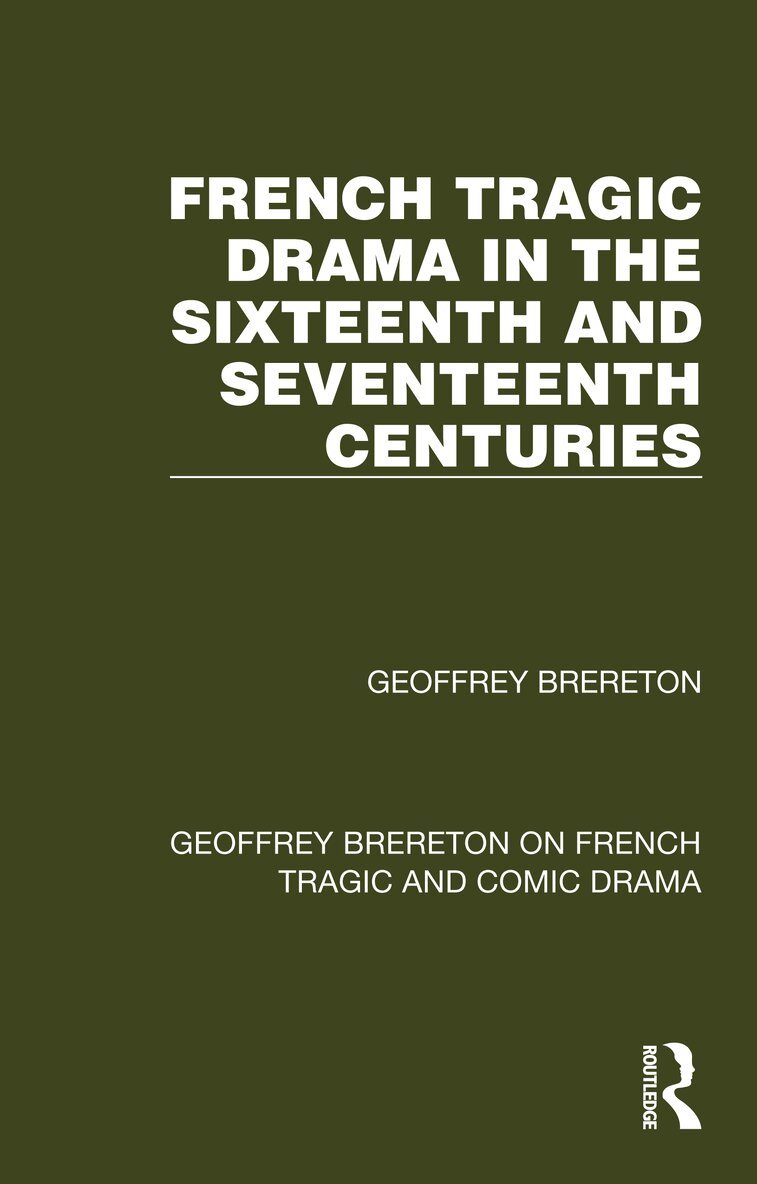
Originally published in 1973, the history of French tragedy and tragicomedy from their origins in the sixteenth century to the last years of Louis XIV’s reign is here surveyed in a single volume. Beginning with a brief account of the development of drama from the Middle Ages to the Renaissance, Dr Brereton examines the plays as types of drama, the circumstances in which they were produced and their reception by contemporaries. The traditionally great figures of Corneille and Racine are treated at some length, but their work is seen in perspective against the plays of their predecessors and of their own time. Garnier and Montchrestien are discussed, among others, as notable writers of Renaissance humanist tragedy. Sections are devoted to secondary but still important dramatists such as Mairet, Rotrou, Du Ryer, Tristan L’Hermite, Thomas Corneille and Quinault. A long chapter on Alexandre Hardy reviews the work of this neglected author and stresses his interest as a transitional link between the two centuries and as a vigorous pioneer of a type of drama which flourished for several decades after him concurrently with French ‘classical’ tragedy.The main currents of critical theory, social attitudes and stage history are described in their relation to the development of the drama. Well over a hundred plays are discussed or summarized; and the author has constantly referred back to the original material and has avoided an over-simplification of a vast subject which contains more exceptions and anomalies than has generally been recognized in the past. Chronological tables of the works of major dramatists, summaries of numerous plays and a bibliography containing modern editions of plays are included.
539 kr
Skickas inom 10-15 vardagar
Originally published in 1973, the history of French tragedy and tragicomedy from their origins in the sixteenth century to the last years of Louis XIV’s reign is here surveyed in a single volume. Beginning with a brief account of the development of drama from the Middle Ages to the Renaissance, Dr Brereton examines the plays as types of drama, the circumstances in which they were produced and their reception by contemporaries. The traditionally great figures of Corneille and Racine are treated at some length, but their work is seen in perspective against the plays of their predecessors and of their own time. Garnier and Montchrestien are discussed, among others, as notable writers of Renaissance humanist tragedy. Sections are devoted to secondary but still important dramatists such as Mairet, Rotrou, Du Ryer, Tristan L’Hermite, Thomas Corneille and Quinault. A long chapter on Alexandre Hardy reviews the work of this neglected author and stresses his interest as a transitional link between the two centuries and as a vigorous pioneer of a type of drama which flourished for several decades after him concurrently with French ‘classical’ tragedy.The main currents of critical theory, social attitudes and stage history are described in their relation to the development of the drama. Well over a hundred plays are discussed or summarized; and the author has constantly referred back to the original material and has avoided an over-simplification of a vast subject which contains more exceptions and anomalies than has generally been recognized in the past. Chronological tables of the works of major dramatists, summaries of numerous plays and a bibliography containing modern editions of plays are included.