Great Egyptian Writers – serie
Visar alla böcker i serien Great Egyptian Writers. Handla med fri frakt och snabb leverans.
4 produkter
4 produkter
Häftad, Engelska, 2026
230 kr
Kommande
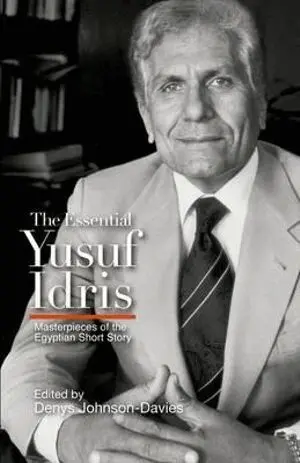
A carefully curated collection of short story masterpieces from the "genius of the short story" (Tawfiq al-Hakim) and the Arab world's greatest short-story writer of the twentieth century, now available in paperback''Like the Russian aristocrats of Chekhov, the provincial bourgeoisie of Flaubert, or the Ibo villagers of Achebe, Idris raises his authentic characters into convincing types within their context: he makes us live their agonies and hopes.''—Ferial GhazoulYusuf Idris (1927–91), who belonged to the same generation of pioneering Egyptian writers as Naguib Mahfouz and Tawfiq al-Hakim, is widely celebrated as the father of the Arabic short story. He studied and practiced medicine, but his interests were in politics and the support of the nationalist struggle, and in writing—and his writing, whether in his regular newspaper columns or in his fiction, often reflected his political convictions. He was nominated for the Nobel Prize for literature more than once, and when the prize went to Naguib Mahfouz in 1988, Idris felt that he had been passed over because of his outspoken views on Israel. In all, Yusuf Idris wrote some twelve collections of superbly crafted short stories, mainly about ordinary, poor people, many of which have been translated into English and are included, along with an extract from one of his novels, in this collection of the best of his work.Included works:The Cheapest Nights (translated by Wadida Wassef)You Are Everything to Me (translated by Wadida Wassef)The Errand (translated by Wadida Wassef)Hard Up (translated by Wadida Wassef)The Funeral Ceremony (translated by Wadida Wassef)All on a Summer’s Night (translated by Wadida Wassef)The Caller in the Night (translated by Wadida Wassef)The Dregs of the City (translated by Wadida Wassef)Did You Have to Turn on the Light, Li-Li? (translated by Wadida Wassef)Death from Old Age (translated by Wadida Wassef)The Shame (translated by Wadida Wassef)His Mother (translated by Catherine Cobham)An Egyptian Mona Lisa (translated by Roger Allen and Christopher Tingley)The Chair Carrier (translated by Denys Johnson-Davies)Rings of Burnished Brass (translated by Catherine Cobham)The Shaykh Shaykha (translated by Ragia Fahmi and Saneya Shaarawi)It’s Not Fair (translated by Denys Johnson-Davies)House of Flesh (translated by Denys Johnson-Davies)Farahat’s Republic (translated by Denys Johnson-Davies)The Greatest Sin of All (translated by Mona Mikhail)from City of Love and Ashes (translated by R. Neil Hewison)
Inbunden, Engelska, 2009
333 kr
Skickas inom 11-20 vardagar
A carefully curated collection of short story masterpieces from the "genius of the short story" (Tawfiq al-Hakim) and the Arab world's greatest short-story writer of the twentieth century''Like the Russian aristocrats of Chekhov, the provincial bourgeoisie of Flaubert, or the Ibo villagers of Achebe, Idris raises his authentic characters into convincing types within their context: he makes us live their agonies and hopes.''—Ferial GhazoulYusuf Idris (1927–91), who belonged to the same generation of pioneering Egyptian writers as Naguib Mahfouz and Tawfiq al-Hakim, is widely celebrated as the father of the Arabic short story. He studied and practiced medicine, but his interests were in politics and the support of the nationalist struggle, and in writing—and his writing, whether in his regular newspaper columns or in his fiction, often reflected his political convictions. He was nominated for the Nobel Prize for literature more than once, and when the prize went to Naguib Mahfouz in 1988, Idris felt that he had been passed over because of his outspoken views on Israel. In all, Yusuf Idris wrote some twelve collections of superbly crafted short stories, mainly about ordinary, poor people, many of which have been translated into English and are included, along with an extract from one of his novels, in this collection of the best of his work.
Inbunden, Engelska, 2011
315 kr
Tillfälligt slut
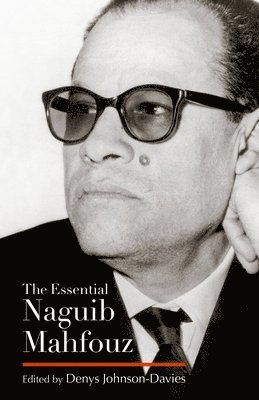
A carefully curated selection of the most important works of Egypt's Nobel literature laureate in a single volumeNaguib Mahfouz, the first and only writer of Arabic to be awarded the Nobel prize for literature, wrote prolifically from the 1930s until shortly before his death in 2006, in a variety of genres: novels, short stories, plays, screenplays, a regular weekly newspaper column, and in later life his intensely brief and evocative Dreams. His Cairo Trilogy achieved the status of a world classic, and the Swedish Academy of Letters in awarding him the 1988 Nobel prize for literature noted that Mahfouz “through works rich in nuance—now clear-sightedly realistic, now evocatively ambiguous—has formed an Arabic narrative art that applies to all mankind.”Here Denys Johnson-Davies, described by Edward Said as “the leading Arabic–English translator of our time,” makes an essential selection of short stories and extracts from novels and other writings, to present a cross-section through time of the very best of the work of Egypt’s Nobel literature laureate.
Häftad, Engelska, 2013
176 kr
Tillfälligt slut
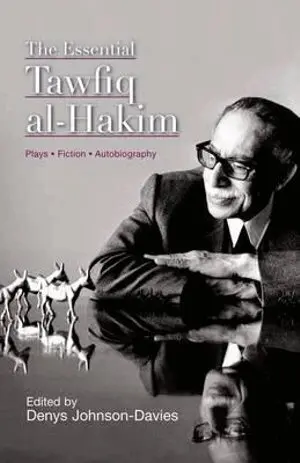
A selection of the most important prose and stage works of the great Egyptian playwright of the twentieth centuryThe importance of Tawfiq al-Hakim (1898–1987) to the emergence of a modern Arabic literature is second only to that of Naguib Mahfouz. If the latter put the novel among the genres of writing that are an accepted part of literary production in the Arab world today, Tawfiq al-Hakim is recognized as the undisputed creator of a literature of the theater.In this volume, Tawfiq al-Hakim’s fame as a playwright is given prominence. Of the more than seventy plays he wrote, The Sultan’s Dilemma, dealing with a historical subject in an appealingly light-hearted manner, is perhaps the best known; it appears in the extended edition of Norton’s World Masterpieces and was broadcast on the old Home Service of the BBC. The other full-length play included here, The Tree Climber, is one that reveals al-Hakim’s openness to outside influences—in this case, the absurdist mode of writing. Of the two one-act plays in this collection, The Donkey Market shows his deftness at turning a traditional folk tale into a hilarious stage comedy.Tawfiq al-Hakim produced several of the earliest examples of the novel in Arabic; included in this volume is an extract from his best known work in that genre, the delightful Diary of a Country Prosecutor, in which he draws on his own experience as a public prosecutor in the Egyptian countryside. Three of the many short stories he published are also included, as well as an extract from The Prison of Life, an autobiography in which Tawfiq al-Hakim writes with commendable frankness about himself.