Denys Johnson-Davies – författare
Visar alla böcker från författaren Denys Johnson-Davies. Handla med fri frakt och snabb leverans.
9 produkter
9 produkter
170 kr
Skickas inom 7-10 vardagar
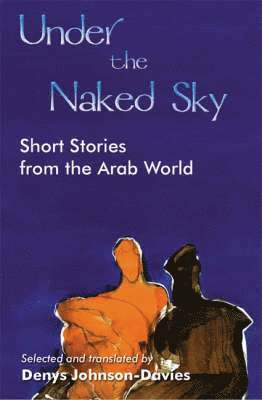
Drawing on an intimate knowledge of modern Arabic writing, Denys Johnson-Davies brings together a colourful mosaic of life as lived and portrayed by Arabs from Morocco to Iraq. From a diverse area of the world with the common factor of a written language, these thirty stories tell of an old Moroccan peasant woman who kills snakes; an Iraqi soldier who returns home as a stranger after years as a prisoner-of-war; a repairer of lost virginities in a Tunisian village; a typically Mahfouzian start to a train journey; the steamy meeting of two women and a catat the height of an Iraqi summer; the ill-fated attraction of a boy to a magical bird in the Tuareg deserts of Libya; and a novel way of hunting ducks in the Nile Delta. The purveyors of this strange and delightful cornucopia of fictions include Naguib Mahfouz, Yusuf Idris and others.
268 kr
Skickas inom 5-8 vardagar
327 kr
Kommande
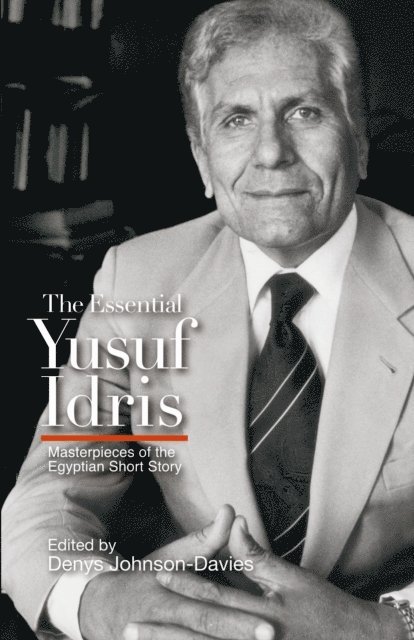
A carefully curated collection of short story masterpieces from the "genius of the short story" (Tawfiq al-Hakim) and the Arab world's greatest short-story writer of the twentieth century, now available in paperback''Like the Russian aristocrats of Chekhov, the provincial bourgeoisie of Flaubert, or the Ibo villagers of Achebe, Idris raises his authentic characters into convincing types within their context: he makes us live their agonies and hopes.''—Ferial GhazoulYusuf Idris (1927–91), who belonged to the same generation of pioneering Egyptian writers as Naguib Mahfouz and Tawfiq al-Hakim, is widely celebrated as the father of the Arabic short story. He studied and practiced medicine, but his interests were in politics and the support of the nationalist struggle, and in writing—and his writing, whether in his regular newspaper columns or in his fiction, often reflected his political convictions. He was nominated for the Nobel Prize for literature more than once, and when the prize went to Naguib Mahfouz in 1988, Idris felt that he had been passed over because of his outspoken views on Israel. In all, Yusuf Idris wrote some twelve collections of superbly crafted short stories, mainly about ordinary, poor people, many of which have been translated into English and are included, along with an extract from one of his novels, in this collection of the best of his work.
601 kr
Skickas inom 5-8 vardagar
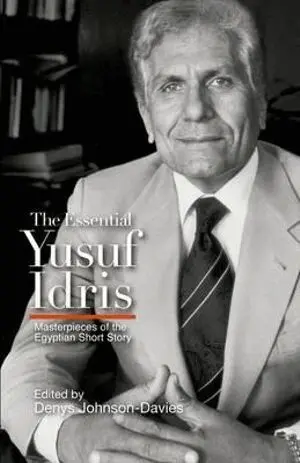
A carefully curated collection of short story masterpieces from the "genius of the short story" (Tawfiq al-Hakim) and the Arab world's greatest short-story writer of the twentieth century''Like the Russian aristocrats of Chekhov, the provincial bourgeoisie of Flaubert, or the Ibo villagers of Achebe, Idris raises his authentic characters into convincing types within their context: he makes us live their agonies and hopes.''—Ferial GhazoulYusuf Idris (1927–91), who belonged to the same generation of pioneering Egyptian writers as Naguib Mahfouz and Tawfiq al-Hakim, is widely celebrated as the father of the Arabic short story. He studied and practiced medicine, but his interests were in politics and the support of the nationalist struggle, and in writing—and his writing, whether in his regular newspaper columns or in his fiction, often reflected his political convictions. He was nominated for the Nobel Prize for literature more than once, and when the prize went to Naguib Mahfouz in 1988, Idris felt that he had been passed over because of his outspoken views on Israel. In all, Yusuf Idris wrote some twelve collections of superbly crafted short stories, mainly about ordinary, poor people, many of which have been translated into English and are included, along with an extract from one of his novels, in this collection of the best of his work.
299 kr
Tillfälligt slut
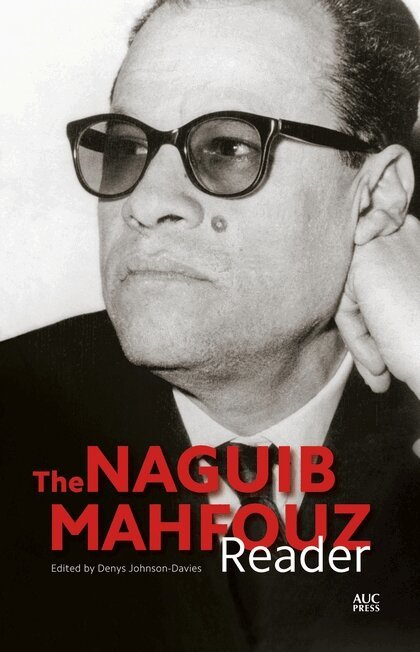
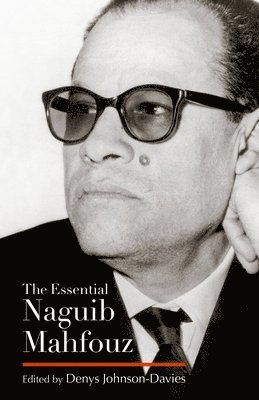
A carefully curated selection of the most important works of Egypt's Nobel literature laureate in a single volumeNaguib Mahfouz, the first and only writer of Arabic to be awarded the Nobel prize for literature, wrote prolifically from the 1930s until shortly before his death in 2006, in a variety of genres: novels, short stories, plays, screenplays, a regular weekly newspaper column, and in later life his intensely brief and evocative Dreams. His Cairo Trilogy achieved the status of a world classic, and the Swedish Academy of Letters in awarding him the 1988 Nobel prize for literature noted that Mahfouz “through works rich in nuance—now clear-sightedly realistic, now evocatively ambiguous—has formed an Arabic narrative art that applies to all mankind.”Here Denys Johnson-Davies, described by Edward Said as “the leading Arabic–English translator of our time,” makes an essential selection of short stories and extracts from novels and other writings, to present a cross-section through time of the very best of the work of Egypt’s Nobel literature laureate.
172 kr
Tillfälligt slut
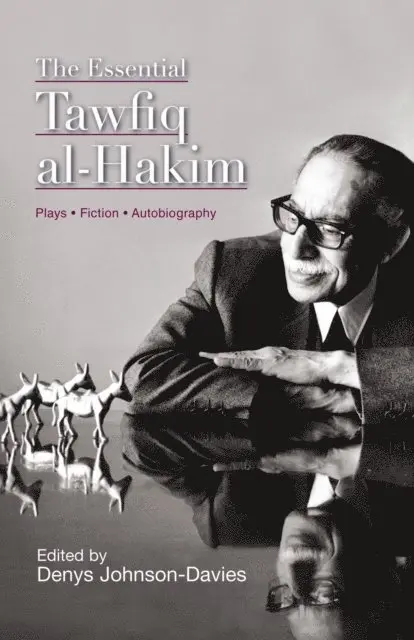
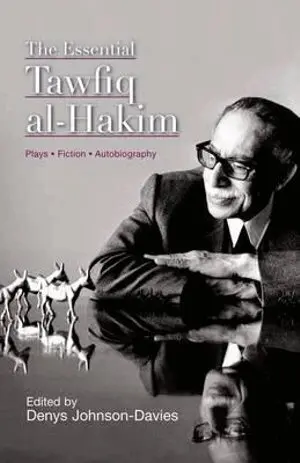
A selection of the most important prose and stage works of the great Egyptian playwright of the twentieth centuryThe importance of Tawfiq al-Hakim (1898–1987) to the emergence of a modern Arabic literature is second only to that of Naguib Mahfouz. If the latter put the novel among the genres of writing that are an accepted part of literary production in the Arab world today, Tawfiq al-Hakim is recognized as the undisputed creator of a literature of the theater.In this volume, Tawfiq al-Hakim’s fame as a playwright is given prominence. Of the more than seventy plays he wrote, The Sultan’s Dilemma, dealing with a historical subject in an appealingly light-hearted manner, is perhaps the best known; it appears in the extended edition of Norton’s World Masterpieces and was broadcast on the old Home Service of the BBC. The other full-length play included here, The Tree Climber, is one that reveals al-Hakim’s openness to outside influences—in this case, the absurdist mode of writing. Of the two one-act plays in this collection, The Donkey Market shows his deftness at turning a traditional folk tale into a hilarious stage comedy.Tawfiq al-Hakim produced several of the earliest examples of the novel in Arabic; included in this volume is an extract from his best known work in that genre, the delightful Diary of a Country Prosecutor, in which he draws on his own experience as a public prosecutor in the Egyptian countryside. Three of the many short stories he published are also included, as well as an extract from The Prison of Life, an autobiography in which Tawfiq al-Hakim writes with commendable frankness about himself.
192 kr
Skickas inom 5-8 vardagar
Denys Johnson-Davies brings together this remarkable overview of the work of several generations of Egypt's leading short story writers. This selection of some fifty stories represents not only a cross-section through time but also a spectrum of styles, and includes works by Teymour, Hakki, Gohar, and Mahfouz and later writers such as Mohamed El-Bisatie, Said el-Kafrawi, Bahaa Taher, and Radwa Ashour, as well as new young writers of today like Hamdy El-Gazzar, Mansoura Ez Eldin, and Youssef Rakha.
206 kr
Skickas inom 5-8 vardagar
Naguib Mahfouz, the first and only writer of Arabic to be awarded the Nobel prize for literature, wrote prolifically from the 1930s until shortly before his death in 2006, in a variety of genres: novels, short stories, plays, screenplays, a regular weekly newspaper column, and in later life his intensely brief and evocative Dreams. His Cairo Trilogy achieved the status of a world classic, and the Swedish Academy of Letters in awarding him the 1988 Nobel prize for literature noted that Mahfouz "through works rich in nuance-now clear-sightedly realistic, now evocatively ambiguous-has formed an Arabic narrative art that applies to all mankind."Here Denys Johnson-Davies, described by Edward Said as "the leading Arabic-English translator of our time," makes an essential selection of short stories and extracts from novels and other writings, to present a cross-section through time of the very best of the work of Egypt's Nobel literature laureate.
285 kr
Tillfälligt slut
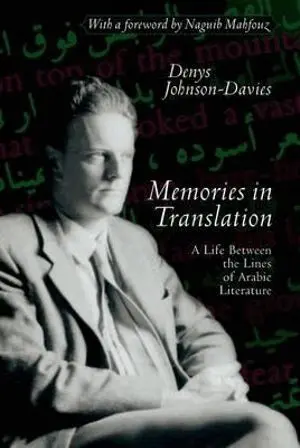
Nobody has done more for modern Arabic literature in translation than Denys Johnson-Davies, described by the late Edward Said as “the leading Arabic–English translator of our time.” With more than twenty-five volumes of translated Arabic novels, short stories, plays, and poetry to his name, and a career spanning some sixty years, he has brought the works of a host of writers from across the Arab world to an ever-widening English readership. Here he tells the story of a life in translation, and gives intimate glimpses of many of the Arab writers who are becoming increasingly known in the west. In the 1940s, while teaching at Cairo University, he came to know such iconic figures as Yahya Hakki, Tewfik al-Hakim, Yusuf Idris, and of course Naguib Mahfouz. Later when he lived in Beirut, that other great literary center of the Arab world, he spent time with such poets as Tawfic Sayigh, Badr Shakir al-Sayyab, and Boland al-Haydari. He was already a close friend of Jabra Ibrahim Jabra from his college days at Cambridge, and later of another well-known Palestinian writer, Ghassan Kanafani. In the 1960s he started an influential Arabic literary magazine, Aswat, which published the leading avant-garde writers of the time, and in 1967 he put together the first representative volume of short stories from the Arab world. Then he really put Arabic writing on the international literary map with the establishment of the Heinemann Arab Authors series. Since then he has continued to select and translate the best of Arabic fiction, most recently the classic novella by Yahya Hakki, The Lamp of Umm Hashim (AUC Press 2004). He has also translated three books of Islamic Hadith (with Ezzeddin Ibrahim) and other books of Islamic thought, and has written a large number of children’s books of Middle Eastern history and folktales.