Great Empires of the Past – serie
Visar alla böcker i serien Great Empires of the Past. Handla med fri frakt och snabb leverans.
14 produkter
Empires of Ancient Mesopotamia
Inbunden, 2010
412 kr
Lägg i varukorg
Mesopotamia, the land between the Tigris and the Euphrates rivers, was the site of the world's first stable civilizations, including Sumer, Babylonia, and Assyria. As people settled permanently along the Fertile Crescent, they built irrigation systems to bring water to crops and constructed levees …
Empire of Ancient Greece
Inbunden, 2009
412 kr
Lägg i varukorg
The classical Greek civilization is the cornerstone of Western civilization today. The Greeks invented and developed everything from logic and democracy to rhetoric, drama, and philosophy. ""Empire of Ancient Greece, Revised Edition"" chronicles the remarkable legacy of the Greeks, as well as the …
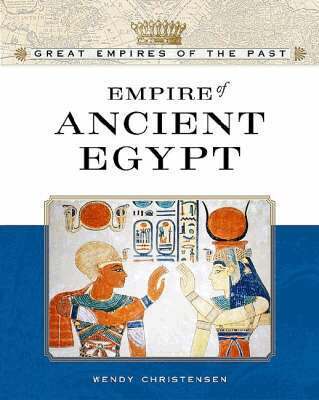
Empire of Ancient Egypt
Inbunden, 2004
444 kr
Tillfälligt slut
Empire of Ancient Egypt opens with an introduction to the world and the geographic area in the years leading up to the empire, followed by a brief summary of the history of the empire. Sorting through the myths of popular culture and contradictory historical evidence, this volume provides a clear, …
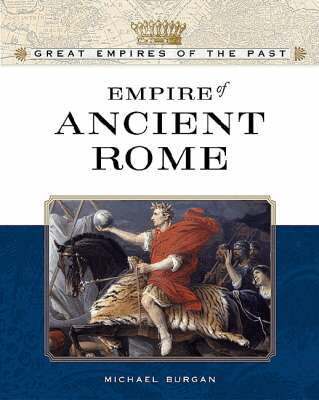
Roman Empire
Inbunden, 2004
444 kr
Tillfälligt slut
The influence of the Roman Empire has been widespread and profound, perhaps more so than any other empire or civilization. This volume begins with a brief summary of the Roman Empire and provides an account of the world and this geographic area in the years leading up to the empire. In an …
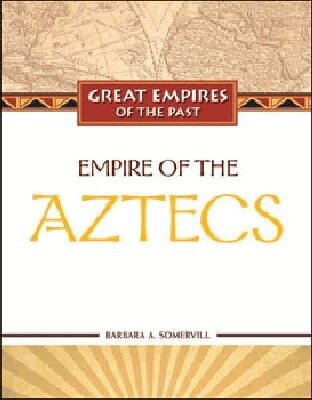
Empire of the Aztecs
Inbunden, 2009
412 kr
Tillfälligt slut
Despite only existing for two centuries, the Aztec managed to found their civilization on an island in the Valley of Mexico, link causeways to the mainland, develop far-reaching trade agreements, and build Tenochtitlan, one of the world's largest cities at the time of the Spanish invasion. Today, …
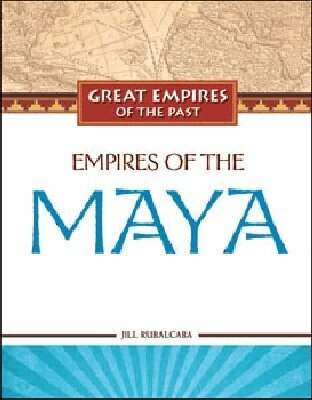
Empires of the Maya
Inbunden, 2010
412 kr
Tillfälligt slut
Long before European boats reached the shores of the Americas, sophisticated civilizations had already developed throughout the continents. The empire of the Maya, located in modern Mexico and Central America, influenced civilization there for centuries. The ancient Maya had fully developed the …
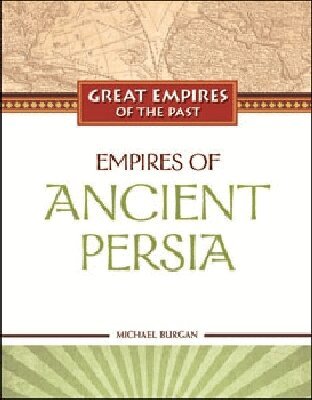
Empires of Ancient Persia
Inbunden, 2009
412 kr
Tillfälligt slut
For almost 1,200 years, the Persians ruled a territory that stretched from the Black Sea into Central Asia, from India to Egypt and into the fringes of southern Europe. During that period from 550 BCE to 651 CE, the ancient Persians learned to cultivate crops such as wheat and barley and to …
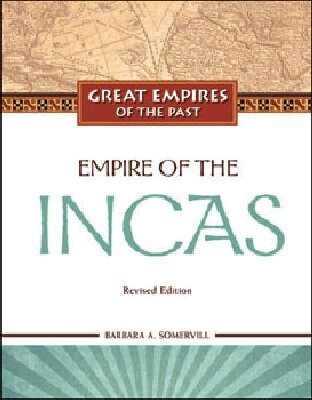
Empire of the Incas
Inbunden, 2009
412 kr
Tillfälligt slut
Though the Incas left no written records of their great civilization, the archaeological remains and accounts of Spanish conquistadors and priests paint a picture of a well-ordered, vast empire. In the mountains of Peru and Ecuador, traces of Inca culture remain today in the road system that winds …
Empire of Ancient Rome
Inbunden, 2009
412 kr
Tillfälligt slut
The influence of the Roman Empire has been widespread and profound, perhaps more so than that of any other empire or civilization. Rome laid the foundation for many of the institutions and ideas in the modern Western world, including the common political and legal systems. Roman ruins can still be …
Empire of Ancient Egypt
Inbunden, 2009
412 kr
Tillfälligt slut
A great civilization that grew up around the Nile River, ancient Egypt had sophisticated irrigation systems that held back the desert, writing and recordkeeping that tracked every event in the region, and some of the greatest architects and engineers the world has ever seen. This revised edition of …
Empire of the Islamic World
Av Robin Doak
Inbunden, 2009
412 kr
Tillfälligt slut
While Europe was in the Dark Ages, classical learning from ancient Greece, Rome, and Persia was being preserved and advanced in Islamic libraries and universities. From 632 to 1258, the Islamic Empire was the most powerful and cultured domain in the world. Less than a century after its founding, …
Empire of Alexander the Great
Inbunden, 2009
412 kr
Tillfälligt slut
From the age of 20 until his death at 32, Alexander the Great and his armies from Greece swept across a vast region that included Persia, Asia Minor, Syria, and Egypt. Ultimately ruling an empire that stretched approximately 2 million square miles across three continents, Alexander revolutionized …
Empire of the Mongols
Inbunden, 2009
412 kr
Tillfälligt slut
Under the leadership of Chinggis Khan and his descendants in the 13th century, the Mongols quickly built an empire that stretched from Korea to eastern Europe - the largest continuous area of land ever controlled by one ruling family. The rise of the Mongols marked the last major clash between …
Empires of Medieval West Africa
Inbunden, 2009
412 kr
Tillfälligt slut
Beginning about 1200 CE, the Mali, Songhay, and Ghana empires spread their sequential influence across the western horn of Africa, making advances in trade, language, culture, and economy. Influenced heavily by Islam in their later periods, these empires flourished and grew under a series of …