Greenwood Guides to Great Ideas in Science – Serie
Visar alla böcker i serien Greenwood Guides to Great Ideas in Science. Handla med fri frakt och snabb leverans.
9 produkter
9 produkter
809 kr
Skickas inom 10-15 vardagar
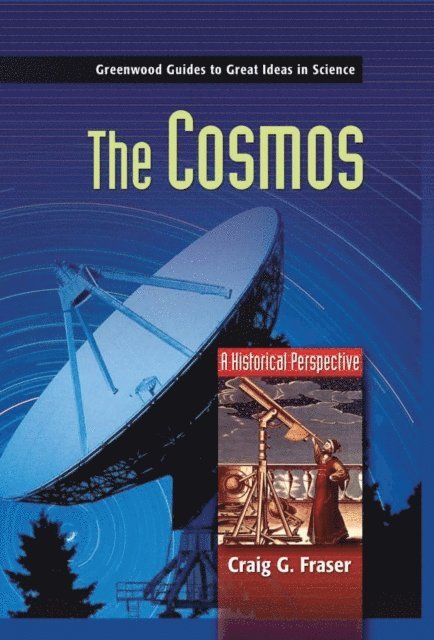
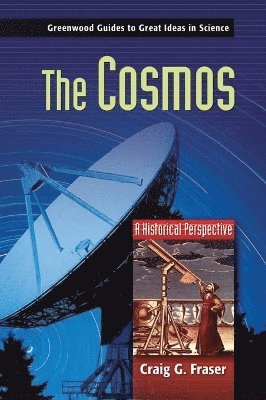
Everyone knows that the universe is extremely old and extremely large. But how did scientists determine just how old and how large? How do astronomers know that there are upwards of 100 billion galaxies in the universe if the nearest one is over 40,000 light-years away? How do we know what the stars are made of? The answer is that our current knowledge of the universe has arisen from the work and ideas of scientists and philosophers over hundreds of years. While it's only been during the last several decades that scientists have had the technology and theories to really understand how the universe works, humans have thought about such issues for millennia. And the scientists who today are attempting to understand the most complex issues of the universe build upon the work and thought of the thinkers of the last hundreds of years.The Cosmos: A Historical Perspective provides an accessible introduction to the many ways humans have conceived of the universe throughout history and what ideas have led to our current understanding of the cosmos. The book examines: the Scientific Revolution and the new ideas of the Earth's place in the cosmos; the importance of nineteenth-century physics and chemistry in determining the compositions of stars; Einstein's Theory of Relativity and how it altered how scientists thought about gravity; and new, cutting-edge science that may alter, yet again, our conceptions of the cosmos, such as the inflationary universe and the possibility of dark energy. Jargon and mathematics is kept to a minimum, and the volume includes an annotated bibliography and a timeline. The Cosmos is an ideal introduction for students studying space science and the history and nature of the scientific understanding of the universe.
875 kr
Skickas inom 10-15 vardagar
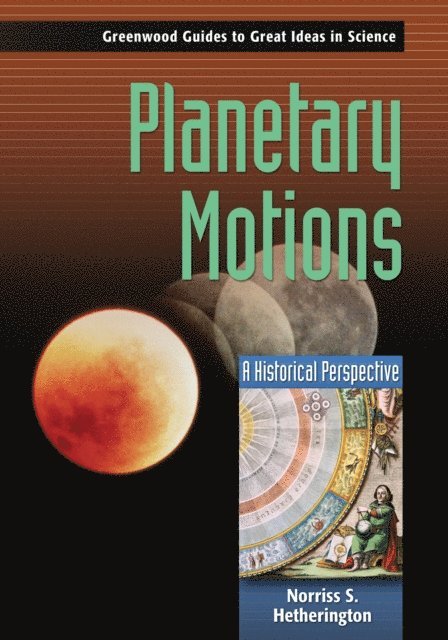
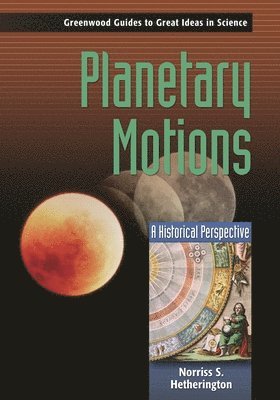
Students in an introductory physics class learn a variety of different, and seemingly unconnected, concepts. Gravity, the laws of motion, forces and fields, the mathematical nature of the science - all of these are ideas that play a central role in understanding physics. And one thing that connects all of these physical concepts is the impetus the great scientists of the past had to develop them - the desire to understand the motion of the planets of the solar system. This desire led to the revolutionary work of Copernicus and Galileo, Kepler and Newton. And their work forever altered how science is practiced and understood.
809 kr
Skickas inom 10-15 vardagar
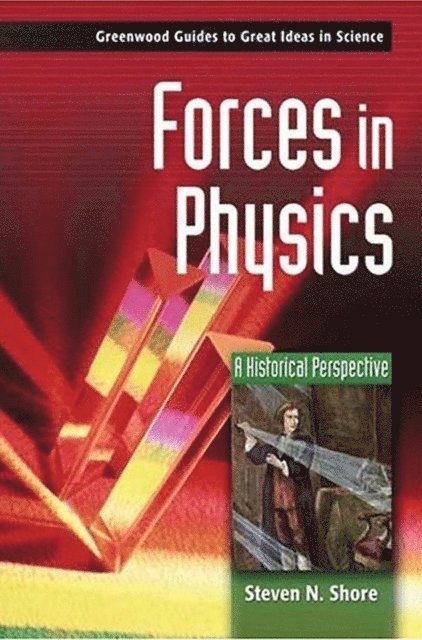
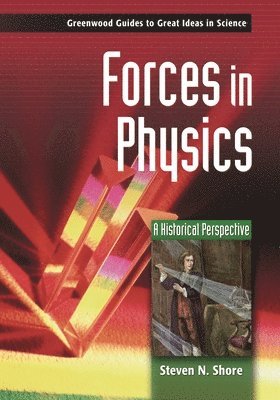
Force is one of the most elementary concepts that must be understood in order to understand modern science; it is discussed extensively in textbooks at all levels and is a requirement in most science guidelines. It is also one of the most challenging - how could one idea be involved in such disparate physical phenomena as gravity and radioactivity? Forces in Physics helps the science student by explaining how these ideas originally were developed and provides context to the stunning conclusions that scientists over the centuries have arrived at. It covers the history of all of the four traditional fundamental forces - gravity, electromagnetism, weak nuclear force, and the strong nuclear force - and shows how these forces have, over the years, allowed physicists to better understand the nature of the physical world.Forces in Physics: A Historical Perspective traces the evolution of the concept from the earliest days of the Ancient Greeks to the contemporary attempt to form a GUT (Grand Unified Theory): Aristotle and others in Ancient Greece who developed ideas about physical laws and the introduction of forces into nature; Newton and others in the Scientific Revolution who discovered that forces like gravity applied throughout the universe; the 19th century examinations of thermodynamics and the forces of the very small; and 20th century developments—relativity, quantum mechanics, and more advanced physics—that revolutionized the way we understand force. The volume includes a glossary of terms, a timeline of important events, and a bibliography of resources useful for further research.
875 kr
Skickas inom 10-15 vardagar
One of the most familiar features of any high-school chemistry lab is the Periodic Table of Elements. Elegant, informative, useful to any student in the lab - the Periodic Table neatly summarizes our scientific knowledge of the chemical elements from hydrogen to uranium and beyond - atomic number, atomic weight, isotopes, and more. But how did scientists discover all of these features of the elements? How did the Periodic Table come to be? And, even more basically, how did the concept of the chemical element come to dominate how scientists understand chemistry? This book shows readers the answers to these and other questions regarding the scientific understanding of matter.The Chemical Element, a volume in the Greenwood Guides to Great Ideas in Science, traces the history of this tremendously powerful concept from the ancient philosophers to the present day. The volume covers: the idea of the elements held by Aristotle and the other ancient Greek philosophers; how Chinese, Arabic and other ancient civilizations thought about the elements; Mendeleyev and the creation of the Periodic Table of Elements, the predictive power of which helped in the discovery of dozens of new elements; and the discovery of the artificial elements that are heavier than uraniumJargon and mathematics is kept to a minimum, and the volumes includes a timeline, a glossary, and a bibliography, making The Chemical Element an ideal resource for students researching chemistry and the history and nature of the scientific understanding of the world around us.
809 kr
Skickas inom 10-15 vardagar
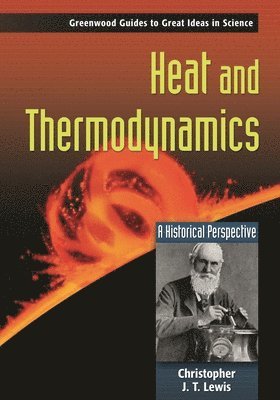
Heat and energy form the backbone of modern physics, but the ideas are not intuitive for most students beginning their study of physics. Instructors spend much valuable time in the classroom and lab explaining such concepts as entropy, thermodynamics, and the conservation of energy. But, as educators know, such ideas can become clearer if students learn how the scientists who developed these concepts came to their discoveries through experimentation and observation. This volume in the Greenwood Guide to Great Ideas in Science series provides a historical perspective to heat and thermodynamics, providing readers with an accessible introduction to the people whose work led to our profound understanding of the nature of the universe.Originally stimulated by the invention of the steam engine during the Industrial Revolution, thermodynamics developed into a universally applicable and powerful scientific theory.Heat and Thermodynamics includes illustrations, a bibliography, timeline, and glossary for students who wish to research the subject in more detail.Heat and Thermodynamics shows readers how the powerful ideas of energy and heat were developed by scientists over the centuries: Explores the history of the ideas of what heat was from the ancient element of Fire through the notion of heat as an indestructible fluid — caloric — of the 18th century. Explains the revolutionary experiments of Sadi Carnot, James Joule, and others as they develop the early theories of thermodynamics Discusses great scientists such as Lord Kelvin, and their theories that helped formalize the new ideas of heat and energy
875 kr
Skickas inom 10-15 vardagar
All students of physics need to understand the basic concepts of electricity and magnetism. E&M is central to the study of physics, and central to understanding the developments of the last two hundred years of not just science, but technology and society in general. But the core of electricity and magnetism can be difficult to understand - many of the ideas are counterintuitive and difficult to appreciate. This volume in the Greenwood Guides to Great Ideas in Science series traces the central concepts of electricity and magnetism from the ancient past to the present day, enabling students to develop a deeper understanding of how the science arose as it has.
809 kr
Skickas inom 10-15 vardagar
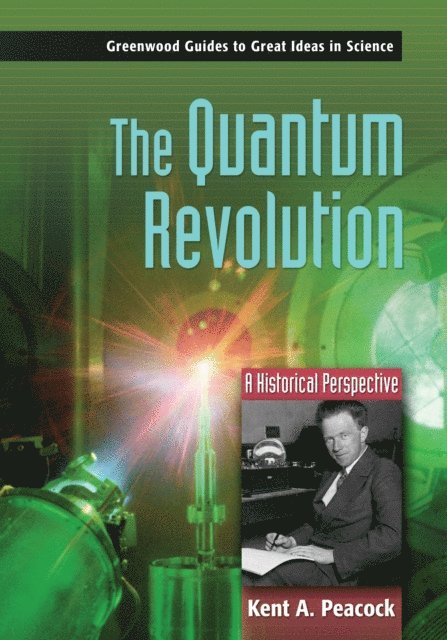
Quantum mechanics is one of the great success stories of modern physics, making sense of the very small just as Einstein's theory of relativity made sense of the very large. But, for most students, the ideas that make quantum mechanics powerful can be confusing and counterintuitive. This volume in the Greenwood Guides to Great Ideas in Science series provides a history of quantum mechanics from the early breakthroughs of Planck and Einstein, at the beginning of the 20th century, to the present frontiers of quantum computing and quantum gravity. The approach is entirely non-technical, and is aimed at the general reader who may not have much mathematical background but who has a strong curiosity about some of the most important developments in modern science.Quantum Mechanics: A Historical Perspective traces the history of this powerful theory, including:; The early discoveries by Max Planck and Albert Einstein regarding the quantization of radiation; The early quantum theory, including Neils Bohr's theory of the atom; The birth of modern quantum mechanics through the work of Heisenberg, Schrodinger, Born, Dirac and others; Applications of quantum mechanics in chemistry, nuclear physics, electronics, and many other areas; Recent work in quantum computation and quantum information theoryThe book emphasizes the fact that despite the great success of quantum mechanics, many exciting intellectual frontiers remain open for further researchers to explore. It includes a glossary, a timeline, and a bibliography of accessible resources for further research.
809 kr
Skickas inom 10-15 vardagar
Genetics is one of the most powerful scientific fields today. It is transforming how we view medicine and public health, and is producing tremendous new discoveries in biotechnology. Advances in genetics also provoke extensive ethical debates over cloning, genetic counseling, stem cell research, and privacy. But to understand these debates, it's essential to understand where these ideas came from - the ideas of the past have had tremendous influence on not just the science of genetics, but on the political and ethical debates surrounding the field. This volume in the Greenwood Guides to Great Ideas in Science series provides an accessible and thorough description of the history of genetics, and includes relevant historical ideas from the Classical era to the present day.The Gene: A Historical Perspective provides an overview of the field of genetics, with contemporary examples of its scientific, social and economic importance, and an emphasis on the historical development of the concept of the gene. The book includes a glossary of terms, a timeline of events, and a bibliography of accessible resources for students who wish to learn more about the gene.
875 kr
Skickas inom 10-15 vardagar
What is evolution? Few ideas are more controversial - and more misunderstood - than the biological theory of evolution. But it's also the case that, as a great scientist once said, Nothing in biology makes sense except in the light of evolution. So, if students want to truly understand biology in all of its forms, they will need to understand what evolution - the scientific idea - is. This volume in the Greenwood Guides to Great Ideas in Science series enables the reader to learn what evolution is by charting the course of the ideas of biological change from the ancient time to the present. Accessible and comprehensive, Evolution: A Historical Perspective shows how the great thinkers of the past and present mean when they say something evolved.Evolution: A Historical Perspective discusses the main components that make evolution such a singularly powerful scientific theory: Early attempts at explaining biological change, and scientific attempts to explain discoveries about life on earth; Charles Darwin's introduction of natural selection in The Origin of Species; Gregor Mendel's gene, and the merging of modern genetics and evolution in the Modern Synthesis; James Watson and Francis Crick's discovery of the structure of DNA, and the biochemical explanation for biological changeThe volume includes a glossary, a timeline of events, and a bibliography of works that will be useful in further research.