Histories of Vision - Böcker
Visar alla böcker i serien Histories of Vision. Handla med fri frakt och snabb leverans.
13 produkter
13 produkter
2 113 kr
Skickas inom 10-15 vardagar
In his novel Kim, in which a Tibetan pilgrim seeks to visit important Buddhist sites in India, Rudyard Kipling reveals the nineteenth-century fascination with the discovery of the importance of Buddhism in India's past. Janice Leoshko, a scholar of South Asian Buddhist art uses Kipling's account and those of other western writers to offer new insight into the priorities underlying nineteenth-century studies of Buddhist art in India. In the absence of written records, the first explorations of Buddhist sites were often guided by accounts of Chinese pilgrims. They had journeyed to India more than a thousand years earlier in search of sacred traces of the Buddha, the places where he lived, obtained enlightenment, taught and finally passed into nirvana. The British explorers, however, had other interests besides the religion itself. They were motivated by concerns tied to the growing British control of the subcontinent. Building on earlier interventions, Janice Leoshko examines this history of nineteenth-century exploration in order to illuminate how early concerns shaped the way Buddhist art has been studied in the West and presented in its museums.
2 176 kr
Skickas inom 10-15 vardagar
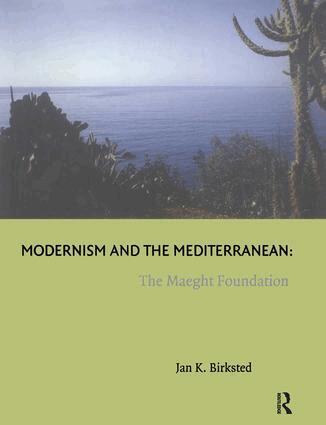
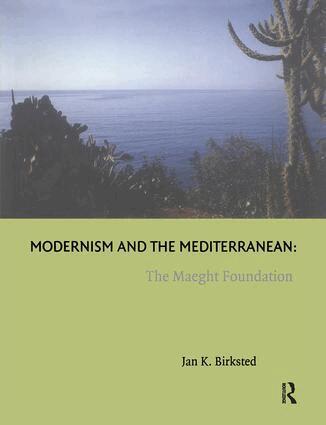
Situated in a Mediterranean landscape, the Maeght Foundation is a unique Modernist museum, product of an extraordinary collaboration between the architect, José Luis Sert, and the artists whose work was to be displayed there. The architecture, garden design and art offer a rare opportunity to see work in settings conceived in active collaboration with the artists themselves. By focusing on the relationship between this art foundation and its Arcadian setting, including Joan Miró's labyrinth, George Braque's pool, Tal-Coat's mosaic wall and Giacometti's terrace, Jan K. Birksted demonstrates how the building articulates many of the ideas that preoccupied this group of artists during the culminating years of their lives. The study pays special attention to the ways in which architecture can shape the experience of time, and addresses the Modernist desire for wilderness and its problematic roots in the classical Mediterranean ideal. In showing how the design of the Maeght Foundation is a Modernist representation of Mediterranean culture, the author has developed an interpretation of architecture that accommodates not only the architect's handling of material or function, but shows as well how it can be the embodiment of a particular vision of space and time.
2 386 kr
Skickas inom 10-15 vardagar
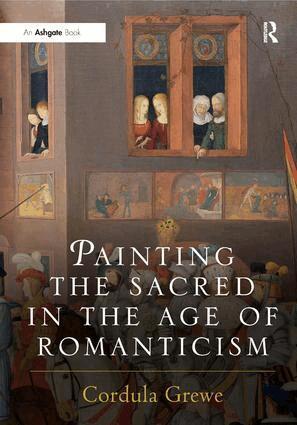
After a century of Rationalist scepticism and political upheaval, the nineteenth century awakened to a fierce battle between the forces of secularization and the crusaders of a Christian revival. From this battlefield arose an art movement that would become the torchbearer of a new religious art: Nazarenism. From its inception in the Lukasbund of 1809, this art was controversial. It nonetheless succeeded in becoming a lingua franca in religious circles throughout Europe, America, and the world at large. This is the first major study of the evolution, structure, and conceptual complexity of this archetypically nineteenth-century language of belief. The Nazarene quest for a modern religious idiom evolved around a return to pre-modern forms of biblical exegesis and the adaptation of traditional systems of iconography. Reflecting the era's historicist sensibility as much as the general revival of orthodoxy in the various Christian denominations, the Nazarenes responded with great acumen to pressing contemporary concerns. Consequently, the artists did not simply revive Christian iconography, but rather reconceptualized what it could do and say. This creativity and flexibility enabled them to intervene forcefully in key debates of post-revolutionary European society: the function of eroticism in a Christian life, the role of women and the social question, devotional practice and the nature of the Church, childhood education and bible study, and the burning issue of anti-Judaism and modern anti-Semitism. What makes Nazarene art essentially Romantic is the meditation on the conditions of art-making inscribed into their appropriation and reinvention of artistic tradition. Far from being a reactionary move, this self-reflexivity expresses the modernity of Nazarene art. This study explores Nazarenism in a series of detailed excavations of central works in the Nazarene corpus produced between 1808 and the 1860s. The result is a book about the possibility of religious meaning in modern art. It will reinvigorate scholarship in the fields of nineteenth-century art, romanticism, and religion and the arts, and restore the Nazarene artists to their rightful place at the forefront of romantic art history.
2 246 kr
Skickas inom 10-15 vardagar
One of the most significant developments in the study of works of art over the past generation has been a shift in focus from the works themselves to the viewer's experience of them and the relation of that experience both to the works in question and to other aspects of cultural life. The ten essays written for this volume address the experience of art in early modern Europe and approach it from a variety of methodological perspectives: concerns range from the relation between its perceptual and significative dimensions to the ways in which its discursive formation anticipates but does not exactly correspond to later notions of 'aesthetic' experience. The modes of engagement vary from careful empirical studies that explore the complex complementary relationship between works of art and textual evidence of different kinds to ambitious efforts to mobilize the powerful interpretative tools of psychoanalysis and phenomenology. This diversity testifies to the vitality of current interest in the experience of beholding and the urgency of the challenge it poses to contemporary art-historical practice.
Look of Van Dyck
The Self-Portrait with a Sunflower and the Vision of the Painter
Inbunden, Engelska, 2006
2 246 kr
Skickas inom 10-15 vardagar
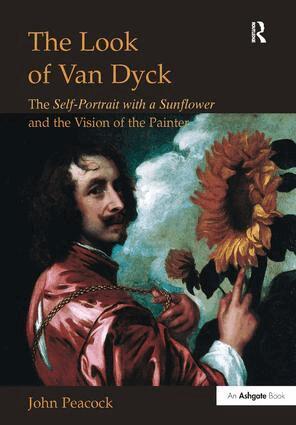
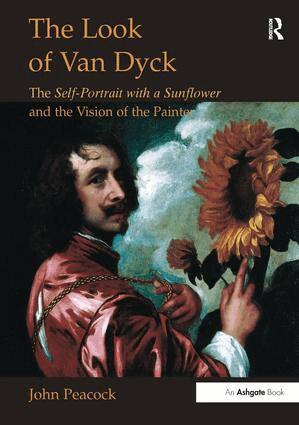
Based on a close study of Van Dyck's Self-portrait with a Sunflower, this book examines the picture's context in the symbolic discourses of the period and in the artist's oeuvre. The portrait is interpreted as a programmatic statement, made in the ambience of the Caroline court after Van Dyck's appointment as 'Principal Painter', of his view of the art of painting. This statement, formulated in appropriately visual terms, characterizes painting as a way of looking and seeing, a mode of vision. In making such a claim, the artist steps aside from the familiar debate about whether painting was a manual or an intellectual discipline, and moves beyond any idea of it as simply a means of representing the external world: the painter's definitive faculty of vision can reach further than those realities which present themselves to the eye. John Peacock analyses the motif of looking - the ways in which figures regard or disregard each other - throughout Van Dyck's work, and the images of the sunflower and the gold chain in this particular portrait, to reveal what is essentially an idealist conception of pictorial art. He contradicts previous opinions that the artist was pedestrian in his thinking, by showing him to be familiar with a range of ideas current in contemporary Europe about painting and the role of the painter.
Signorelli and Fra Angelico at Orvieto
Liturgy, Poetry and a Vision of the End Time
Inbunden, Engelska, 2003
539 kr
Skickas inom 10-15 vardagar
Built in 1290, the cathedral at Orvieto, Italy, is a masterpiece of Italian gothic architecture. The decoration of the Cappella Nuova, commenced by Fra Angelico in 1447 and magnificently completed by Luca Signorelli in 1499 and 1504, displays an awe-inspiring Last Judgement and Apocalypse and, below it, scenes from Dante and classical literature. Drawing on years of detailed research into the history of the chapel, Sara Nair James identifies Signorelli's theological advisors as a group of Dominican scholars, known as the 'Masters of the Sacred Page of this city'. She presents the decoration as an integrated whole, a program complex in iconography, message, source material and theory and, through a detailed response to Dante's Divine Comedy and a moralized reading of classical legends, explains how the events of the end-time join the literary narratives to form a sermon on salvation through penance. The book is not simply a work of traditional iconography, explaining the stories behind the pictures. It is an important study in the theory and techniques of the visual representation of religious belief and its reception by the laity. The detailed illustration includes many photographs taken after the restoration of the chapel in 1996.
2 246 kr
Skickas inom 10-15 vardagar
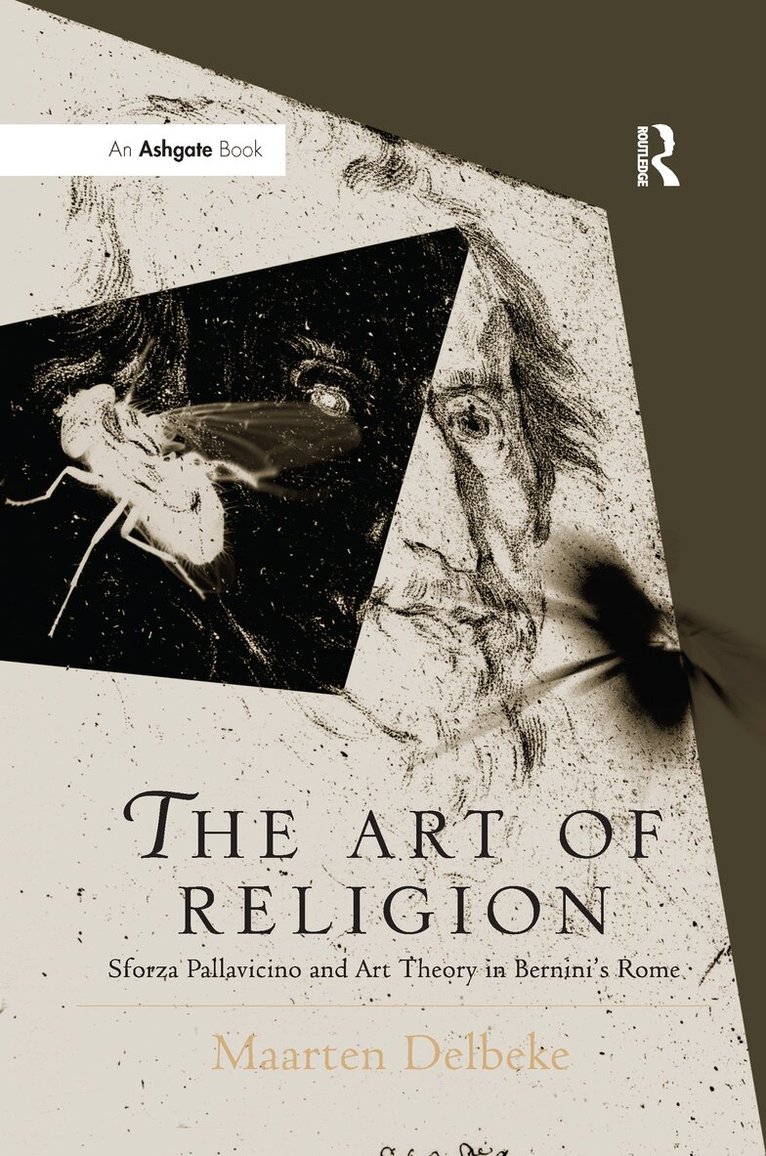
Bernini and Pallavicino, the artist and the Jesuit cardinal, are closely related figures at the papal courts of Urban VIII and Alexander VII, at which Bernini was the principal artist. The analysis of Pallavicino's writings offers a new perspective on Bernini's art and artistry and allow us to understand the visual arts in papal Rome as a 'making manifest' of the fundamental truths of faith. Pallavicino's views on art and its effects differ fundamentally from the perspective developed in Bernini's biographies offering a perspective on the tension between artist and patron, work and message. In Pallavicino's writings the visual arts emerge as being intrinsically bound up with the very core of religion involving questions of idolatry, mimesis and illusionism that would prove central to the aesthetic debates of the eighteenth century.
2 386 kr
Skickas inom 10-15 vardagar
In about 25 BC tribesmen of the kingdom of Meroe placed a bronze head of Augustus, cut from a full-length statue, beneath the steps of a temple of victory: the decapitated head of the Emperor was thus regularly trampled underfoot. Two millennia later, during the second Gulf War, Iraqis 'insulted' a toppled bronze statue of Saddam Hussein by beating it with their shoes. Do these chronologically distant but apparently related examples of the defamation of images imply that the persons represented were regarded by their detractors as in some way 'present' in the images? Presence: The Inherence of the Prototype within Images and Other Objects reconsiders the notion of 'presence' in objects. The first book to address the issue directly, it contains a series of case studies covering a broad geographical and chronological range from ancient Greece and the Incas to industrial America and contemporary India, as well as examples from the canon of western European art. The studies reveal the widespread evidence for this striking form of response and allow readers to see how 'presence' is evoked and either embraced or repressed in differing historical and cultural contexts. Featuring a variety of disciplines and approaches, the book will be of interest to students of art history, art theory, visual culture, anthropology, psychology and philosophy.
At the Edges of Vision
A Phenomenological Aesthetics of Contemporary Spectatorship
Inbunden, Engelska, 2008
2 246 kr
Skickas inom 10-15 vardagar
In At the Edges of Vision, Renée van de Vall re-examines the aesthetics of spectatorship in terms of new-media art and visual culture. The aesthetic experience of visual art has traditionally been described in terms of the distanced contemplation and critical interpretation of the work's form and representational content. Recent developments in installation, video and computer art have foregrounded the bodily and affective engagement of the spectator and, in retrospect, throw into question the model of spectatorial distance for more traditional art forms as well. But what does this development entail for art's potential for reflective, imaginative and experiential depth? Is art still capable of providing a critical counterpoint to the ubiquitous presence of sensational, yet short-lived media imagery when it speaks to the senses rather than to the mind? In a thorough examination of examples from painting, film, installation art and interactive video, and computer art, Van de Vall argues for a tactile and affective conception of reflection, linking philosophy and art. Looking at a Rembrandt self-portrait and navigating through an internet art work have in common that both types of work rely on a playful, rhythmically structured, sensuous and embodied reflexivity for the articulation of meaning. This sensuous dimension of playful reflexivity is just as important in philosophical thought, however, as the transcendental condition for genuine, open-ended reflection. Drawing on the philosophy of Merleau-Ponty, Levinas, Lyotard and Deleuze on the one hand and on new-media theory on the other, Van de Vall develops a performative phenomenology of aesthetic reflection, visuality and visual art, in order to rethink art's ethical and political relevance in present-day digital-media culture.
Look of Van Dyck
The Self-Portrait with a Sunflower and the Vision of the Painter
Häftad, Engelska, 2016
805 kr
Skickas inom 10-15 vardagar
Based on a close study of Van Dyck's Self-portrait with a Sunflower, this book examines the picture's context in the symbolic discourses of the period and in the artist's oeuvre. The portrait is interpreted as a programmatic statement, made in the ambience of the Caroline court after Van Dyck's appointment as 'Principal Painter', of his view of the art of painting. This statement, formulated in appropriately visual terms, characterizes painting as a way of looking and seeing, a mode of vision. In making such a claim, the artist steps aside from the familiar debate about whether painting was a manual or an intellectual discipline, and moves beyond any idea of it as simply a means of representing the external world: the painter's definitive faculty of vision can reach further than those realities which present themselves to the eye. John Peacock analyses the motif of looking - the ways in which figures regard or disregard each other - throughout Van Dyck's work, and the images of the sunflower and the gold chain in this particular portrait, to reveal what is essentially an idealist conception of pictorial art. He contradicts previous opinions that the artist was pedestrian in his thinking, by showing him to be familiar with a range of ideas current in contemporary Europe about painting and the role of the painter.
791 kr
Skickas inom 10-15 vardagar
Bernini and Pallavicino, the artist and the Jesuit cardinal, are closely related figures at the papal courts of Urban VIII and Alexander VII, at which Bernini was the principal artist. The analysis of Pallavicino's writings offers a new perspective on Bernini's art and artistry and allow us to understand the visual arts in papal Rome as a 'making manifest' of the fundamental truths of faith. Pallavicino's views on art and its effects differ fundamentally from the perspective developed in Bernini's biographies offering a perspective on the tension between artist and patron, work and message. In Pallavicino's writings the visual arts emerge as being intrinsically bound up with the very core of religion involving questions of idolatry, mimesis and illusionism that would prove central to the aesthetic debates of the eighteenth century.
791 kr
Skickas inom 10-15 vardagar
One of the most significant developments in the study of works of art over the past generation has been a shift in focus from the works themselves to the viewer's experience of them and the relation of that experience both to the works in question and to other aspects of cultural life. The ten essays written for this volume address the experience of art in early modern Europe and approach it from a variety of methodological perspectives: concerns range from the relation between its perceptual and significative dimensions to the ways in which its discursive formation anticipates but does not exactly correspond to later notions of 'aesthetic' experience. The modes of engagement vary from careful empirical studies that explore the complex complementary relationship between works of art and textual evidence of different kinds to ambitious efforts to mobilize the powerful interpretative tools of psychoanalysis and phenomenology. This diversity testifies to the vitality of current interest in the experience of beholding and the urgency of the challenge it poses to contemporary art-historical practice.
791 kr
Skickas inom 10-15 vardagar
Situated in a Mediterranean landscape, the Maeght Foundation is a unique Modernist museum, product of an extraordinary collaboration between the architect, José Luis Sert, and the artists whose work was to be displayed there. The architecture, garden design and art offer a rare opportunity to see work in settings conceived in active collaboration with the artists themselves. By focusing on the relationship between this art foundation and its Arcadian setting, including Joan Miró's labyrinth, George Braque's pool, Tal-Coat's mosaic wall and Giacometti's terrace, Jan K. Birksted demonstrates how the building articulates many of the ideas that preoccupied this group of artists during the culminating years of their lives. The study pays special attention to the ways in which architecture can shape the experience of time, and addresses the Modernist desire for wilderness and its problematic roots in the classical Mediterranean ideal. In showing how the design of the Maeght Foundation is a Modernist representation of Mediterranean culture, the author has developed an interpretation of architecture that accommodates not only the architect's handling of material or function, but shows as well how it can be the embodiment of a particular vision of space and time.