History and Philosophy of Science – serie
Visar alla böcker i serien History and Philosophy of Science. Handla med fri frakt och snabb leverans.
9 produkter
9 produkter
Del 1 - History and Philosophy of Science
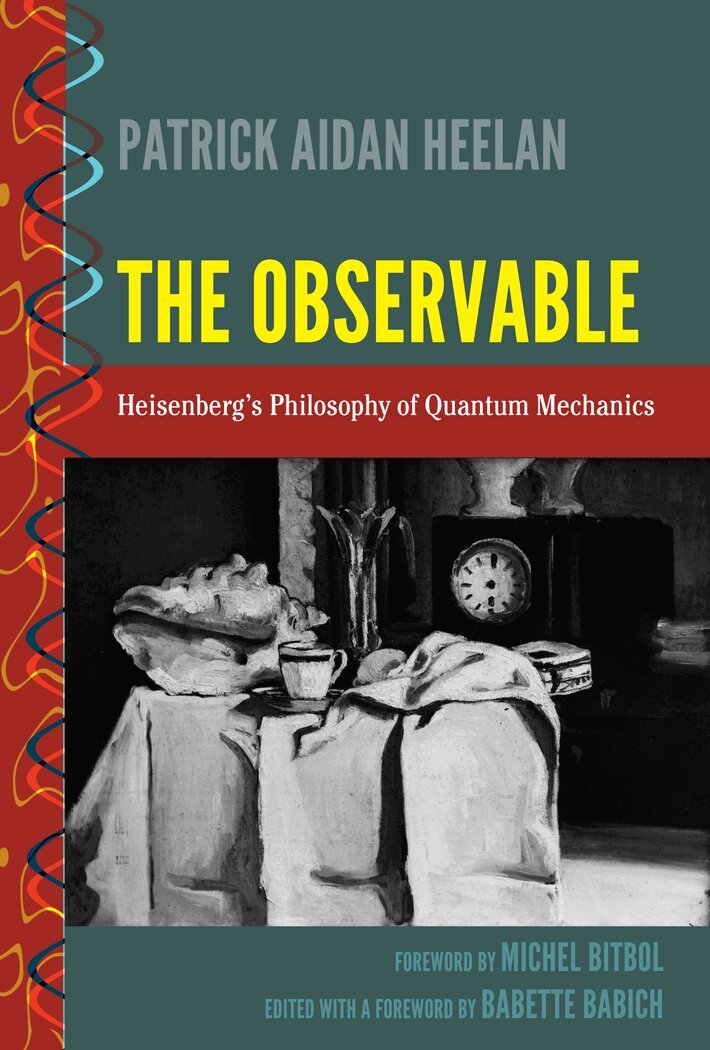
Observable
Heisenberg’s Philosophy of Quantum Mechanics
Inbunden, Engelska, 2015
978 kr
Skickas inom 5-8 vardagar
Patrick Aidan Heelan’s The Observable offers the reader a completely articulated development of his 1965 philosophy of quantum physics, Quantum Mechanics and Objectivity. In this previously unpublished study dating back more than a half a century, Heelan brings his background as both a physicist and a philosopher to his reflections on Werner Heisenberg’s physical philosophy. Including considerably broader connections to the contributions of Niels Bohr, Wolfgang Pauli, and Albert Einstein, this study also reflects Heelan’s experience in Eugene Wigner’s laboratory at Princeton along with his reflections on working with Erwin Schrödinger dating from Heelan’s years at the Institute for Advanced Cosmology in Dublin.A contribution to continental philosophy of science, the phenomenological and hermeneutic resources applied in this book to the physical and ontological paradoxes of quantum physics, especially in connection with laboratory science and measurement, theory and model making, will enrich students of the history of science as well as those interested in different approaches to the historiography of science. University courses in the philosophy of physics will find this book indispensable as a resource and invaluable for courses in the history of science.
Del 2 - History and Philosophy of Science
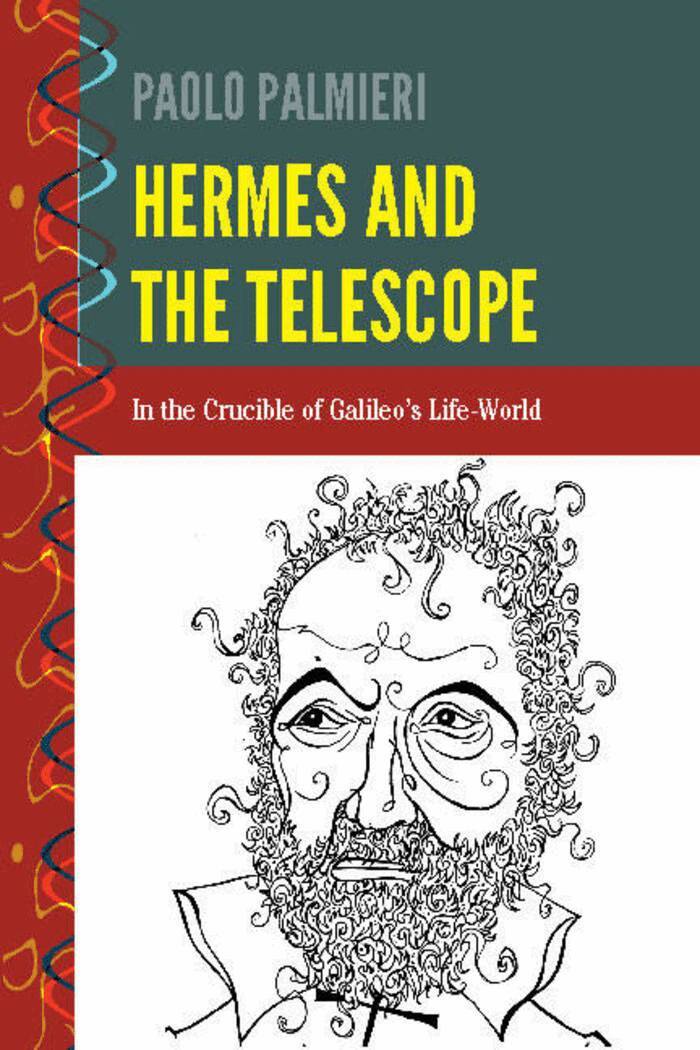
Hermes and the Telescope
In the Crucible of Galileo's Life-World
Inbunden, Engelska, 2016
1 065 kr
Skickas inom 5-8 vardagar
This book explores the life of Galileo Galilei through a philosophical and scientific lens, utilizing an innovative hermeneutic perspective that places his work in the wider context of early modern hermeticism, religious heresy, and libertinism. As the first comprehensive study of Galileo’s life and work from a phenomenological and existentialist viewpoint, Paolo Palmieri calls into question the positivist myth of Galileo, the founder of modern science, and interrogates the positivist historiography that has shaped the myth since the historic publication of the monumental edition of Galileo’s works at the turn of the twentieth century. The book highlights the entanglement of Galileo’s natural philosophy with his private unorthodox convictions about Christian theology, Biblical hermeneutic, sexuality, and the hidden traditions of Italian heretics and libertines. The text demonstrates the philosophical, pedagogical, and political implications of this new reading of one of the founding fathers of modernity for both the sciences and the humanities. Addressing hotly debated questions of ethnicity, racism, subjectivity, the self, and pedagogy, this study will be of particular interest to scholars who teach both undergraduate and graduate courses in history of science, philosophy of science, phenomenology and existential philosophy, cultural studies, Italian studies, humanism, and the European Renaissance.
1 170 kr
Skickas inom 5-8 vardagar
The Theory of Social Pulsation is a new social theory elaborated from the social phenomenology and philosophy of sciences’ standpoint. It represents an innovative interpretation of social phenomena postulated as active states of social actors including individuals, social groups, and social facts (organizations, institutions, systems). As an active state of social actors, pulsation is defined by eight variables that constitute social phenomena as a whole: (a) intention, (b) reaction, (c) reflection, (d) communication, (e) institutionalization, (f) internalization, (g) structuration, and (h) innovation. Ivo Komsic argues that social states are pulsating and within those states, social causality is transferred from one social actor to another. Social actors continuously transfer social causality from one to another, depending on the intensity of its pulsation. Balanced or unbalanced, functional or dysfunctional, consensual or imposed, a system will be classified in the presence or absence of one of these phenomena, by its greater or lesser intensity. The theory posits a new paradigm that tends to overcome the "eternal" problem in sociology—relations between individuals as social actors and social structure, that is, "social statics" and "social dynamics," the role of the great historical personalities and the "objective law of history," freedom and necessity in social action, micro and macro social levels.The model of social communication analyzed in the book can be used as a general model of social and political communication, particularly in multiethnic and multicultural societies considering the contemporary state of affairs globally.
Del 3 - History and Philosophy of Science
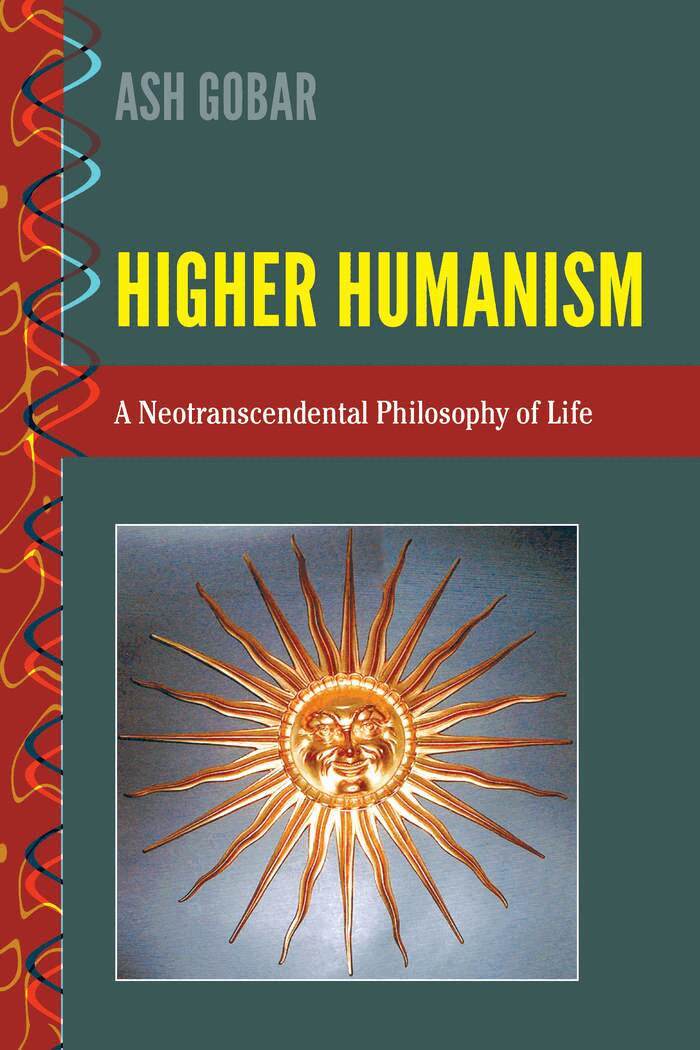
Higher Humanism
A Neotranscendental Philosophy of Life
Inbunden, Engelska, 2017
1 170 kr
Skickas inom 5-8 vardagar
The ideal of higher humanism challenges our modern civilization and its diminished image of the human being. A critique of the ideologies of "bourgeois humanism" provides a pathway toward the renascence of human identity and human dignity. Historical illustrations, drawn from the higher heritage of humanity, revive values long forgotten. Ash Gobar re-argues the great argument for the impact of the "philosophy of life" upon the "quality of life." This is a timely work: the call of a modern philosopher to awaken the conscience of humanity from its existential vertigo.
Del 5 - History and Philosophy of Science
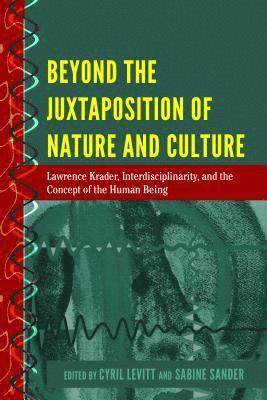
Beyond the Juxtaposition of Nature and Culture
Lawrence Krader, Interdisciplinarity, and the Concept of the Human Being
Inbunden, Engelska, 2018
1 167 kr
Skickas inom 5-8 vardagar
The essays contained in Beyond the Juxtaposition of Nature and Culture represent an attempt by scholars from Canada, Germany, and Mexico to come to grips with the innovative work of the American philosopher and anthropologist Lawrence Krader who has proposed nothing less than a new theory of nature, according to which there are at least three different orders—the material-biotic, the quantum, and the human—which differ from one another according to their different configurations of space-time, and which cannot be reduced the one to the others. Each author takes up Krader’s theory in relation to its impact on their own discipline: sociology, anthropology, the study of myth, the theory of labor and value, economics, linguistics, and aesthetics. The question of how nature and culture can be integrated within a theoretical framework which links them in difference and nexus and allows each their non-reductive space leads each of the contributors to move in their thinking beyond the old dualisms of materialism and idealism, fact and value, nature and culture.
Del 6 - History and Philosophy of Science
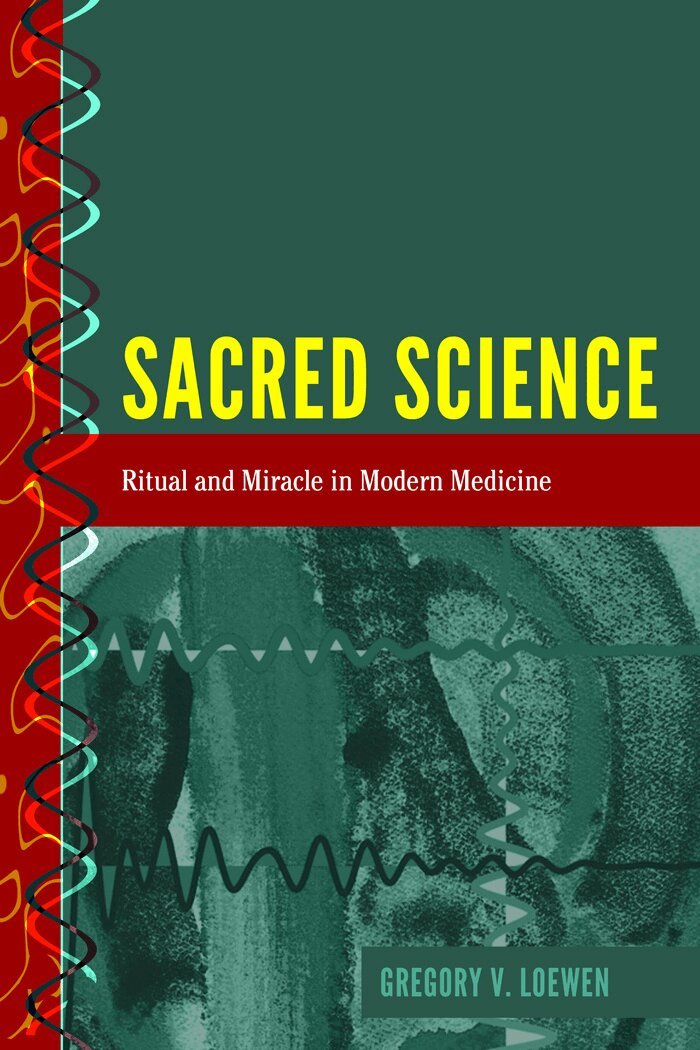
Sacred Science
Ritual and Miracle in Modern Medicine
Inbunden, Engelska, 2017
1 416 kr
Skickas inom 5-8 vardagar
Sacred Science is an analysis of post-war discourses concerning health and illness. These discourses are an attempt to grasp the meaning of health in our modern human condition, and as such they provide both new insights into the genealogy of conceptualizations of both health and illness, but also serve as a viable hermeneutic summary of many important textual moments in the recent history of health studies, including Foucault, Gadamer, Illich, Sontag, and others. This book is the result of a phenomenological disquisition of the ideas employed by health scholars and philosophers, and its import rests both on its uniqueness in the relevant fields and its new ideas, including ‘indefinitude’, ‘deontic facticity’, and illness as the experience of the simultaneous ‘inexistence’ of both life and death.
489 kr
Skickas inom 5-8 vardagar
The Profound Limitations of Knowledge explores the limitations of knowledge and argues that neither reasoning nor direct or indirect observations can be trusted. We cannot even assign probabilities to claims of what we can know. Furthermore, for any set of data, there are an infinite number of possible interpretations. Evidence suggests that we live in a participatory universe—that is, our observations shape reality.
Del 8 - History and Philosophy of Science
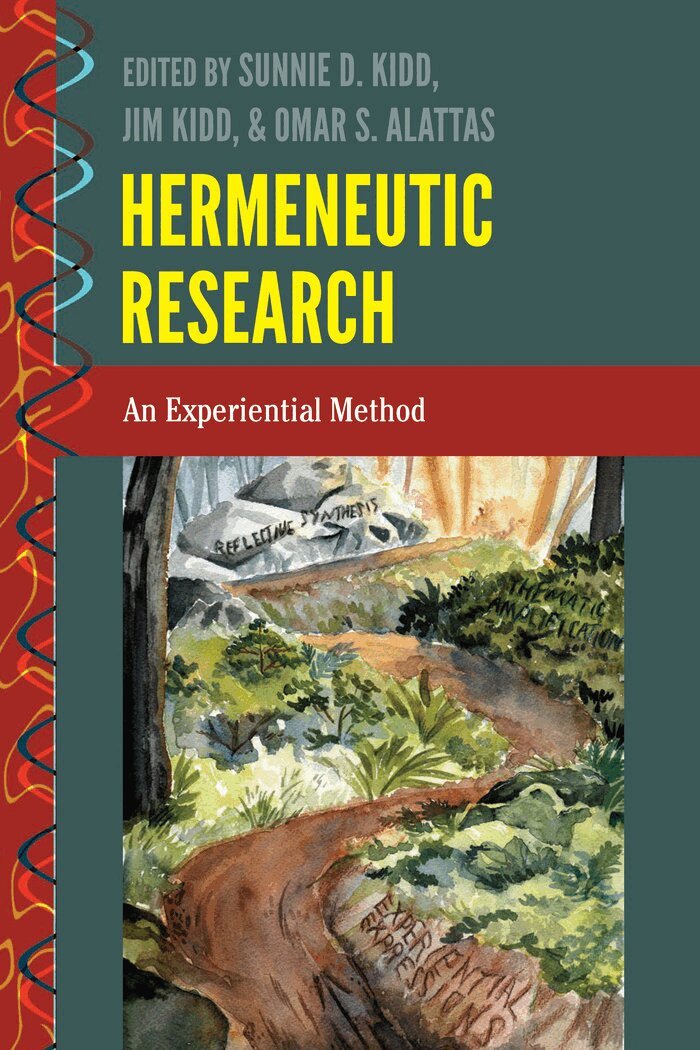
Hermeneutic Research
An Experiential Method
Inbunden, Engelska, 2019
1 065 kr
Skickas inom 5-8 vardagar
Hermeneutic Research: An Experiential Method presents a method to investigate lived experiences. In doing so, this book integrates a broad range of philosophical topics, such as hermeneutics, the philosophy of consciousness, and the philosophy of being. We are conscious beings. Through every act of consciousness, something is presented to the experiencing person. Something—a theme—stands in the focus of attention. Within the dimensional human consciousness, this theme is related to other thoughts, a process that includes certain aspects of the theme and excludes others from conscious experience. The foundational conviction of the experiential method detailed in this book is that thought is not static in its ultimate nature but organically dynamic. Thought uncovers its internal endlessness through time as its medium, just as the small seed uncovers the unity of a tree through soil as its medium. Thought, as a dynamic self-revealing phenomenon, uncovers itself as a series of understandings that cannot be interpreted except through reciprocal reference. Meaningfulness, therefore, is not contained in self-identity but in the larger whole in which it is a specific part. Wholeness contains possibilities of knowledge as present realities revealing themselves, through human choices and experiences, in temporal progression to reach a unity that is already contained in them. This infinite movement of knowledge thus reveals the possibility intrinsic to finite thought. Intuition, as wholistic apprehension, is movement that could acknowledge and reach an immanent infinite, of which the finite concepts of comprehension and cognition are only momentums.
1 303 kr
Skickas inom 5-8 vardagar
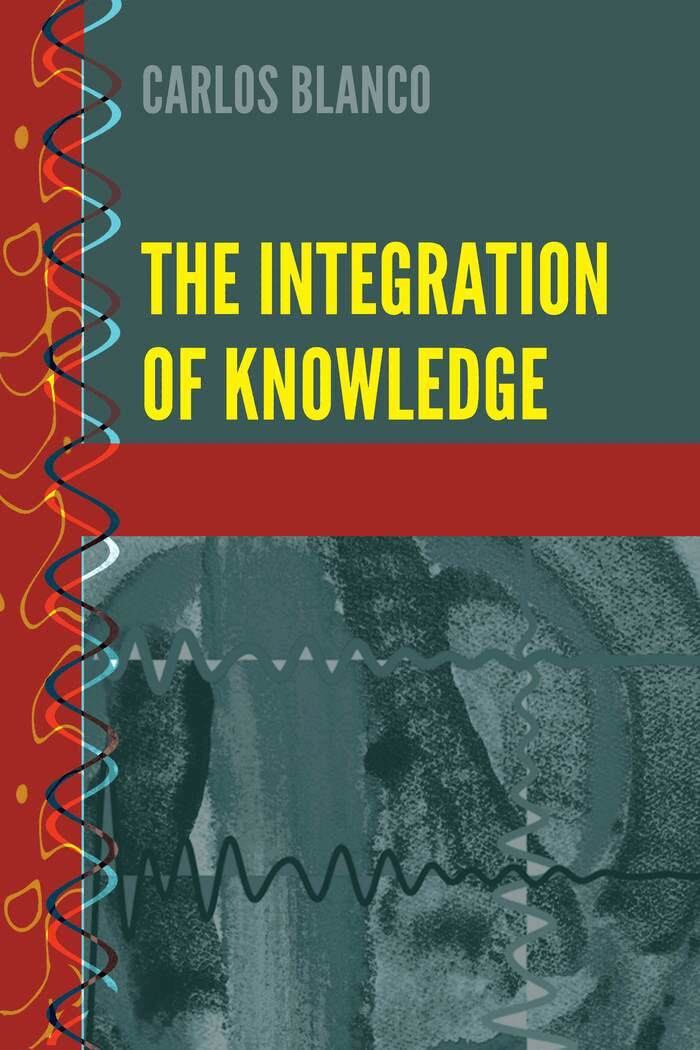
The Integration of Knowledge explores a theory of human knowledge through a model of rationality combined with some fundamental logical, mathematical, physical and neuroscientific considerations. Its ultimate goal is to present a philosophical system of integrated knowledge, in which the different domains of human understanding are unified by common conceptual structures, such that traditional metaphysical and epistemological questions may be addressed in light of these categories. Philosophy thus becomes a "synthesizer" of human knowledge, through the imaginative construction of categories and questions that may reproduce and even expand the conceptual chain followed by nature and thought, in an effort to organize the results of the different branches of knowledge by inserting them in a broader framework.