Inflammation and Drug Therapy Series - Böcker
Visar alla böcker i serien Inflammation and Drug Therapy Series. Handla med fri frakt och snabb leverans.
6 produkter
6 produkter
1 094 kr
Skickas inom 10-15 vardagar
The role of trace metals, especially copper and zinc, in the pathogenesis of rheumatic conditions has continued to receive much interest following the initial upsurge of research activity in the 1970s. Meantime also copper and zinc complexes receive continued attention for their potential anti-inflam matory actions. Since the previous major titles were published in this field some years ago (e. g. 1,2) it was considered timely to consider progress which has been made in the interceding period. Thus in this volume aspects are re viewed of the metabolism and biodisposition of copper and zinc, especially as they may be influenced by inflammatory processes, the mode of action of copper and zinc compounds in inflammatory states, and the actions of some newer copper complexes. While we still understand relatively little about how copper and zinc complexes work in inflammation, and indeed what the fate of the ligands and their complexed ions is in inflammation, it is hoped that this volume will be useful for giving a current view of the "state of art" in the field. Special thanks are given to the valued efforts of the contributors, Dr Peter Clarke (Publishing Director, Kluwer Academic Publishers) and Mrs Veronica Rainsford-Koechli for her help in proof-reading the manuscripts. K D Rainsford Hamilton, Ontario, Canada February 1989 References 1. Rainsford, K. D. , Brune, K. and Whitehouse, M. W. (eds) (1981). Elements in the pathogenesis a treatment of inflammation.
Del 5 - Inflammation and Drug Therapy Series
Side-Effects of Anti-Inflammatory Drugs 3
Häftad, Engelska, 2012
550 kr
Skickas inom 10-15 vardagar
The contents of this book represent papers which were presented at the Third International Meeting on "Side-Effects of Anti-Inflammatory and Analgesic Drugs" which was held under the auspices of the University of Verona, Institute of Pharmacology in Verona on 8-11 May 1991. This meeting was held in conjunction with the 13th European Workshop on Inflammation and although publications from this part of the meeting are not published here (they appear in Agents and Actions), we were fortunate in having a group of people interested in inflammation from varying backgrounds. The success of the third meeting followed previous meetings held in Cambridge and Verona respectively and continue a tradition which has now become well established. The meeting brought together physicians, scientists and those concerned with the production and use of anti-inflammatory drugs to a very stimulating conference to discuss basic issues affecting all aspects of side-effects of anti-inflammatory and analgesic drugs as well as their detection and treatment. The meeting was held in the Auditorium of Glaxo Italy and we are very grateful to that company for use of their facilities as well as to the University of Verona, Institute of Pharmacology, for valuable secretarial and administrative help. The success of the conference would not have been possible without valuable financial assistance of the companies listed separately (under Acknowledgements) as well as to the organizers of the 13th European Workshop on Inflammation who collaborated with us.
Del 3 - Inflammation and Drug Therapy Series
New Developments in Antirheumatic Therapy
Häftad, Engelska, 2011
550 kr
Skickas inom 10-15 vardagar
At present we may be at the cross-roads in the therapeutic approaches we have for the treatment of the 100 or more rheumatic conditions. This is be cause we now recognise that although some advances have been made with the development of a large range of non-steroidal and steroidal drugs during the past two decades or so, we now recognise that many, if not all, of these have rather limited effects on many of the disease processes which underlie the manifestations of the various rheumatic states. Advances in molecular bi- 010gy in the past 5-10 years have enabled these tools to be applied extensive ly for developing further our understanding of the rheumatic disease processes. In some cases these molecular tools (e. g. ,),-interferon, interleukin- 2, T-cell antibodies) have been directly employed as therapies themselves. While the outcome from trials with such agents in rheumatoid arthritis in particular has not been as would have been hoped, these results as with cy closporin A and low-dose methotrexate in the therapy of rheumatoid arth ritis have given us important indications for the approach employing what are generally described as "immunomodulators" to control this disease. But this may not be the same type of approach which is desirable for all types of rheumatic conditions. Indeed, even the way which the present range of drugs and other therapies are applied may not be the most effective and safe means of treating different types of arthritic conditions.
1 094 kr
Skickas inom 10-15 vardagar
The role of trace metals, especially copper and zinc, in the pathogenesis of rheumatic conditions has continued to receive much interest following the initial upsurge of research activity in the 1970s. Meantime also copper and zinc complexes receive continued attention for their potential anti-inflam matory actions. Since the previous major titles were published in this field some years ago (e. g. 1,2) it was considered timely to consider progress which has been made in the interceding period. Thus in this volume aspects are re viewed of the metabolism and biodisposition of copper and zinc, especially as they may be influenced by inflammatory processes, the mode of action of copper and zinc compounds in inflammatory states, and the actions of some newer copper complexes. While we still understand relatively little about how copper and zinc complexes work in inflammation, and indeed what the fate of the ligands and their complexed ions is in inflammation, it is hoped that this volume will be useful for giving a current view of the "state of art" in the field. Special thanks are given to the valued efforts of the contributors, Dr Peter Clarke (Publishing Director, Kluwer Academic Publishers) and Mrs Veronica Rainsford-Koechli for her help in proof-reading the manuscripts. K D Rainsford Hamilton, Ontario, Canada February 1989 References 1. Rainsford, K. D. , Brune, K. and Whitehouse, M. W. (eds) (1981). Elements in the pathogenesis a treatment of inflammation.
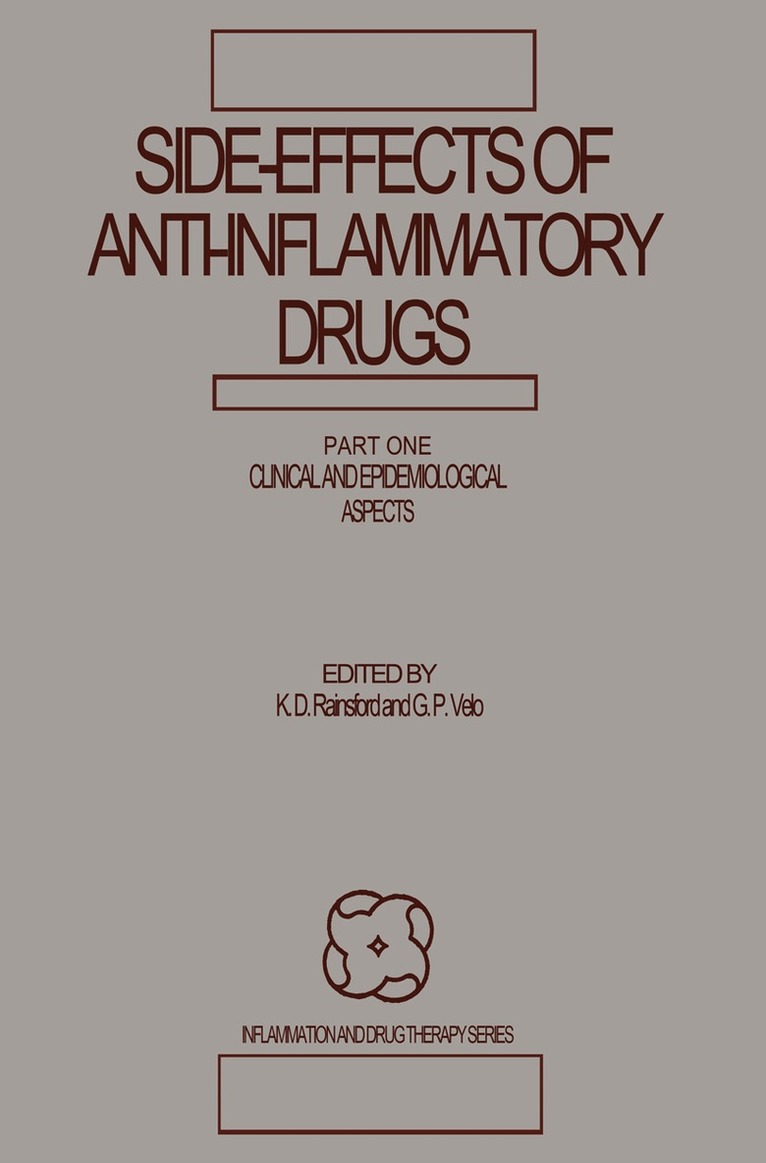
Del 1 - Inflammation and Drug Therapy Series
Side-Effects of Anti-Inflammatory Drugs
Part One Clinical and Epidemiological Aspects
Häftad, Engelska, 2012
550 kr
Skickas inom 10-15 vardagar
These two volumes contain the proceedings of a 3 day international meeting held at the University of Cambidge and Queens' College Cambridge from 31st July to 2nd August 1985 on the Side-Effects of Anti-Inflammatory Analgesic Drugs. The first meeting was held in Verona, (Italy) in 1982 and the organisers felt that, with a number of recent developments including the withdrawal of a num ber of new anti-inflammatory drugs, and concern being expressed in the lay and specialist medical press and other media about the safety of these drugs, that it was appropriate to have a second such meeting. The meeting was attended by some 300 delegates and the dis cussion focussed most intently on the recent issues, e. g. the value of adverse drug reaction reporting of the non-steroidal anti inflammatory (NSAI) drugs, certain side-effects associated with particular NSAI drugs, the predictive value of animal models etc. Organising a meeting de novo without outside help would not have been possible without the immensely valuable help given en thusiastically by people and financial assistance given most generously by those pharmaceutical companies listed below. These financial contributions were given despite current economic dif ficulties and moves to restrict the proportion of profits towards educational activities.
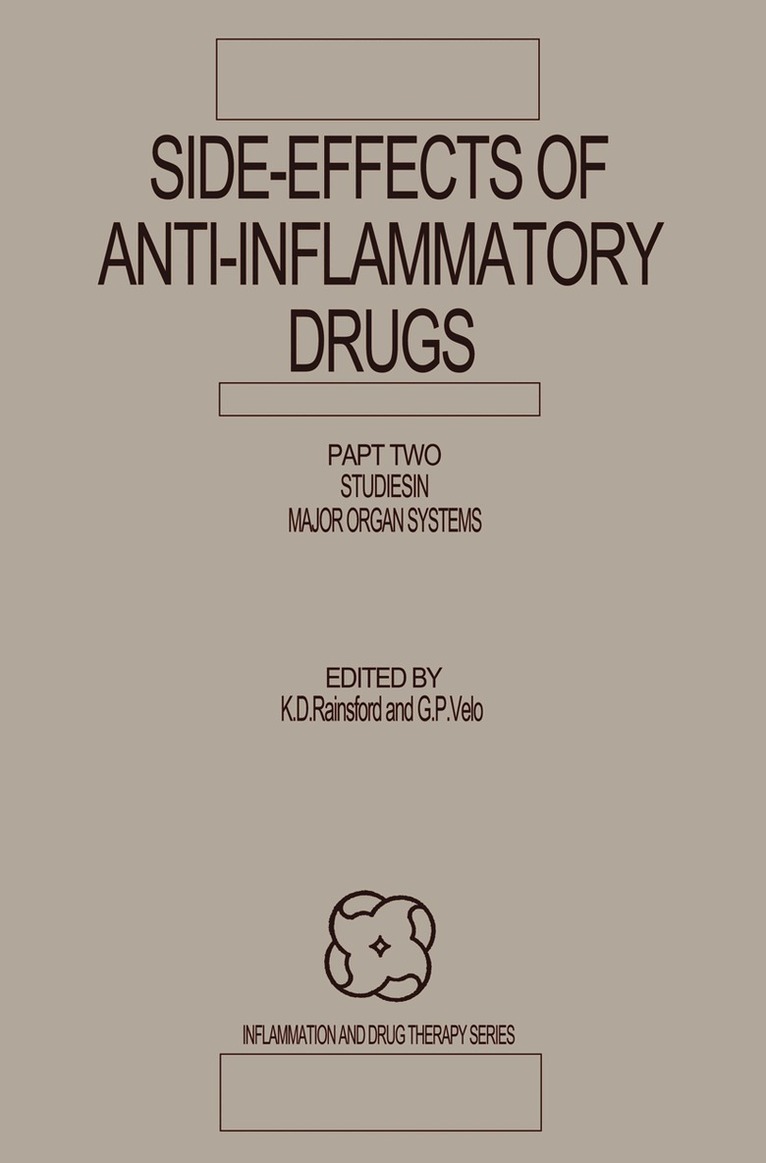
Side-Effects of Anti-Inflammatory Drugs
Part Two Studies in Major Organ Systems
Häftad, Engelska, 2012
1 094 kr
Skickas inom 10-15 vardagar
These two volumes contain the proceedings of a 3 day international meeting held at the University of Cambidge and Queens' College Cambridge from 31st July to 2nd August 1985 on the Side-Effects of Anti-Inflammatory Analgesic Drugs. The first meeting was held in Verona, (Italy) in 1982 and the organisers feIt that, with a number of recent developments including the. withdrawal of a num- ber of new anti-inflammatory drugs, and concern being expressed in the lay and specialist medical press and other media about the safety of these drugs, that it was appl'Qpriate to have a second such meeting. The meeting was attended by some 300 delegates and the dis- cussion focussed most intently on the recent issues, . e. g. the value of adverse drug reaction reporting of the non-. steroidal anti- inflammatory (NSAI) drugs, certain side-effects associated with particular NSAI drugs, the predictive value of animal models etc. Organising a meeting de novo without outside help would not have been possible without the immensely valuable help given en- thusiastica1ly by people and financial assistance given most generously by those pharmaceutical companies listed below.These financial contributions were given despite current economic dif- ficulties and moves to restrict the proportion of profits towards educational actlvities.