Intersections: Asian and Pacific American Transcultural Studies – serie
Visar alla böcker i serien Intersections: Asian and Pacific American Transcultural Studies. Handla med fri frakt och snabb leverans.
18 produkter
18 produkter
Häftad, Engelska, 2003
223 kr
Skickas inom 10-15 vardagar
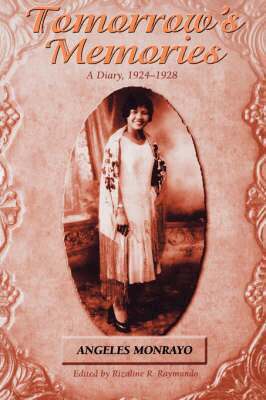
Angeles Monrayo (1912-2000) began her diary on January 10, 1924, a few months before she and her father and older brother moved from a sugar plantation in Waipahu to Pablo Manlapit's strike camp in Honolulu. Here for the first time is a young Filipino girl's view of life in Hawai'i and central California in the first decades of the twentieth century - a significant and often turbulent period for immigrant and migrant labor in both settings. Angeles' vivid, simple language takes us into the heart of an early Filipino family as its members come to terms with poverty and racism and struggle to build new lives in a new world. But even as Angeles recounts the hardships of immigrant life, her diary of ""everyday things"" never lets us forget that she and the people around her went to school and church, enjoyed music and dancing, told jokes, went to the movies, and fell in love. Essays by Jonathan Okamura and Dawn Mabalon enlarge on Angeles' account of early working-class Filipinos and situate her experience in the larger history of Filipino migration to the United States.
Häftad, Engelska, 2004
182 kr
Skickas inom 10-15 vardagar
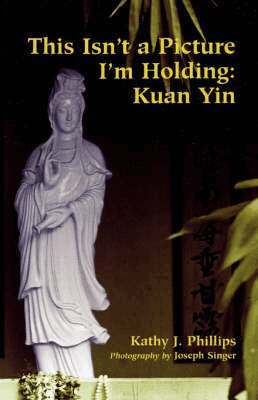
The bodhisattva Kuan Yin remains one of the most popular figures in Buddhism, loved and worshiped throughout Asia for over a millennium. She arrived in Hawai'i with the first Chinese plantation workers, each of whom would have kept a ricepaper print of her over a small altar in his room. In this delightful book, Kathy Phillips and Joseph Singer celebrate Kuan Yin's many incarnations in words and images that exhibit humor, poignancy, and the open-endedness of a koan. An introduction examines Kuan Yin and her place in religion, legend, art, changing social prescriptions for gender, and the everyday lives of Hawai'i's people.
Häftad, Engelska, 2005
288 kr
Skickas inom 10-15 vardagar
November 20, 1968 Now I'll have more time. I'm finally out of the shit. The docs say I got hit a week ago, but I don't remember...I woke up in a hospital bed. A nice young doc said, ""You're lucky, Corporal Divina, you're going home. Nasty, yeah, some muscle damage, but no vital organs. A frag just missed your heart..."" Doc was wrong. I don't have a heart, not now, anyway. ""The others?"" I asked. He was a nice doc and he looked at me, like maybe that's something I shouldn't have said. ""You're lucky,"" he said and turned away. After being wounded in Vietnam, nineteen-year-old Rico Divina is sent home to a string of low-paying jobs and shabby apartments while trying to cope with the demons inside him. As an ""Indipino"" (half Yakima, half Filipino), Rico has come up against obstacles all his life - those of race, culture, nationality, and now the experience of war - that have left him without hope. In time he embarks on a course that is self-destructive and increasingly violent. People and situations present themselves, offering him the chance to turn his life around, but Rico, whether from lack of faith or pride, rejects them. The only thing that sustains him is writing his own story with a happy ending - something he has long suspected he will never have.
Inbunden, Engelska, 2010
639 kr
Skickas inom 10-15 vardagar
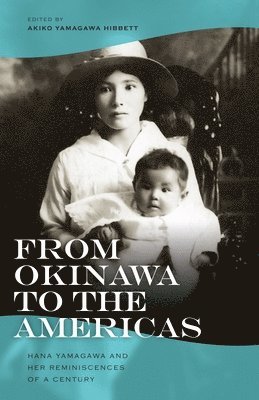
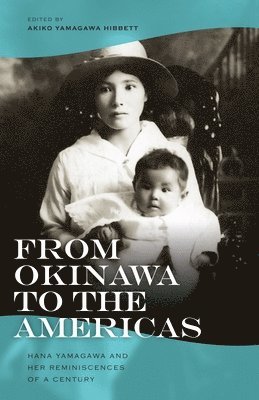
Between 1889 and 1940 more than 40,000 Okinawan contract laborers emigrated to plantations in Hawaii, Brazil, the Philippines, and Peru. In 1912 seventeen-year-old Hana Kaneshi accompanied her husband and brother to South America and dreamed of returning home in two years’ time a wealthy young woman. Edited by her daughter Akiko, Hana’s richly detailed memoir is a rare, first-hand account of the life of a female Okinawan immigrant in the New World. It spans nearly a century, from Hana’s early life in a small village not long after the Ryukyu Kingdom’s annexation to Japan; to a sugar plantation in Peru and its capital, Lima; to her dangerous trek through Mexico and the California desert to enter the U.S. and start a new life, this time in the Imperial Valley and finally Los Angeles. Hana’s story comes full circle when she returns briefly, after forty-seven years, to Okinawa during the postwar American Occupation.From Okinawa to the Americas will appeal to not only students of Asian American and disapora studies, but also those seeking to understand the complexity of Okinawan culture and the networks of family relationships in Okinawa and in its overseas immigrant communities.
Inbunden, Engelska, 2015
539 kr
Skickas inom 5-8 vardagar
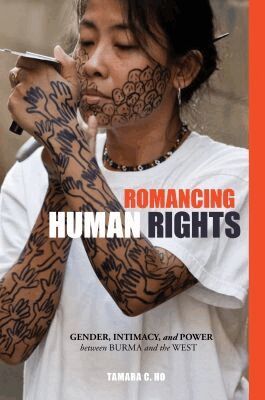
When the world thinks of Burma, it is often in relation to Nobel laureate and icon Aung San Suu Kyi. But beyond her is another world, one that complicates the overdetermination of Burma as a pariah state and myths about the “high status” of Southeast Asian women. Highlighting and critiquing this fraught terrain, Tamara C. Ho’s Romancing Human Rights maps “Burmese women” as real and imagined figures across the twentieth century and into the twenty-first century. More than a recitation of “on the ground” facts, Ho’s groundbreaking scholarship—the first monograph to examine Anglophone literature and dynamics of gender and race in relation to Burma—brings a critical lens to contemporary literature, fi lm, and politics through the use of an innovative feminist/queer methodology. She crosses intellectual boundaries to illustrate how literary and gender analysis can contribute to discourses surrounding and informing human rights—and in the process off ers a new voice in the debates about representation, racialization, migration, and spirituality.Romancing Human Rights demonstrates how Burmese women break out of prisons, both real and discursive, by writing themselves into being. Ho assembles an eclectic archive that includes George Orwell, Aung San Suu Kyi, critically acclaimed authors Ma Ma Lay and Wendy Law-Yone, and activist Zoya Phan. Her close readings of literature and politicized performances by women in Burma, the Burmese diaspora, and the United States illuminate their contributions as authors, cultural mediators, and practitioner-citizens. Using flexible, polyglot rhetorical tactics and embodied performances, these authors creatively articulate alter/native epistemologies—regionally situated knowledges and decolonizing viewpoints that interrogate and destabilize competing transnational hegemonies, such as U.S. moral imperialism and Asian militarized dictatorship.Weaving together the fi ctional and non-fi ctional, Ho’s gendered analysis makesRomancing Human Rights a unique cultural studies project that bridges postcolonial studies, area studies, and critical race/ethnic studies—a must-read for thosewith an interest in fi elds of literature, Asian and Asian American studies, history, politics, religion, and women’s and gender studies.
Inbunden, Engelska, 2015
630 kr
Skickas inom 10-15 vardagar
Together, the five stories and novella in this collection follow the lives of first- and second-generation Indian Americans living in contemporary California. The characters share a similar sensibility: a sense that immigration is a distant memory, yet an experience that continues to shape the decisions they make in subtle and surprising ways as they go about the complicated business of everyday living. The collection is anchored by the title novella about a love triangle between an aging, blind writer, his younger beautiful wife, and a young man desperate to start a writing life. Over several months, the three will get to know one another and move toward a moment that will change the lives of each of them forever.
Inbunden, Engelska, 2014
616 kr
Skickas inom 10-15 vardagar
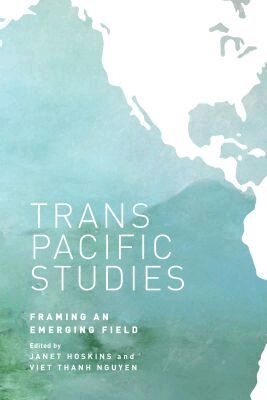
The Pacific has long been a space of conquest, exploration, fantasy, and resistance. Pacific Islanders had established civilisations and cultures of travel well before European explorers arrived, initiating centuries of upheaval and transformation. The twentieth century, with its various wars fought in and over the Pacific, is only the most recent era to witness military strife and economic competition. While “Asia Pacific” and “Pacific Rim” were late twentieth-century terms that dealt with the importance of the Pacific to the economic, political, and cultural arrangements that span Asia and the Americas, a new term has arisen—the transpacific. In the twenty-first century, U.S. efforts to dominate the ocean are symbolized not only in the “Pacific pivot” of American policy but also the development of a Transpacific Partnership. This partnership brings together a dozen countries—not including China—in a trade pact whose aim is to cement U.S. influence. That pact signals how the transpacific, up to now an academic term, has reached mass consciousness.Recognising the increasing importance of the transpacific as a word and concept, this anthology proposes a framework for transpacific studies that examines the flows of culture, capital, ideas, and labour across the Pacific. These flows involve Asia, the Americas, and the Pacific Islands. The introduction to the anthology by its editors, Janet Hoskins and Viet Thanh Nguyen, consider the advantages and limitations of models found in Asian studies, American studies, and Asian American studies for dealing with these flows. The editors argue that transpacific studies can draw from all three in order to provide a critical model for considering the geopolitical struggle over the Pacific, with its attendant possibilities for inequality and exploitation. Transpacific studies also sheds light on the cultural and political movements, artistic works, and ideas that have arisen to contest state, corporate, and military ambitions. In sum, the transpacific as a concept illuminates how flows across the Pacific can be harnessed for purposes of both domination and resistance.The anthology’s contributors include geographers (Brenda S. A. Yeoh, Weiqiang Lin), sociologists (Yen Le Espiritu, Hung Cam Thai), literary critics (John Carlos Rowe, J. Francisco Benitez, Yunte Huang, Viet Thanh Nguyen), and anthropologists (Xiang Biao, Heonik Kwon, Nancy Lutkehaus, Janet Hoskins), as well as a historian (Laurie J. Sears), and a film scholar (Akira Lippit). Together these contributors demonstrate how a transpacific model can be deployed across multiple disciplines and from varied locations, with scholars working from the United States, Singapore, Japan and England. Topics include the Cold War, the Chinese state, U.S. imperialism, diasporic and refugee cultures and economies, national cinemas, transpacific art, and the view of the transpacific from Asia. These varied topics are a result of the anthology’s purpose in bringing scholars into conversation and illuminating how location influences the perception of the transpacific. But regardless of the individual view, what the essays gathered here collectively demonstrate is the energy, excitement, and insight that can be generated from within a transpacific framework.
Inbunden, Engelska, 2014
753 kr
Skickas inom 10-15 vardagar
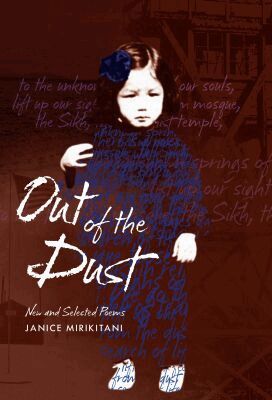
Out of the Dust is a collection of new poems by activist, leader, poet, and editor Janice Mirikitani. After being named San Francisco’s second Poet Laureate in 2000, this fifth book of poems from Mirikitani was written in response to the terrorist attacks on September 11, 2001.Drawing from her own background as a Sansei (third generation) Japanese American, Mirikitani reflects on the many ways we connect through the dust and our ability to rise and renew ourselves from this place. From the dust of the World Trade Center in New York to the retaliatory ashes of the dead in America’s war in Afghanistan, the poems in this volume seek to explicate the connections of our humanity to the reactionary profiling of people of Middle Eastern descent and different ethnicities, comparing these choices to the incarceration of Japanese Americans during World War II.Mirikitani’s poems cover topics about rape, incest, the continued struggle for justice and economic equality, and the poet’s experiences throughout her 50-year career at Glide Foundation and Church in San Francisco, where she has helped to create ground-breaking programs for the poor, women and children, and those who are healing from sexual assault, violence and abuse. Though constructed from a depth of experiences with struggle, these poems also erupt in celebration of marriage, daughters, and the discovery of self through diversity.
Inbunden, Engelska, 2015
723 kr
Skickas
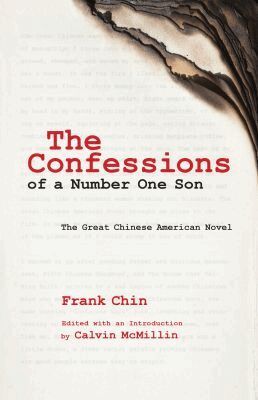
In the early 1970s, Frank Chin, the outspoken Chinese American author of such plays as The Chickencoop Chinaman and The Year of the Dragon, wrote a fulllength novel that was never published and presumably lost. Nearly four decades later, Calvin McMillin, a literary scholar specializing in Asian American literature,would discover Chin’s original manuscripts and embark on an extensive restoration project. Meticulously reassembled from multiple extant drafts, Frank Chin’s “forgotten” novel is a sequel to The Chickencoop Chinaman and follows the further misadventures of Tam Lum, the original play’s witty protagonist.Haunted by the bitter memories of a failed marriage and the untimely death of a beloved family member, Tam flees San Francisco’s Chinatown for a life of self-imposed exile on the Hawaiian island of Maui. After burning his sole copy of a manuscript he believed would someday be hailed as “The Great Chinese American Novel,” Tam stumbles into an unlikely romance with Lily, a former nun fresh out of the convent and looking for love. In the process, he also develops an unusual friendship with Lily’s father, a washed-up Hollywood actor once famous for portraying Charlie Chan on the big screen. Thanks in no small part to this bizarre father/daughter pair, not to mention an array of equally quirky locals, Tam soon discovers that his otherwise laidback island existence has been transformed into a farce of epic proportions.Had it been published in the 1970s as originally intended, The Confessions of a Number One Son might have changed the face of Asian American literature as we know it. Written at the height of Frank Chin’s creative powers, this formerly “lost” novel ranks as the author’s funniest, most powerful, and most poignant work to date. Now, some forty years after its initial conception, The Confessions of a Number One Son is finally available to readers everywhere.
Inbunden, Engelska, 2017
786 kr
Skickas inom 5-8 vardagar
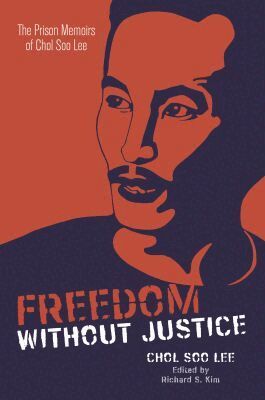
Freedom without Justice is a compelling story of one man’s wrongful incarceration and the actions he took to survive ten years in prison, while his supporters fought to win retrial and freedom. As a memoir, it is at once a captivating chronicle of his life with a trenchant description of how prisons end up producing the non-normativity they purport to prevent. This unusual story is part of an important chapter in the post-1964 history of Asian American activism.Chol Soo Lee’s saga begins against a backdrop of great historical change in Asian American communities following the passage of the 1965 Immigration Act. At the age of twelve, Chol Soo immigrated to the United States from South Korea to reunite with his mother, who had arrived earlier as a military bride. In less than a decade, Chol Soo finds himself labeled as a violent criminal, convicted, and incarcerated.Quickly Chol Soo Lee became a rallying point for an extraordinary pan–Asian American movement in the late 1970s and early 1980s, and Freedom without Justice provides a rare and valuable glimpse into a pivotal moment in history when the Asian American movement united around one of its first major political campaigns. The Lee case brought together immigrants and American-born Asians in a common cause of justice and freedom. This alliance of supporters, organized under a national network of the Chol Soo Lee Defense Committee, included student activists, elderly immigrants, religious organizations, small business owners, white-collar professionals, social workers, lawyers, legal assistance organizations, and left-wing communist groups nationwide. In the end the united front that mobilized to attain social and legal justice for Chol Soo Lee was a remarkable coalition of people from a broad spectrum of social backgrounds that transcended ethnicity, class, political ideology, religion, generation, and language. This diverse grassroots social movement initiated and organized a six-year “Free Chol Soo Lee!” campaign that led to Lee’s historic release from San Quentin’s death row in 1983. Incarcerated during a time when Asian American inmates were scarce, and Korean Americans even scarcer, Lee embodies social realities of race and class inequalities drawing readers into his social worlds—war-torn Korea, the streets of San Francisco, the criminal justice system, prison gang politics, and death row.
Häftad, Engelska, 2017
305 kr
Skickas inom 5-8 vardagar
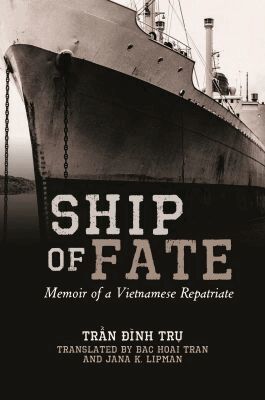
Ship of Fate tells the emotionally gripping story of a Vietnamese military officer who evacuated from Saigon in 1975 but made the dramatic decision to return to Vietnam for his wife and children, rather than resettle in the United States without them. Written in Vietnamese in the years just after 1991, when he and his family finally immigrated to the United States, Tran Dinh Tru's memoir provides a detailed and searing account of his individual trauma as a refugee in limbo, and then as a prisoner in the Vietnamese reeducation camps.In April 1975, more than 120,000 Indochinese refugees sought and soon gained resettlement in the United States. Given the chaos of the evacuation, however, approximately 1,500 Vietnamese men and women insisted in no uncertain terms on being repatriated back to Vietnam. Tru was one of these repatriates.To resolve the escalating crisis, the U.S. government granted the Vietnamese a large ship, the Viet Nam Thuong Tin. An experienced naval commander, Tru became the captain of the ship and sailed the repatriates back to Vietnam in October 1975. On return, Tru was imprisoned and underwent forced labor for more than twelve years. Tru's account reveals a hidden history of refugee camps on Guam, internal divisions among Vietnamese refugees, political disputes between the United Nations High Commissioner for Refugees and the U.S. government, and the horror of the postwar “reeducation” camps. While there are countless books on the U.S. war in Vietnam, there are still relatively few in English that narrate the war from a Vietnamese perspective. This translation adds new and unexpected dimensions to the U.S. military’s final withdrawal from Vietnam.
Häftad, Engelska, 2021
314 kr
Skickas inom 5-8 vardagar
In Envisioning Religion, Race, and Asian Americans, David K. Yoo and Khyati Y. Joshi assemble a wide-ranging and important collection of essays documenting the intersections of race and religion and Asian American communities - a combination so often missing both in the scholarly literature and in public discourse. Issues of religion and race/ethnicity undergird current national debates around immigration, racial profiling, and democratic freedoms, but these issues, as the contributors document, are longstanding ones in the United States.The essays feature dimensions of traditions such as Islam, Hinduism, and Sikhism, as well as how religion engages with topics that include religious affiliation (or lack thereof), the legacy of the Vietnam War, and popular culture. The contributors also address the role of survey data, pedagogy, methodology, and literature that is richly complementary and necessary for understanding the scope and range of the subject of Asian American religions. These essays attest to the vibrancy and diversity of Asian American religions, while at the same time situating these conversations in a scholarly lineage and discourse. This collection will certainly serve as an invaluable resource for scholars, students, and general readers with interests in Asian American religions, ethnic and Asian American studies, religious studies, American studies, and related fields that focus on immigration and race.
Häftad, Engelska, 2021
376 kr
Skickas inom 5-8 vardagar
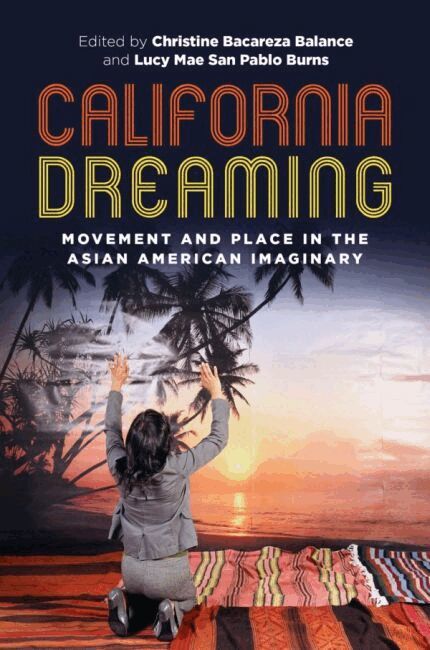
California Dreaming is a multi-genre collection featuring works by Asian American artists based in California. Exploring the places of "Asian America" through the migration and circulation of the arts, this volume highlights creative processes and the flow of objects to understand the rendering of California's imaginary. Here, "California" is interpreted as both a specific locale and an identity marker that moves, linking the state's cultural imaginary, labor, and economy with Asia Pacific, the Americas, and the world. Together, the works in this collection shift previous models and studies of the "Golden State" as the embodiment of "frontier mentality" and the discourse of exceptionality to a translocal, regional, and archipelagic understanding of place and cultural production.The poems, visual essays, short stories, critical essays, interviews, artist statements, and performance text excerpts featured in this collection expand notions of where knowledge is produced, directing our attention to the particularity of California's landscape and labor in the production of arts and culture. An interdisciplinary collection, California Dreaming foregrounds "sensing" and "imagining" place, vividly, as it hopes to inspire further creative responses to the notion of emplacement. In doing so, California Dreaming explores the possibilities imagined by and through Asian American arts and culture today, paving the way for what is yet to be.
Inbunden, Engelska, 2023
752 kr
Skickas inom 5-8 vardagar
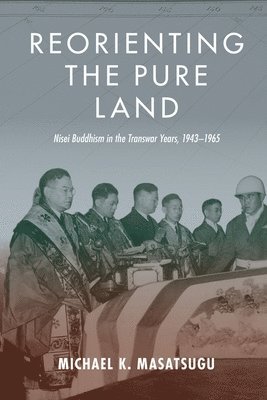
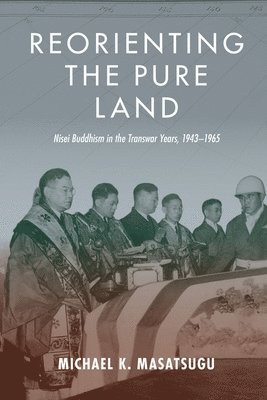
Post–World War II historical developments, including Japanese American resettlement, the U.S. occupation of Japan, the Cold War, and decolonization in an emerging "Third World," created both a climate of uncertainty and possibility for the future of Japanese American Buddhism in the United States. As both a racial minority and as adherents of a non-Christian religious tradition with roots in Asia, Nikkei Buddhists faced distinct challenges in asserting their religion as part of their ethnic heritage. Adaptations associated with Nisei Buddhism sought to prioritize cultural assimilation as prescribed by U.S. government officials and other proponents of racial liberalism, while also seeking to maintain Shin Buddhist tradition, claiming it as integral to Nikkei heritage and part of a tradition of American religious freedom. Nisei also presented Buddhism as a world religion, which served as more than a rhetorical strategy, since many Nisei extended their vision of the sangha (community of Buddhists) to include connections with Buddhists in Japan and South and Southeast Asia. But Nisei Buddhism's emerging influence among American Shin Buddhist communities would be challenged by converts and a younger generation of more progressive Nikkei during the 1960s. Reorienting the Pure Land: Nisei Buddhism in the Transwar Years, 1943–1965, is the first historical study of Nisei Shin Buddhists in the United States during the tumultuous period between World War II and the early decades of the Cold War. This book examines Nisei-led adaptations to American Shin Buddhist institutions and organizations in an effort to reconstitute Nikkei Buddhist communities following the end of World War II and release from U.S. government sponsored concentration camps. Taking a transnational perspective, this text establishes the importance of Buddhism in shaping networks in the United States and across the globe, and is the first to highlight the centrality of ethnic Buddhism in building the terms of racial inclusion and the construction of Asian Americans as a model minority. In addressing themes of religious adaptation, cultural nationalism, and global connection, Reorienting the Pure Land makes new contributions to the fields of Japanese American history, the history of Buddhism in America, and the study of Cold War racial liberalism.
Häftad, Engelska, 2023
286 kr
Skickas inom 5-8 vardagar
Post–World War II historical developments, including Japanese American resettlement, the U.S. occupation of Japan, the Cold War, and decolonization in an emerging "Third World," created both a climate of uncertainty and possibility for the future of Japanese American Buddhism in the United States. As both a racial minority and as adherents of a non-Christian religious tradition with roots in Asia, Nikkei Buddhists faced distinct challenges in asserting their religion as part of their ethnic heritage. Adaptations associated with Nisei Buddhism sought to prioritize cultural assimilation as prescribed by U.S. government officials and other proponents of racial liberalism, while also seeking to maintain Shin Buddhist tradition, claiming it as integral to Nikkei heritage and part of a tradition of American religious freedom. Nisei also presented Buddhism as a world religion, which served as more than a rhetorical strategy, since many Nisei extended their vision of the sangha (community of Buddhists) to include connections with Buddhists in Japan and South and Southeast Asia. But Nisei Buddhism's emerging influence among American Shin Buddhist communities would be challenged by converts and a younger generation of more progressive Nikkei during the 1960s. Reorienting the Pure Land: Nisei Buddhism in the Transwar Years, 1943–1965, is the first historical study of Nisei Shin Buddhists in the United States during the tumultuous period between World War II and the early decades of the Cold War. This book examines Nisei-led adaptations to American Shin Buddhist institutions and organizations in an effort to reconstitute Nikkei Buddhist communities following the end of World War II and release from U.S. government sponsored concentration camps. Taking a transnational perspective, this text establishes the importance of Buddhism in shaping networks in the United States and across the globe, and is the first to highlight the centrality of ethnic Buddhism in building the terms of racial inclusion and the construction of Asian Americans as a model minority. In addressing themes of religious adaptation, cultural nationalism, and global connection, Reorienting the Pure Land makes new contributions to the fields of Japanese American history, the history of Buddhism in America, and the study of Cold War racial liberalism.
Inbunden, Engelska, 2026
720 kr
Kommande
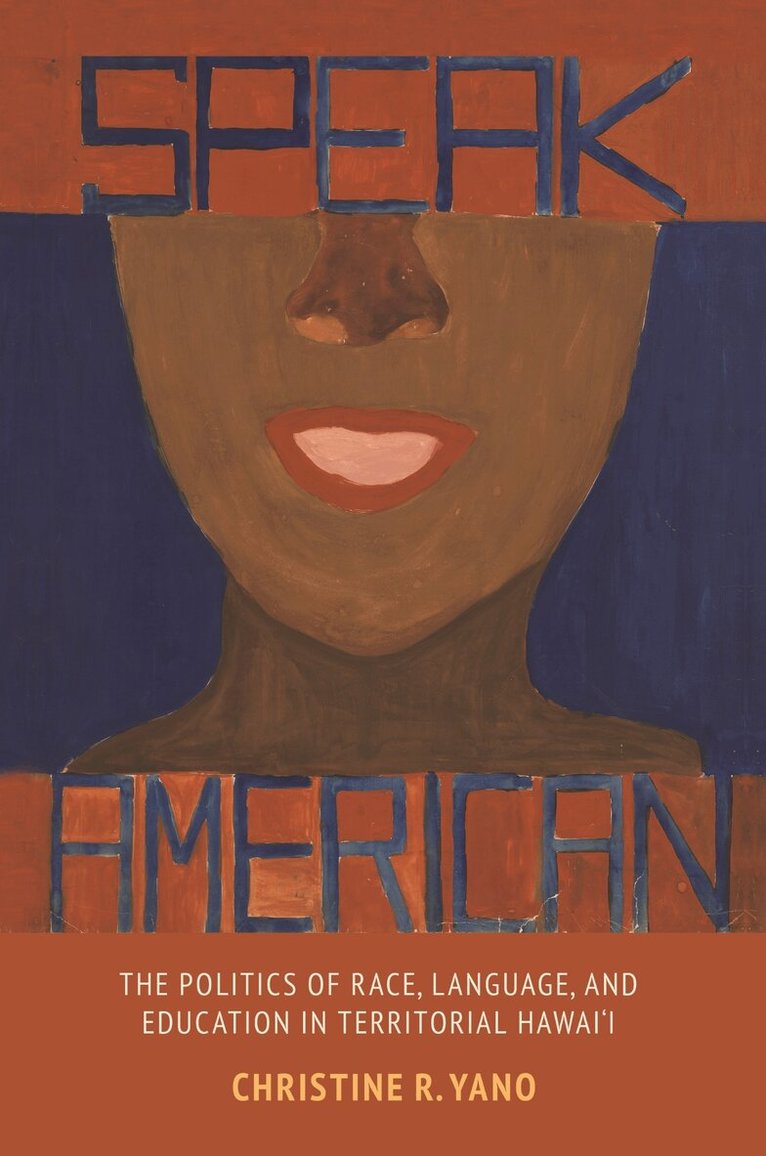
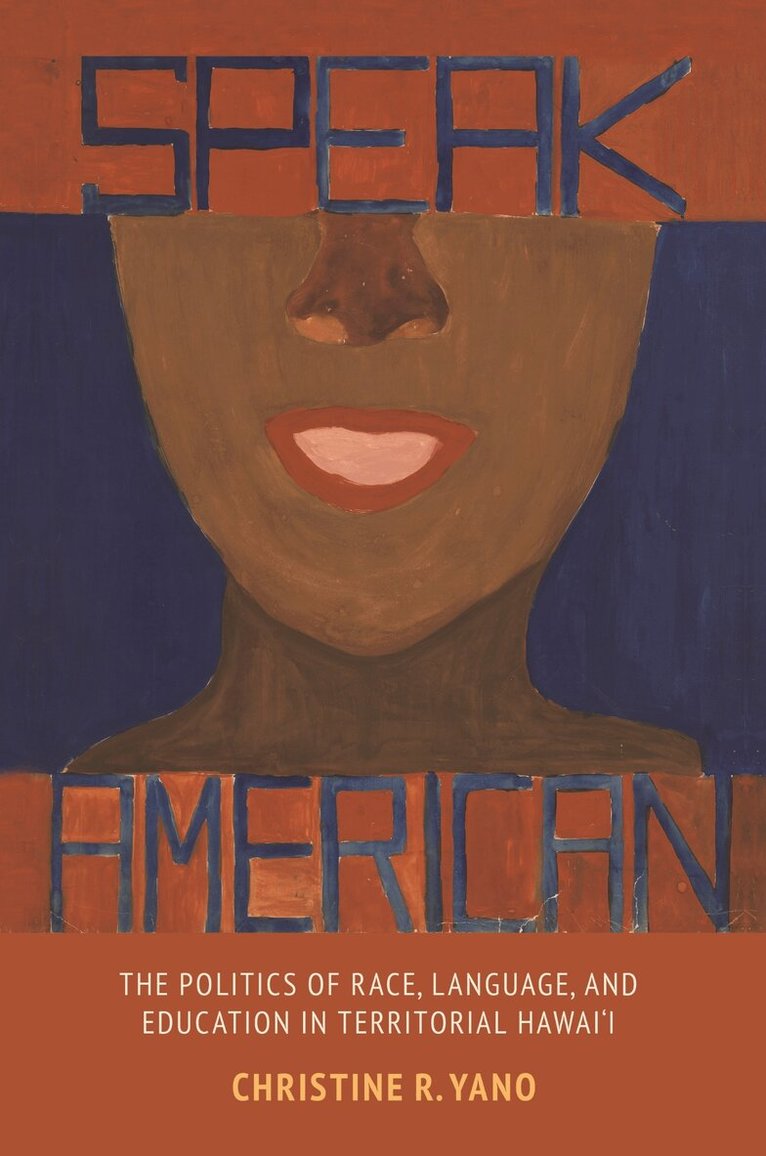
Speak American explores how language tied together race, power, and citizenship in Territorial Hawai‘i from 1924 to 1960 via the public K–12 English Standard School System. In this segregated system, children were tested for spoken English fluency: those who passed were placed in elite classes or schools, while others remained in regular classrooms. Proposed by white mothers, the policy used language as a tool to implement de facto racial separation, privileging those who already spoke English rather than teaching it to those who didn’t. This dynamic was enabled by "listening regimes" (disciplinary practices that trained educators and the public to listen for and reward Standard English), while marginalizing Hawai‘i Creole English, the everyday language of plantation and urban life. Drawing on archival records, interviews, and school alumni events, the book introduces the concept of the "panauricon"—a listening-based counterpart to Foucault’s visual panopticon—to describe how language surveillance reinforced and extended social hierarchies. A century later, debates over monolingualism and national identity persist, making this study of Hawai‘i’s historic linguistic politics both timely and urgent.
Inbunden, Engelska, 2026
1 040 kr
Kommande
Häftad, Engelska, 2026
304 kr
Kommande
Speak American explores how language tied together race, power, and citizenship in Territorial Hawai‘i from 1924 to 1960 via the public K–12 English Standard School System. In this segregated system, children were tested for spoken English fluency: those who passed were placed in elite classes or schools, while others remained in regular classrooms. Proposed by white mothers, the policy used language as a tool to implement de facto racial separation, privileging those who already spoke English rather than teaching it to those who didn’t. This dynamic was enabled by "listening regimes" (disciplinary practices that trained educators and the public to listen for and reward Standard English), while marginalizing Hawai‘i Creole English, the everyday language of plantation and urban life. Drawing on archival records, interviews, and school alumni events, the book introduces the concept of the "panauricon"—a listening-based counterpart to Foucault’s visual panopticon—to describe how language surveillance reinforced and extended social hierarchies. A century later, debates over monolingualism and national identity persist, making this study of Hawai‘i’s historic linguistic politics both timely and urgent.