Janet Hoskins - Böcker
Visar alla böcker från författaren Janet Hoskins. Handla med fri frakt och snabb leverans.
6 produkter
6 produkter
712 kr
Skickas inom 10-15 vardagar
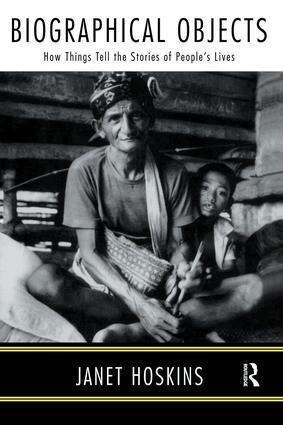
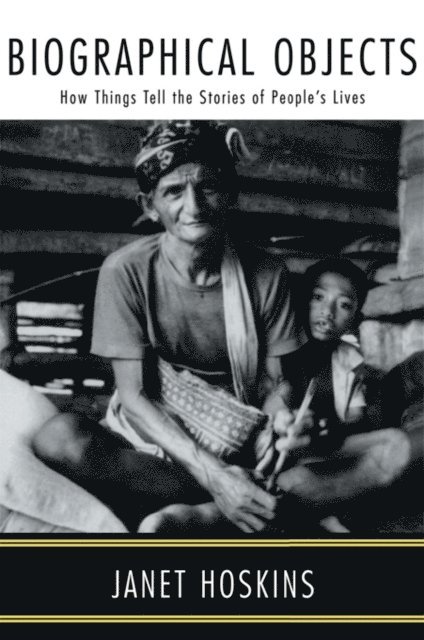
In this innovative study, six women and men from Eastern Indonesia narrate their own lives by talking about their possessions--domestic objects used to construct a coherent identity through a process of identification and self-historicizing. Janet Hoskins explores how things are given biographical significance and entangled in sexual politics, expressed in dualistic metaphors where the familiar distinctions between person and object and female and male are drawn in unfamiliar ways. Biographical Objects is an ethnography of persons which takes the form of a study of things, showing how the object is not only a metaphor for the self but a pivot for reflexivity and introspection, a tool for autobiographic elaboration, a way of knowing oneself through things.
384 kr
Skickas
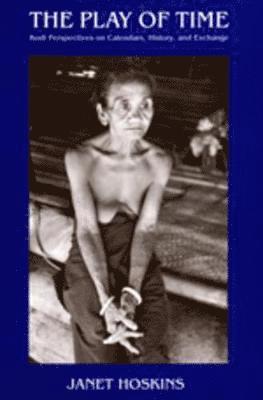
Janet Hoskins provides both an ethnographic study of the organization of time in an Eastern Indonesian society and a theoretical argument about alternate temporalities in the modern world. Based on more than three years of field work with the Kodi people of the island of Sumba, her book focuses on Kodi calendrical rituals, exchange transactions, and confrontations with the historical forces of the colonial and postcolonial world. Hoskins explores the contingent, contested, and often contradictory precedent of the past to show how local systems of knowledge are in dialogue with wider historical forces. Arguing that traditional temporality is more complex than many theorists have realized, Hoskins highlights the flexibility and relativity of local time concepts, whose sophistication belies the cliche of simple societies living in a world outside of time.
1 466 kr
Skickas inom 10-15 vardagar
A Stanford University Press classic.
362 kr
Skickas inom 7-10 vardagar
A Stanford University Press classic.
607 kr
Skickas inom 10-15 vardagar
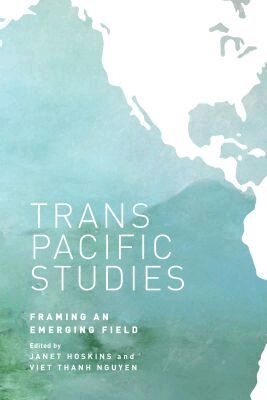
The Pacific has long been a space of conquest, exploration, fantasy, and resistance. Pacific Islanders had established civilisations and cultures of travel well before European explorers arrived, initiating centuries of upheaval and transformation. The twentieth century, with its various wars fought in and over the Pacific, is only the most recent era to witness military strife and economic competition. While “Asia Pacific” and “Pacific Rim” were late twentieth-century terms that dealt with the importance of the Pacific to the economic, political, and cultural arrangements that span Asia and the Americas, a new term has arisen—the transpacific. In the twenty-first century, U.S. efforts to dominate the ocean are symbolized not only in the “Pacific pivot” of American policy but also the development of a Transpacific Partnership. This partnership brings together a dozen countries—not including China—in a trade pact whose aim is to cement U.S. influence. That pact signals how the transpacific, up to now an academic term, has reached mass consciousness.Recognising the increasing importance of the transpacific as a word and concept, this anthology proposes a framework for transpacific studies that examines the flows of culture, capital, ideas, and labour across the Pacific. These flows involve Asia, the Americas, and the Pacific Islands. The introduction to the anthology by its editors, Janet Hoskins and Viet Thanh Nguyen, consider the advantages and limitations of models found in Asian studies, American studies, and Asian American studies for dealing with these flows. The editors argue that transpacific studies can draw from all three in order to provide a critical model for considering the geopolitical struggle over the Pacific, with its attendant possibilities for inequality and exploitation. Transpacific studies also sheds light on the cultural and political movements, artistic works, and ideas that have arisen to contest state, corporate, and military ambitions. In sum, the transpacific as a concept illuminates how flows across the Pacific can be harnessed for purposes of both domination and resistance.The anthology’s contributors include geographers (Brenda S. A. Yeoh, Weiqiang Lin), sociologists (Yen Le Espiritu, Hung Cam Thai), literary critics (John Carlos Rowe, J. Francisco Benitez, Yunte Huang, Viet Thanh Nguyen), and anthropologists (Xiang Biao, Heonik Kwon, Nancy Lutkehaus, Janet Hoskins), as well as a historian (Laurie J. Sears), and a film scholar (Akira Lippit). Together these contributors demonstrate how a transpacific model can be deployed across multiple disciplines and from varied locations, with scholars working from the United States, Singapore, Japan and England. Topics include the Cold War, the Chinese state, U.S. imperialism, diasporic and refugee cultures and economies, national cinemas, transpacific art, and the view of the transpacific from Asia. These varied topics are a result of the anthology’s purpose in bringing scholars into conversation and illuminating how location influences the perception of the transpacific. But regardless of the individual view, what the essays gathered here collectively demonstrate is the energy, excitement, and insight that can be generated from within a transpacific framework.

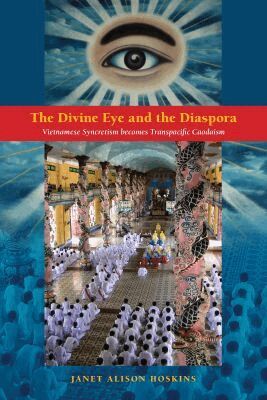
Divine Eye and the Diaspora
Vietnamese Syncretism Becomes Transpacific Caodaism
Häftad, Engelska, 2015
309 kr
Skickas inom 11-20 vardagar
Caodaism is a new religion born in Vietnam during the struggles of decolonization, shattered and spatially dispersed by cold war conflicts, now trying to reshape the goals of its four million followers. Colorful and strikingly syncretistic, it incorporates elements of Chinese, Buddhist, and Western religions as well as more recent outstanding world figures like Victor Hugo, Jeanne d’Arc, Vladimir Lenin, and (in the United States) Joseph Smith, the founder of Mormonism.The book looks at the connections between “the age of revelations” (1925–1934) in French Indochina and the “age of diaspora” (1975–present) when many Caodai leaders and followers went into exile. Structured in paired biographies to trace relations between masters and disciples, now separated by oceans, it focuses on five members of the founding generation and their followers or descendants in California, showing the continuing obligation to honor those who forged the initial vision to “bring the gods of the East and West together.” The syncretism of the colonialperiod has been transformed by the experience of exile into a diasporic formation, at the same time that Caodaism in Vietnam has emerged from a period of severe restrictions to return to the public arena. Caodaism forces us to reconsider how anthropologistsstudy religious mixtures in postcolonial settings, since its dynamics challenge the unconscious Eurocentrism of our notions of how religions are bounded and conceptualized.