Jerusalem Van Leer Foundation - Böcker
Visar alla böcker i serien Jerusalem Van Leer Foundation. Handla med fri frakt och snabb leverans.
7 produkter
7 produkter
2 311 kr
Skickas inom 10-15 vardagar
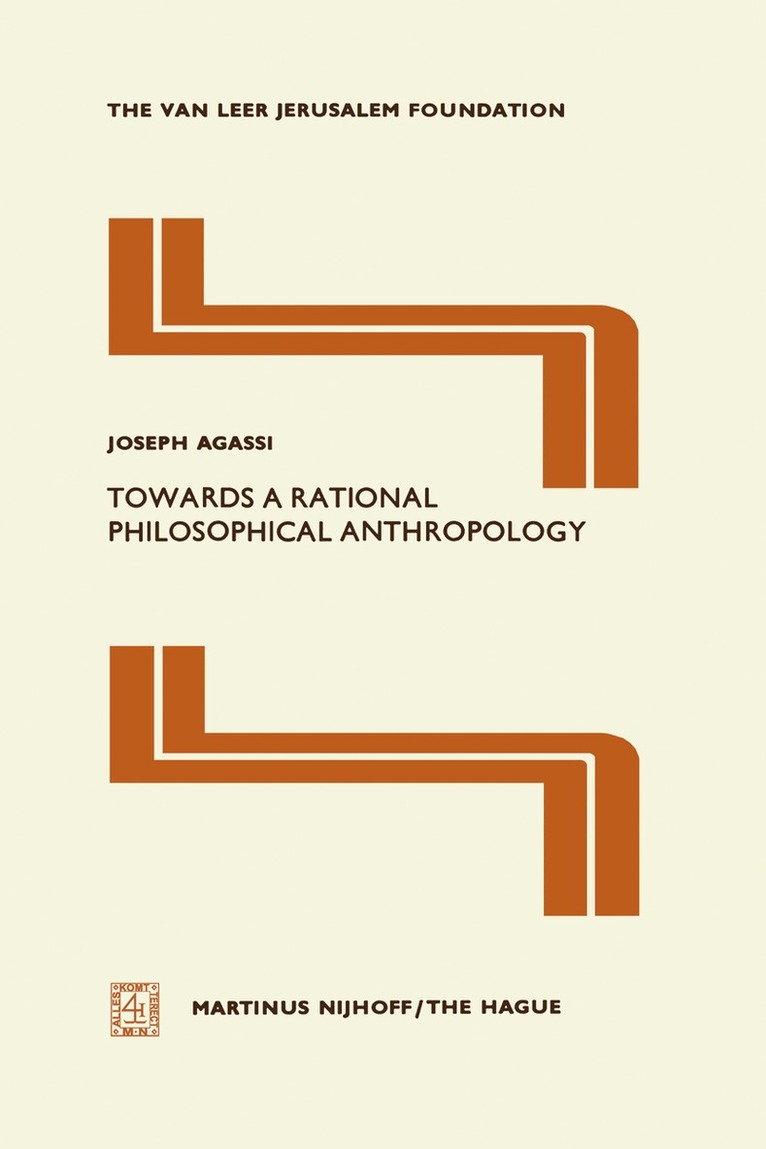
The thesis of the present volume is critical and dual. (1) Present day philosophy of man and sciences of man suffer from the Greek mis taken polarization of everything human into nature and convention which is (allegedly) good and evil, which is (allegedly) truth and fal sity, which is (allegedly) rationality and irrationality, to wit, the polar ization of all fields of inquiry, the natural and social sciences, as well as ethics and all technology, whether natural or social, into the totally positive and the totally negative. (2) Almost all philosophy and sci ences of man share the erroneous work ethic which is the myth of man's evil nature - the myth of the beast in man, the doctrine of original sin. To mediate or to compromise between the first view of human nature as good with the second view of it as evil, sociologists have devised a modified utilitarianism with deferred gratification so called, and the theory of the evil of artificial competition (capitalist and socialist alike) and of keeping up with the Joneses. Now, the mediation is not necessary. For, the polarization makes for abstract errors which are simplistic views of rationality, such as reductionism and positivism of all sorts, as well as for concrete errors, such as the disposition to condemn repeatedly those human weaknesses which are inevitable, namely man's inability to be perfectly rational, avoid all error, etc. , thus setting man against himself as all too wicked.
1 064 kr
Skickas inom 10-15 vardagar
1 064 kr
Skickas inom 10-15 vardagar
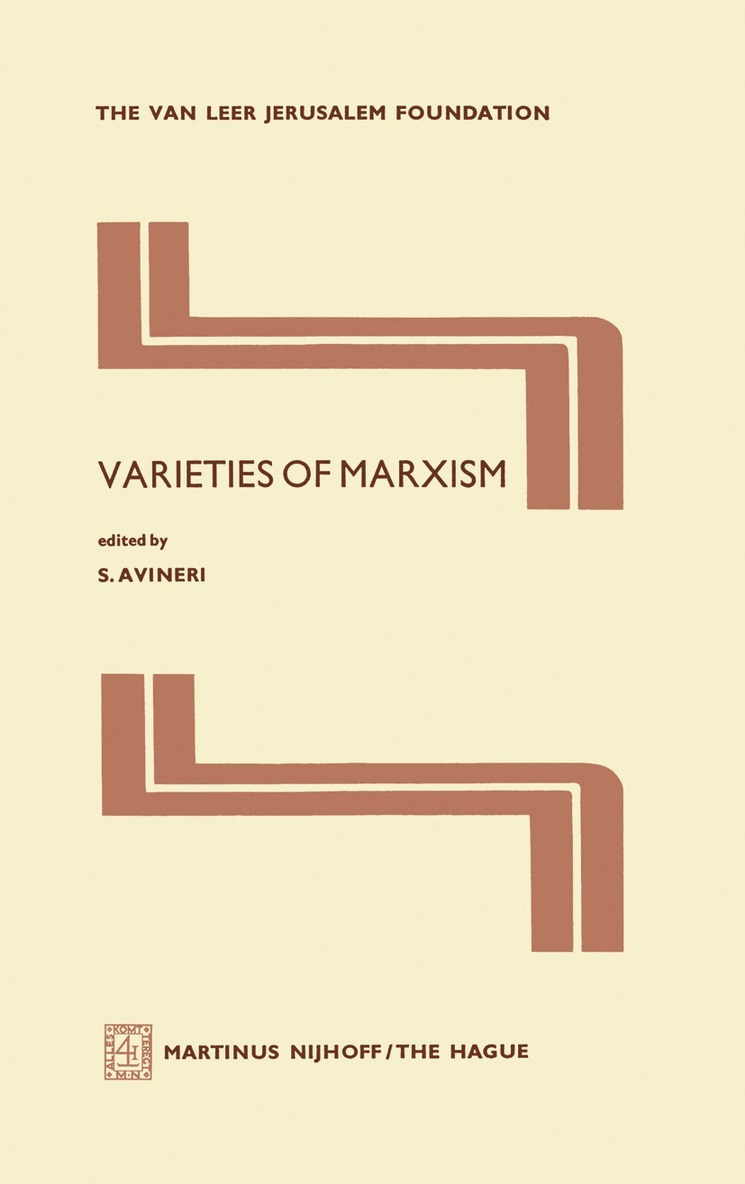
The essays included in this volume are based on papers delivered at the International Symposium on Varieties of Marxism, held at the Van Leer Jerusalem Foundation on June 16-19,1974, and dedicated to the memory of George Lichtheim. When the idea of such a symposium was first raised, the organizers planned to have George Lichtheim as one of the main speakers at the event. In our last and brief meeting in London, I suggested this to him and Lichtheim gave his consent to attend the symposium, though at that time no date was yet fixed. His tragic death a few months later left a gap not only in the program of the symposium but in Marxist studies generally; it was felt that per haps one way of paying tribute to his contribution to the study of a subject so near to his mind would be to name the symposium in his memory and devote an introductory paper to an attempt at an intel lectual portrait of George Lichtheim as an historian of ideas. The volume as published includes all papers delivered at the sym posium, with the excep,tion of the papers of J. L. Talmon (Jerusalem) on 'Marxism and Nationalism' and Gajo Petrovic (Zagreb) on 'Yugo slav Marxism'. Appended is also a short obituary written by me on Lichtheim for the journal Political Science published by the American Political Science Association.
1 064 kr
Skickas inom 10-15 vardagar
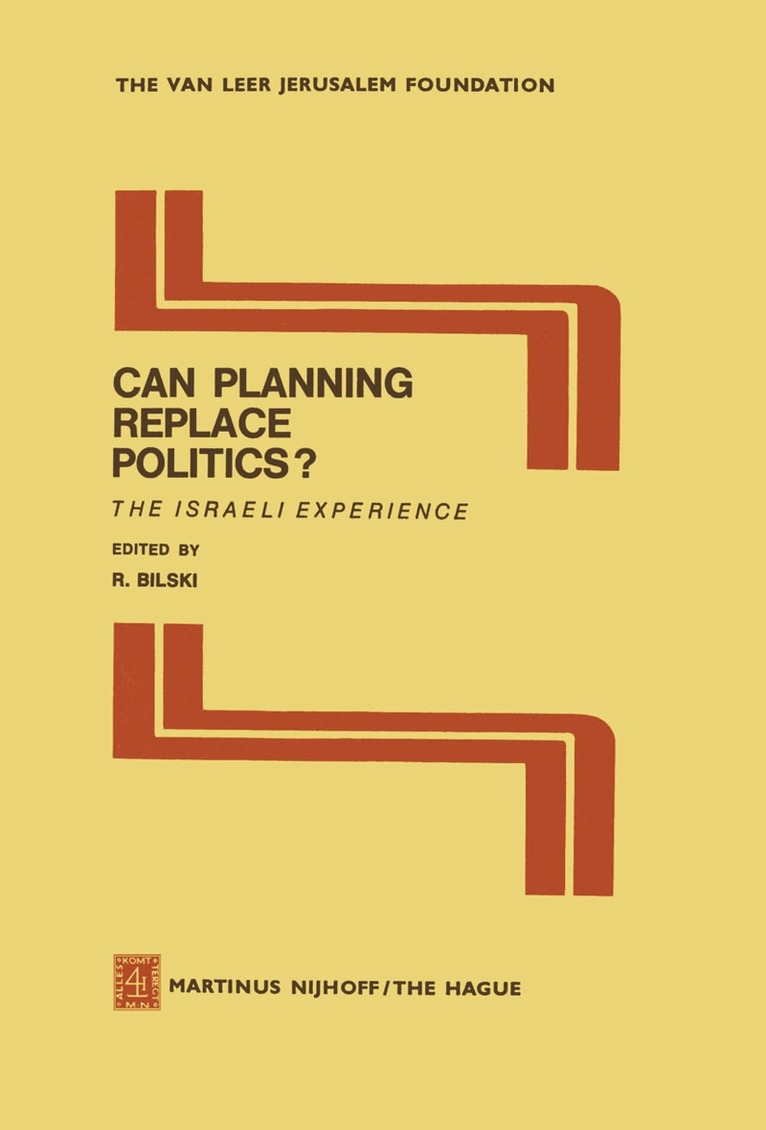
Much hope has been placed in the potential of planning to solve social and economic problems. In the East ~nd the West, in devel oped and less-developed countries, planning has become widespread. It has been praised and ridiculed, used and misused, both as a catch word for a better future and as a scapegoat for bitter failure. Plan ning has been interpreted differently by every society, giving rise to a wide range of styles and approaches. Fascination with the phenom enon has yielded a variety of definitions of planning, each of them influenced by the actual problems facing the planners on the one hand, and by the imagination, ideology and aspirations of the theo rists on the other. However, the variety of approaches and definitions has almost obscured the phenomenon itself and blurred its specific meaning. This fact, coupled with disappointment with the practical achievements of plannings, has created much criticism of the social and political value of planning in the West. In this volume we do not intend to answer the question whether planning in Western countries has been successful, nor to suggest specific ways of improving it. We shall limit ourselves to presenting a case study of national planning in one country. The title of this book suggests that the crucial question regarding planning efforts in Israel and perhaps in other countries is the tension between images of planning processes (systematic, comprehensive, structured, etc. ) and political processes (improvised, fragmented, diffused, etc. ).
1 064 kr
Skickas inom 10-15 vardagar
Much hope has been placed in the potential of planning to solve social and economic problems. In the East ~nd the West, in devel oped and less-developed countries, planning has become widespread. It has been praised and ridiculed, used and misused, both as a catch word for a better future and as a scapegoat for bitter failure. Plan ning has been interpreted differently by every society, giving rise to a wide range of styles and approaches. Fascination with the phenom enon has yielded a variety of definitions of planning, each of them influenced by the actual problems facing the planners on the one hand, and by the imagination, ideology and aspirations of the theo rists on the other. However, the variety of approaches and definitions has almost obscured the phenomenon itself and blurred its specific meaning. This fact, coupled with disappointment with the practical achievements of plannings, has created much criticism of the social and political value of planning in the West. In this volume we do not intend to answer the question whether planning in Western countries has been successful, nor to suggest specific ways of improving it. We shall limit ourselves to presenting a case study of national planning in one country. The title of this book suggests that the crucial question regarding planning efforts in Israel and perhaps in other countries is the tension between images of planning processes (systematic, comprehensive, structured, etc. ) and political processes (improvised, fragmented, diffused, etc. ).
2 311 kr
Skickas inom 10-15 vardagar
The thesis of the present volume is critical and dual. (1) Present day philosophy of man and sciences of man suffer from the Greek mis taken polarization of everything human into nature and convention which is (allegedly) good and evil, which is (allegedly) truth and fal sity, which is (allegedly) rationality and irrationality, to wit, the polar ization of all fields of inquiry, the natural and social sciences, as well as ethics and all technology, whether natural or social, into the totally positive and the totally negative. (2) Almost all philosophy and sci ences of man share the erroneous work ethic which is the myth of man's evil nature - the myth of the beast in man, the doctrine of original sin. To mediate or to compromise between the first view of human nature as good with the second view of it as evil, sociologists have devised a modified utilitarianism with deferred gratification so called, and the theory of the evil of artificial competition (capitalist and socialist alike) and of keeping up with the Joneses. Now, the mediation is not necessary. For, the polarization makes for abstract errors which are simplistic views of rationality, such as reductionism and positivism of all sorts, as well as for concrete errors, such as the disposition to condemn repeatedly those human weaknesses which are inevitable, namely man's inability to be perfectly rational, avoid all error, etc. , thus setting man against himself as all too wicked.
1 064 kr
Skickas inom 10-15 vardagar
The essays included in this volume are based on papers delivered at the International Symposium on Varieties of Marxism, held at the Van Leer Jerusalem Foundation on June 16-19,1974, and dedicated to the memory of George Lichtheim. When the idea of such a symposium was first raised, the organizers planned to have George Lichtheim as one of the main speakers at the event. In our last and brief meeting in London, I suggested this to him and Lichtheim gave his consent to attend the symposium, though at that time no date was yet fixed. His tragic death a few months later left a gap not only in the program of the symposium but in Marxist studies generally; it was felt that per haps one way of paying tribute to his contribution to the study of a subject so near to his mind would be to name the symposium in his memory and devote an introductory paper to an attempt at an intel lectual portrait of George Lichtheim as an historian of ideas. The volume as published includes all papers delivered at the sym posium, with the excep,tion of the papers of J. L. Talmon (Jerusalem) on 'Marxism and Nationalism' and Gajo Petrovic (Zagreb) on 'Yugo slav Marxism'. Appended is also a short obituary written by me on Lichtheim for the journal Political Science published by the American Political Science Association.