Johns Hopkins Nuclear History and Contemporary Affairs – serie
Visar alla böcker i serien Johns Hopkins Nuclear History and Contemporary Affairs. Handla med fri frakt och snabb leverans.
9 produkter
9 produkter
949 kr
Skickas
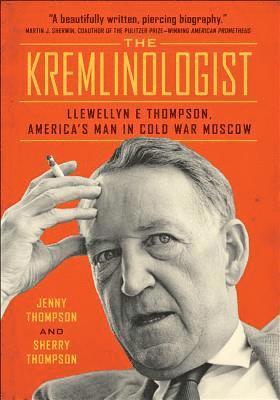
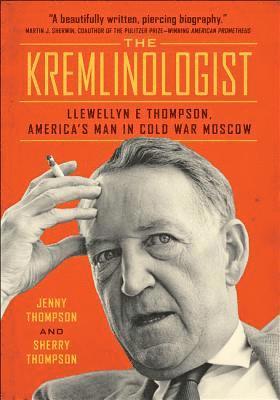
An Owl in a Hawk’s World: Top diplomat Llewellyn E Thompson was everywhere the Cold War was.Winner of the New Mexico/Arizona Book Award for Best BiographyWinner of the New Mexico/Arizona Book Award for Best BiographyAgainst the sprawling backdrop of the Cold War, The Kremlinologist revisits some of the twentieth century's greatest conflicts as seen through the eyes of its hardest working diplomat, Llewellyn E Thompson. From the wilds of the American West to the inner sanctums of the White House and the Kremlin, Thompson became an important advisor to presidents and a key participant in major global events, including the Cuban Missile Crisis and the Vietnam War. Yet unlike his contemporaries Robert S. McNamara and Dean Rusk, who considered Thompson one of the most crucial Cold War actors and the "unsung hero" of the Cuban Missile Crisis, he has not been the subject of a major biography—until now. Thompson's daughters Jenny and Sherry Thompson skillfully and thoroughly document his life as an accomplished career diplomat. In vigorous prose, they describe how Thompson joined the Foreign Service both to feed his desire for adventure and from a deep sense of duty. They also detail the crucial role he played as a negotiator unafraid of compromise. Known in the State Department as "Mr. Tightlips," Thompson was the epitome of discretion. People from completely opposite ends of the political spectrum lauded his approach to diplomacy and claimed him as their own. Refuting historical misinterpretations of the Berlin Crisis, the Austrian State Treaty, and the Cuban Missile Crisis, the Thompsons tell their father's fascinating story. With unprecedented access to Thompson's FBI dossier, State Department personnel files, letters, diaries, speeches, and documents, and relying on probing interviews and generous assistance from American and Russian archivists, historians, and government officials, the authors bring new material to light, including important information on the U-2, Kennan's containment policy, and Thompson's role in US covert operations machinery. This unique and monumental biography not only restores a central figure to history, it makes the crucial events he shaped accessible to a broader readership and gives contemporary readers a backdrop for understanding the fraught United StatesRussia relationship that still exists today.
474 kr
Skickas inom 7-10 vardagar
An Owl in a Hawk’s World: Top diplomat Llewellyn E Thompson was everywhere the Cold War was.Winner of the New Mexico/Arizona Book Award for Best BiographyWinner of the New Mexico/Arizona Book Award for Best BiographyAgainst the sprawling backdrop of the Cold War, The Kremlinologist revisits some of the twentieth century's greatest conflicts as seen through the eyes of its hardest working diplomat, Llewellyn E Thompson. From the wilds of the American West to the inner sanctums of the White House and the Kremlin, Thompson became an important advisor to presidents and a key participant in major global events, including the Cuban Missile Crisis and the Vietnam War. Yet unlike his contemporaries Robert S. McNamara and Dean Rusk, who considered Thompson one of the most crucial Cold War actors and the "unsung hero" of the Cuban Missile Crisis, he has not been the subject of a major biography—until now. Thompson's daughters Jenny and Sherry Thompson skillfully and thoroughly document his life as an accomplished career diplomat. In vigorous prose, they describe how Thompson joined the Foreign Service both to feed his desire for adventure and from a deep sense of duty. They also detail the crucial role he played as a negotiator unafraid of compromise. Known in the State Department as "Mr. Tightlips," Thompson was the epitome of discretion. People from completely opposite ends of the political spectrum lauded his approach to diplomacy and claimed him as their own. Refuting historical misinterpretations of the Berlin Crisis, the Austrian State Treaty, and the Cuban Missile Crisis, the Thompsons tell their father's fascinating story. With unprecedented access to Thompson's FBI dossier, State Department personnel files, letters, diaries, speeches, and documents, and relying on probing interviews and generous assistance from American and Russian archivists, historians, and government officials, the authors bring new material to light, including important information on the U-2, Kennan's containment policy, and Thompson's role in US covert operations machinery. This unique and monumental biography not only restores a central figure to history, it makes the crucial events he shaped accessible to a broader readership and gives contemporary readers a backdrop for understanding the fraught United StatesRussia relationship that still exists today.
American Lab
An Insider’s History of the Lawrence Livermore National Laboratory
Inbunden, Engelska, 2018
875 kr
Skickas
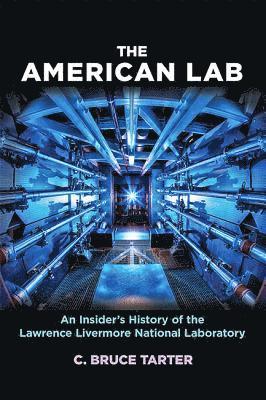
Behind the scenes of the Lawrence Livermore National Laboratory, the quintessential American lab.Nobel laureate Ernest O. Lawrence and renowned physicist Edward Teller founded the Lawrence Livermore National Laboratory in 1952. A new ideas incubator, the Lab was at the heart of nuclear testing and the development of supercomputers, lasers, and other major technological innovations of the second half of the twentieth century. Many of its leaders became prominent figures in the technical and defense establishments, and by the end of the 1960s, Livermore was the peer of Los Alamos National Lab, a relationship that continues today.In The American Lab, former Livermore director C. Bruce Tarter offers unparalleled access to the inner workings of the Lab. Touching on Cold War nuclear science and the technological shift that occurred after the fall of the Berlin Wall, he traces the Lab’s evolution from its founding under University of California management through its transfer to private oversight. Along the way, he highlights important episodes in that journey, from the invention of Polaris, the first submarine-launched ballistic missile, to the Lab’s controversial role in the Star Wars program. He also describes Livermore’s significant responsibilities in stockpile stewardship, the program that ensures the safety and reliability of the US nuclear arsenal. The book portrays the lab’s extensive work on thermonuclear fusion, a potential source of unlimited energy; describes the development of the world’s largest laser fusion installation, the National Ignition Facility; and examines a number of smaller projects, such as the Lab’s participation in founding the Human Genome Project. Finally, it traces the relationship of the Lab to its federal sponsor, the Department of Energy, as it evolved from partnership to compliance with orders, a shift that affected all of the national laboratories. Drawing on oral histories, internal laboratory documents, and the author’s personal experiences from more than fifty years as a Lab employee, The American Lab is an illuminating history of the Lab and its revolutionary work.
422 kr
Skickas inom 5-8 vardagar
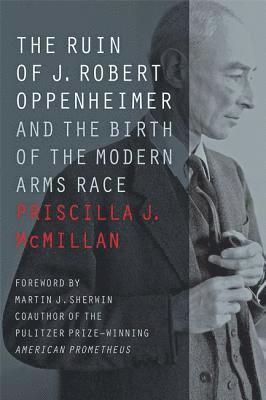
The true story of the government conspiracy to bring down J. Robert Oppenheimer, America’s most famous scientist.On April 12, 1954, the nation was astonished to learn that J. Robert Oppenheimer was facing charges of violating national security. Could the director of the Manhattan Project, the visionary who led the effort to build the atom bomb, really be a traitor? In this riveting book, bestselling author Priscilla J. McMillan draws on newly declassified U.S. government documents and materials from Russia, as well as in-depth interviews, to expose for the first time the conspiracy that destroyed one of America’s most illustrious scientists.McMillan recreates the fraught years from 1949 to 1955 when Oppenheimer and a group of liberal scientists tried to head off the cabal of hard-line air force officials, anti-Communist politicians, and rival scientists, including physicist Edward Teller, who were trying to seize control of U.S. policy and build ever more deadly nuclear weapons. Retelling the story of Oppenheimer’s trial, which took place in utmost secrecy, she describes how the government made up its own rules and violated many protections of the rule of law. She also argues that the effort to discredit Oppenheimer, occurring at the height of the McCarthy era and sanctioned by a misinformed President Eisenhower, was a watershed in the Cold War, poisoning American politics for decades and creating dangers that haunt us today.A chilling tale of McCarthy-era machinations, this groundbreaking page-turner rewrites the history of the Cold War.
618 kr
Skickas inom 7-10 vardagar
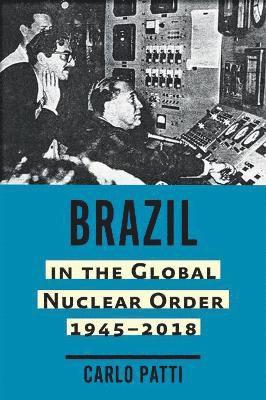
The first comprehensive and definitive history of Brazil's decision to give up the nuclear weapon option.Why do countries capable of "going nuclear" choose not to? Brazil, which gained notoriety for developing a nuclear program and then backtracking into adherence to the nonproliferation regime, offers a fascinating window into the complex politics surrounding nuclear energy and American interference. Since the beginning of the nuclear age, author Carlo Patti writes, Brazil has tried to cooperate with other countries in order to master nuclear fuel cycle technology, but international limitations have constrained the country's approach. Brazil had the start of a nuclear program in the 1950s, which led to the United States interfering in agreements between Brazil and other countries with advanced nuclear industries, such as France and West Germany. These international constraints, especially those imposed by the United States, partly explain the country's decision to create a secret nuclear program in 1978 and to cooperate with other countries outside the Nuclear Non-Proliferation Treaty [NPT] regime, such as Argentina and China. Yet, in 1998, Brazil chose to adhere to the Nuclear Non-Proliferation Treaty it so actively opposed only three decades prior, although the country still critiques the unfair nature of the treaty. Patti draws on recent declassified primary sources collected during years of research in public and private archives in eight different countries, as well as interviews with former presidents, diplomats, and scientists, to show how US nonproliferation policies deeply affected Brazil's decisions. Assessing the domestic and international factors that informed the evolution of Brazil's nuclear diplomacy, Brazil in the Global Nuclear Order, 1945-2018 also discusses what it means with respect to Brazil's future political goals.
588 kr
Skickas inom 7-10 vardagar
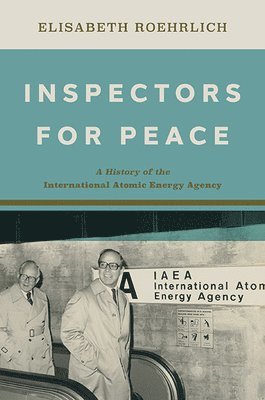
The first comprehensive, empirically grounded, and independent study of the history of the IAEA.The International Atomic Energy Agency, which sends inspectors around the world to prevent states from secretly developing nuclear bombs, has one of the most important jobs in international security. At the same time, the IAEA is a global hub for the exchange of nuclear science and technology for peaceful purposes. Yet spreading nuclear materials and know-how around the world bears the unwanted risk of helping what the agency aims to halt: the emergence of new nuclear weapon states. In Inspectors for Peace, Elisabeth Roehrlich unravels the IAEA's paradoxical mission of sharing nuclear knowledge and technology while seeking to deter nuclear weapon programs. Founded in 1957 in an act of unprecedented cooperation between the Cold War superpowers, the agency developed from a small technical bureaucracy in war-torn Vienna to a key organization in the global nuclear order. Roehrlich argues that the IAEA's dual mandate, though apparently contradictory, was pivotal in ensuring the organization's legitimacy, acceptance, and success. For its first decade of existence, the IAEA was primarily a scientific and technical organization; it was not until the Treaty on the Non-Proliferation of Nuclear Weapons entered into force in 1970 that the agency took on the far-reaching verification and inspection role for which it is now most widely known. While the Fukushima nuclear disaster and the Iran negotiations made the IAEA's name famous, the organization's remarkable history remains strikingly absent from public knowledge. Drawing on extensive archival research, including firsthand access to newly opened records at the IAEA Archives in Vienna, Inspectors for Peace provides the first comprehensive, empirically grounded, and independent study on the history of the IAEA. Roehrlich also interviewed leading policymakers and officials, including Hans Blix and Nobel Peace laureate Mohamed ElBaradei, the agency's former heads. This book offers insight not only for students, scholars, and policy experts but for anyone interested in the history of the nuclear age, the Cold War, and the role of international organizations in shaping our world.
371 kr
Skickas inom 7-10 vardagar
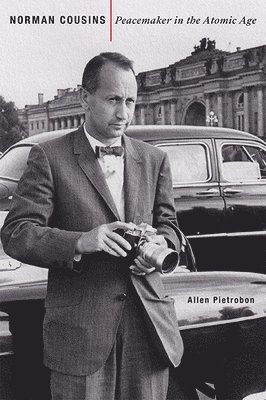
As the editor of the Saturday Review for more than thirty years, Norman Cousins had a powerful platform from which to help shape American public debate during the height of the Cold War. Under Cousins's leadership, the magazine was considered one of the most influential in the literary world. Cousins's progressive, nonpartisan editorials in the Review earned him the respect of the public and US government officials. But his deep impact on postwar international humanitarian aid, anti-nuclear advocacy, and Cold War diplomacy has been largely unexplored. In this book, Allen Pietrobon presents the first true biography of Norman Cousins. Cousins was much more important than we realize: he was involved in several secret citizen diplomacy missions during the height of the Cold War and, acting as a private citizen, played a major role in getting the Limited Test Ban Treaty signed. He also wrote JFK's famous 1963 American University commencement speech ("not merely peace in our time but peace for all time"). This book is a fascinating look at the outsized impact that one individual had on the course of American public debate, international humanitarianism, and the Cold War itself. This biography of the vocal anti-communist and anti-nuclear activist's public life will interest readers across the ideological spectrum.
Inheriting the Bomb
The Collapse of the USSR and the Nuclear Disarmament of Ukraine
Häftad, Engelska, 2023
376 kr
Skickas inom 7-10 vardagar
The collapse of the Soviet Union unleashed the specter of the largest wave of nuclear proliferation in history. Why did Ukraine ultimately choose the path of nuclear disarmament?Winner of the William E. Colby Award by the Norwich UniversityThe collapse of the Soviet Union in 1991 left its nearly 30,000 nuclear weapons spread over the territories of four newly sovereign states: Belarus, Kazakhstan, the Russian Federation, and Ukraine. This collapse cast a shadow of profound ambiguity over the fate of the world's largest arsenal of the deadliest weapons ever created. In Inheriting the Bomb, Mariana Budjeryn reexamines the history of nuclear predicament caused by the Soviet collapse and the subsequent nuclear disarmament of the non-Russian Soviet successor states.Although Belarus and Kazakhstan renounced their claim to Soviet nuclear weapons, Ukraine proved to be a difficult case: with its demand for recognition as a lawful successor state of the USSR, a nuclear superpower, the country became a major proliferation concern. And yet by 1994, Ukraine had acceded to the Treaty on the Non-proliferation of Nuclear Weapons (NPT) as a non-nuclear-weapon state and proceeded to transfer its nuclear warheads to Russia, which emerged as the sole nuclear successor of the USSR. How was this international proliferation crisis averted? Drawing on extensive archival research in the former Soviet Union and the United States, Budjeryn uncovers a fuller and more nuanced narrative of post-Soviet denuclearization. She reconstructs Ukraine's path to nuclear disarmament to understand how its leaders made sense of the nuclear armaments their country inherited. Among the various factors that contributed to Ukraine's nuclear renunciation, including diplomatic pressure from the United States and Russia and domestic economic woes, the NPT stands out as a salient force that provided an international framework for managing the Soviet nuclear collapse.
Saving the World from Nuclear War
The June 12, 1982, Disarmament Rally and Beyond
Häftad, Engelska, 2023
495 kr
Skickas inom 7-10 vardagar
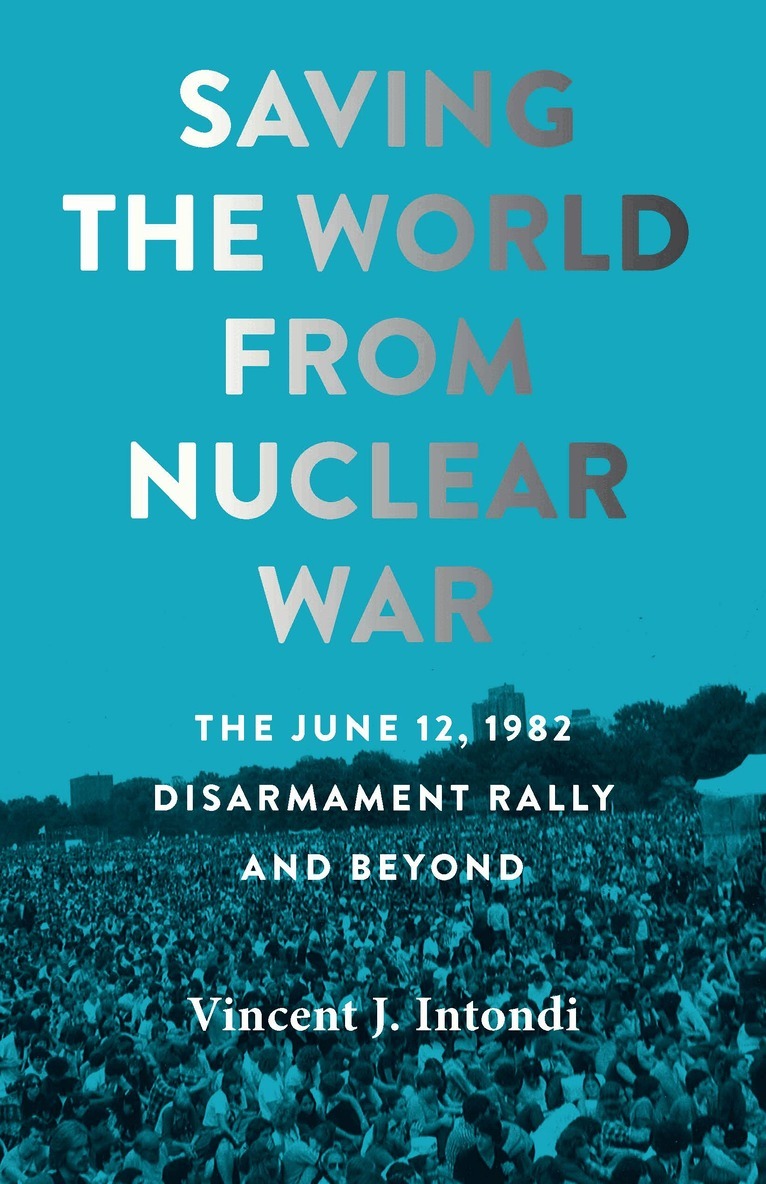
Examines how the June 12, 1982, rally for nuclear disarmament paved the way for a new generation of activists.On June 12, 1982, one million people filled the streets of New York City and rallied in Central Park to show support for the United Nations' Second Special Session on Disarmament. They demanded an end to the nuclear arms race and called for a shift from military funds to money allocated for human needs. In Saving the World from Nuclear War, Vincent J. Intondi draws on archival materials and interviews with rally organizers and activists in Central Park to explore this demonstration from its inception through the months of organizing, recruiting, and planning, to the historic day itself.