Key Texts in Anti-Colonial Thought – serie
Visar alla böcker i serien Key Texts in Anti-Colonial Thought. Handla med fri frakt och snabb leverans.
4 produkter
4 produkter
2 409 kr
Skickas inom 3-6 vardagar
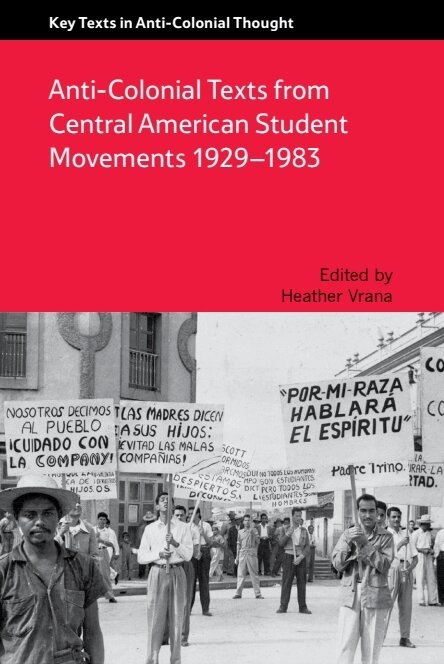
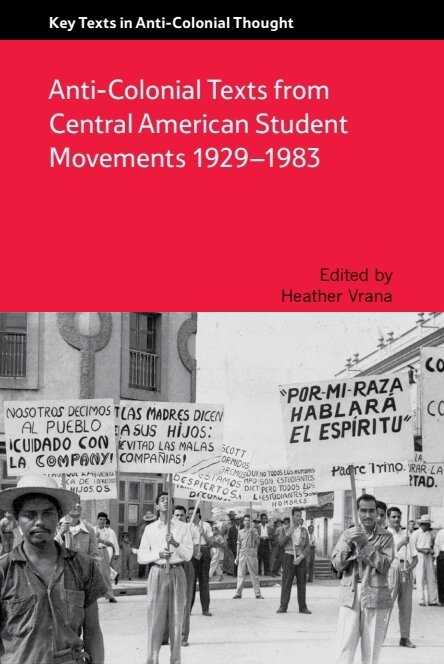
Collects more than sixty foundational documents from student protest from the frontlines of revolution Few people know that student protest emerged in Latin America decades before the infamous student movements of Western Europe and the U.S. in the 1960s. Even fewer people know that Central American university students authored colonial agendas and anti-colonial critiques. In fact, Central American students were key actors in shaping ideas of nation, empire, and global exchange. Bridging a half-century of student protest from 1929 to 1983, this source reader contains more than sixty texts from Guatemala, Nicaragua, Honduras, El Salvador, and Costa Rica, including editorials, speeches, manifestos, letters, and pamphlets. Available for the first time in English, these rich texts help scholars and popular audiences alike to rethink their preconceptions of student protest and revolution. The texts also illuminate key issues confronting social movements today: global capitalism, dispossession, privatization, development, and state violence. Key FeaturesMakes available for the first time to English-language readers a diverse archive of more than sixty foundational documents and ephemera accompanied by an introduction, section introductions and further readingExpands the geographic scope of anti-colonial movement scholarship by presenting anti-colonial thought in the most contentious decades of the 20th century from a region peripheral even within anti-colonial and postcolonial studiesAdvances anti-colonial and postcolonial studies by taking urban students as critical actors and so recasting thematics of the peasantry, the rural/urban divide, and religionSuggests a new social movement chronology beyond the so-called "Global 1968," or the common notion that student movements peaked in May 1968 in Paris, New York City, Berkeley, and Mexico City
500 kr
Skickas inom 7-10 vardagar
Collects more than sixty foundational documents from student protest from the frontlines of revolution Few people know that student protest emerged in Latin America decades before the infamous student movements of Western Europe and the U.S. in the 1960s. Even fewer people know that Central American university students authored colonial agendas and anti-colonial critiques. In fact, Central American students were key actors in shaping ideas of nation, empire, and global exchange. Bridging a half-century of student protest from 1929 to 1983, this source reader contains more than sixty texts from Guatemala, Nicaragua, Honduras, El Salvador, and Costa Rica, including editorials, speeches, manifestos, letters, and pamphlets. Available for the first time in English, these rich texts help scholars and popular audiences alike to rethink their preconceptions of student protest and revolution. The texts also illuminate key issues confronting social movements today: global capitalism, dispossession, privatization, development, and state violence. Key FeaturesMakes available for the first time to English-language readers a diverse archive of more than sixty foundational documents and ephemera accompanied by an introduction, section introductions and further readingExpands the geographic scope of anti-colonial movement scholarship by presenting anti-colonial thought in the most contentious decades of the 20th century from a region peripheral even within anti-colonial and postcolonial studiesAdvances anti-colonial and postcolonial studies by taking urban students as critical actors and so recasting thematics of the peasantry, the rural/urban divide, and religionSuggests a new social movement chronology beyond the so-called "Global 1968," or the common notion that student movements peaked in May 1968 in Paris, New York City, Berkeley, and Mexico City
500 kr
Skickas inom 7-10 vardagar
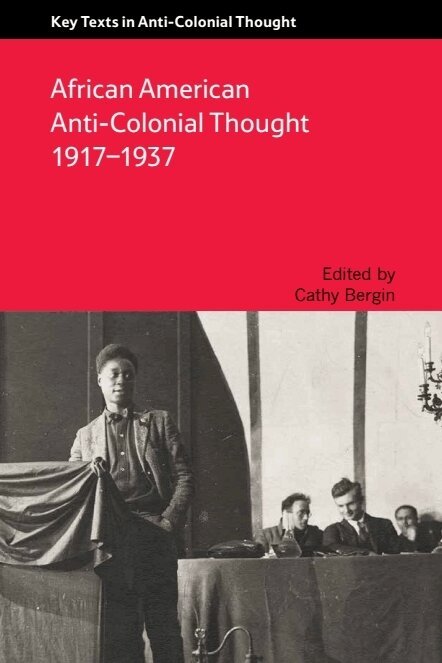
An investigation of interwar African American critiques of racism and colonialismThis volume re-publishes key texts produced by African American anti-colonial activists between 1917-1937. Some of these texts remain well-known, but many have disappeared from view and are once again re-inserted in their original polemical contexts. The context for these writings is the turbulent politics of ‘race’ in the US in the interwar years and the emergence of a particular ‘race’/class politics. The framing of the material in the book stresses those texts which are specifically concerned with finding connections between the plight of African Americans and those who suffer colonial oppression in order to emphasise the dialectical nature of anti-colonial struggle. The intention of many of these writers was to create a space for interracial class politics. Despite, or because of, the complexities of negotiating ‘race’, class and colonialism, this material gives us access to an historically specific attempt to create a ‘race’/class politics attuned to the challenges of confronting racism of the USA and beyond.Key FeaturesIntroduces a powerful, but neglected, tradition of African American anti-colonial writingLocates African American anti-colonial writing of the interwar years in both a US and global contextStresses the dialectical nature of the relationship between anti-colonial politics and political activismReflects upon the relevance of interwar African American anti-colonial writings to contemporary debates about racism and neo-colonialismEmphasises the relationship between African American politics and the Left during this period
500 kr
Skickas inom 7-10 vardagar
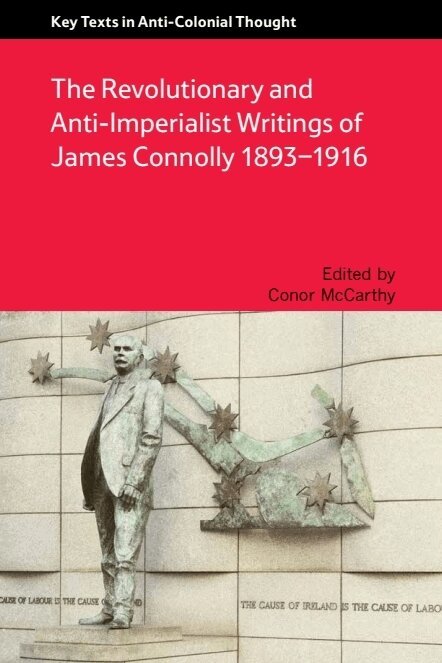
The writings of Ireland’s greatest left-wing and anti-imperialist activistJames Connolly, the greatest Marxist and socialist thinker, organiser and leader Ireland ever produced, was also a great internationalist and anti-imperialist writer and campaigner. This wide-ranging anthology features a scholarly introduction which provides background to Connolly’s life, career, and influences; and which contextualizes his work both in Ireland and internationally. The collection of texts presented here demonstrates that Connolly’s writings are as pertinent in Ireland and the postcolonial world a century after his execution for leadership of the 1916 Easter Rising in Ireland as it was in his own lifetime. The Revolutionary and Anti-Imperialist Writings of James Connolly, 1893-1916 will be a vital and inspiring resource for students, scholars and activists seeking to understand the tumultuous history of early-twentieth century Ireland in both its local and imperial contexts, and looking for the tools to understand the inequities of our globalised world today.Key FeaturesOffers an account of his life and locates his work in the contexts of Irish, imperial and global historyStresses the complex and rich dialectic in his work between socialism and Marxism, and nationalismDemonstrates Connolly’s internationalist and anti-imperialist world-viewLocates Connolly’s work in the context of Irish nationalist and republican revolutionary thought, and international Marxism and anti-imperialism