KU Leuven Centre for IT & IP Law Series - Böcker
Visar alla böcker i serien KU Leuven Centre for IT & IP Law Series. Handla med fri frakt och snabb leverans.
10 produkter
10 produkter
Del 2 - KU Leuven Centre for IT & IP Law Series
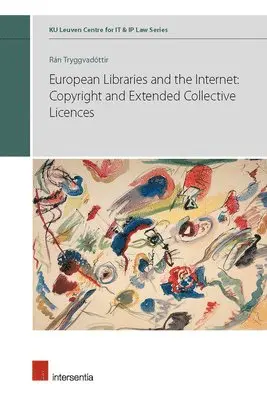
European Libraries and the Internet: Copyright and Extended Collective Licences
Inbunden, Engelska, 2018
1 510 kr
Skickas inom 5-8 vardagar
Few would dispute the importance of preserving and providing access to cultural heritage and the key role of libraries in this endeavour. In an increasingly digital world, initiatives such as Google's Book Search Project have digitised broad swathes of the world's literary heritage and have enabled search engines to take on functions once exclusive to libraries.Before the advent of digital technology, libraries acquired copyrighted works in tangible hard copies. Those copies were then preserved in their original form and access was granted either on the premises or through lending schemes. Today, libraries often handle works that are born digital and, in many cases, have never existed in tangible form. In addition, there is a demand to digitize analogue works, inter alia to make them available on-line. These developments and the high volume of in-copyright works in library collections create tensions with copyright law and constitute a major challenge for libraries and other cultural heritage institutions wishing to operate in the digital world. The problem is compounded by the territorial nature of copyright, which generally means that the exercise of the exclusive rights afforded by copyright in one country is geographically restricted to that country, unless the rights are specifically recognised in another country. For digital libraries who want to put in-copyright works online, the principle of territoriality usually requires them to obtain licences from rightholders for each country where a work is to be made available online. This is a major obstacle in making Europes cultural heritage easily accessible in the digital world.The implications of these developments for libraries are stark; if libraries are to prevent themselves from becoming obsolete, they must provide the same services in the digital environment as they currently do in the analogue world, whilst ensuring they operate within the legal framework.European Libraries and the Internet: Copyright and Extended Collective Licences examines libraries' online use of in-copyright works from their collections and how such use is affected by copyright. In particular, the book examines whether the system of extended collective licences could facilitate online access without territorial limitations to in-copyright works in libraries, within Europe or more specifically within the European Economic Area (EEA). The book explores options for a legal framework, in particular the system of extended collective licences, which allow libraries to operate in the digital world while maintaining the necessary balance of rights and obligations between rightholders and users.
Del 1 - KU Leuven Centre for IT & IP Law Series
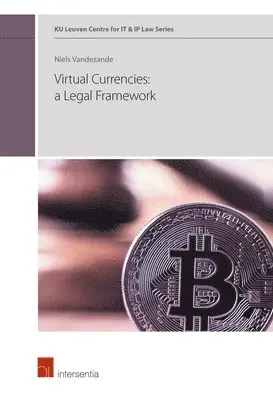
Virtual currencies: a legal framework
Inbunden, Engelska, 2018
1 937 kr
Skickas inom 5-8 vardagar
In the last few years, the cryptocurrency bitcoin has repeatedly made worldwide headlines with its fluctuations in value and the uncertainty regarding the legal framework under which it operates. While bitcoin has swiftly become the foremost example of a virtual currency, it is by no means the only one. In-game currencies and currencies used as part of a loyalty scheme are examples as of other forms of virtual currencies. Moreover, new forms of virtual currency used mainly for investment purposes - derived from cryptocurrencies such as bitcoin - are rapidly gaining hold. This book focuses on the legal aspects of virtual currencies from the perspective of financial and economic law. It establishes a typology of virtual currencies and assesses whether they can be considered as money. The author analyzes whether the EU legal frameworks on electronic money, payment services, anti-money laundering, and markets in financial instruments can be applied to virtual currencies. A functional comparison is made to the US, where more regulatory initiative has been identified. The book concludes by answering the question of whether - and how - virtual currencies should be regulated within the EU.
Del 3 - KU Leuven Centre for IT & IP Law Series
Intermediary Liability and Freedom of Expression in the EU: from concepts to safeguards
Inbunden, Engelska, 2018
1 510 kr
Skickas inom 5-8 vardagar
States increasingly delegate regulatory and police functions to Internet intermediaries. The delegation is achieved by providing an incentive in the form of conditional liability exemptions. In the EU, the exemptions enshrined in the E-Commerce Directive effectively require intermediaries to police online content if they wish to maintain immunity regarding third party content. Such an approach results in delegated private enforcement that may lead to interference with the right to freedom of expression. Involving intermediaries in content regulation may be inevitable. The legal framework, on which it is based, however, should come equipped with safeguards that ensure effective protection of the right to freedom of expression.This book analyses the positive obligation of the European Union to introduce safeguards for freedom of expression when delegating the realisation of public policy objectives to Internet intermediaries.It also identifies and describes the safeguards that should be implemented in order to better protect freedom of expression.In a time when these issues are of particular relevance, Intermediary liability and freedom of expression in the EU provides the reader with a broader perspective on the problem of delegated regulation of expression on theInternet. It also provides the reader with up-to-date information on the discussions in the EU.
Del 4 - KU Leuven Centre for IT & IP Law Series
When an Original Is Not Original
The originality requirement in Belgian law
Inbunden, Engelska, 2019
940 kr
Skickas inom 5-8 vardagar
Originality is an important element in different branches of law. For instance, under Belgian contract law, a written mutual agreement must be drafted in as many originals as there are parties. In other branches of law, there are requirements for the preservation of original documents. However, while originality may be an element common to different branches of law, there are clear indications that the precise meaning of this notion may be rather divergent between them. Moreover, the introduction of digital processes in many aspects of law has provided another dimension to this matter, as originality remains a difficult element to apply in the realm of electronic information.Currently, there are little to no guidelines on how to establish when electronic information is original and when it is not. Therefore, it is the aim of this book to analyse a select number of incarnations of the originality requirement in different branches of Belgian law in order to establish whether common elements or a common root can be found. These findings will subsequently be applied to the practice of digitalization in law in order to gain a better understanding of how the concept of originality should be interpreted in this matter.At a time when issues arising from digitalization in law are increasingly prevalent, this book aims to provide the reader with an examination of the current situation and attempts to find a uniform legal definition for the concept of originality that would be applicable across different branches of law.
Del 5 - KU Leuven Centre for IT & IP Law Series
Impact of Cybercrime on Belgian Businesses
Inbunden, Engelska, 2018
690 kr
Tillfälligt slut
Information technology offers unprecedented opportunities to individuals, businesses and the public sector but also creates new vulnerabilities to crime. Impressive cybercrimes have been reported in the media in recent years, demonstrating the grave harm that even a single cyberattack can cause. Yet no systematic assessment of the impact of cybercrime on Belgian society and economy had been conducted until the start of the research project Belgian Cost of Cybercrime (BCC) in 2013, which was funded by the Belgian Service Science Policy Office (BELSPO) and coordinated by the KU Leuven Centre for IT & IP Law (CiTiP), in collaboration with the KU Leuven Institute of Criminology (LINC).Building on that large multidisciplinary project, the book assesses the impact of cybercrime on businesses based in Belgium, drawing from a thorough conceptualization of both cybercrime and itsimpact. Using data collected through two surveys sent to more than 9,000 representatives of Belgian businesses, the authors report that most of the responding businesses are confronted with at least one type of cybercrime every year and some of them suffer serious harm from these incidents. Lastly, the book calls for the identification and implementation of effective preventive measures targeting the different types of cybercrime.
Del 6 - KU Leuven Centre for IT & IP Law Series
Data Protection Law in the EU: Roles, Responsibilities and Liability
Inbunden, Engelska, 2019
1 652 kr
Skickas inom 5-8 vardagar
EU data protection law imposes a series of requirements designed to protect individuals against the risks that result from the processing of their data. It also distinguishes among different types of actors involved in the processing, setting out different obligations for each actor. The most important distinction in this regard is the distinction between ''controllers'' and ''processors''. Together, these concepts provide the very basis upon which responsibility for compliance with EU data protection law is allocated. As a result, both concepts play a decisive role in determining the potential liability of an organisation under EU data protection law, including the General Data Protection Regulation (GDPR).Technological and societal developments have made it increasingly difficult to apply the controller-processor model in practice. The main factors are the growing complexity of processing operations, the diversification of processing, services and the sheer number of actors that can be involved. Against this background, this book seeks to determine whether EU data protection law should continue to maintain the controller-processor model as the main basis for allocating responsibility and liability.This book provides its readers with the analytical framework to help them navigate the intricate relationship of roles, responsibility and liability under EU data protection law. The book begins with an in-depth analysis of the nature and role of the controller and processor concepts. The key elements of each are examined in detail, as is the associated allocation of responsibility and liability. The next part contains a historical-comparative analysis, which traces the origin and development of the controller-processor model over time. To identify the main problems that occur when applying the controller-processor model in practice, a number of real-life use cases are examined (cloud computing, social media, identity management and search engines). In the final part, a critical evaluation is made of the choices made by the European legislature in the context of the GDPR. It is clear that the GDPR has introduced considerable improvements in comparison to EU Directive 95/46. In the long run, however, further changes may well be necessary. By way of conclusion, a number of avenues for possible improvements are presented.
Del 7 - KU Leuven Centre for IT & IP Law Series
Security and Law
Legal and Ethical Aspects of Public Security, Cyber Security and Critical Infrastructure Security
Inbunden, Engelska, 2019
1 367 kr
Skickas inom 5-8 vardagar
Security and law against the backdrop of technological development.Few people doubt the importance of the security of a state, its society and its organizations, institutions and individuals, as an unconditional basis for personal and societal flourishing. Equally, few people would deny being concerned by the often occurring conflicts between security and other values and fundamental freedoms and rights, such as individual autonomy or privacy for example. While the search for a balance between these public values is far from new, ICT and data-driven technologies have undoubtedly given it a new impulse. These technologies have a complicated and multifarious relationship with security.This book combines theoretical discussions of the concepts at stake and case studies following the relevant developments of ICT and data-driven technologies. Part I sets the scene by considering definitions of security. Part II questions whether and, if so, to what extent the law has been able to regulate the use of ICT and datadriven technologies as a means to maintain, protect or raise security, in search of a balance between security and other public values, such as privacy and equality. Part III investigates the regulatory means that can be leveraged by the law-maker in attempts to secure products, organizations or entities in a technological and multiactor environment. Lastly, Part IV, discusses typical international and national aspects of ICT, security and the law.
1 877 kr
Tillfälligt slut
Del 14 - KU Leuven Centre for IT & IP Law Series
Discrimination in Online Platforms
A Comparative Law Approach to Design, Intermediation and Data Challenges
Inbunden, Engelska, 2022
2 301 kr
Skickas
This book focuses on the legal governance of online platforms concerning direct and indirect discrimination against users in the housing, advertising, and labor markets. Through an extensive investigation of sources that include private company practices, antidiscrimination policies, collective and private litigation, court decisions, and public regulation, this book illustrates how statutory law and legal precedents in the E.U. and the U.S. are only partially equipped to address discrimination against statutorily protected classes in online platforms.In the analysis of the selected sources, the author showcases that the main obstacles to the full implementation of the equality principle rely on online platforms' structural challenges, including their aesthetic designs, matching tools, evaluation systems, and network effects that ultimately reinforce old biases against protected classes. In light of these structural challenges, the author concludes that the fight against discrimination in online platforms may produce the best results when oriented by a model of regulation that encourages private businesses to implement the principle of transparency, fairness and the active cooperation of antidiscrimination bodies.
Del 16 - KU Leuven Centre for IT & IP Law Series
Crypto-assets: the European Legal Framework
Inbunden, Engelska, 2023
2 104 kr
Tillfälligt slut