Legal Dimensions - Böcker
Visar alla böcker i serien Legal Dimensions. Handla med fri frakt och snabb leverans.
8 produkter
8 produkter
1 025 kr
Skickas inom 7-10 vardagar
At their simplest level, human relationships are about ties between people. These ties, however, are anything but simple; rather, they are complex interdependencies whose dynamic reciprocity of obligations and interests is not always represented in our legal thinking. This collection explores the intersection of interdependency and the law, and contemplates some of the key issues at stake in the way the law interprets and addresses human relationships.Part of a series that questions fundamental concepts of law, this book looks critically at the legal concepts that have framed these relationships: contract, fiduciary duty, the "duty to act fairly," the impartiality of decision makers, and privileged communication. Many of these obscure the element of interdependency. The authors argue that interdependency is a fruitful critical - and human - framework by which to re-evaluate some of our traditional legal concepts.The book will be of interest to law and society scholars and students, as it presents a different critical framework through which to analyze traditional human relationships.
358 kr
Skickas inom 7-10 vardagar
At their simplest level, human relationships are about ties between people. These ties, however, are anything but simple; rather, they are complex interdependencies whose dynamic reciprocity of obligations and interests is not always represented in our legal thinking. This collection explores the intersection of interdependency and the law, and contemplates some of the key issues at stake in the way the law interprets and addresses human relationships.Part of a series that questions fundamental concepts of law, this book looks critically at the legal concepts that have framed these relationships: contract, fiduciary duty, the "duty to act fairly," the impartiality of decision makers, and privileged communication. Many of these obscure the element of interdependency. The authors argue that interdependency is a fruitful critical - and human - framework by which to re-evaluate some of our traditional legal concepts.The book will be of interest to law and society scholars and students, as it presents a different critical framework through which to analyze traditional human relationships.
760 kr
Skickas
Part of a series designed to explore the role of law in structuring human relationships, this collection of essays re-evaluates the public-private divide to examine how it affects the legal forms that shape our personal relationships.
389 kr
Skickas inom 7-10 vardagar
We all have notions of what it means to commit a crime. Most of us are very much aware of the behaviours which, by law, constitute crime. Rarely, however, do we stop to consider why certain activities and behaviours are deemed criminal and others are not.What Is A Crime? examines how we define criminal conduct in contemporary society, and how we respond to it once it has been identified.Drawing from diverse scholarly traditions, including law, sociology, criminology and socio-legal studies, this rich collection of essays looks at the processes of defining crime and considers the varied and complex implications of our decisions to criminalize certain unwanted behaviour. From the perspective of various case studies, the contributors reflect on the social processes that inform definitions of crime, criminal law, and its enforcement, while illuminating the subjective nature of crime and questioning the role of law in dealing with complex social issues.What Is A Crime? will be of interest to a broad spectrum of readers with an interest in the governance of crime and its control in contemporary society. Students and scholars of law, sociology, political science, philosophy, and criminology will find this book invaluable in furthering their understanding of the processes of defining and responding to crime and criminal behaviour. It will also hold sway with policymakers, criminal justice practitioners, and anyone with a stake in our current approaches to crime.
358 kr
Skickas inom 7-10 vardagar
The study and practice of risk analysis, risk management, and thecommunication of risk has been the subject of heated debates. This isno less so when law is added to the mix. Despite the law'sconstant search for certainty, the concept of risk itself is inherentlyuncertain. From the precautionary principle to the role of researchethics boards, risk remains a value-laden term, difficult to define andeven more difficult to address.This book looks at law and risk in a variety of contexts andprovides insight into how courts use and interpret risk and how the lawallocates risk, as well as examining the regulation of riskyactivities. To demonstrate the linkages between law and risk, theessays tackle some difficult topics, including dangerous offenders, sexoffender notification, drug courts, genetic research, pesticide use,child pornography, and tobacco advertising.This careful consideration of whether the law adequately andappropriately responds to risk will be of interest to students andscholars of law and the social sciences, as well as to lawpractitioners and lawmakers.
1 025 kr
Skickas inom 7-10 vardagar
Long confined to the study of nationality, citizenship was not always considered a major concern of social scientists. In recent decades, however, the concept of citizenship has generated significant interest and intellectual debate in a variety of academic contexts. Globalization is changing the relationships between actors on the national and international stage and shifting the balance of power between them. These changes have spawned a wealth of scholarship across social science disciplines.The essays in Law and Citizenship add to this lively discourse and provide a framework for analyzing citizenship in an increasingly globalized world. A number of fundamental issues are addressed: How are traditional notions of citizenship erecting borders against those who are excluded? What are the impacts of changing notions of state, borders, and participation on our concepts of citizenship? Within territorial borders, to what extent are citizens able to participate, given that the principles of accountability, transparency, and representativeness remain ideals?There are numerous implications of the concept of citizenship for law and public policy in a number of different fields. International law, both private and public, poverty law, immigration law, constitutional law, history, political science, and sociology all reflect concepts of citizenship. Law and Citizenship will appeal to scholars and students in law and politics as well as those interested in the idea of citizenship in contemporary society.
334 kr
Skickas inom 7-10 vardagar
Long confined to the study of nationality, citizenship was not always considered a major concern of social scientists. In recent decades, however, the concept of citizenship has generated significant interest and intellectual debate in a variety of academic contexts. Globalization is changing the relationships between actors on the national and international stage and shifting the balance of power between them. These changes have spawned a wealth of scholarship across social science disciplines.The essays in Law and Citizenship add to this lively discourse and provide a framework for analyzing citizenship in an increasingly globalized world. A number of fundamental issues are addressed: How are traditional notions of citizenship erecting borders against those who are excluded? What are the impacts of changing notions of state, borders, and participation on our concepts of citizenship? Within territorial borders, to what extent are citizens able to participate, given that the principles of accountability, transparency, and representativeness remain ideals?There are numerous implications of the concept of citizenship for law and public policy in a number of different fields. International law, both private and public, poverty law, immigration law, constitutional law, history, political science, and sociology all reflect concepts of citizenship. Law and Citizenship will appeal to scholars and students in law and politics as well as those interested in the idea of citizenship in contemporary society.
382 kr
Skickas inom 7-10 vardagar
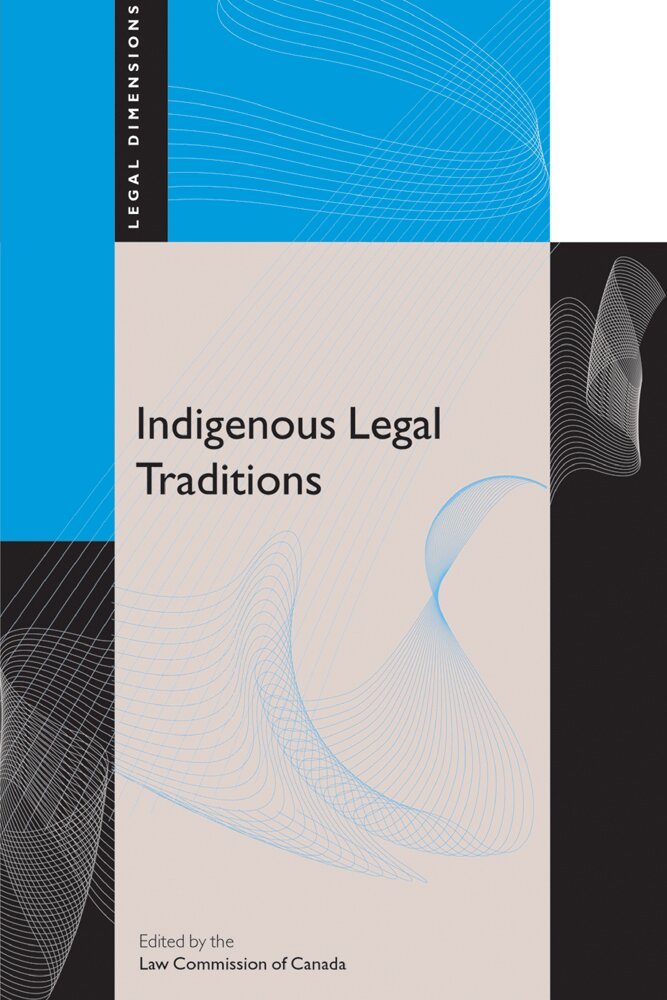
Although Indigenous peoples had their own systems of law based on their social, political, and spiritual traditions, under colonialism their legal systems have often been ignored or overruled by non-Indigenous laws. Today, however, these legal traditions are being reinvigorated and recognized as vital for the preservation of the political autonomy of Aboriginal nations and the development of healthy communities.The essays in this book present important perspectives on the role of Indigenous legal traditions in reclaiming and preserving the autonomy of Aboriginal communities and in reconciling the relationship between these communities and Canadian governments. Contributors include Andrée Lajoie, Minnawaanagogiizhigook (Dawnis Kennedy), Ghislain Otis, Ted Palys and Wenona Victor, Paulette Regan, and Perry Shawana. Common threads linking the essays include the relationship between Indigenous and Canadian legal orders, the importance of Indigenous legal traditions for Aboriginal communities' autonomy, and the ways in which these traditions might be recognized and given space in the Canadian legal landscape.In its examination of different aspects of and models for the recognition of Indigenous legal orders, this book addresses important issues relating to legal pluralism. It will be of interest to a wide audience including lawyers and legal academics, teachers, students, policy makers, and members of Aboriginal communities.