Library of Early Christology – serie
Visar alla böcker i serien Library of Early Christology. Handla med fri frakt och snabb leverans.
15 produkter
15 produkter
Häftad, Engelska, 2017
481 kr
Skickas inom 10-15 vardagar
In Angelomorphic Christology author Charles Gieschen demonstrates that angel and angel-related traditions, especially those built upon the so-called ""Angel of the Lord"" figure in the Hebrew Bible, had a profound impact upon the origin, development, and shape of early Christian claims about Jesus.Gieschen's book falls neatly into two halves. The first catalogues the various antecedents for Angelomorphic Christology - Jewish speculation about principal angels, mediator figures, and related phenomena - with chapters on ""An Angelomorphic God,"" ""Angelomorphic Divine Hypostases"" (including the Divine Name, the Divine Glory, Wisdom, the Word, the Spirit and Power), Principal Named Angels, and Angelomorphic Humans. The book's second half examines the evidence for Angelomorphic Christology in early Christian literature. This portion begins with a brief overview of the principal Angel and Angelomorphic Christology from Justin to Nicea and then examines in turn the Pseudo-Clementines, the Shepherd of Hermas, the Ascension of Isaiah, the Revelation of John, the Fourth Gospel, the Epistle to the Hebrews, and the Pauline Corpus.Gieschen argues that Christian use of the angelomorphic tradition did not spawn a new and variant kind of Christology, one that competed with accepted belief about Jesus for early Christians' favor, but instead shows how Christians adapted an already variegated Jewish tradition to weave a single story about a common Lord.
Häftad, Engelska, 2017
372 kr
Skickas inom 10-15 vardagar
The earliest Christian communities engaged in bold and imaginative rereadings of their Scriptures - none more astounding and potentially inflammatory than of the passages that focus upon the name and nature of Israel's God. In this volume, David B. Capes tracks the Apostle Paul's use of Old Testament texts that directly invoke God's name, Yahweh, for what they can disclose about the earliest Christian beliefs and practices. Since Paul writes to his churches in Greek and quotes the Old Testament extensively from the Septuagint, Capes focuses upon Old Testament quotations and allusions in which kyrios translates the divine name. He discovers that Paul applies a majority of his quotations of and allusions to Yahweh texts to the Lord Jesus Christ, thus offering to him designations originally reserved for Israel's God. Given the high regard that Judaism placed upon both Scripture and the divine name in the first century, the application of Yahweh texts to Jesus bears significant christological weight. These texts reveal that Paul considered Jesus to be more than a man or a divine agent - Paul believed that Christ was in some sense Yahweh Himself. Capes thus unveils Paul's strategy for the reading of Scripture, which provides a basis for properly interpreting early Christianity's veneration of Jesus, including prayers and hymns to Christ, the authoritative status attributed to Jesus' words, and the notions of Christ's pre-existence, role in creation, and authority as coming eschatological Savior and Judge. How Paul reread his Bible goes hand-in-glove with the differences that developed between Christianity and Judaism.
Häftad, Engelska, 2017
372 kr
Skickas inom 10-15 vardagar
In Seek to See Him April DeConick argues that the Gospel of Thomas, contrary to the way Thomas is normally understood, does not originate from gnostic traditions. Instead, she proposes that Thomas is best explained by Hermetic and Second Temple Jewish mystical traditions. DeConick substantiates her proposal by first examining the developmental stages of the Gospel of Thomas, questioning the classification of Thomas as gnostic on the basis of Thomas' dualism and his speculation about original sin. DeConick carefully delineates the difference between Thomas' and gnostic views of the world and of salvation before going on to demonstrate the crucial role of purification, heavenly ascent, and visio dei - final transformation through an experience of seeing God - in this Gospel. In the end, DeConick shows that Thomas is best explained as arising from the fusion of Jewish Mysticism and Hermetic praxis and not as being shaped by gnostic traditions.
Häftad, Engelska, 2017
481 kr
Skickas inom 10-15 vardagar
The relationship among Judaism, Gnosticism, and Christianity perpetually eludes easy description. While it is clear that by the second and third centuries of the Common Era these three religious groups worked hard to distinguish themselves from each other, it is also true that the three religious traditions share common religious perspectives. Jarl Fossum, in The Name of God and the Angel of the Lord, examines this common heritage by proposing that the emergence of an anticosmic gnostic demiurge was not simply Gnosticism's critique of the Jewish God or a metaphysical antisemitism. The figure of the gnostic demiurge arose from Judaism itself. Fossum demonstrates that the first gnostic versions of the demiurge constituted a subordinated dualism. Fossum then turns to Judaism, in particular Samaritanism's portrayal of a principal angel. In distinction from non-Samaritan Jewish examples - where the Angel of the Lord bears the Divine Name but is not a demiurge, or examples where the Divine Name is said to be the instrument of creation but is not an angel or personal being - Fossum discovers a figure who bore God's name, was distinct from God, and was God's instrument for creation. Only in Samaritan texts is God's vice-regent personalized, angelic, demiurgic, and the bearer of God's name. In the end, The Name of God and the Angel of the Lord reveals that not all gnostic speculation was anti-Jewish and, indeed, emerging gnostic and Christian traditions borrowed as much from Judaism as they criticized and rejected.
Häftad, Engelska, 2017
372 kr
Skickas inom 10-15 vardagar
While the relationship between Second Temple Jewish exegesis and early Christian exegesis as demonstrated in the New Testament is universally recognized, the reasons for their similarities and differences are often elusive. Donald H. Juel in Messianic Exegesis seeks to unknot this tangled web of interpretation. Juel's thesis is simple: Christianity's origins are rooted in the earliest Christian interpretations of Israel's Scriptures. The difficulty resides in showing how these distinctive interpretations arose. Juel argues that the events of Jesus' life form the fulcrum for the Christian re-reading of Jewish Scripture. In particular, Juel shows how Christian belief in a crucified and risen Messiah guided both the selection and appropriation of Old Testament texts - texts like 2 Samuel 7, Daniel 7, and Psalms 2 and 110. With the confession ""Jesus is the Messiah"" as the central claim of Christianity, Juel is able to show the fluidity of contemporary Jewish exegesis while also making the anomalous uses of Scripture within the early Christian community understandable. Christians proclaimed Jesus as Messiah throughout their exegesis and thereby defined their emerging community through the way they read Scripture.
Häftad, Engelska, 2017
481 kr
Skickas inom 10-15 vardagar
Glory formed an essential part of early Christianity's christological vocabulary. Along with ""word,"" ""image,"" and ""wisdom,"" Glory ( doxa) language worked to define the identity, status, and even uniqueness of Christian belief in Jesus. In Paul's Glory-Christology author Carey C. Newman, using methodology developed in semantics, semiotics, and literary theory, examines the origin and rhetoric of Paul's Glory-language. Newman divides the investigation into three distinct tasks: (1) to plot the tradition-history of Glory that formed part of Paul's linguistic world, (2) to examine Paul's letters, in light of the reconstructed tradition-history of Glory, in order to discern the rationale of Paul's identification of Christ as Glory, and (3) to map out the implications of such an identification for Paul's theological and rhetorical strategy. Newman reaches four conclusions for understanding Paul. First, Paul inherited a symbolic universe with signs already full of signification. Second, awareness of the connotative range of a surface symbol aids in discerning Paul's precise contingent strategy. Third, knowing a symbol's referential power defines and contributes to the deeper structure of Paul's theological grammar. Finally, the heuristic power within the construals of the Glory tradition coalesce in Paul's Christophany and thus provide coherence at the deepest level of Paul's Christology. Taken together, these conclusions reveal that nothing less than Paul's declaration of Jesus as God is expressed in his designation of Jesus as Glory.
Häftad, Engelska, 2017
481 kr
Skickas inom 10-15 vardagar
Second Temple Judaism exerted a profound and shaping influence upon early Christianity. The Jewish Roots of Christological Monotheism documents this influence by exploring the ways in which the Christian praxis of Christ-devotion in the first two centuries of the Common Era can be understood as a manifestation of Jewish monotheism. The volume approaches this phenomenon along four distinctive lines of inquiry: (1) reexamining (and problematizing) the theological force of monotheism during the Second Temple period; (2) retracing the historical steps of Christianity's adaptation, mutation, and/or redefinition of Jewish monotheism; (3) exploring and debating the influence of non-Jewish traditions on this process; and (4) mapping how Christianity's unique appropriation of Jewish monotheism helps explain the intriguing relationships among emerging Christian, Jewish, and gnostic communities. Eighteen chapters, each from an expert in the study of early Judaism and Christianity, comprise the volume. The chapters collectively demonstrate how the creation of new mythic narratives, the revelatory power of mystical experiences, and the sociology of community formation capitalized on Jewish mediator traditions to initiate the praxis of Christ-devotion.
Häftad, Engelska, 2017
481 kr
Skickas inom 10-15 vardagar
The public worship of the risen Christ as depicted in John's Apocalypse directly contradicts the guiding angel's emphasis that only God should be worshiped (Revelation 19:10; 22:8-9). In Angel Veneration and Christology, Loren Stuckenbruck explores this contradiction in light of angel veneration in Early Judaism. Stuckenbruck surveys a wide variety of Jewish traditions related to angelic worship and discovers proscriptions against sacrificing to angels; prohibitions against making images of angels; rejections of the ""two powers""; second-century Christian apologetic accusations specifically directed against Jews; and, most importantly, the refusal tradition, widespread in Jewish and Jewish-Christian writings, wherein angelic messengers refuse the veneration of the seer and exhort the worship of God alone. While evidence for the practice of angel veneration among Jews of antiquity (Qumran, pseudepigraphal literature, and inscriptions from Asia Minor) does not furnish the immediate background for the worship of Christ, Stuckenbruck demonstrates that the very fact that safeguards to a monotheistic framework were issued at all throws light on the Christian practice of worshiping Jesus. The way the Apocalypse adapts the refusal tradition illuminates Revelation's declarations about and depictions of Jesus. Though the refusal tradition itself only safeguards the worship of God, Stuckenbruck traces how the tradition has been split so that the angelophanic elements were absorbed into the christophany. As Stuckenbruck shows, an angelomorphic Christology, shared by the author of Revelation and its readers, functions to preserve the author's monotheistic emphasis as well as to emphasize Christ's superiority over the angels - setting the stage for the worship of the Lamb in a monotheistic framework that does not contradict the angelic directive to worship God alone.
Häftad, Engelska, 2018
426 kr
Skickas inom 10-15 vardagar
Oscar Cullmann's The Christology of the New Testament was the standard student textbook in New Testament courses and the measuring stick for scholarly inquiry into Christology for decades. An enduring classic, this book is based on a lifetime of study from one of the most creative and disciplined minds ever to tackle the problem of New Testament Christology. Cullmann moves methodically through his careful philological and textual consideration of the various titles used for Jesus in the New Testament, dividing them into four groups: titles used to refer to Jesus' earthly life (prophet, servant, and priest); titles used to refer to Jesus' eschatological work (Messiah and Son of Man); titles used to refer to Jesus' present work in the church (Lord and Savior); and titles used to refer to Jesus' preexistence (Word and Son of God). In each case, he weighs the New Testament's usage of each title against the Old Testament, Second Temple Jewish, and Hellenistic semantic backgrounds. Though Cullmann sifts the evidence analytically and presents it systematically, the end result is not simply a christological lexicon. Instead, he creates a cohesive picture by showing that early Christianity's view of Jesus originated with the historical Jesus himself. For Cullmann, New Testament Christology was not a later Hellenistic imposition upon earlier Jewish beliefs about Jesus. Rather, the titles used for Jesus form a chain of specific events centered around Jesus, events that fit into and extend the long string of God's saving deeds in history. Cullmann's Christology remains as instructive and important today as when it first appeared - and still repays careful reading and study.
Häftad, Engelska, 2018
481 kr
Skickas inom 10-15 vardagar
In the early '70s, James M. Robinson (Claremont) and Helmut Koester (Harvard), both students of Bultmann, broke new ground in their Trajectories through Early Christianity. The eight essays that comprise this volume seek a wholesale redefinition of the task of New Testament studies, as well as illustrating this newly conceived task.Robinson and Koester claim that the New Testament cannot be read apart from other early Christian literature and that the regnant designation of ""canon"" is misleading because it obscures the essential fluidity of early Christianity. Robinson and Koester not only question the artificial limits of the New Testament as a whole, but also the utility of the most commonly accepted forms ( Gattungen) that constitute the New Testament.In the end, even the labels ""orthodoxy"" and ""heresy"" should be abandoned - along with an outmoded belief that orthodoxy preceded heresy and formed the center of Christianity. From its birth, Christianity was pluriform, and what later came to be known as ""orthodoxy"" and ""heresy"" were only two of many equally legitimate trajectories running through Christianity.Robinson and Koester's bold wrestling with the basic question of Christian origins proves as instructive today as it did over forty years ago: was there ever identifiable unity in early Christianity, or has diversity always been the measuring stick?
Häftad, Engelska, 2018
575 kr
Skickas inom 10-15 vardagar
At the turn of the twentieth century, a group of famed scholars at the University of G?Âttingen founded a movement that came to be known as the ""History of Religions School."" In their approach to Christian origins and early Christian belief about Jesus they emphasized the degree to which Christianity was a product of its time. Christians borrowed and adapted ideas already in wide circulation to craft their claims about Christ.In his now classic Hellenistic Mystery-Religions (first published in 1910), Richard Reitzenstein seeks to establish the direct dependence of early Christianity on Hellenistic, Mandaean, and Iranian mythology and ritual. While written before the discoveries of Qumran and Nag Hammadi, Reitzenstein's knowledge of ancient texts still warrants careful reading. Even if one rejects his claim that the Apostle Paul was ""the greatest of all Gnostics,"" Reitzenstein's rigorous attempt to root Christianity in its historical context and demonstrate the genetic development of religious belief and practice merits both commendation and careful attention.
Häftad, Engelska, 2019
481 kr
Skickas inom 10-15 vardagar
Häftad, Engelska, 2008
778 kr
Skickas inom 10-15 vardagar
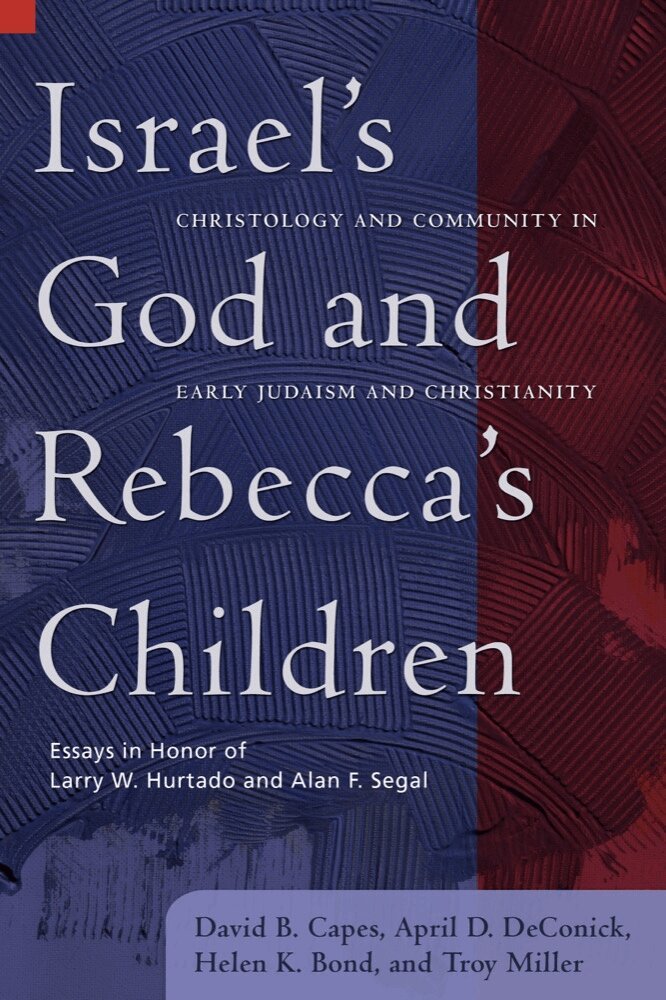
Israel's God and Rebecca's Children is a collection of essays written as a tribute to the lasting scholarship and friendship of Larry Hurtado (University of Edinburgh) and Alan Segal (Barnard College), two scholars who have contributed significantly to the contemporary understanding of Second Temple and Rabbinic Judaism and early Christianity. Their colleagues and friends examine a wide range of topics that have been the focus of Hurtado and Segal's research, including Christology, community, Jewish-Christian relations, soteriology and the development of early Christianity. Together these essays reconceptualize Christology and community in Judaism and Christianity and provide valuable insights into the issues of community and identity.
Häftad, Engelska, 2012
481 kr
Skickas inom 10-15 vardagar
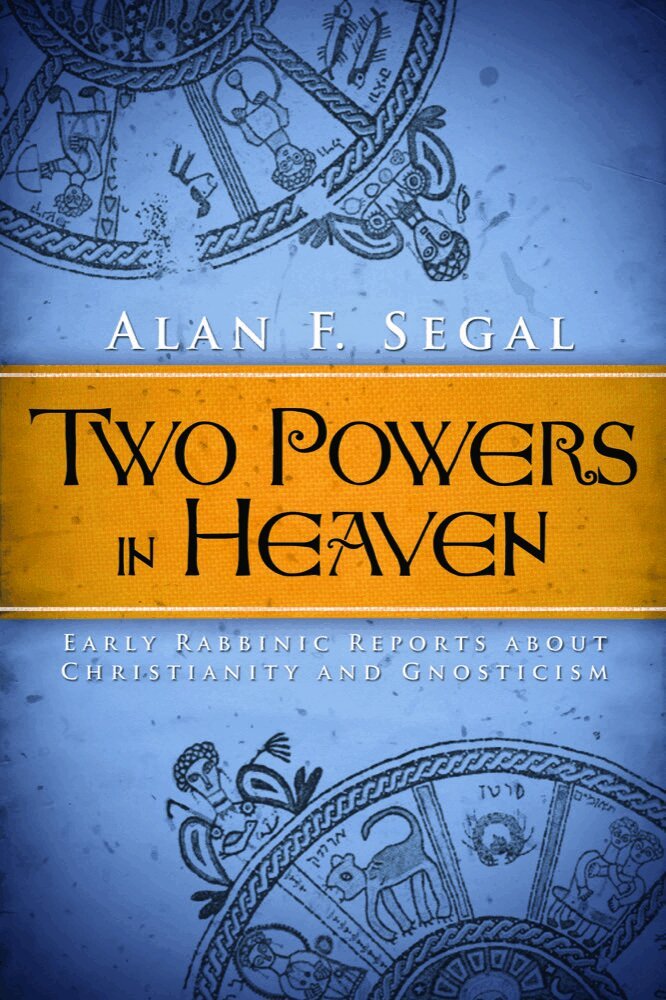
In his now classic Two Powers in Heaven, Alan Segal examines rabbinic evidence about early manifestations of the ""two powers"" heresy within Judaism. Segal sheds light upon the development of and relationships among early Christianity, Gnosticism, and Merkabah mysticism and demonstrates that belief in the ""two powers in heaven"" was widespread by the first century, and may have been a catalyst for the Jewish rejection of early Christianity. An important addition to New Testament and Gnostic scholarship by this much revered scholar, Segal's Two Powers in Heaven is made available once again for a new generation.
Häftad, Engelska, 2013
720 kr
Skickas inom 3-6 vardagar
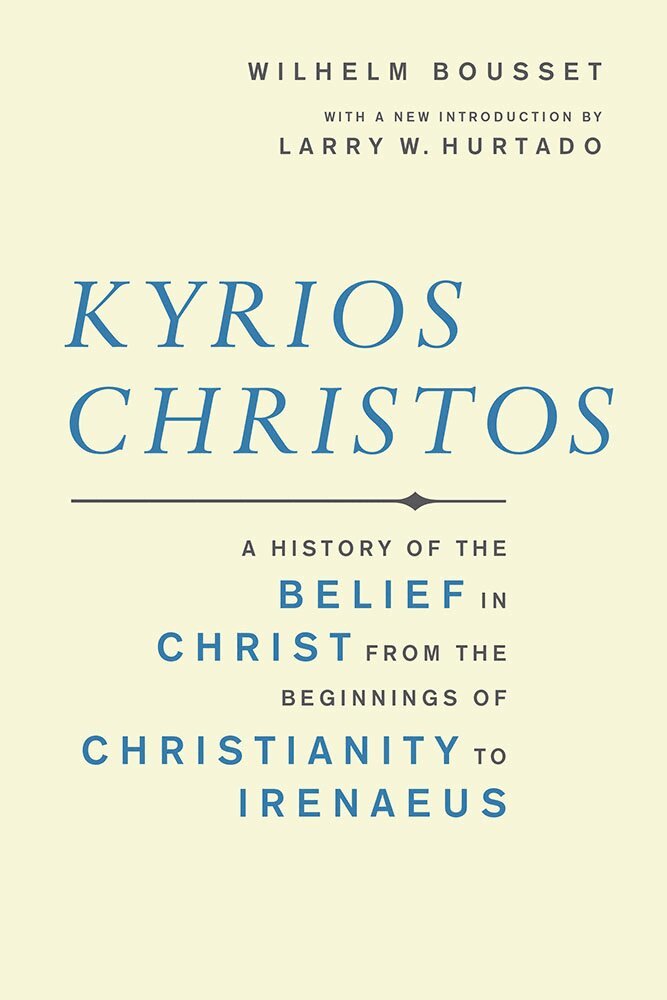
In Kyrios Christos, Wilhelm Bousset argues that the Hellenistic Church's declaration of "Jesus as Lord" is a transformation of the pre-Christian Judaic community's understanding of Jesus as the Son of Man. This unique distinction between the primitive Palestinian community and Hellenistic Christianity reveals how the earliest Christian beliefs were informed by existing religious influences. A well-known classic, Kyrios Christos defined the research agenda for nearly a century concerning the belief in Jesus as Lord and Christ from the New Testament through Irenaeus and his contemporaries. Bousset's landmark, with a new introduction by Larry Hurtado, is now made available for a new generation of students and scholars seeking to delve further into the ancient world of the early Christians.