Libri Historici - Böcker
Visar alla böcker i serien Libri Historici. Handla med fri frakt och snabb leverans.
6 produkter
6 produkter
297 kr
Skickas
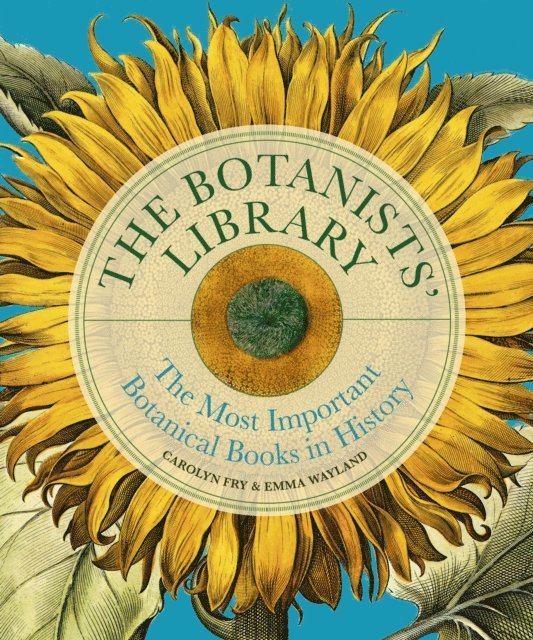
Discover a vast treasure trove of botanical knowledge in The Botanist’s Library, a superbly illustrated collection of 300+ seminal books and illustrations from throughout history.From the earliest manuscripts penned by visionary naturalists to the modern tomes that continue to shape our understanding of the plant kingdom, this book is a testament to the tireless dedication of the world's greatest botanists. Its compelling narrative and visual journey make it a must-have addition to the library of anyone fascinated by the beauty and complexity of the plant kingdom.This complete guide traces the development of botanical science through era-defining publications, covering: Historia Plantarum, the first history of botany, written between c. 350 BC and c. 287 BC in which Theophrastus described plants by their uses, and attempted a biological classification based on how plants reproduced to the authors of the herbals of the 16th century Brunfels, Fuchs, Bock and Mattioli, who regarded plants as the vehicles of medicinal virtues The golden age of the 18th- and 19th-century flower hunters who travelled to every corner of the world in search of new and exotic plants Today’s most significant works of botanical reference Each chapter delves into the pages of a seminal work, unveiling the insights, controversies, and stories behind the books that have shaped our understanding of the plant world. Whether you are a seasoned botanist, a budding enthusiast, or simply someone with an insatiable curiosity about the natural world, The Botanist's Library offers a comprehensive reference that will enrich your understanding of botany and its evolution.
Atlas of Atlases
Exploring the most important atlases in history and the cartographers who made them
Inbunden, Engelska, 2022
297 kr
Skickas
This beautiful book is a lavishly illustrated look at the most important atlases in history and the cartographers who made them.Atlases are books that changed the course of history. Pored over by rulers, explorers and adventures these books were used to build empires, wage wars, encourage diplomacy and nurture trade.Written by Philip Parker, an authority on the history of maps, this book brings these fascinating artefacts to life, offering a unique, lavishly illustrated guide to the history of these incredible books and the cartographers behind them. All key cartographic works from the last half-millennium are covered, including: The Theatrum Orbis Terrarum, considered the world’s first atlas and produced in 1570 by the Dutch, geographer Abraham Ortelius. The 17th-century Klencke – one of the world’s largest books that requires 6 people to carry it The Rand McNally Atlas of 1881, still in print today and a book that turned its makers, William H Rand and Andrew McNally into cartographic royalty.This beautiful book will engross readers with its detailed, visually stunning illustrations and fascinating story of how map-making has developed throughout human history.
364 kr
Skickas
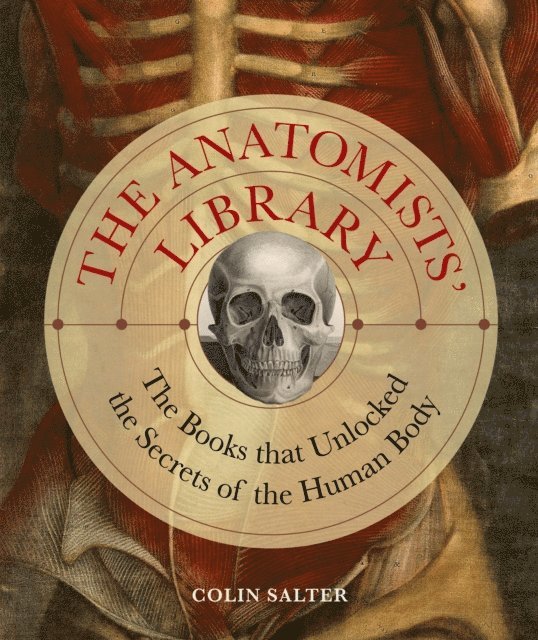
The Anatomist's Library is a fascinating chronological collection of the best anatomical books from six centuries, charting the evolution of both medical knowledge and illustrated publishing.There is a rich history of medical publishing across Europe with outstanding publications from Germany, France, Italy, Netherlands, Spain, UK, and also many from Persia and Japan. Because of the high value of accurate medical textbooks, it was these works that pushed the boundaries of illustrated publishing. They commanded the expert illustrators and skilled engravers and hence didn’t come cheaply. They were treasured by libraries and their intrinsic worth has meant that there is an incredible wealth of beautifully preserved historic examples from the 15th century onwards The enduring popularity of Gray’s Anatomyhas shown that there is a long-term interest in the subject beyond the necessity of medical students to learn the modern equivalent – the 42nd edition (2020) – from cover to cover. But Englishman Henry Gray was late in the field and never saw the enduring success of his famous work. Having first published the surgeon’s reference book in 1858, he died in 1861 after contracting smallpox from his nephew (who survived). He was just 34. Gray was following on from a long tradition of anatomists starting with Aristotle and Galen whose competing theories about the human body dominated early medicine. However they did not have the illustrative skills of Leonardo da Vinci who was trained in anatomy by Andrea del Verrocchio. In 1489 Leonardo began a series of anatomical drawings depicting the human form. His surviving 750 drawings (from two decades) represent groundbreaking studies in anatomy. However none of Leonardo's Notebooks were published during his lifetime, they only appeared in print centuries after his death. Brussels-born Andries van Wesel (Andreas Vesalius) professor at the University of Padua is deemed to be the founder of modern anatomical reference with his 1543 work De Humani Corporis Fabrica Libri Septem ("On the fabric of the human body in seven books"). An Italian contemporary was Bartolomeo Eustachi who supported Galen’s medical theories. Among other discoveries he correctly identified the Eustachian tube and the arrangement of bones in the inner ear. His Anatomical Engravings were completed in 1552, nine years after Vesalius’s great work, but remained unpublished until 1714. These are just two entries in a book brimming with an abundance of important illustrated works – with some more primitive examples from the 15th century, up to the 42nd edition of Gray’s in the 21st.
297 kr
Skickas
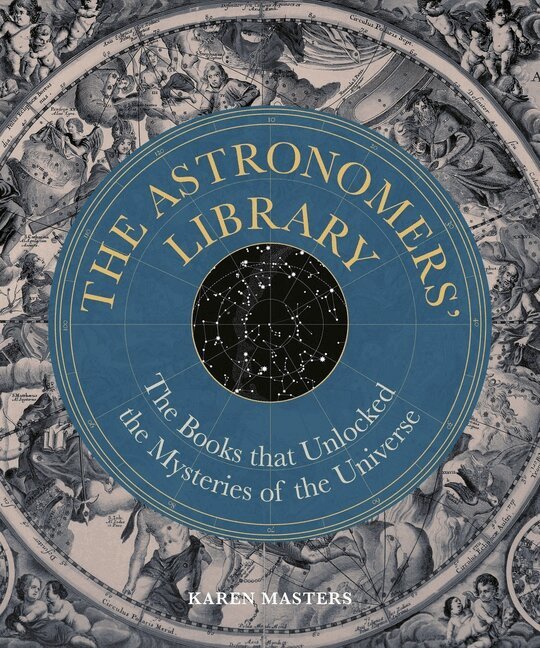
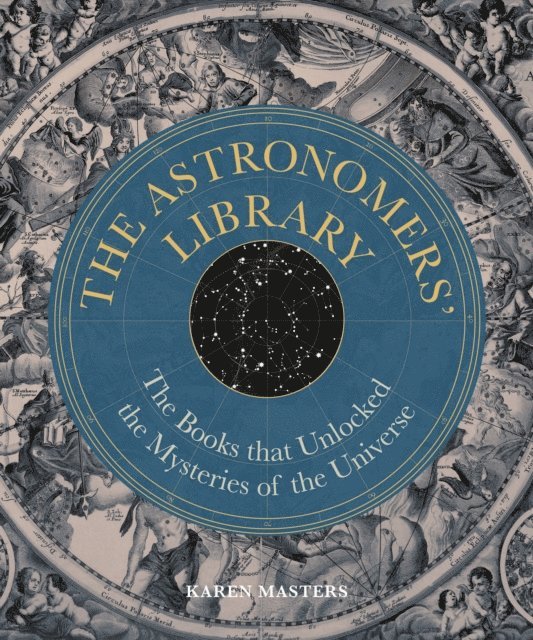
Indulge in this collection of the best astronomy books from the past 800 years. The Astronomers' Library is a rich history of astronomy (and astrology) publishing across Europe.This is a carefully selected arrangement of publications from all over the continent – Germany, France, Italy, Netherlands, Spain, and the UK. And of course, as the original world leader in astrology, the middle east is featured, with multiple books from Persia.Humankind has looked to the heavens since the dawn of time, wondering what is out there, as well as how everything works and (originally) who was responsible for it. Every tribe, race and civilization has wondered about our place in the universe and what lies beyond and what lies within it, below our feet.Lately, attention has turned to the origins of the universe. From the turn of the millennium, knowledge and ideas were recorded, first on tablets or rock, then in the form of simple manuscripts, and eventually in a much more elaborate fashion as illustrative and engraving skills evolved.The advent of printed books saw the production of highly illustrated tomes that showed off the skills of the printers as well as the newfound knowledge of the scholars and artists that wrote them.Many of these works pushed the boundaries of illustrated publishing (and continue to do so to this day). They commanded expert illustrators and skilled engravers and hence didn’t come cheaply. They were treasured in the libraries of the wealthy and their intrinsic worth has meant that there is an incredible wealth of beautifully preserved historic examples from the 14th century onwards.The significant difference we acknowledge today between astronomy and astrology has a relatively recent past, and the stars have long been associated with creatures, gods, characters and all sorts of divine beings. The study of such has a long, fascinating history that is shown in beautiful detail in the pages of these many beautiful books, and the transition from seeing the stars as characters to understanding them as spinning, celestial beings and part of our huge universe is akin to witnessing the history of the world.As far back as the tenth century, Persian scholars such as Abd al-Rahman al-Sufi was recording his findings, observations and speculations on the wider universe, in his Book of Fixed Stars. The focus turned to Europe in the Middle Ages, with Germany, Holland and England the centres of study and publication. Following the “Copernican Revolution”, observation and study underwent a radical change, paving the way for astronomers such as Kepler, Galilei and Newton to shed further light on the nature of the planets and stars of our known systems, and the ground beneath our feet. Each of those famous names contribute to the illustrated books that are featured within.
297 kr
Kommande
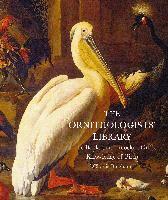
The Ornithologists’ Library is a beautifully illustrated exploration of the most influential books in the study of birds. From the pioneering works of John James Audubon and Gilbert White to modern field guides and conservation manifestos, this book traces how key texts have shaped our understanding of avian life—and why they matter now more than ever.At a time when bird populations are declining at an alarming rate due to habitat destruction, climate change, and human activity, this book highlights the role of literature in inspiring conservation action. By revisiting the groundbreaking works that deepened our appreciation of birds, we can better understand the urgency of protecting them today.Arranged chronologically, each chapter will focus on landmark books in ornithology, providing historical context, key insights, and its impact on bird science and conservation. Stunning reproductions of original illustrations, book covers, and archival material will accompany engaging narratives. The book will also draw connections between past knowledge and today’s conservation challenges, showing how these works continue to shape our efforts to protect bird species and their habitats.Chronological journey from early manuscripts to modern classicsBiographical insights into the authors and their contributions to ornithology and conservationHigh-quality illustrations of birds, book pages, and rare archival materialsGlobal perspective, covering both Western and non-Western contributionsContemporary relevance, linking historical books to modern conservation efforts and challengesBirds are powerful indicators of environmental health, and their decline signals broader ecological crises. This book will appeal to bird enthusiasts, conservationists, historians of science, bibliophiles, and nature lovers. It offers a visually rich and intellectually engaging tribute to the literature of ornithology while emphasising the urgent need to preserve the natural world these books have documented for centuries.
289 kr
Skickas
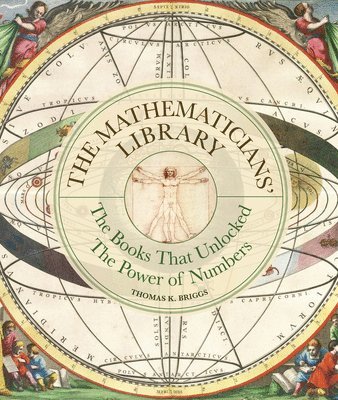
Discover the story of mathematics like never before with The Mathematicians’ Library, an extraordinary collection that chronicles the evolution of mathematical thought and its profound impact on the world. This expertly curated anthology brings together the most influential works and authors from across history, showcasing the journey of mathematical discovery from ancient tablets to contemporary volumes.The Mathematicians’ Library takes you through the pages of history, featuring groundbreaking works like Euclid’s Elements, Fibonacci’s Liber Abaci, Hilbert’s Foundations of Geometry, and Mandelbrot’s The Fractal Geometry of Nature. Each book offers a unique glimpse into how mathematics has shaped human civilization, guiding everything from transportation and commerce to art, science, and beyond.Mathematics is the invisible force that governs our daily lives, influencing everything from the weather forecasts we trust to the technology we depend on. It has been a cornerstone of human progress, evolving through centuries of research, discovery, and collaboration across cultures. This book reveals that legacy by presenting works that have changed the way we understand our world, from ancient knowledge inscribed on clay tablets, the contributions of Babylonian, Greek, Roman, Chinese, Islamic, and Maya scholars, The Mathematicians’ Library offers unparalleled access to the greatest minds in mathematics—Plato, Pythagoras, Euclid, Hypatia, Galileo, Einstein, and more.The Mathematicians’ Library is more than just a collection; it's a journey through the intellectual milestones that have defined our understanding of the world. Whether you're a scholar, a history enthusiast, or simply curious about the forces that shape our lives, this collection will captivate and inspire. Unlock the secrets of mathematics and discover the brilliance behind the numbers that rule our world.Table of contents:IntroductionThe Origins of MathematicsPrehistoricThe Global Evolution of Mathematics (Babylon, Egypt, Greece, Rome, China, India, Islam, Maya, Medieval Europe)The Scientific RevolutionModern MathematicsThe FutureBibliographyIndex