Häftad, Engelska, 2011
1 655 kr
Skickas inom 10-15 vardagar
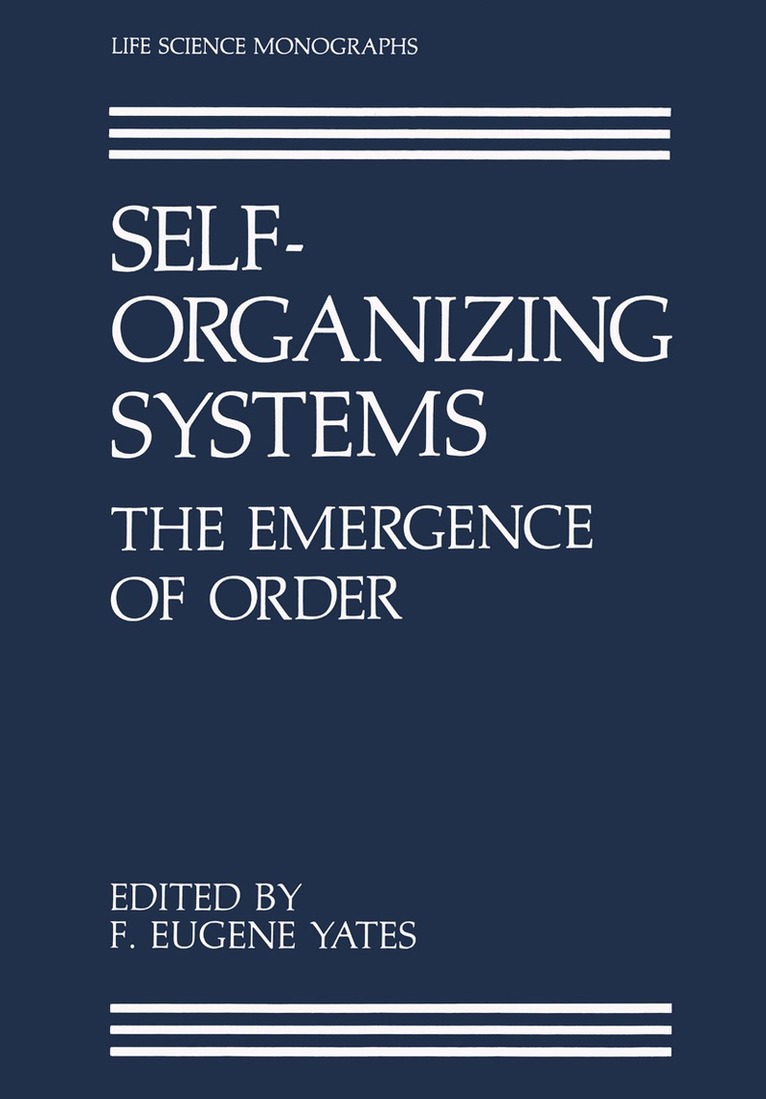
Technological systems become organized by commands from outside, as when human intentions lead to the building of structures or machines. But many nat ural systems become structured by their own internal processes: these are the self organizing systems, and the emergence of order within them is a complex phe nomenon that intrigues scientists from all disciplines. Unfortunately, complexity is ill-defined. Global explanatory constructs, such as cybernetics or general sys tems theory, which were intended to cope with complexity, produced instead a grandiosity that has now, mercifully, run its course and died. Most of us have become wary of proposals for an "integrated, systems approach" to complex matters; yet we must come to grips with complexity some how. Now is a good time to reexamine complex systems to determine whether or not various scientific specialties can discover common principles or properties in them. If they do, then a fresh, multidisciplinary attack on the difficulties would be a valid scientific task. Believing that complexity is a proper scientific issue, and that self-organizing systems are the foremost example, R. Tomovic, Z. Damjanovic, and I arranged a conference (August 26-September 1, 1979) in Dubrovnik, Yugoslavia, to address self-organizing systems. We invited 30 participants from seven countries. Included were biologists, geologists, physicists, chemists, mathematicians, bio physicists, and control engineers. Participants were asked not to bring manu scripts, but, rather, to present positions on an assigned topic. Any writing would be done after the conference, when the writers could benefit from their experi ences there.