Massachusetts Studies in Early Modern Culture - Böcker
Visar alla böcker i serien Massachusetts Studies in Early Modern Culture. Handla med fri frakt och snabb leverans.
7 produkter
7 produkter
659 kr
Skickas inom 3-6 vardagar
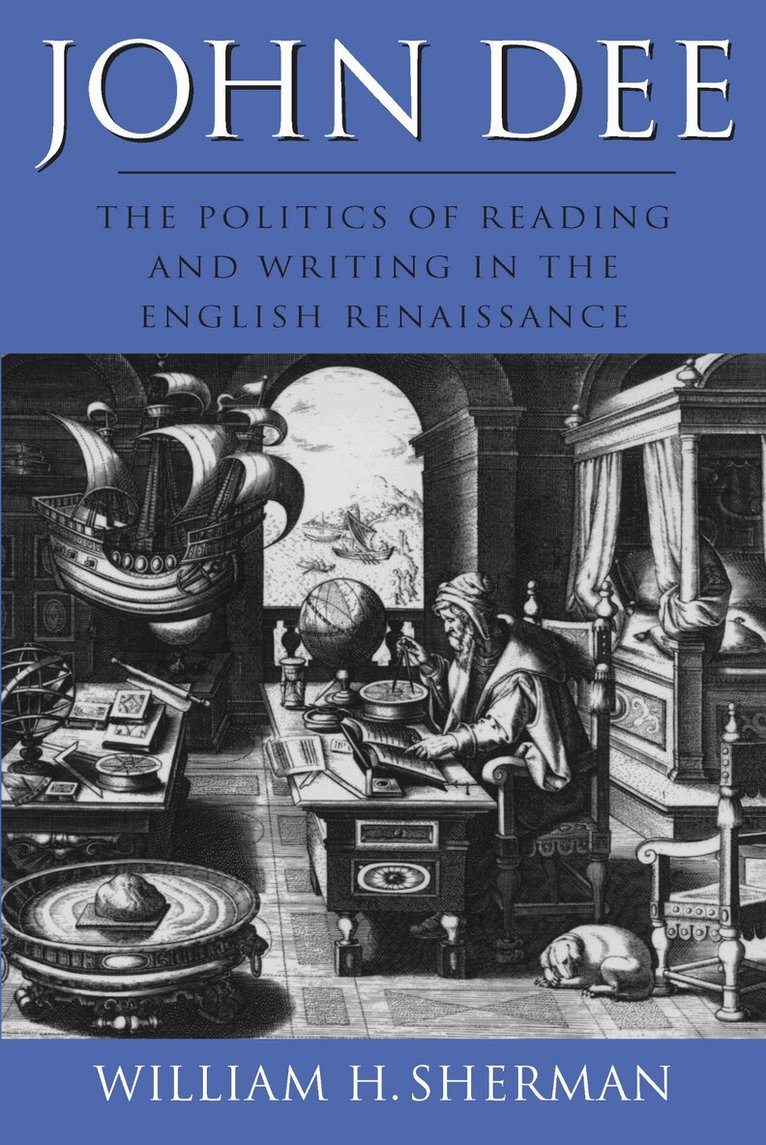
This text presents a reassessment of the career and cultural background of John Dee (1527-1609), one of Elizabethan England's most interesting figures. Challenging the conventional image of the isolated eccentric philosopher, Sherman situates Dee in a fresh context, revealing that he was a well-connected adviser to the academic, courtly and commercial circles of his day. The centrepiece of Dee's life is shown to be the massive library and museum at Mortlake, perhaps the first modern ""think tank"". There he lived, worked and entertained some of the period's most influential intellectuals and politicians. Sherman discusses Dee's household arrangements, reading practices, and writings on subjects ranging from calendar reform to imperial policy. He also offers an account of the broad network of scholars and other experts who, along with Dee, operated behind the political scenes, providing textual and technological support during this time of unprecedented intellectual and global expansion.
387 kr
Skickas inom 7-10 vardagar
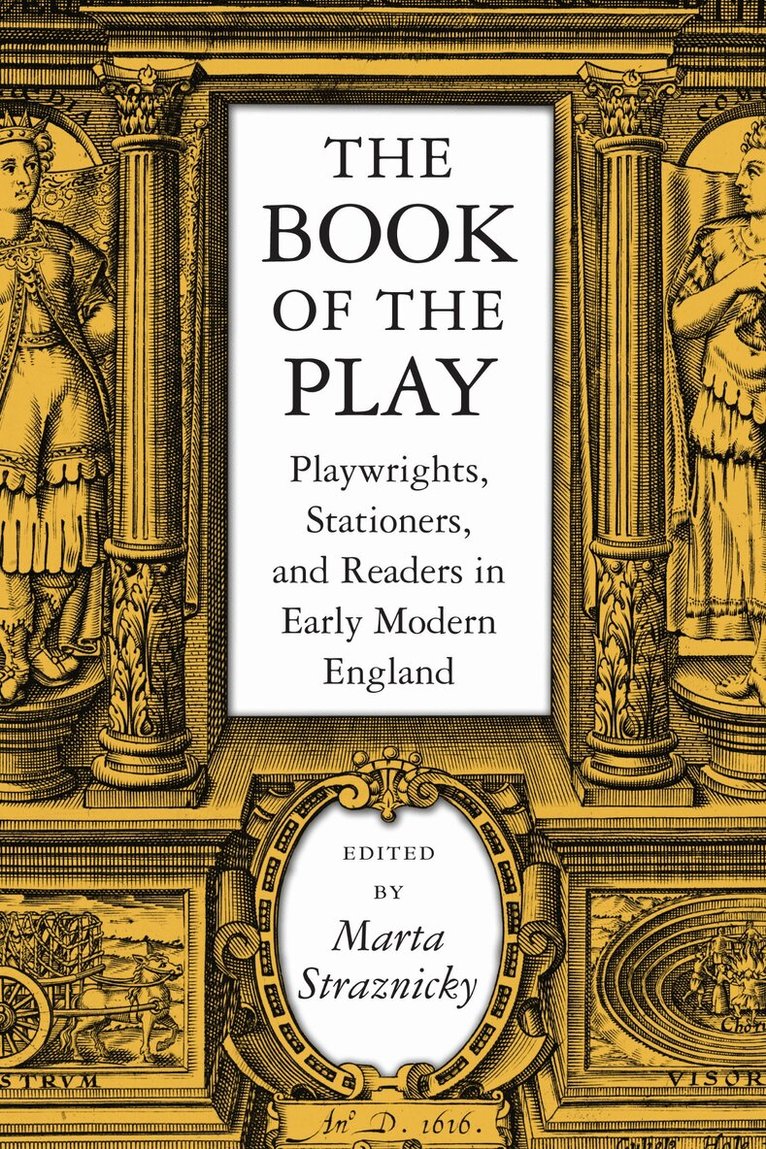
The Book of the Play is a collection of essays that examines early modern drama in the context of book history. Focusing on the publication, marketing, and readership of plays opens fresh perspectives on the relationship between the cultures of print and performance, and more broadly between drama and the public sphere. Marta Straznicky's introduction offers a survey of approaches to the history of play reading in this period, and the collection as a whole consolidates recent work in textual, bibliographic, and cultural studies of printed drama. Individually, the essays advance our understanding of play reading as a practice with distinct material forms, discourses, social settings, and institutional affiliation. Part One, ""Real and Imagined Communities,"" includes four essays on play-reading communities and the terms in which they are distinguished from the reading public at large. Cyndia Clegg surveys the construction of readers in prefaces to published plays; Lucy Munro traces three separate readings of a single play, Edward Sharpham's The Fleer; Marta Straznicky studies women as readers of printed drama; and Elizabeth Sauer describes how play reading was mobilized for political purposes in the period of the civil war. In Part Two, ""Play Reading and the Book Trade,"" five essays consider the impact of play reading on the public sphere through the lens of publishing practices. Zachary Lesser offers a revisionist account of black-letter typeface and the extent to which it may be understood as an index of popular culture; Alan Farmer examines how the emerging news trade of the 1620s and 1630s affected the marketing of printed drama; Peter Berek traces the use of generic terms on title pages of plays to reveal their intersection with the broader culture of reading; Lauren Shohet demonstrates that the Stuart masque had a parallel existence in the culture of print; and Douglas Brooks traces the impact print had on eclipsing performance as the medium in which the dramatist could legitimately lay claim to having authored his text. The individual essays focus on selected communities of readers, publication histories, and ideologies and practices of reading; the collection as a whole demonstrates the importance of textual production and reception to understanding the place of drama in the early modern public sphere.
639 kr
Skickas inom 3-6 vardagar
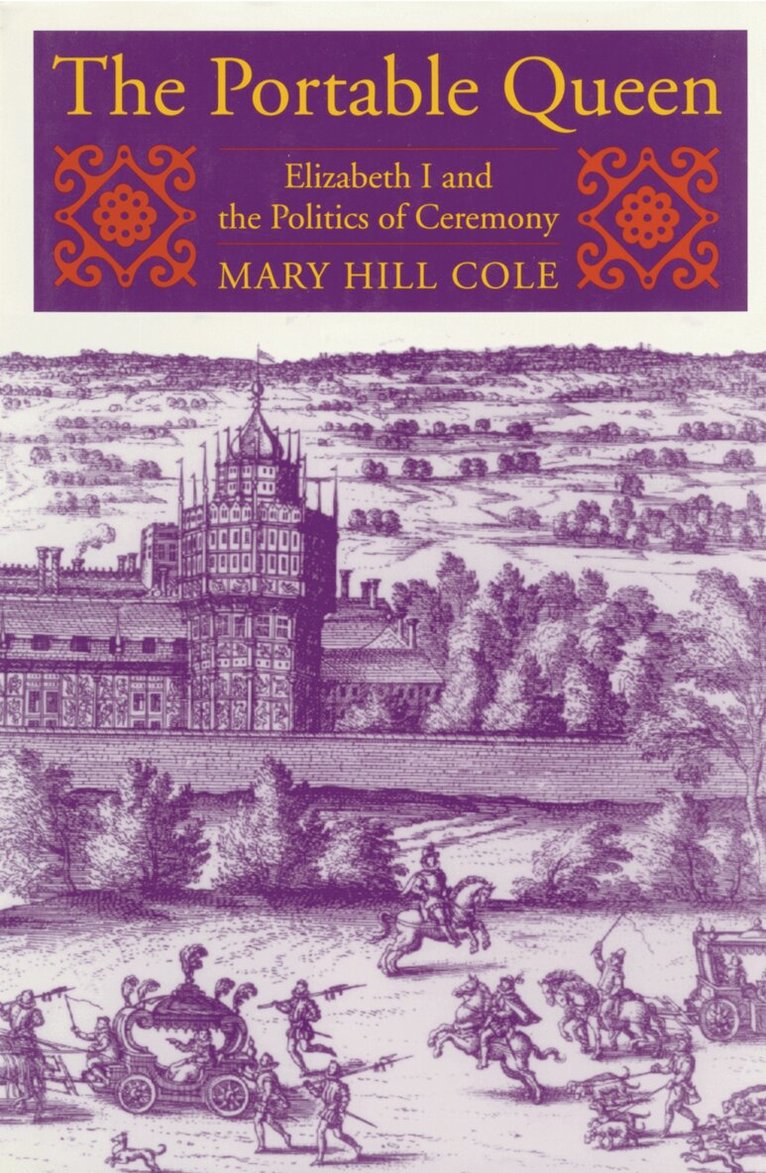
Every spring and summer of her forty-four years as queen, Elizabeth I (1533-1603) insisted that her court go "on progress," a series of royal visits to towns and aristocratic homes in southern England. These trips provided the only direct contact most people had with a monarch who made popularity a cornerstone of her reign. Public appearances gave the queen a stage on which to interact with her subjects in a calculated effort to keep their support. The progresses were both emblematic of Elizabeth's rule and intrinsic to her ability to govern.In this book, Mary Hill Cole provides a detailed analysis of the progresses. Drawing on royal household accounts, ministerial correspondence, county archives, corporation records, and family papers, she examines the effects of the visits on the queen's household and government, the individual and civic hosts, and the monarchy of the Virgin Queen.Cole places the progresses in the sixteenth-century world of politics and images, where the queen and her hosts exchanged ceremonial messages that advanced their own agendas. The heart of the progresses was the blend of politics, socializing, and ceremony that enabled the queen to accomplish royal business on the move while satisfying the needs of those courtiers, townspeople, and country residents who welcomed her into their communities. While all Renaissance monarchs engaged in occasional travel, in Elizabeth's case the progresses provided the settings in which she crafted her royal authority. Although the trips inconvenienced the government and strained her treasury, Elizabeth found power in the turmoil of an itinerant court and in a continuing ceremonial dialogue with her subjects.
387 kr
Skickas inom 7-10 vardagar
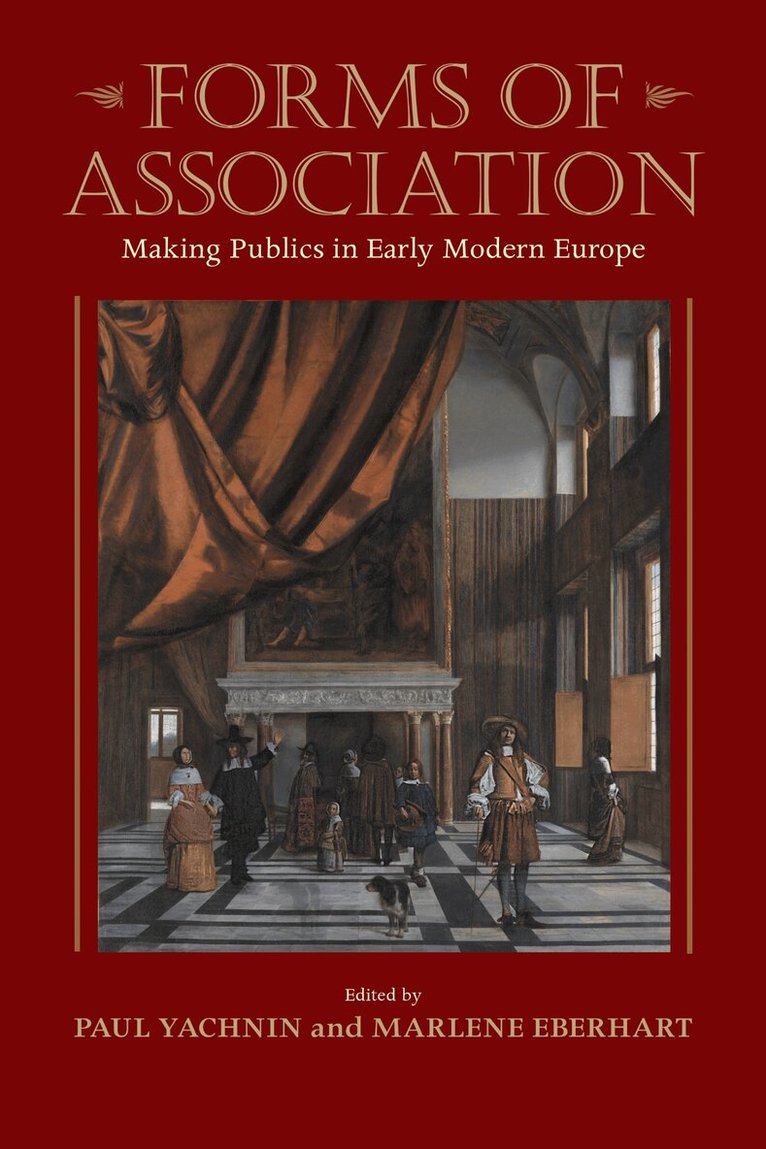
In today's connected and interactive world, it is hard to imagine a time when cultural and intellectual interests did not lead people to associate with others who shared similar views and preoccupations. In this volume of essays, fifteen scholars explore how these kinds of relationships began to transform early modern European culture.Forms of Association grows out of the “Making Publics: Media, Markets, and Association in Early Modern Europe” (MaPs) project, funded by the Social Sciences and Humanities Research Council of Canada. This scholarly initiative convened an interdisciplinary research team to consider how “publics”-- new forms of association built on the shared interests of individuals -- developed in Europe from 1500 to 1700. Drawing on a wide array of texts and histories, including the plays of Shakespeare, the legend of Robin Hood, paintings, and music as well as English gossip about France, the contributors develop a historical account of what publics were in early modern Europe. This collaborative study provides a dynamic way of understanding the political dimensions of artistic and intellectual works and opens the way toward a new history of early modernity. Until his death in 2008, the great Renaissance scholar Richard Helgerson was a key participant in the MaPs project. The scholars featured in this volume originally met in Montreal to engage in a critical, commemorative conversation about Helgerson's work, the issues and questions coming out of the MaPs project, and how Helgerson's thinking advanced and could in turn be advanced by MaPs. This collection represents the fruits of that conversation.
714 kr
Skickas inom 3-6 vardagar
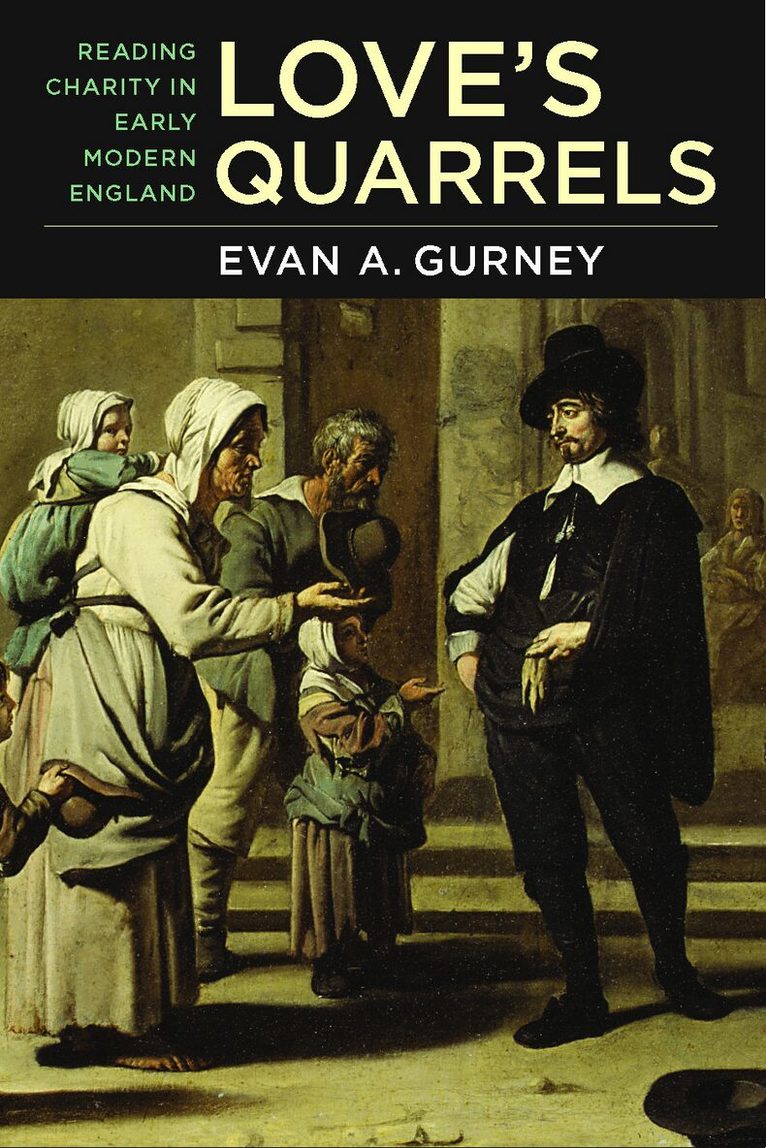
Early modern English writers often complained that ""charity had grown cold,"" lamenting the dissolution of society's communal bonds. But far from diminishing in scope or influence, charity generated heated debates, animated by social, political, and religious changes that prompted urgent questions about the virtue's powers and functions. Charity was as much a problem as it was a solution, a sure sign of trouble even when invoked on behalf of peace and community.Love's Quarrels charts charity's complex history from the 1520s to the 1640s and details the ways in which it can be best understood in biblical translations of the early sixteenth century, in Elizabethan polemic and satire, and in the political and religious controversies arriving at the outset of civil war. As key works from Edmund Spenser, Ben Jonson, and John Milton reveal, ""reading charity"" was fraught with difficulty as early modern England reconsidered its deepest held convictions in the face of mounting social disruption and spiritual pressure.
985 kr
Skickas inom 7-10 vardagar
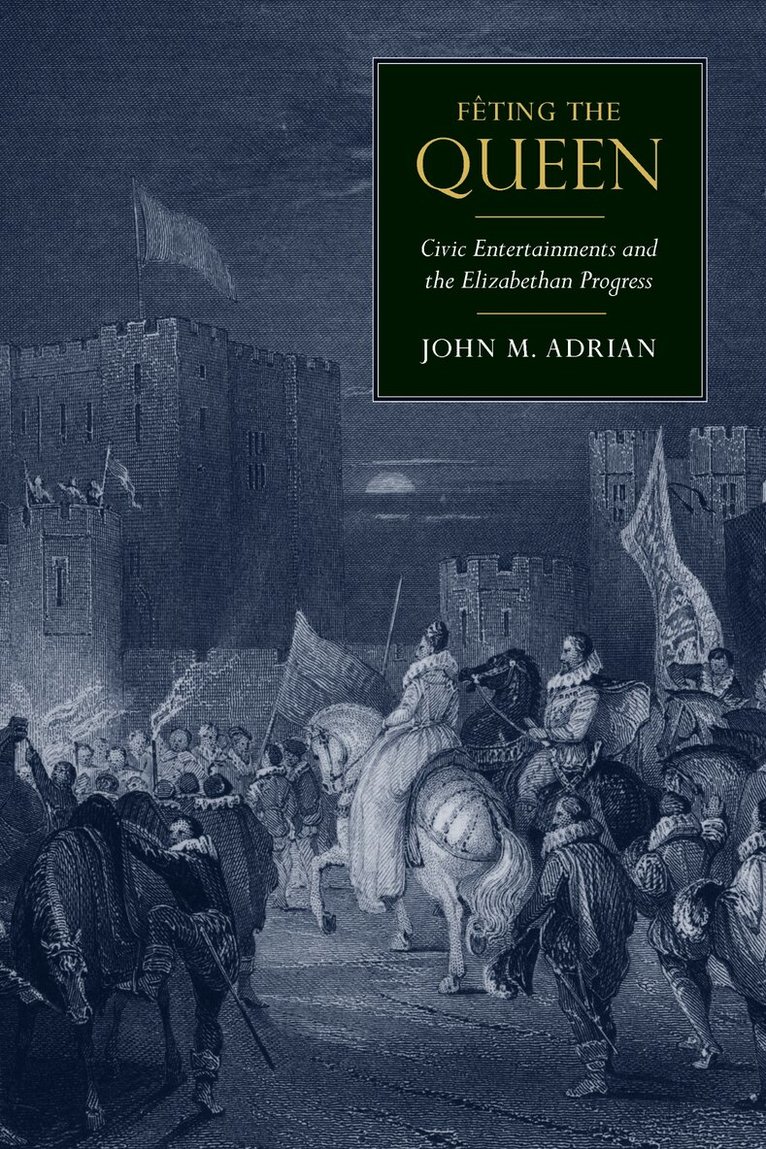
In a 1572 visit to Warwick, Queen Elizabeth looked out the window of her lodgings and saw local people dancing in the courtyard, a seemingly spontaneous performance meant to entertain her. During her travels, she was treated to fireworks, theatrical performances, and lavish banquets. Reconstructing the formal and informal events that took place throughout Elizabeth's progress visits, events rich in pageantry and ceremony, John M. Adrian demonstrates how communities communicated their character, as well as their financial and political needs, to noble guests.While previous scholars have studied Elizabeth I and her visits to the homes of influential courtiers, Fêting the Queen places a new emphasis on the civic communities that hosted the monarch and their efforts to secure much needed support. Case studies of the university and cathedral cities of Oxford, Canterbury, Sandwich, Bristol, Worcester, and Norwich focus on the concepts of hospitality and space—including the intimate details of the built environment.
387 kr
Skickas inom 7-10 vardagar
In a 1572 visit to Warwick, Queen Elizabeth looked out the window of her lodgings and saw local people dancing in the courtyard, a seemingly spontaneous performance meant to entertain her. During her travels, she was treated to fireworks, theatrical performances, and lavish banquets. Reconstructing the formal and informal events that took place throughout Elizabeth's progress visits, events rich in pageantry and ceremony, John M. Adrian demonstrates how communities communicated their character, as well as their financial and political needs, to noble guests.While previous scholars have studied Elizabeth I and her visits to the homes of influential courtiers, Fêting the Queen places a new emphasis on the civic communities that hosted the monarch and their efforts to secure much needed support. Case studies of the university and cathedral cities of Oxford, Canterbury, Sandwich, Bristol, Worcester, and Norwich focus on the concepts of hospitality and space—including the intimate details of the built environment.