Milestones in American History - Böcker
Visar alla böcker i serien Milestones in American History. Handla med fri frakt och snabb leverans.
5 produkter
5 produkter
418 kr
Skickas inom 7-10 vardagar
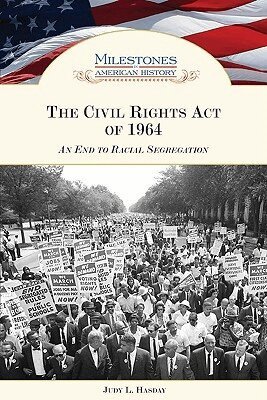
Considered the most important U.S. civil rights law, the Civil Rights Act of 1964 was proposed by President John F. Kennedy in 1963 and passed by his successor, Lyndon B. Johnson, the following year. The landmark law prohibiting discrimination in public facilities, government, and employment based on race, color, religion, or national origin is brought to life in this meticulously researched and excitingly illustrated volume from the new ""Milestones in American History"" series.
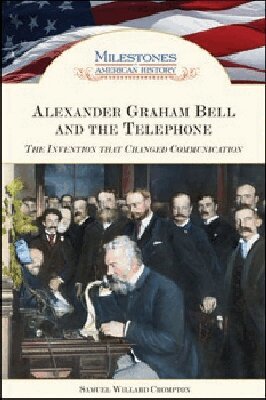
Alexander Graham Bell and the Telephone
The Invention That Changed Communication
Inbunden, Engelska, 2009
418 kr
Skickas inom 7-10 vardagar
In 1876, Alexander Graham Bell uttered the words that would inaugurate a new era in human communication: 'Mr. Watson, come here, I want to see you'. Bell was speaking through his new invention: the telephone. Though his name is the first to be associated with this now ubiquitous device, Bell was not working in a vacuum or entirely on his own. The second half of the 19th century was a time of great innovation, during which many people were experimenting with various designs for machines to enable human communication over great distances. Bell was simply the first to win a patent. ""Alexander Graham Bell and the Telephone"" tells the story of the man who invented the telephone, the people who helped him, and the changes that came about because of one of the greatest inventions of all time.
418 kr
Skickas inom 7-10 vardagar
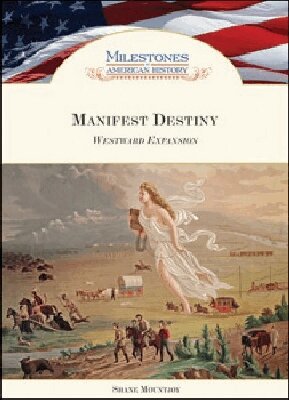
As the population of the 13 colonies grew and the economy developed, the desire to expand into new land increased. Nineteenth-century Americans believed it was their divine right to expand their territory from the Atlantic Ocean to the Pacific. 'Manifest destiny', a phrase first used in 1839 by journalist John O'Sullivan, embodied the belief that God had given the United States a mission to spread a republican democracy across the continent. Advocates of manifest destiny were determined to carry out their mission and instigated several wars, including the war with Mexico to win much of what is now the southwestern United States. In ""Manifest Destiny"", learn how this philosophy to spread out across the land shaped our nation.
418 kr
Skickas inom 7-10 vardagar
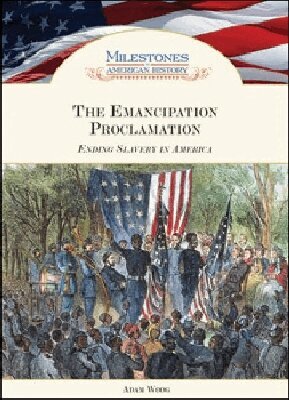
In 1863, during the Civil War that had torn the United States apart, President Abraham Lincoln signed the Emancipation Proclamation, which declared that all slaves would be freed in the Confederate states at war. Considered Lincoln's most direct action to hasten the end of slavery, the proclamation promised that slavery would effectively end at the conclusion of the war - and also allowed African Americans to serve in the Union army. Though the Emancipation Proclamation could not be enforced in the Confederate states until after the war, its issuance linked the Union's fight for the country's unity with the moral cause of freeing the slaves. In ""The Emancipation Proclamation"", read about the groundbreaking document that was a precursor to the 13th Amendment to the Constitution that effectively ended slavery in the United States.
387 kr
Skickas inom 7-10 vardagar
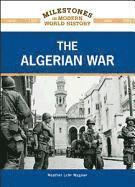
An insult. A diplomatic crisis. A French king eager to cement his power. Many different factors led to the French invasion of Algeria in June 1830, but the result was the establishment of a French colony in North Africa that would last 132 years. For more than a century, Algeria was marked by sharp divisions between its European colonizers and the mainly Muslim people who had occupied the land prior to the arrival of French troops. Discrimination, prejudice, and injustice separated these two groups until a war for independence began on November 1, 1954. After nearly eight years of violence, Algeria became an independent nation in 1962, but a half century later, it remains a country haunted by violence and struggling to achieve stability and prosperity for its people. Read about this conflict in The Algerian War.