Monographs in Economic Anthropology Series – serie
Visar alla böcker i serien Monographs in Economic Anthropology Series. Handla med fri frakt och snabb leverans.
10 produkter
10 produkter
Häftad, Engelska, 1996
886 kr
Skickas inom 10-15 vardagar
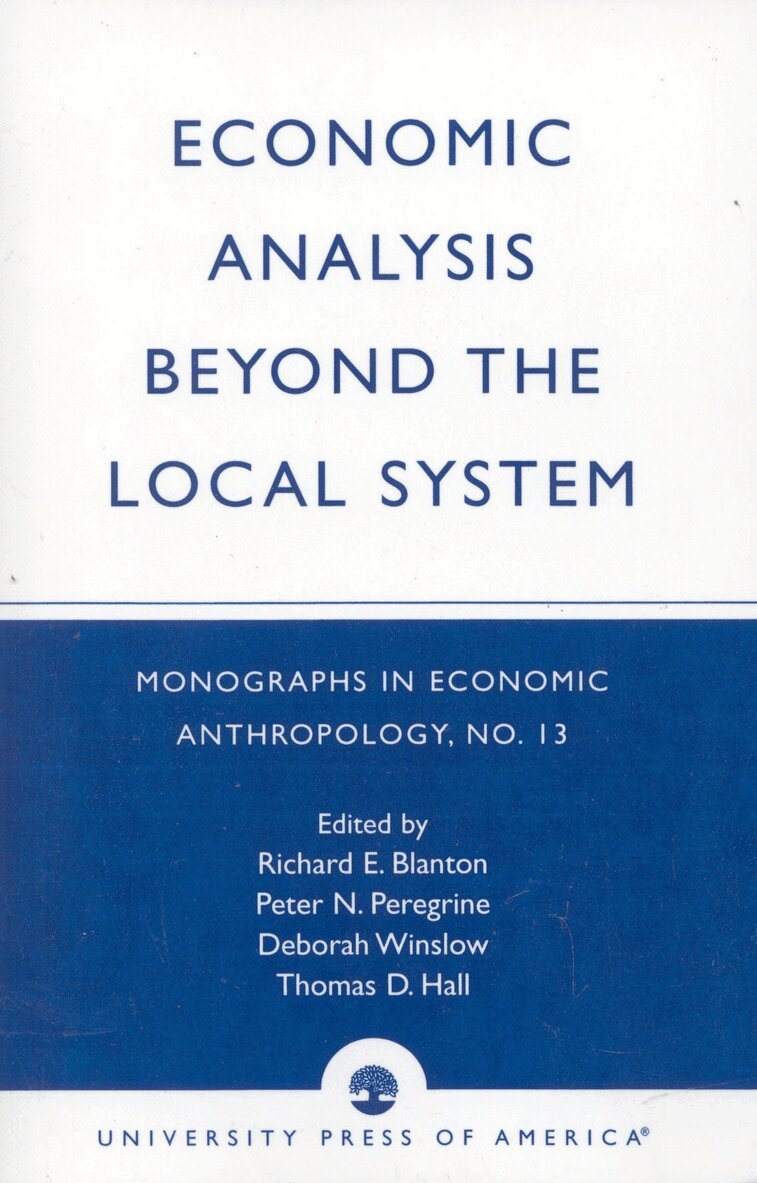
Co-published with the Society for Economic Anthropology, this work explores the social, political and economic contexts and consequences of economic interaction beyond the local systems. Because the focus of economic analysis is often local, particularly in anthropology, this book specifically aims analysis beyond the local system of economic interaction.
Häftad, Engelska, 1983
1 051 kr
Skickas inom 10-15 vardagar
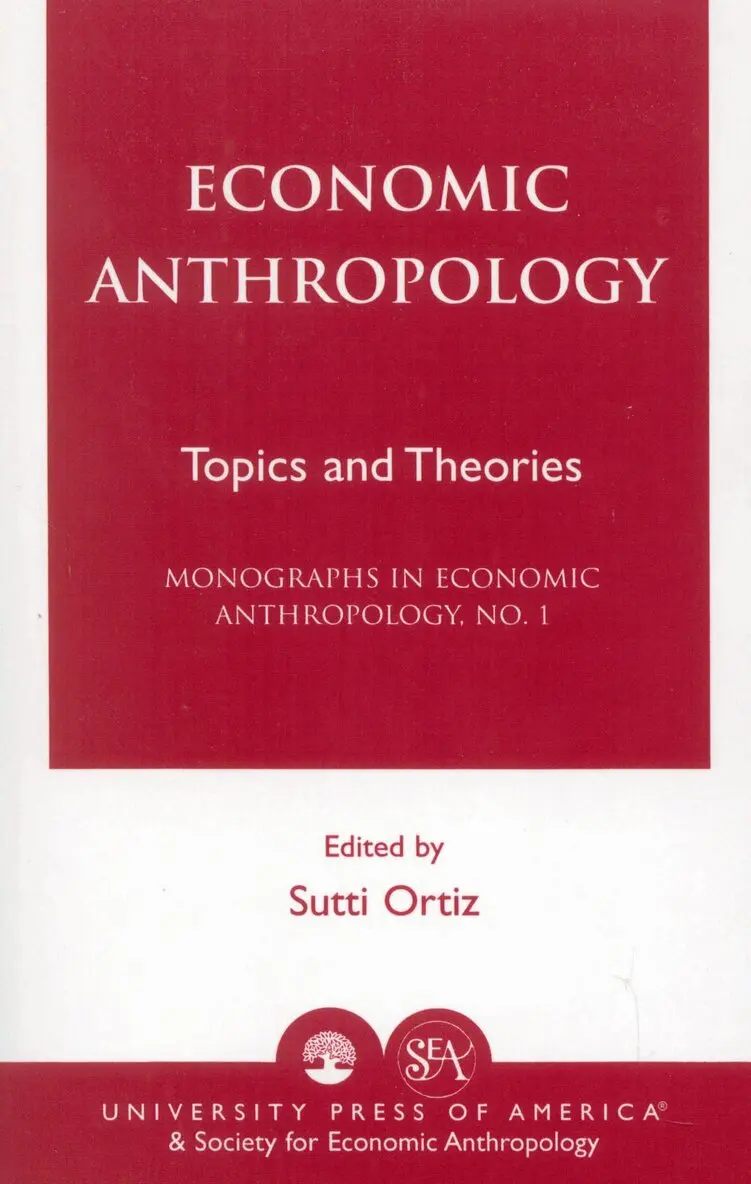
Developed from the inaugural conference of the Society for Economic Anthropology, this collection of papers reflects an interdisciplinary dialogue and a joint interest in a critical review of the various approaches used to examine the organization and transformation of economic systems.
Del 1 - Monographs in Economic Anthropology Series
Economic Anthropology
Topics and Theories
Inbunden, Engelska, 1983
833 kr
Tillfälligt slut
Developed from the inaugural conference of the Society for Economic Anthropology, this collection of papers reflects an interdisciplinary dialogue and a joint interest in a critical review of the various approaches used to examine the organization and transformation of economic systems.
Del 4 - Monographs in Economic Anthropology Series
Markets and Marketing
Monographs in Economic Anthropology No. 4
Häftad, Engelska, 1985
518 kr
Tillfälligt slut
This collection of 15 articles drawn from the Society for Economic Anthropology's 1984 meeting is divided into four topics: central place analysis of marketplace systems, economic behavior in market contexts, markets in economic development, and markets in historical perspective. Co-published with: The Society for Economic Anthropology.
Del 8 - Monographs in Economic Anthropology Series
Perspectives on the Informal Economy
Inbunden, Engelska, 1990
638 kr
Tillfälligt slut
This collection of current research in the field of economic anthropology grew out of a conference held in April of 1989. The papers included here investigate and analyze the informal economy, that is, those activities that have economic consequences but have been ignored or missed by economists and governing officials. Contents: Introduction: "A Million Here, A Million There, and Pretty Soon You're Talking Real Money," by M. Estellie Smith; The Informal Sector in Comparative Perspective, Bryan Roberts; The Informal Economy and the State in Tanzania, Aili Mari Tripp; Informal Sector Housing: Social Structure and the State in Brazil, William P. Norris; Macrotheories, Microcontexts, and the Informal Sector; Case Studies of Self-Employment in Three Brazilian Cities, Leo A. Despres; Popular Religion, Patronage, and Resource Distribution in Brazil: A Model of an Hypothesis for the Survival of the Economically Marginal, Sidney M. Greenfield and Russell R. Prust; Crisis and Sector in Oaxaca, Mexico: A Comparison of Households 1977-87, Arthur D. Murphy and Martha W. Rees; The Need for a Reevaluation of the Concept "Informal Sector": The Dominican Case, Martin F. Murphy; Community Growth Versus Simply Surviving; The Informal Sectors of Cubans and Haitians in Miami, Alex Stepick; Economic Crisis and the Informal Street Market System of Spain, Anthony Oliver-Smith; Black Markets and Welfare in Scandinavia; Some Methodological and Empirical Issues, Gunnar Viby Mogensen; Self-Employment vs. Wage Employment in Hong Kong: A Reconsideration of the Urban Informal Economy, Josephine Smart; Hidden Dimensions of the Burmese Way to Socialism, Nicola Tannenbaum and E. Paul Durrenberger; Bundles of Assets in Exchanges: Integrating the Formal and Informal in Canal Irrigation, Robert C. Hunt; A Cross-Cultural Treatment of the Informal Economy, Rhoda H. Halperin and Sara Sturdevant; Index.
Del 8 - Monographs in Economic Anthropology Series
Perspectives on the Informal Economy
Häftad, Engelska, 1990
442 kr
Tillfälligt slut
This collection of current research in the field of economic anthropology grew out of a conference held in April of 1989. The papers included here investigate and analyze the informal economy, that is, those activities that have economic consequences but have been ignored or missed by economists and governing officials. Contents: Introduction: 'A Million Here, A Million There, and Pretty Soon You're Talking Real Money,' by M. Estellie Smith; The Informal Sector in Comparative Perspective, Bryan Roberts; The Informal Economy and the State in Tanzania, Aili Mari Tripp; Informal Sector Housing: Social Structure and the State in Brazil, William P. Norris; Macrotheories, Microcontexts, and the Informal Sector; Case Studies of Self-Employment in Three Brazilian Cities, Leo A. Despres; Popular Religion, Patronage, and Resource Distribution in Brazil: A Model of an Hypothesis for the Survival of the Economically Marginal, Sidney M. Greenfield and Russell R. Prust; Crisis and Sector in Oaxaca, Mexico: A Comparison of Households 1977-87, Arthur D. Murphy and Martha W. Rees; The Need for a Reevaluation of the Concept 'Informal Sector': The Dominican Case, Martin F. Murphy; Community Growth Versus Simply Surviving; The Informal Sectors of Cubans and Haitians in Miami, Alex Stepick; Economic Crisis and the Informal Street Market System of Spain, Anthony Oliver-Smith; Black Markets and Welfare in Scandinavia; Some Methodological and Empirical Issues, Gunnar Viby Mogensen; Self-Employment vs. Wage Employment in Hong Kong: A Reconsideration of the Urban Informal Economy, Josephine Smart; Hidden Dimensions of the Burmese Way to Socialism, Nicola Tannenbaum and E. Paul Durrenberger; Bundles of Assets in Exchanges: Integrating the Formal and Informal in Canal Irrigation, Robert C. Hunt; A Cross-Cultural Treatment of the Informal Economy, Rhoda H. Halperin and Sara Sturdevant; Index.
Häftad, Engelska, 1991
442 kr
Tillfälligt slut
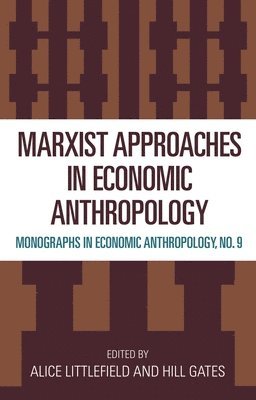
The best of current thinking in Marxist anthropology on the inter-relationships of economies, polities, and kinship systems is encompassed in these eleven papers by fourteen authors. Chapter I, Petty Production, targets petty producers in diverse political-economic contexts ranging from the linen industry in eighteenth-century Northern Ireland to entrepreneurship in contemporary China. Chapter II, Kinship in Political Economy, analyzes the consequences of production sysems for social organization and social reproduction among Languedoc viticulturalists, Bolivian Aymara, and the Cheyenne. Their work encourages us to rethink the complex interdependence of kinship and political economy. Chapter III, the State as Economic Actor, examines the role of state power as arbiter of investment, surplus flows, and labor markets, analyzing the impact of state policy on the economic fate of particular populations-Peruvian and Portuguese peasants, Tongans, indigenous peoples in the United States-in the context of larger political economic systems. Contributors include Hill Gates, Marilyn Cohen, Leigh Binford, Scott Cook, Jane L. Collins, Winnie Lem, Alice B. Kehoe, John H. Moore, David Nugent, Timothy J. Finan, Roger W. Fix, Mark L. Langworthy, Christine Ward Gailey, and Alice Littlefield. Co-published with the Society for Economic Anthropology.
Inbunden, Engelska, 1992
656 kr
Tillfälligt slut
The papers in this volume were presented to the tenth annual meeting of the Society for Economic Anthropology. The meeting was conceived as a decennial review of some of the central issues explored in recent studies of economic process in market and non-market societies. Contents: I. Some New and Old Paradigms; Introduction; Nonmarket Transfers and Altuism; The Nature of Economic Relations; II. Power and Economic Transformations: Introduction; Market, Power and Culture as Agencies in the Transformation of Labor Contracts in Agriculture; Natural Resource Extraction and Power Differentials in a Global Economy; A Theoretical Perspective on Elites and the Economic Transformation of Classic Period Maya Households; III. The Household as Economic Actor: Introduction; Imagined Unities: Constructions of 'The Household' in Economic Theory; Households and Gender Relations: The Modelling of the Economy; IV. Environment: Victim or Agent: Introduction; Human-land Relations from an Archaeological Perspective: The Case of Ancient Oaxaca; Marxism Confronts the Environment: Labor, Ecology and Environmental Change; Everyone's Concern, Whose Responsibility? and The Problem of the Common. Contributors: Sutti Ortiz, Oded Stark, Mark Granovetter, S.G. Bunker, Patricia A. McAnany, Gillian Hart, H.L. Moore, Susan Lees, Gary M. Feinman, Linda M. Nicholas, Jane Collins and Bonnie J. McCay.
Del 12 - Monographs in Economic Anthropology Series
Anthropology and Institutional Economics
Inbunden, Engelska, 1995
1 273 kr
Tillfälligt slut
The last two decades have seen a convergence of the interests of anthropologists and economists. In the past few years, a small number of anthropologists have become interested in institutional economics—many of those anthropologists are contributors to this volume. The primary objective of this volume is to begin to assess the degree to which the ideas of institutional economics can be applied to societies in the Third World. They discuss a wide variety of institutions from this perspective, including family budgets, revolving credit institutions in Bangladesh, Mexican peasant unions, markets in East Africa, share contracts in the Philippine fishing communities, the actions of the agents of the state, and credit institutions in Africa. Co-published with the Society for Economic Anthropology.
Del 12 - Monographs in Economic Anthropology Series
Anthropology and Institutional Economics
Häftad, Engelska, 1994
601 kr
Tillfälligt slut
The primary objective of this volume is to begin to assess the degree to which the ideas of institutional economics can be applied to societies in the Third World. They discuss a wide variety of institutions from this perspective, including family budgets, revolving credit institutions in Bangladesh, Mexican peasant unions, markets in East Africa, share contracts in the Philippine fishing communities, the actions of the agents of the state, and credit institutions in Africa. Co-published with the Society for Economic Anthropology.