James M. Acheson – författare
Visar alla böcker från författaren James M. Acheson. Handla med fri frakt och snabb leverans.
4 produkter
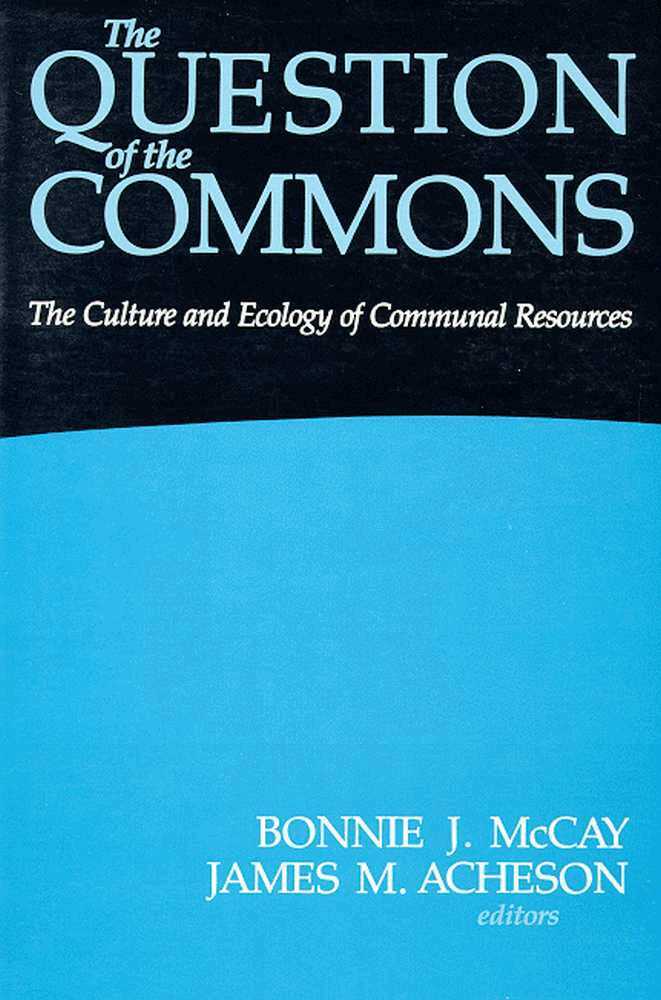
Question of the Commons
The Culture and Ecology of Communal Resources
Av Bonnie J. McCay, James M. Acheson
Häftad, 1990
399 kr
Lägg i varukorg
This collection of eighteen original essays evaluates the use and misuse of common-property resources, taking as its starting point ecologist Garret Hardin's assertion in ""The Tragedy of the Commons"" that common property is doomed to overexploitation in any society. This book represents the first …
Anthropology and Institutional Economics
Inbunden, 1995
1358 kr
Tillfälligt slut
The last two decades have seen a convergence of the interests of anthropologists and economists. In the past few years, a small number of anthropologists have become interested in institutional economics—many of those anthropologists are contributors to this volume. The primary objective of this …
Anthropology and Institutional Economics
Häftad, 1994
641 kr
Tillfälligt slut
The primary objective of this volume is to begin to assess the degree to which the ideas of institutional economics can be applied to societies in the Third World. They discuss a wide variety of institutions from this perspective, including family budgets, revolving credit institutions in …