Hill Gates - Böcker
Visar alla böcker från författaren Hill Gates. Handla med fri frakt och snabb leverans.
9 produkter
9 produkter
2 301 kr
Skickas inom 10-15 vardagar
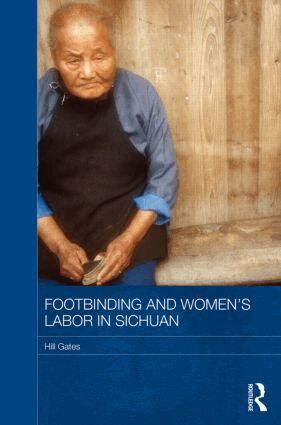
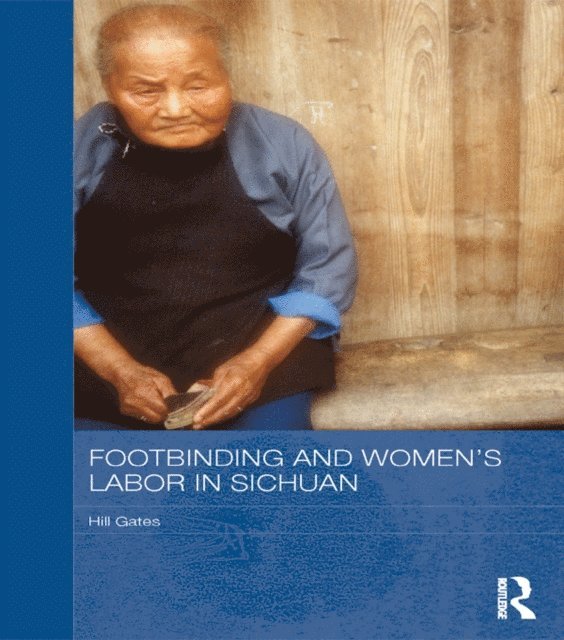
When Chinese women bound their daughters’ feet, many consequences ensued, some beyond the imagination of the binders and the bound. The most obvious of these consequences was to impress upon a small child’s body and mind that girls differed from boys, thus reproducing gender hierarchy. What is not obvious is why Chinese society should have evolved such a radical method of gender-marking. Gendering is not simply preparation for reproduction, rather its primary significance lies in preparing children for their places in the division of labor of a particular political economy. Drawing on extensive fieldwork and interviews with almost 5,000 women, this book examines footbinding as Sichuan women remember it from the final years of the empire and the troubled times before the 1949 revolution. It focuses on two key questions: what motivated parents to maintain this custom, and how significant was girls’ work in China’s final pre-industrial century? In answering these questions, Hill Gates shows how footbinding was a form of labor discipline in the first half of the twentieth century in China, when it was a key institution in a now much-altered political economy. Countering the widely held views surrounding the sexual attractiveness of bound feet to Chinese men, footbinding as an ethnic boundary marker, its role in female hypergamy, and its connection to state imperatives, this book instead presents a compelling argument that footbinding was in fact a crucial means of disciplining of little girls to lives of early and unremitting labor.This vivid and fascinating study will be of huge interest to students and scholars working across a wide range of fields including Chinese history, oral history, anthropology and gender studies.
691 kr
Skickas inom 10-15 vardagar
Taiwan's working class has been shaped by Chinese tradition, by colonialism, and by rapid industrialization. This book defines that class, explores that history, and presents with sensitive honesty the life experiences of some of its women and men. Hill Gates first provides a solid and informative introduction to Taiwan's history, showing how mainland China, Japan, the convulsions of twentieth-century wars, and the East Asian economic expansion interacted in forming Taiwanese urban life. She introduces nine individuals from Taiwan's three major ethnic groups to tell the stories of their lives in their own words. The narrators include a fortuneteller, a woman laborer, and a retired air force mechanic. A former spirit medium and a janitor are among the others who speak.
691 kr
Skickas inom 10-15 vardagar
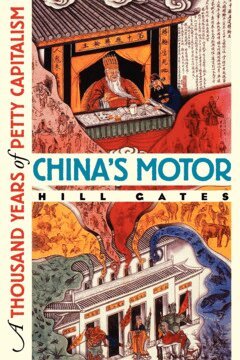
"Gates is a Marxist anthropologist with chutzpah. Best known for her compelling portrayal of contemporary working-class Taiwanese, she considerably broadens and deepens her analysis of China's socioeconomy in this work."—ChoiceThis monumental work reveals the continuities that underlie the changing surface of Chinese life from late imperial days to modern times. With a perspective that encompasses a thousand years of Chinese history, China's Motor provides a view of the social, economic, and political principles that have prompted people in widely varying circumstances to act, believe, and behave in ways that are labeled as Chinese.This original reinterpretation of Chinese culture, as meticulous in detail as it is vast in scope, will revise not only the study of China but also the very terms of social analysis.
1 548 kr
Skickas inom 10-15 vardagar
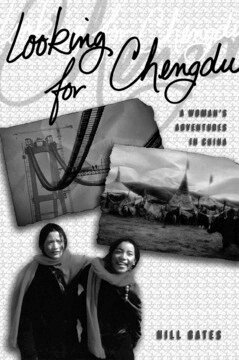
For decades, anthropologist Hill Gates had waited for an opportunity to get to know the citizens of China as she had done in Taiwan—face to face, over an extended period of time. At last in the late 1980s she set out on an excursion to Sichuan Province. That visit was the first of many she would make there on a remarkable double adventure: to gain a deeper understanding of Chinese women and to complete a difficult passage in her own life. Looking for Chengdu is her memoir of these trips. By turns analytic, witty, and bittersweet, Gates's observations on contemporary China are enlivened by a keen eye for the oddities of human behavior, including her own.The vast, inland province of Sichuan was the birthplace of the Chinese economic reforms of the 1970s, and is now speeding from the sixteenth to the twenty-first century. Was its economic boom transforming women's lives, Gates wondered? After a generation of socialist rule, would women risk the challenge of entrepreneurship? A feminist, she was especially curious to learn what Chinese of both sexes defined as women's rights.Gates traveled—by boat, train, bus, car, bicycle, and foot (her preference)—across the spectacular countryside, gleaning insight into China's massive bureaucracies from her experiences on an obligatory vacation, in a Tibetan dance-hall, and at a shouting match in her Chengdu home. She met dozens of hard-working, stylish women running family firms, and crossed paths with scholars and sailors. Her book is rich in anecdotes and compelling moments, from her journey through mountain villages in search of five thousand women with bound feet to low-voiced conversations about the Chengdu equivalent of the events at Tiananmen Square.A fascinating glimpse into the deeply personal vocation of anthropology, Gates's memoir will change the way readers think about the Chinese people.
404 kr
Skickas inom 10-15 vardagar
"Gates is a Marxist anthropologist with chutzpah. Best known for her compelling portrayal of contemporary working-class Taiwanese, she considerably broadens and deepens her analysis of China's socioeconomy in this work."—ChoiceThis monumental work reveals the continuities that underlie the changing surface of Chinese life from late imperial days to modern times. With a perspective that encompasses a thousand years of Chinese history, China's Motor provides a view of the social, economic, and political principles that have prompted people in widely varying circumstances to act, believe, and behave in ways that are labeled as Chinese.This original reinterpretation of Chinese culture, as meticulous in detail as it is vast in scope, will revise not only the study of China but also the very terms of social analysis.
472 kr
Skickas inom 10-15 vardagar
For decades, anthropologist Hill Gates had waited for an opportunity to get to know the citizens of China as she had done in Taiwan—face to face, over an extended period of time. At last in the late 1980s she set out on an excursion to Sichuan Province. That visit was the first of many she would make there on a remarkable double adventure: to gain a deeper understanding of Chinese women and to complete a difficult passage in her own life. Looking for Chengdu is her memoir of these trips. By turns analytic, witty, and bittersweet, Gates's observations on contemporary China are enlivened by a keen eye for the oddities of human behavior, including her own.The vast, inland province of Sichuan was the birthplace of the Chinese economic reforms of the 1970s, and is now speeding from the sixteenth to the twenty-first century. Was its economic boom transforming women's lives, Gates wondered? After a generation of socialist rule, would women risk the challenge of entrepreneurship? A feminist, she was especially curious to learn what Chinese of both sexes defined as women's rights.Gates traveled—by boat, train, bus, car, bicycle, and foot (her preference)—across the spectacular countryside, gleaning insight into China's massive bureaucracies from her experiences on an obligatory vacation, in a Tibetan dance-hall, and at a shouting match in her Chengdu home. She met dozens of hard-working, stylish women running family firms, and crossed paths with scholars and sailors. Her book is rich in anecdotes and compelling moments, from her journey through mountain villages in search of five thousand women with bound feet to low-voiced conversations about the Chengdu equivalent of the events at Tiananmen Square.A fascinating glimpse into the deeply personal vocation of anthropology, Gates's memoir will change the way readers think about the Chinese people.
583 kr
Skickas inom 7-10 vardagar
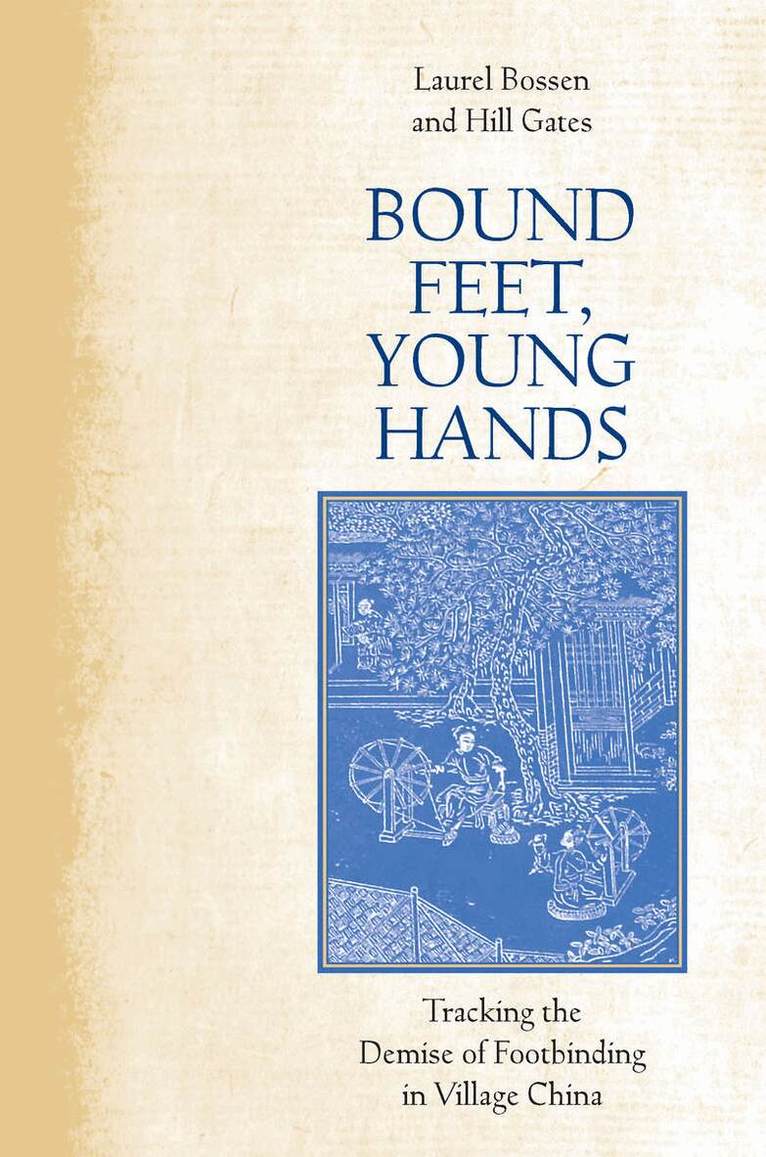
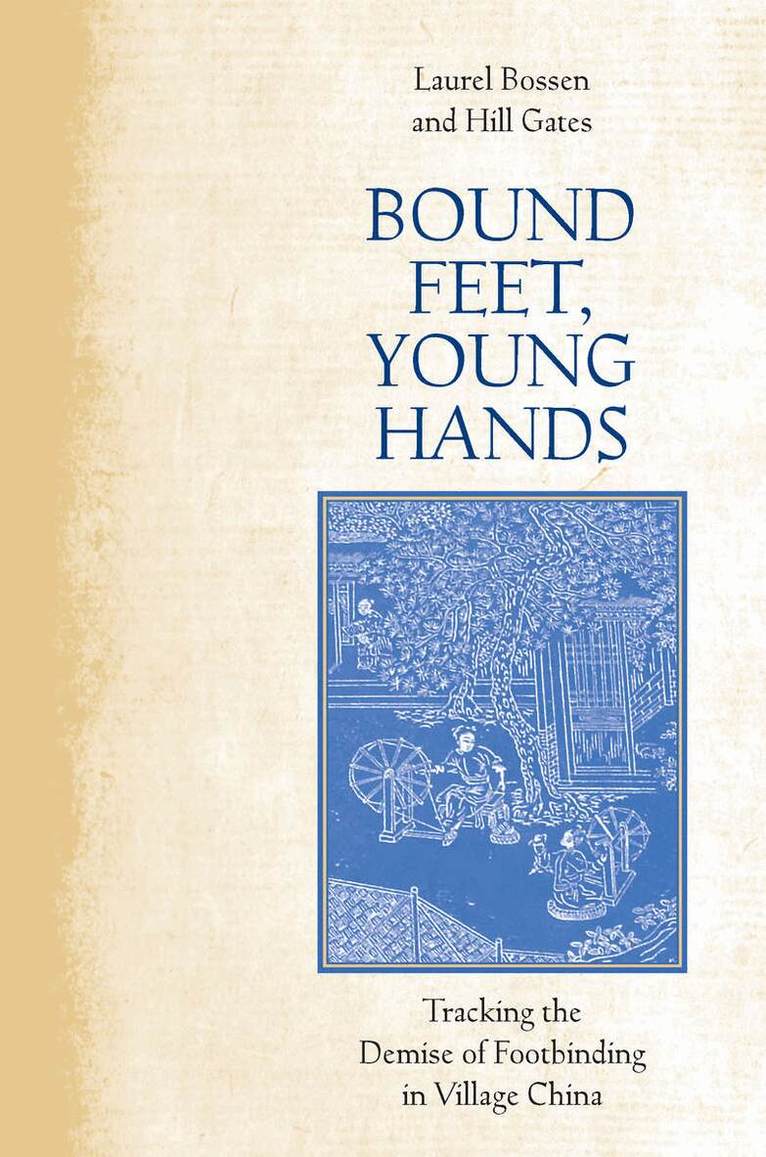
Footbinding was common in China until the early twentieth century, when most Chinese were family farmers. Why did these families bind young girls' feet? And why did footbinding stop? In this groundbreaking work, Laurel Bossen and Hill Gates upend the popular view of footbinding as a status, or even sexual, symbol by showing that it was an undeniably effective way to get even very young girls to sit still and work with their hands.Interviews with 1,800 elderly women, many with bound feet, reveal the reality of girls' hand labor across the North China Plain, Northwest China, and Southwest China. As binding reshaped their feet, mothers disciplined girls to spin, weave, and do other handwork because many village families depended on selling such goods. When factories eliminated the economic value of handwork, footbinding died out. As the last generation of footbound women passes away, Bound Feet, Young Hands presents a data-driven examination of the social and economic aspects of this misunderstood custom.
695 kr
Skickas inom 10-15 vardagar
When Chinese women bound their daughters’ feet, many consequences ensued, some beyond the imagination of the binders and the bound. The most obvious of these consequences was to impress upon a small child’s body and mind that girls differed from boys, thus reproducing gender hierarchy. What is not obvious is why Chinese society should have evolved such a radical method of gender-marking. Gendering is not simply preparation for reproduction, rather its primary significance lies in preparing children for their places in the division of labor of a particular political economy. Drawing on extensive fieldwork and interviews with almost 5,000 women, this book examines footbinding as Sichuan women remember it from the final years of the empire and the troubled times before the 1949 revolution. It focuses on two key questions: what motivated parents to maintain this custom, and how significant was girls’ work in China’s final pre-industrial century? In answering these questions, Hill Gates shows how footbinding was a form of labor discipline in the first half of the twentieth century in China, when it was a key institution in a now much-altered political economy. Countering the widely held views surrounding the sexual attractiveness of bound feet to Chinese men, footbinding as an ethnic boundary marker, its role in female hypergamy, and its connection to state imperatives, this book instead presents a compelling argument that footbinding was in fact a crucial means of disciplining of little girls to lives of early and unremitting labor.This vivid and fascinating study will be of huge interest to students and scholars working across a wide range of fields including Chinese history, oral history, anthropology and gender studies.
259 kr
Skickas inom 10-15 vardagar
Taiwan's working class has been shaped by Chinese tradition, by colonialism, and by rapid industrialization. This book defines that class, explores that history, and presents with sensitive honesty the life experiences of some of its women and men. Hill Gates first provides a solid and informative introduction to Taiwan's history, showing how mainland China, Japan, the convulsions of twentieth-century wars, and the East Asian economic expansion interacted in forming Taiwanese urban life. She introduces nine individuals from Taiwan's three major ethnic groups to tell the stories of their lives in their own words. The narrators include a fortuneteller, a woman laborer, and a retired air force mechanic. A former spirit medium and a janitor are among the others who speak.