New Series in NASA History – serie
Visar alla böcker i serien New Series in NASA History. Handla med fri frakt och snabb leverans.
18 produkter
18 produkter
Inbunden, Engelska, 1987
608 kr
Skickas inom 5-8 vardagar
Winner of the Eugene Emme Astronautical Literature Prize from the American Astronautical Society For eight days in October 1984, seven men and women orbitied the Earth on Space Shuttle Mission 41-G. The mission has begun a year earlier; however, with the select of its crew. Before Lift-off is the extraordinary day-to-day story of these astronauts' training and flight-and is as close as most of us will ever come to flying on the space shuttle.New Yorker writer Henry Cooper obtained unprecedented permission from NASA to follow the 41-G crew from its formation through the completion of its mission. He was even given access to the heart of the training program: the crew's sessions in the shuttle mision simulators.More than a chronical of different phases in the astronauts' learning process, Before Lift-off tells the story of the bonding of these men and women. It would be Captain Robert Crippen's fourth space flight, his second command in six months, and Sally Ride's second shuttle voyage. For rookies Davida Leestra, Jon McBride, and Kathy Sullivan, and for two payload specialists, the experience would mark an initiation into the most elite groups-those people who have ventured into space.
Häftad, Engelska, 1994
440 kr
Skickas inom 5-8 vardagar
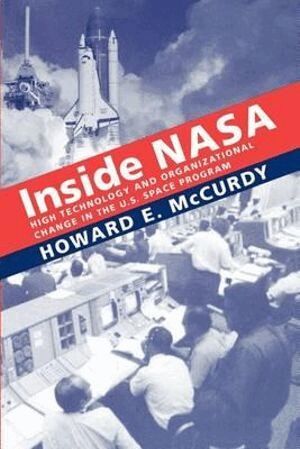
Inside NASA explores how an agency praised for its planetary probes and expeditions to the moon became notorious for the explosion of the space shuttle Challenger and a series of other malfunctions. Using archival evidence as well as in-depth interviews with space agency officials, Howard McCurdy investigates the relationship between the performance of the American space program and NASA's organizational culture. He begins by identifying the beliefs, norms, and practices that guided NASA's early successes. Originally, the agency was dominated by the strong technical culture rooted in the research-and-development organizations from which NASA was formed. To launch the expeditions to the moon, McCurdy explains, this technical culture was linked to an organizational structure borrowed from the Air Force ballistic-missile program. Changes imposed to accomplish the lunar landing-along with the normal aging process and increased bureaucracy in the government as a whole-gradually eroded NASA's original culture and reduced its technical strength.
Häftad, Engelska, 2000
429 kr
Skickas inom 5-8 vardagar
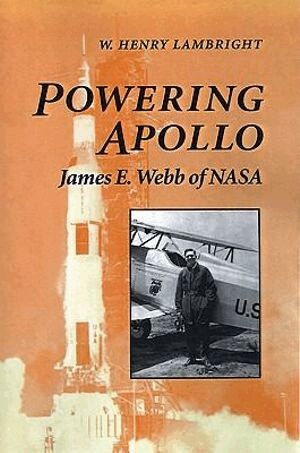
When President Kennedy issued his well-known challenge to reach the moon and return safely before the end of the 1960s, the immediate responsibility for undertaking the task fell to 54-year-old NASA director James E. Webb. Eight years later, when the Apollo II spacecraft splashed down safely in the Pacific and the screens in NASA's Mission Control at Houston flashed the words "Task Accomplished", it was Webb who deserved much of the credit. In powering Apollo, W. Henry Lambright explores Webb's leadership role in NASA's spectacular success -- success that is rare in ambitious government policies and programs. A North Carolina native and Congressional staff member, Jim Webb had served in Congress, worked in the Truman administration, and risen to high office in the defense and energy industries by 1961 when Kennedy named him to head the new National Aeronautics and Space Administration. Examining Webb's role as both Washington insider and government program director, Lambright probes the skills and experience that equipped him to handle his enormous responsibilities.He also shows how Webb's performance reflected important changes in twentieth century public life, including the concentration of political power in Washington; expansion of the federal bureaucracy; the rise of big science; and visions of cooperation among government, industry, and higher education.
Häftad, Engelska, 2001
408 kr
Skickas inom 5-8 vardagar
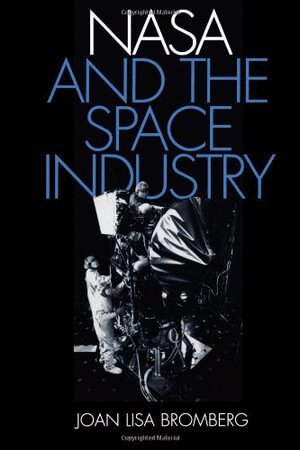
Few federal agencies have more extensive ties to the private sector than NASA. NASA's relationships with its many aerospace industry suppliers of rocket engines, computers, electronics, gauges, valves, O-rings, and other materials have often been described as "partnerships." These have produced a few memorable catastrophes, but mostly technical achievements of the highest order. Until now, no one has written extensively about them. In NASA and the Space Industry, Joan Lisa Bromberg explores how NASA's relationship with the private sector developed and how it works. She outlines the various kinds of expertise public and private sectors brought to the tasks NASA took on, describing how this division of labor changed over time. She explains why NASA sometimes encouraged and sometimes thwarted the privatization of space projects and describes the agency's role in the rise of such new space industries as launch vehicles and communications satellites.
Inbunden, Engelska, 2004
578 kr
Skickas
While the glories and tragedies of the space shuttle make headlines and move the nation, the story of the shuttle forms an inseparabe part of a lesser-known but no less important drama-the search for a reusable single-stage-to-orbit rocket. Here an award-winning student of space science, Andrew J. Butrica, examines the long and tangled history of this ambitious concept, from it first glimmerings in the 1920s, when technicians dismissed it as unfeasible, to its highly expensive heyday in the midst of the Cold War, when conservative-backed government programs struggled to produce an operational flight vehicle. Butrica finds a blending of far-sighted engineering and heavy-handed politics. To the first and oldest idea-that of the reusable rocket-powered single-stage-to-orbit vehicle-planners who belonged to what President Eisenhower referred to as the military-industrial complex.added experimental ("X"), "aircraft-like" capabilties and, eventually, a "faster, cheaper, smaller" managerial approach.Single Stage to Orbit traces the interplay of technology, corporate interest, and politics, a combination that well served the conservative space agenda and ultimately triumphed-not in the realization of inexpensive, reliable space transport-but in a vision of space militarization and commercialization that would appear settled United States policy in the early twenty-first century.
Häftad, Engelska, 2003
435 kr
Skickas inom 5-8 vardagar
In Faster, Better, Cheaper: Low-Cost Innovation in the U.S. Space Program, Howard E. McCurdy examines NASA's recent efforts to save money while improving mission frequency and performance. McCurdy details the sixteen missions undertaken during the 1990s-including an orbit of the moon, deployment of three space telescopes, four Earth-orbiting satellites, two rendezvous with comets and asteroids, and a test of an ion propulsion engine-which cost less than the sum traditionally spent on a single, conventionally planned planetary mission. He shows how these missions employed smaller spacecraft and cheaper technology to undertake less complex and more specific tasks in outer space. While the technological innovation and space exploration approach that McCurdy describes is still controversial, the historical perspective on its disappointments and triumphs points to ways of developing "faster, better, and cheaper" as a management manifesto.
Häftad, Engelska, 2006
359 kr
Skickas inom 5-8 vardagar
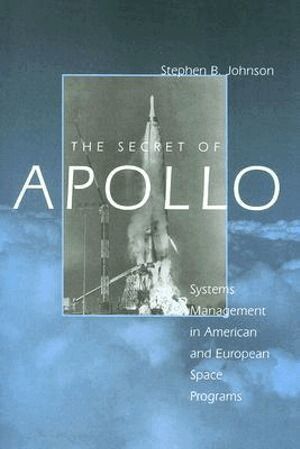
How does one go about organizing something as complicated as a strategic-missile or space-exploration program? Stephen B. Johnson here explores the answer-systems management-in a groundbreaking study that involves Air Force planners, scientists, technical specialists, and, eventually, bureaucrats. Taking a comparative approach, Johnson focuses on the theory, or intellectual history, of "systems engineering" as such, its origins in the Air Force's Cold War ICBM efforts, and its migration to not only NASA but the European Space Agency. Exploring the history and politics of aerospace development and weapons procurement, Johnson examines how scientists and engineers created the systems management process to coordinate large-scale technology development, and how managers and military officers gained control of that process. "Those funding the race demanded results," Johnson explains. "In response, development organizations created what few expected and what even fewer wanted-a bureaucracy for innovation. To begin to understand this apparent contradiction in terms, we must first understand the exacting nature of space technologies and the concerns of those who create them."
Häftad, Engelska, 2008
408 kr
Skickas inom 5-8 vardagar
Outstanding Academic Title, 1991, Choice Magazine Although building a space station has been an extraordinary challenge for America's scientists and engineers, the securing and sustaining of presidential approval, congressional support, and long-term funding for the project was an enormous task for bureaucrats. The Space Station Decision examines the history of this controversial initiative and illustrates how bureaucracy shapes public policy. Using primary documents and interviews, Howard E. McCurdy describes the events that led up to the 1984 decision to build a permanently occupied, international space station in low Earth orbit. As he follows the trail of the space station proposal through the labyrinth of White House policy review, McCurdy explains the evolution of the presidential budget review process, the breakup of the cabinet system, the proliferation of subcabinets and Executive Office interagency, the involvement of White House staff in framing issues for presidential review, and the role of bureaucracy in advancing administration legislation on Capitol Hill.Comparing the space station decision to earlier decisions to go to the moon and to build the space shuttle, McCurdy shows how public officials responsible for long-term science and technology policy maneuvered in a political system that demanded short-term flexibility.
Häftad, Engelska, 2008
435 kr
Skickas inom 5-8 vardagar
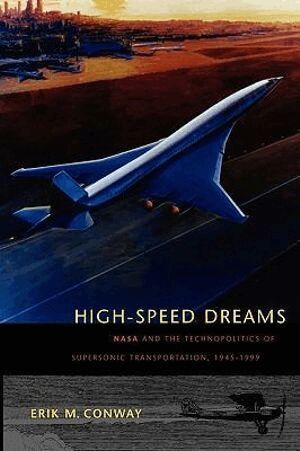
In High-Speed Dreams, Erik M. Conway constructs an insightful history that focuses primarily on the political and commercial factors responsible for the rise and fall of American supersonic transport research programs. Conway charts commercial supersonic research efforts through the changing relationships between international and domestic politicians, military/NASA contractors, private investors, and environmentalists. He documents post-World War II efforts at the National Advisory Committee on Aeronautics and the Defense Department to generate supersonic flight technologies, the attempts to commercialize these technologies by Britain and the United States during the 1950s and 1960s, environmental campaigns against SST technology in the 1970s, and subsequent attempts to revitalize supersonic technology at the end of the century. High-Speed Dreams is a sophisticated study of politics, economics, nationalism, and the global pursuit of progress. Historians, along with participants in current aerospace research programs, will gain valuable perspective on the interaction of politics and technology.
Häftad, Engelska, 2012
338 kr
Skickas inom 5-8 vardagar
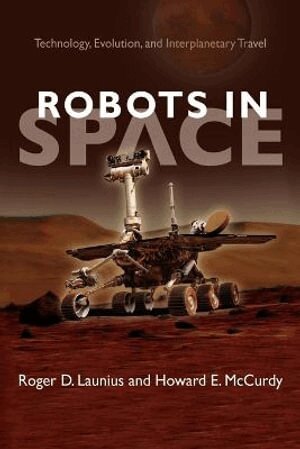
Given the near incomprehensible enormity of the universe, it appears almost inevitable that humankind will one day find a planet that appears to be much like the Earth. This discovery will no doubt reignite the lure of interplanetary travel. Will we be up to the task? And, given our limited resources, biological constraints, and the general hostility of space, what shape should we expect such expeditions to take? In Robots in Space, Roger Launius and Howard McCurdy tackle these seemingly fanciful questions with rigorous scholarship and disciplined imagination, jumping comfortably among the worlds of rocketry, engineering, public policy, and science fantasy to expound upon the possibilities and improbabilities involved in trekking across the Milky Way and beyond. They survey the literature-fictional as well as academic studies; outline the progress of space programs in the United States and other nations; and assess the current state of affairs to offer a conclusion startling only to those who haven't spent time with Asimov, Heinlein, and Clarke: to traverse the cosmos, humans must embrace and entwine themselves with advanced robotic technologies.Their discussion is as entertaining as it is edifying and their assertions are as sound as they are fantastical. Rather than asking us to suspend disbelief, Robots in Space demands that we accept facts as they evolve.
Inbunden, Engelska, 2013
513 kr
Skickas inom 5-8 vardagar
"In the beginning God created the heavens and the earth..." In 1968 the world watched as Earth rose over the moonscape, televised from the orbiting Apollo 8 mission capsule. Radioing back to Houston on Christmas Eve, astronauts recited the first ten verses from the book of Genesis. In fact, many of the astronauts found space flight to be a religious experience. "To Touch the Face of God" is the first book-length historical study of the relationship between religion and the U.S. space program. Kendrick Oliver explores the role played by religious motivations in the formation of the space program and discusses the responses of religious thinkers such as Paul Tillich and C. S. Lewis. Examining the attitudes of religious Americans, Oliver finds that the space program was a source of anxiety as well as inspiration. It was not always easy for them to tell whether it was a godly or godless venture. Grounded in original archival research and the study of participant testimonies, this book also explores one of the largest petition campaigns of the post-war era. Between 1969 and 1975, more than eight million Americans wrote to NASA expressing support for prayer and bible-reading in space.Oliver's study is rigorous and detailed but also contemplative in its approach, examining the larger meanings of mankind's first adventures in "the heavens."
Inbunden, Engelska, 2014
555 kr
Skickas
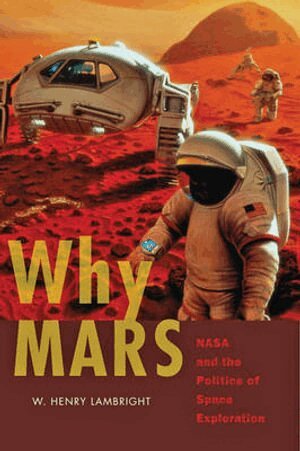
Mars has captured the human imagination for decades. Since NASA's establishment in 1958, the space agency has looked to Mars as a compelling prize, the one place, beyond the Moon, where robotic and human exploration could converge. Remarkably successful with its roaming multi-billion-dollar robot, Curiosity, NASA's Mars program represents one of the agency's greatest achievements. Why Mars analyzes the history of the robotic Mars exploration program from its origins to today. W. Henry Lambright examines the politics and policies behind NASA's multi-decade quest, illuminating the roles of key individuals and institutions, along with their triumphs and defeats. Lambright outlines the ebbs and flows of policy evolution, focusing on critical points of change and factors that spurred strategic reorientation. He explains Mars exploration as a striking example of "big science" and describes the ways a powerful advocacy coalition-composed of NASA decision makers, the Jet Propulsion Laboratory, the Mars academic science community, and many others-has influenced governmental decisions on Mars exploration, making it, at times, a national priority.The quest for Mars stretches over many years and involves billions of dollars. What does it take to mount and give coherence to a multi-mission, big science program? How do advocates and decision makers maintain goals and adapt their programs in the face of opposition and budgetary stringency? Where do they succeed in their strategies? Where do they fall short? Lambright's insightful book suggests that from Mars exploration we can learn lessons that apply to other large-scale national endeavors in science and technology.
Häftad, Engelska, 2016
391 kr
Skickas inom 5-8 vardagar
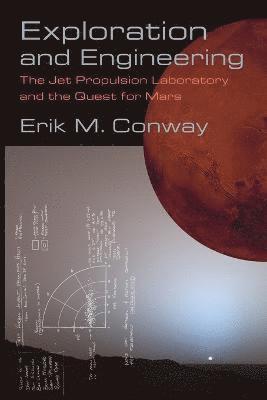
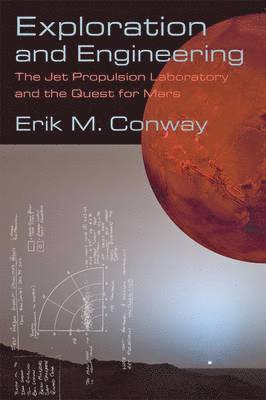
Although the Jet Propulsion Laboratory in Pasadena, California, has become synonymous with the United States' planetary exploration during the past half century, its most recent focus has been on Mars. Beginning in the 1990s and continuing through the Mars Phoenix mission of 2007, JPL led the way in engineering an impressive, rapidly evolving succession of Mars orbiters and landers, including roving robotic vehicles whose successful deployment onto the Martian surface posed some of the most complicated technical problems in space flight history. In Exploration and Engineering, Erik M. Conway reveals how JPL engineers' creative technological feats led to major breakthroughs in Mars exploration. He takes readers into the heart of the lab's problem-solving approach and management structure, where talented scientists grappled with technical challenges while also coping, not always successfully, with funding shortfalls, unrealistic schedules, and managerial turmoil.Conway, JPL's historian, offers an insider's perspective into the changing goals of Mars exploration, the ways in which sophisticated computer simulations drove the design process, and the remarkable evolution of landing technologies over a thirty-year period.
Inbunden, Engelska, 2002
430 kr
Tillfälligt slut
In Faster, Better, Cheaper: Low-Cost Innovation in the U.S. Space Program, Howard E. McCurdy examines NASA's recent efforts to save money while improving mission frequency and performance. McCurdy details the sixteen missions undertaken during the 1990s-including an orbit of the moon, deployment of three space telescopes, four Earth-orbiting satellites, two rendezvous with comets and asteroids, and a test of an ion propulsion engine-which cost less than the sum traditionally spent on a single, conventionally planned planetary mission. He shows how these missions employed smaller spacecraft and cheaper technology to undertake less complex and more specific tasks in outer space. While the technological innovation and space exploration approach that McCurdy describes is still controversial, the historical perspective on its disappointments and triumphs points to ways of developing "faster, better, and cheaper" as a management manifesto.
Häftad, Engelska, 2003
215 kr
Tillfälligt slut
How did science get aboard the Apollo rockets, and what did scientists do with the space allotted to them? Taking Science to the Moon describes, from the perspective of NASA headquarters, the struggles that took place to include science payloads and lunar exploration as part of the Apollo program. Donald A. Beattie-who served at NASA from 1963 to 1973 in several management positions and finally as program manager, Apollo Lunar Surface Experiments-here supplies a detailed, insider's view of the events leading up to the acceptance of science activities on all the Apollo missions.
Inbunden, Engelska, 2009
587 kr
Tillfälligt slut
This book offers an informed and revealing account of NASA's involvement in the scientific understanding of the Earth's atmosphere. Since the nineteenth century, scientists have attempted to understand the complex processes of the Earth's atmosphere and the weather created within it. This effort has evolved with the development of new technologies-from the first instrument-equipped weather balloons to multibillion-dollar meteorological satellite and planetary science programs. Erik M. Conway chronicles the history of atmospheric science at NASA, tracing the story from its beginnings in 1958, the International Geophysical Year, through to the present, focusing on NASA's programs and research in meteorology, stratospheric ozone depletion, and planetary climates and global warming. But the story is not only a scientific one. NASA's researchers operated within an often politically contentious environment. Although environmental issues garnered strong public and political support in the 1970s, the following decades saw increased opposition to environmentalism as a threat to free market capitalism.Atmospheric Science at NASA critically examines this politically controversial science, dissecting the often convoluted roles, motives, and relationships of the various institutional actors involved-among them NASA, congressional appropriation committees, government weather and climate bureaus, and the military.
Inbunden, Engelska, 2009
528 kr
Tillfälligt slut
The launch of Sputnik 1 in 1957 ushered in an exciting era of scientific and technological advancement. As television news anchors, radio hosts, and journalists reported the happenings of the American and the Soviet space programs to millions of captivated citizens, words that belonged to the worlds of science, aviation, and science fiction suddenly became part of the colloquial language. What's more, NASA used a litany of acronyms in much of its official correspondence in an effort to transmit as much information in as little time as possible. To translate this peculiar vocabulary, Paul Dickson has compiled the curious lingo and mystifying acronyms of NASA in an accessible dictionary of the names, words, and phrases of the Space Age. Aviators, fighter pilots, and test pilots coined the phrases "spam in a can" (how astronauts felt prelaunch as they sat in a tiny capsule atop a rocket booster); "tickety-boo" (things are fine), and "the Eagle has landed" (Neil Armstrong's famous quote when Apollo 11 landed on the Moon).This dictionary captures a broader foundation for language of the Space Age based on the historic principles employed by the Oxford English Dictionary and Webster's New Third International Dictionary. Word histories for major terms are detailed in a conversational tone, and technical terms are deciphered for the interested student and lay reader. This is a must-own reference for space history buffs.
Inbunden, Engelska, 2015
346 kr
Tillfälligt slut
Although the Jet Propulsion Laboratory in Pasadena, California, has become synonymous with the United States' planetary exploration during the past half century, its most recent focus has been on Mars. Beginning in the 1990s and continuing through the Mars Phoenix mission of 2007, JPL led the way in engineering an impressive, rapidly evolving succession of Mars orbiters and landers, including roving robotic vehicles whose successful deployment onto the Martian surface posed some of the most complicated technical problems in space flight history. In Exploration and Engineering, Erik M. Conway reveals how JPL engineers' creative technological feats led to major breakthroughs in Mars exploration. He takes readers into the heart of the lab's problem-solving approach and management structure, where talented scientists grappled with technical challenges while also coping, not always successfully, with funding shortfalls, unrealistic schedules, and managerial turmoil.Conway, JPL's historian, offers an insider's perspective into the changing goals of Mars exploration, the ways in which sophisticated computer simulations drove the design process, and the remarkable evolution of landing technologies over a thirty-year period.