Orbis Biblicus et Orientalis – serie
Visar alla böcker i serien Orbis Biblicus et Orientalis. Handla med fri frakt och snabb leverans.
5 produkter
5 produkter
1 392 kr
Tillfälligt slut
Del 197 - Orbis Biblicus Et Orientalis
Trees, Kings, and Politics
Studies in Assyrian Iconography
Inbunden, Engelska, 2003
993 kr
Tillfälligt slut
1 096 kr
Tillfälligt slut
Del 290 - Orbis Biblicus et Orientalis
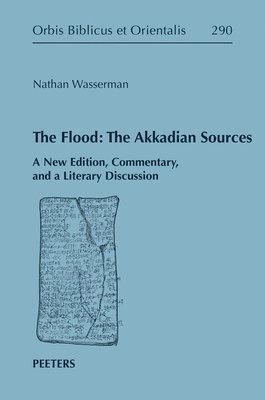
Flood: The Akkadian Sources
A New Edition, Commentary, and a Literary Discussion
Inbunden, Engelska, 2020
1 404 kr
Skickas inom 3-6 vardagar
The story of the primeval cataclysmic flood which wiped out all life on earth, save for one family, is found in different ancient Mesopotamian texts whence it reached the Biblical and Classical literary traditions. The present book systematically collects the earliest attestations of the myth of the Flood, namely all the cuneiform-written Akkadian sources – from the Old Babylonian to the Neo-Assyrian and Neo-Babylonian periods, including Tablet XI of the Epic of Gilgamesh –, presenting them in a new synoptic edition and English translation which are accompanied by a detailed philological commentary and an extensive literary discussion. The book also includes a complete glossary of the Akkadian sources.
Del 293 - Orbis Biblicus et Orientalis
Divine Names on the Spot
Towards a Dynamic Approach of Divine Denominations in Greek and Semitic Contexts
Inbunden, Engelska, 2021
1 249 kr
Skickas inom 3-6 vardagar
Ancient Greek and Semitic languages resorted to a large range of words to name the divine. Gods and goddesses were called by a variety of names and combinations of onomastic attributes. This broad lexicon of names is characterised by plurality and a tendency to build on different sequences of names; therefore, the Mapping Ancient Polytheisms project focuses on the process of naming the divine in order to better understand the ancient divine in terms of a plurality in the making. A fundamental rule for reading ancient divine names is to grasp them in their context – time and place, a ritual, the form of the discourse, a cultural milieu…: a deity is usually named according to a specific situation. From Artemis Eulochia to al-Lat, al-'Uzza and Manat, from Melqart to “my rock” in the biblical book of Psalms, this volume journeys between the sanctuary on Mount Gerizim and late antique magical practices, revisiting rituals, hymnic poetry, oaths of orators and philosophical prayers. While targeting different names in different contexts, the contributors draft theoretical propositions towards a dynamic approach of naming the divine in antiquity.