Oriental Institute Communications - Böcker
Visar alla böcker i serien Oriental Institute Communications. Handla med fri frakt och snabb leverans.
9 produkter
9 produkter
Del 22 - Oriental Institute Communications
Excavations at Nippur
Eleventh Season
Häftad, Engelska, 1975
326 kr
Tillfälligt slut
In this volume the Nippur Expedition publishes the first results of its new program of research at Nippur, the holy city of Mesopotamia. This program, bringing together an interdisciplinary team to work on a historical site in Mesopotamia, focuses on the entire city, not just the sacred aspects. Concentrating on the West Mound, the first season yielded a sequence of temples in Area WA and a Kassite administrative palace above an Old Babylonian house in Area WB.
406 kr
Tillfälligt slut
The second of the preliminary reports on work at Nippur, this volume also gives details of the remains of a series of temples in Area WA and the administrative and residential buildings in Area WB. Included are important treatments of the pottery of the Old Babylonian and Kassite periods, as well as hoards of cuneiform tablets and Islamic silver coins.
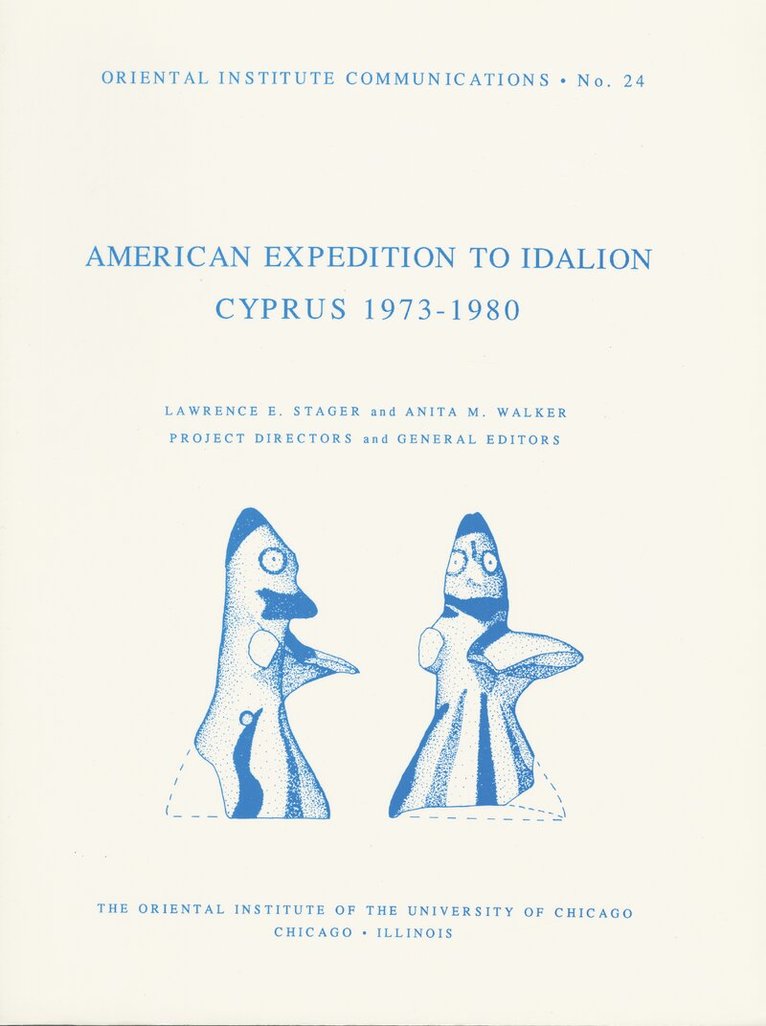
Del 24 - Oriental Institute Communications
American Expedition to Idalion, Cyprus 1973-1980
Häftad, Engelska, 1989
716 kr
Tillfälligt slut
Report on excavations at the urban site of Idalion and the Neolithic site of Shali-Agridhi in Cyprus. Stratigraphic analyses of both sites as well as multidisciplinary studies of mining and metallurgy, fauna, human remains, pottery, coins and sculpture.
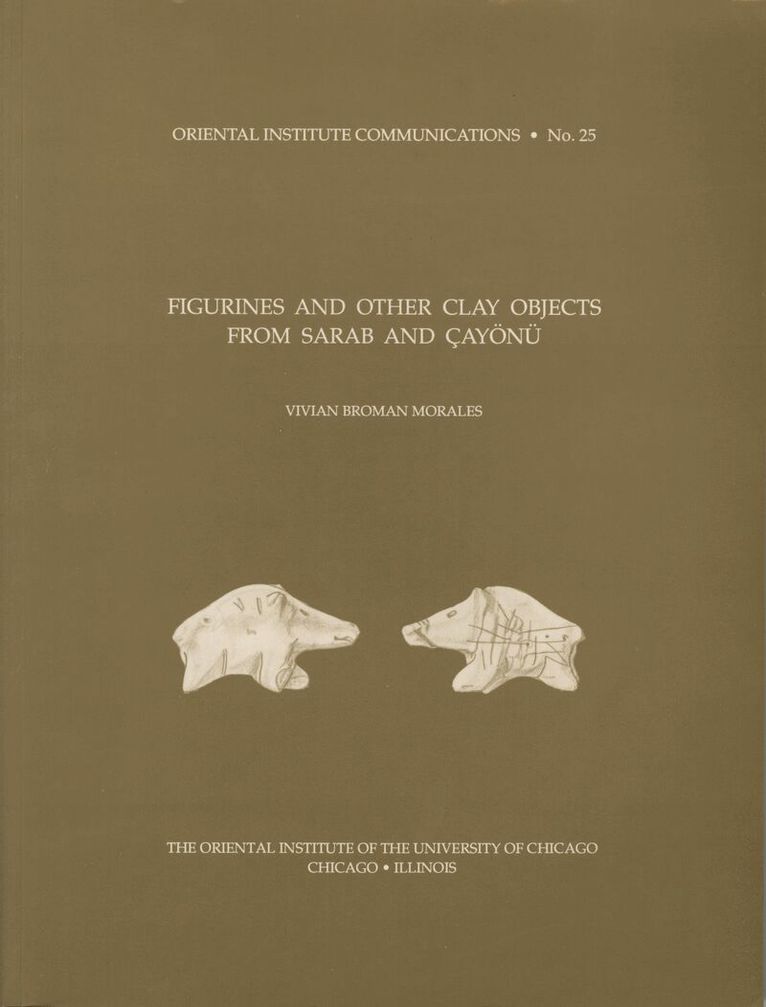
Del 25 - Oriental Institute Communications
Figurines and Other Clay Objects from Sarab and Cayonue
Häftad, Engelska, 1990
326 kr
Skickas inom 5-8 vardagar
Human and animal figurines and other clay objects from the Oriental Institute's continuing work on Neolithic sites in Turkey and Iran.
Del 27 - Oriental Institute Communications
Registry of the Photographic Archives of the Epigraphic Survey, with Plates from Key Plans Showing Locations of Theban Temple Decorations
Häftad, Engelska, 1995
406 kr
Tillfälligt slut
This publication of the photographic registry of the Oriental Institute's Epigraphic Survey in Luxor provides scholars with a quick reference to the photographic documentation contained in the Survey's primary archival holdings. Organized alphabetically by site and by the Nelson numbers keyed to temple decoration (devised by Harold H Nelson, the Survey's first field director), the Registry lists all negatives available for thousands of individual scenes in Theban temples and tombs. A reprint of Nelson's thirty-eight key plans in reduced format appears as a separate plate section for convenient reference.
255 kr
Skickas inom 5-8 vardagar
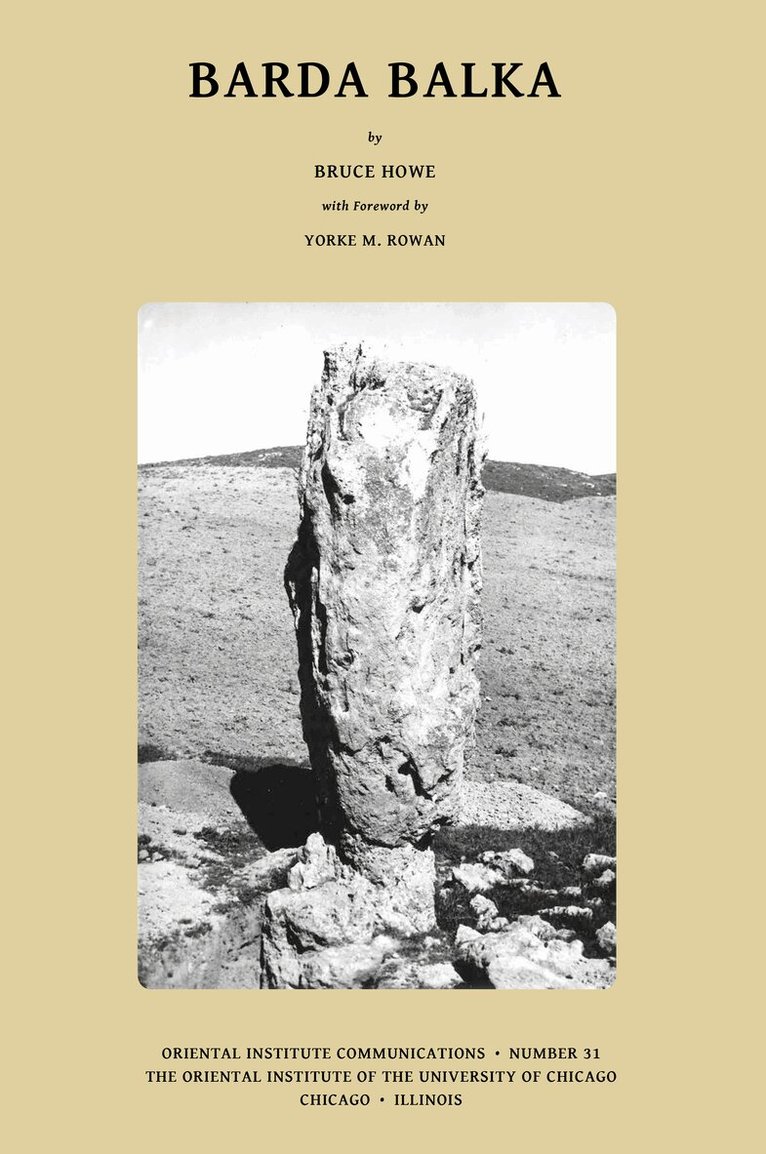
The Paleolithic site of Barda Balka ("standing stone," "stone to lean upon" in local Kurdish) is situated about 3 kilometers northeast of Chemchemal in Kirkuk Province, Iraq. Until recent years, the site was marked by a natural monolith of limestone conglomerate 3.5 meters high on a rather barren slope partly littered with Acheulean-type bifaces, pebble tools, cores, and flake artifacts. The site was discovered in 1949 by members of the Directorate General of Antiquities of Iraq while on archaeological reconnaissance in the district. In 1951, during a field season of the Oriental Institute of the University of Chicago under the direction of Robert J. Braidwood (which not only conducted the excavations at nearby Jarmo and Karim Shahir but also carried out wider geological and prehistoric reconnaissance in the extended Chemchemal Valley area), Barda Balka was visited and further studied by Herbert E. Wright Jr. of the University of Minnesota Department of Geology and Bruce Howe, then of the Peabody Museum, Harvard University. Wright and Howe returned shortly thereafter to conduct a four-day sounding campaign of trenching and localized geological investigations. This volume is Howe's final report of these investigations at Barda Balka.
Del 28 - Oriental Institute Communications
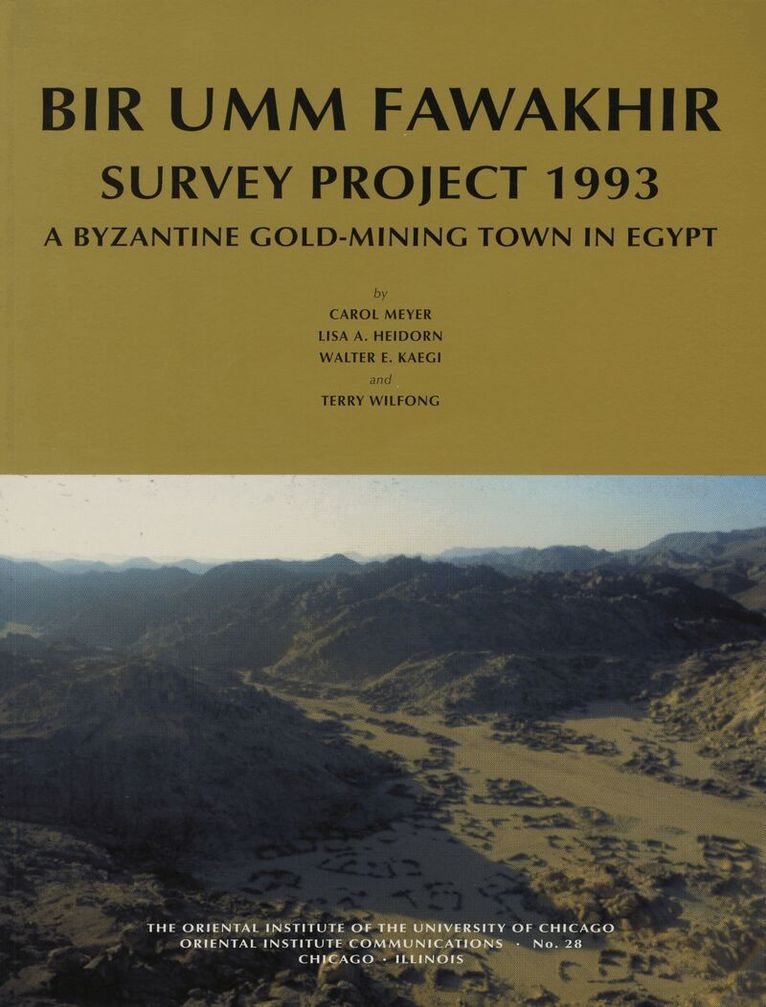
Bir Umm Fawakhir Survey Project 1993
A Byzantine Gold-Mining Town in Egypt
Häftad, Engelska, 2000
636 kr
Skickas inom 5-8 vardagar
The Oriental Institute continued its survey of Bir Umm Fawakhir, a site lying half way between the Nile and the Red Sea, with a short season in January 1993. Located close to the famous bekhen-stone quarries and graffiti of the Wadi Hammamat, the 1992 project took the form of a geological study of the area of Bir Umm Fawakhir. The presence of these mineral resources in this otherwise barren hyper-arid desert, explains why the Bir Umm Fawakhir town was established in this area. By far the most valuable resource was the gold carried in white quartz veins in the local granite, and the mountainsides around Bir Umm Fawakhir are riddled and trenched with ancient mines. This report reflects on the aims of the 1993 season which was to continue mapping the site, to expand the pottery corpus, to seek for some specific features not found in 1992 such as defensive structures and churches, and to carrry out a more general survey of the site's immediate vicinity.
Del 29 - Oriental Institute Communications
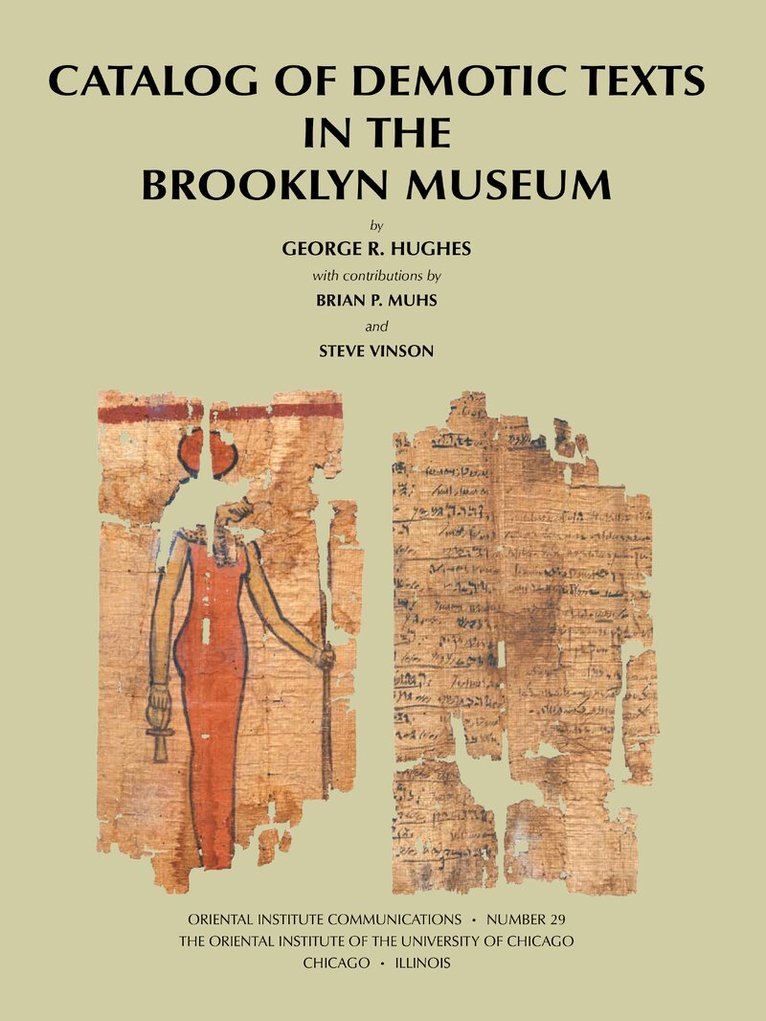
Catalog of Demotic Texts in the Brooklyn Museum
Häftad, Engelska, 2005
1 142 kr
Skickas inom 5-8 vardagar
This catalogue is intended to be only a checklist of the Brooklyn Museum's collection of 212 Demotic Egyptian texts. The catalogue provides both the Museum and Demoticists generally with a list of all the pieces plus only such information as would make the list useful. It is not intended to be a complete publication of the texts with the usual full transliteration, translation, notes, and photographs or drawings. Rather, samples of each type of text (papyri, ostraca, inscribed stone and wooden pieces) are illustrated on the plates and only the more interesting passages in the texts are given in transliteration and translation. The book concludes with key word, name, title, and geographical name indices.
Del 30 - Oriental Institute Communications
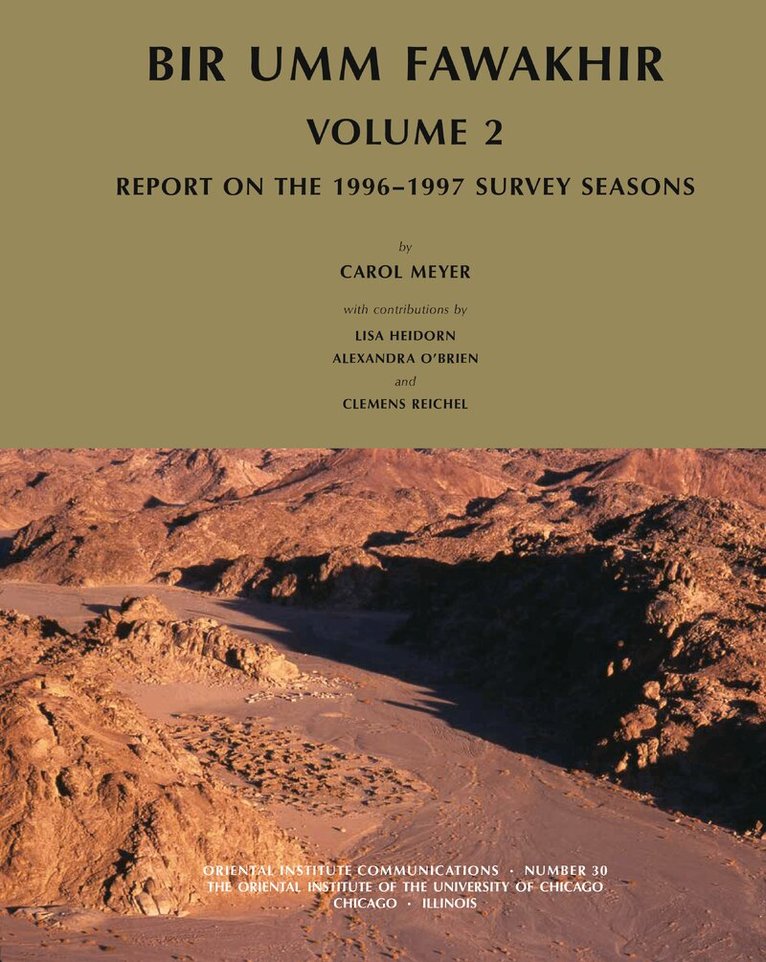
Bir Umm Fawakhir, Volume 2
Report on the 1996-1997 Survey Seasons
Häftad, Engelska, 2011
326 kr
Skickas inom 5-8 vardagar
Bir Umm Fawakhir is a fifth-sixth century AD Coptic/Byzantine gold-mining town located in the central Eastern Desert of Egypt. The Bir Umm Fawakhir Project of the Oriental Institute of the University of Chicago carried out four seasons of archaeological survey at the site, in 1992, 1993, 1996, and 1997; one season of excavation in 1999; and one study season in 2001. This volume is the final report on the 1996 and 1997 seasons. The goals of the 1996 and 1997 field seasons were to complete the detailed map of the main settlement, to continue the investigation of the outlying clusters of ruins or "Outliers" and to address some specific questions such as the ancient gold-extraction process. The completion of these goals makes the main settlement at Bir Umm Fawakhir one of the only completely mapped towns of the period in Egypt. Not only is the main settlement plotted room for room and door for door but also features such as guardposts, cemeteries, paths, roads, wells, outlying clusters of ruins and mines are known and some of these are features not always readily detectable archaeologically. This volume presents the pre-Coptic material; a detailed discussion of the remains in the main settlement, outliers and cemeteries; the Coptic/Byzantine pottery, small finds and dipinti; as well as a study of ancient mining techniques.