OXF STUDIES GENDER INTL RELATIONS SERIES - Böcker
Visar alla böcker i serien OXF STUDIES GENDER INTL RELATIONS SERIES. Handla med fri frakt och snabb leverans.
4 produkter
4 produkter
929 kr
Skickas inom 7-10 vardagar
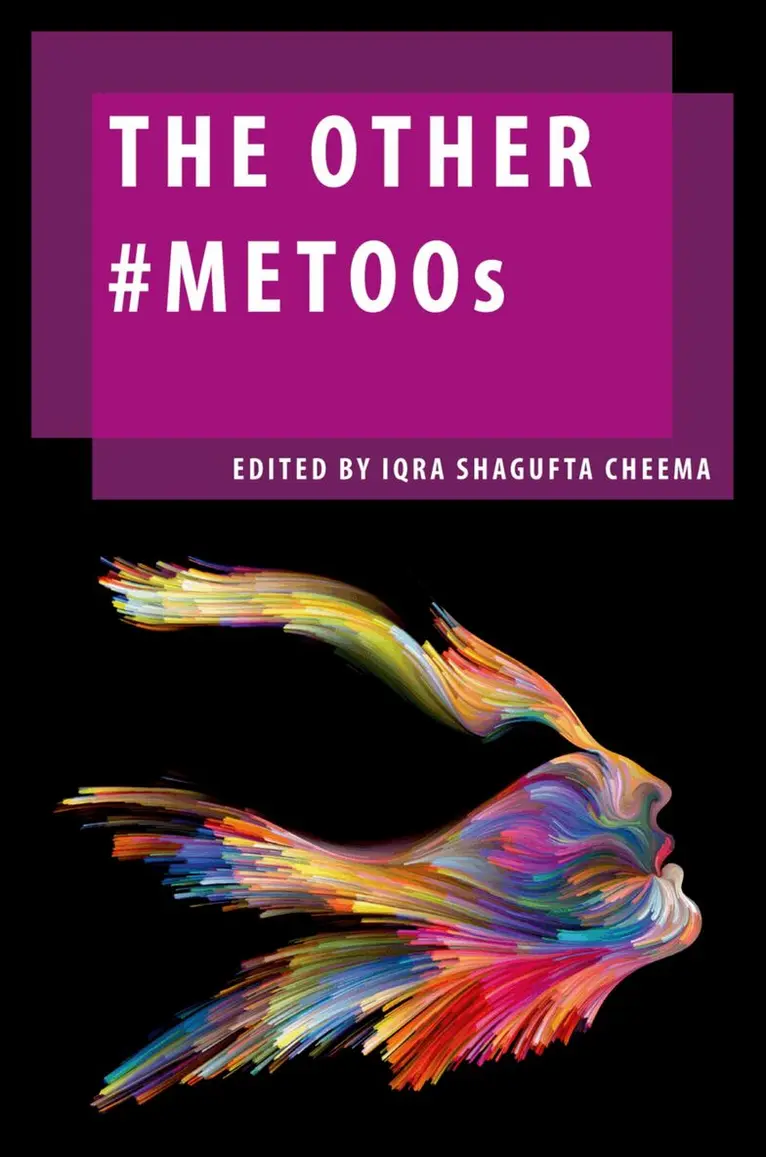
From Asia to Africa to the Middle East, #MeToo has inspired local movements and hashtag trends like #AnaKaman and transnational collective hashtags like #MosqueMeToo. Yet, most Western scholarly and popular treatment of the movement assumes it is a primarily Western phenomenon. To attend to the revolutionary international impact of #MeToo, Iqra Shagufta Cheema brings together contributions from scholars and scholar activists that look at specific iterations of the #MeToo movement across multiple communities, cultures, and countries in the Global South. Going beyond gender, this comprehensive study focuses on the intersectional assemblage of ethnicity, religion, race, class, and politics that informs #MeToo and its place in local and transnational feminisms. By doing so, The Other #MeToos highlights the adaptation, translation, and impact of #MeToo in non-Western, postcolonial, minoritized, and othered locales to explore its wider scope and possibilities.
282 kr
Skickas inom 5-8 vardagar
From Asia to Africa to the Middle East, #MeToo has inspired local movements and hashtag trends like #AnaKaman and transnational collective hashtags like #MosqueMeToo. Yet, most Western scholarly and popular treatment of the movement assumes it is a primarily Western phenomenon. To attend to the revolutionary international impact of #MeToo, Iqra Shagufta Cheema brings together contributions from scholars and scholar activists that look at specific iterations of the #MeToo movement across multiple communities, cultures, and countries in the Global South. Going beyond gender, this comprehensive study focuses on the intersectional assemblage of ethnicity, religion, race, class, and politics that informs #MeToo and its place in local and transnational feminisms. By doing so, The Other #MeToos highlights the adaptation, translation, and impact of #MeToo in non-Western, postcolonial, minoritized, and othered locales to explore its wider scope and possibilities.
Building Peace, Rebuilding Patriarchy
The Failure of Gender Interventions in Timor-Leste
Inbunden, Engelska, 2023
780 kr
Skickas inom 5-8 vardagar
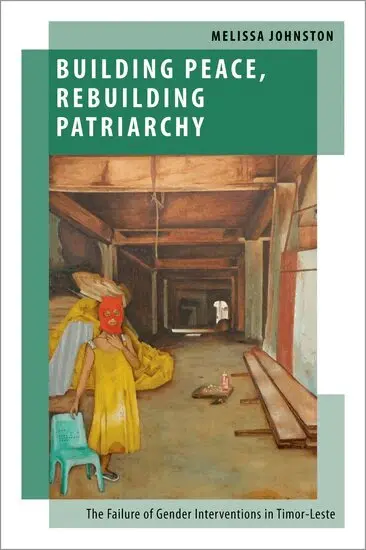
Over the two decades since the adoption of United Nations Security Council Resolution 1325 on Women, Peace and Security, peacebuilding interventions around the globe have increasingly incorporated gender perspectives. These initiatives have used both development programs and gender mainstreaming to advance women's empowerment, with the aim of making peacebuilding more effective as well as building more stable societies and efficient economies. This goal has been manifested in a wide range of programs and projects-or "gender interventions"--including economic empowerment measures, gender quotas, gender-responsive budgeting, and legal reforms. Yet, the results have been uneven, provoking a sizable debate among scholars and practitioners seeking to explain the shortcomings and improve the outcomes.In Building Peace, Rebuilding Patriarchy, Melissa Johnston explains why gender interventions often fail to help those who most need them, using the case of Timor-Leste, a country subjected to high levels of peacebuilding and gender interventions between 1999 and 2017. Looking at three types of gender interventions--gender-responsive budgeting, the law against domestic violence, and microfinance initiatives--Johnston argues that these reforms have produced mixed results because they reinscribe entrenched class and gender hierarchies in their implementation. Focusing on the connection between politics, economics, and gender, Johnston identifies the emergence of an elite class coalition, built on kinship and gender order in Timor-Leste as the root of the problem. Peacebuilders have made concessions to elites and violent men to keep the peace, a tendency amplified by "local turn" approaches to peacebuilding. As a result, deep inequalities remain and violence against women is endemic across the country. Compelling and insightful, Building Peace, Rebuilding Patriarchy makes the case that as peacebuilders seek to rebuild war-torn societies, understanding the intersection of social and gender order is more important than ever.
Support the Troops
Military Obligation, Gender, and the Making of Political Community
Inbunden, Engelska, 2022
1 132 kr
Skickas inom 5-8 vardagar
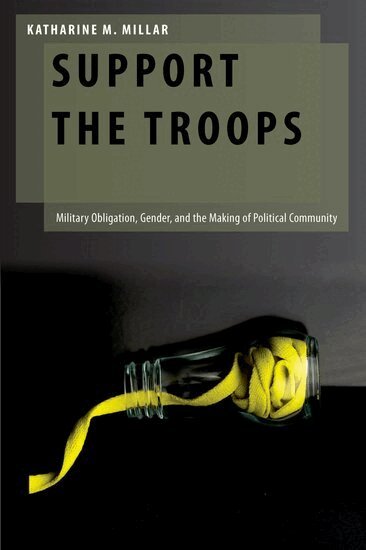
In the past, it was assumed that men, as good citizens, would serve in the armed forces in wartime. In the present, however, liberal democratic states increasingly rely on small, all-volunteer militaries deployed in distant wars of choice. While few people now serve in the armed forces, our cultural myths and narratives of warfare continue to reproduce a strong connection between military service, citizenship, and normative masculinity.In Support the Troops, Katharine M. Millar provides an empirical overview of "support the troops" discourses in the US and UK during the early years of the global war on terror (2001-2010). As Millar argues, seemingly stable understandings of the relationship between military service, citizenship, and gender norms are being unsettled by changes in warfare. The effect is a sense of uneasiness about the meaning of what it means to be a "good" citizen, "good" person, and, crucially, a "good" man in a context where neither war nor military service easily align with existing cultural myths about wartime obligations and collective sacrifice. Instead we participate in the performance of supporting the troops, even when we oppose war--an act that appears not only patriotic and moral, but also apolitical. Failing to support the troops, either through active opposition or a lack of overt supportive actions, is perceived as not only offensive and inappropriately political, but disloyal and dangerous. Millar asserts that military support acts as a new form of military service, which serves to limit anti-war dissent, plays a crucial role in naturalizing the violence of the transnational liberal order, and recasts war as an internal issue of solidarity and loyalty. Rigorous and politically challenging, Millar provides the first work to systematically examine "support the troops" as a distinct social phenomenon and offers a novel reading of this discourse through a gendered lens that places it in historical and transnational context.