Oxford Studies in Language and Race - Böcker
Visar alla böcker i serien Oxford Studies in Language and Race. Handla med fri frakt och snabb leverans.
4 produkter
4 produkter
Becoming the System
A Raciolinguistic Genealogy of Bilingual Education in the Post-Civil Rights Era
Inbunden, Engelska, 2024
875 kr
Skickas inom 7-10 vardagar
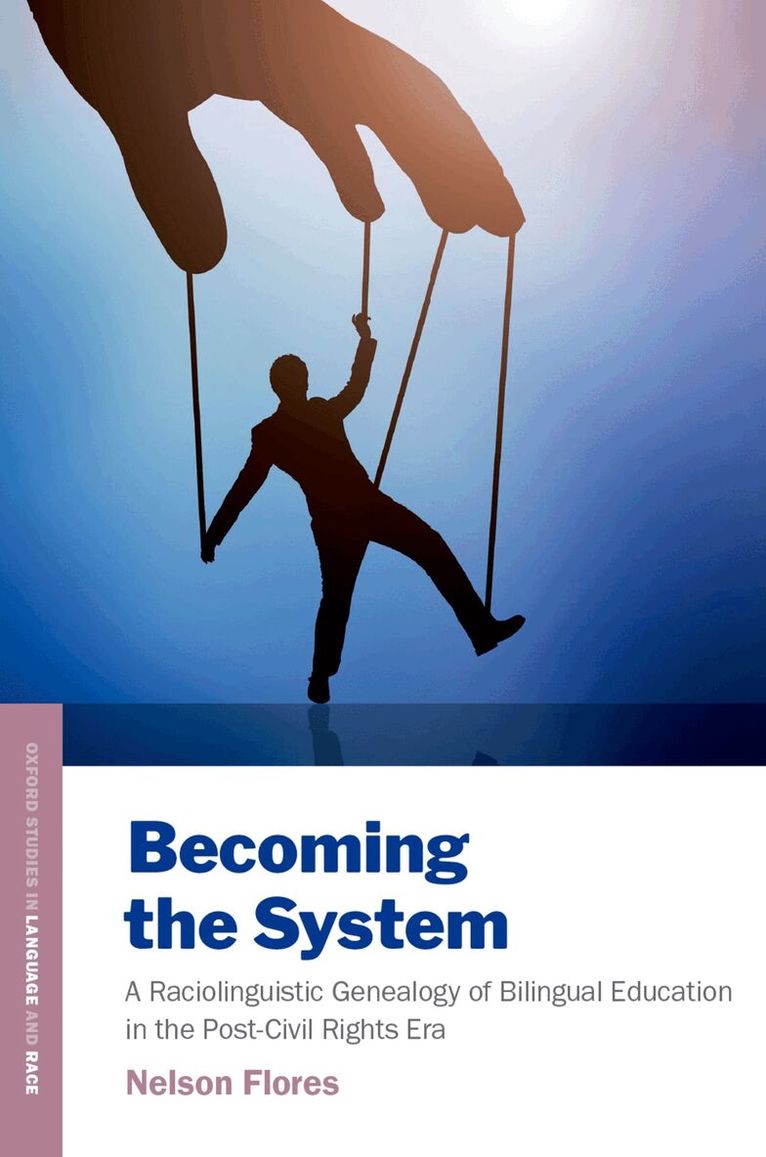
Bilingual education is usually framed as a tool of antiracism. In Becoming the System, author Nelson Flores challenges that framework by examining the ways that institutionalizing bilingual education in the post-Civil Rights Era in the United States has served to maintain rather than challenge racial hierarchies. He adopts a methodology that he terms raciolinguistic genealogy as a point of entry for arguing that the institutionalization of bilingual education was part of a broader reconfiguration of race in the postcolonial era. This reconfiguration located the root of racial inequities within a psychologically damaged racialized subject who, after having experienced multiple generations of racial oppression, had either from a liberal perspective developed a culture of poverty or a radical perspective developed colonized mindset that prevented racial progress. After examining the ways that this psychologically damaged racialized subject provided the ideological foundation for the Bilingual Education Act (BEA), Flores then examines how institutionalizing the BEA produced a cadre of Latinx professionals who were afforded contingent proximity to whiteness in exchange for their acceptance of deficit framings of Latinx communities. He goes on to examine the ways that this institutionalization helped pave the way for neoliberal educational reforms that serve to maintain the racial status quo. This has culminated in the exponential growth of dual language education as a commodity for affluent monolingual white families even as the bilingualism of Latinx communities continue to be pathologized and policed. Flores concludes by implicating himself as a Latinx professional working in bilingual education in this political incorporation and posits the present volume as resistance to the commodification and weaponization of Latinx bilingualism.
Becoming the System
A Raciolinguistic Genealogy of Bilingual Education in the Post-Civil Rights Era
Häftad, Engelska, 2024
278 kr
Skickas inom 5-8 vardagar
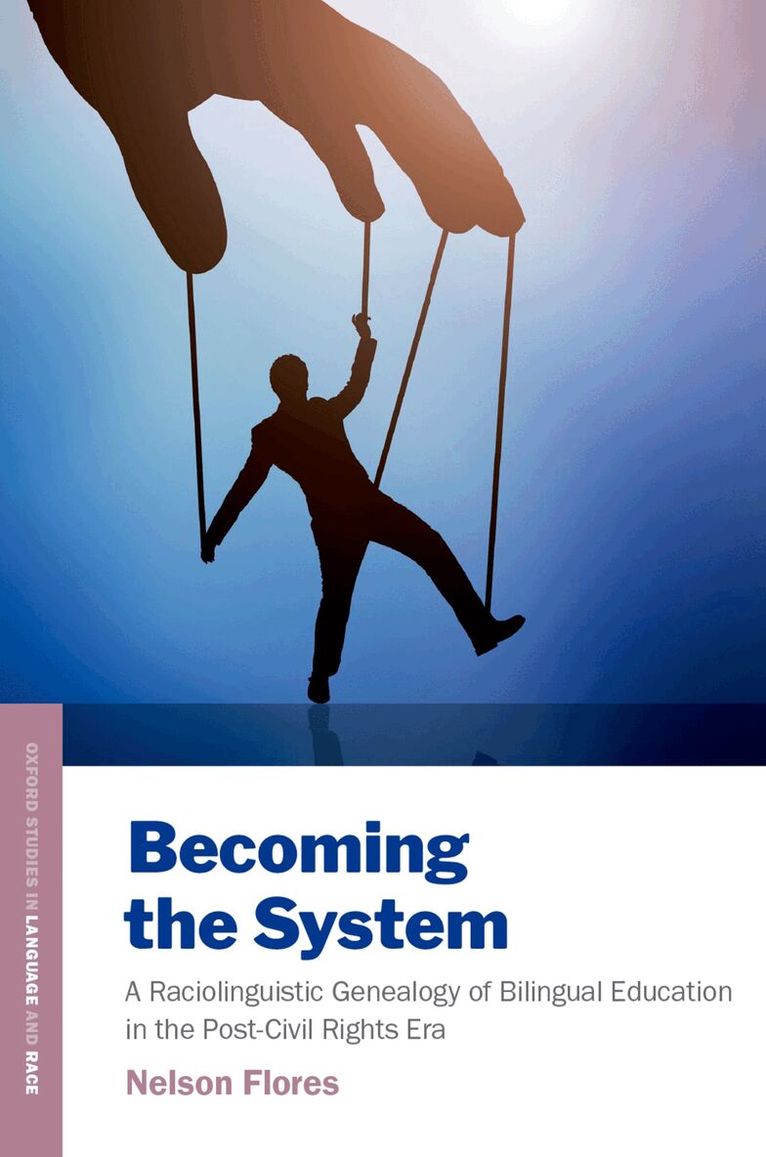
Bilingual education is usually framed as a tool of antiracism. In Becoming the System, author Nelson Flores challenges that framework by examining the ways that institutionalizing bilingual education in the post-Civil Rights Era in the United States has served to maintain rather than challenge racial hierarchies. He adopts a methodology that he terms raciolinguistic genealogy as a point of entry for arguing that the institutionalization of bilingual education was part of a broader reconfiguration of race in the postcolonial era. This reconfiguration located the root of racial inequities within a psychologically damaged racialized subject who, after having experienced multiple generations of racial oppression, had either from a liberal perspective developed a culture of poverty or a radical perspective developed colonized mindset that prevented racial progress. After examining the ways that this psychologically damaged racialized subject provided the ideological foundation for the Bilingual Education Act (BEA), Flores then examines how institutionalizing the BEA produced a cadre of Latinx professionals who were afforded contingent proximity to whiteness in exchange for their acceptance of deficit framings of Latinx communities. He goes on to examine the ways that this institutionalization helped pave the way for neoliberal educational reforms that serve to maintain the racial status quo. This has culminated in the exponential growth of dual language education as a commodity for affluent monolingual white families even as the bilingualism of Latinx communities continue to be pathologized and policed. Flores concludes by implicating himself as a Latinx professional working in bilingual education in this political incorporation and posits the present volume as resistance to the commodification and weaponization of Latinx bilingualism.
Telling Blackness
Young Liberians and the Raciosemiotics of Contemporary Black Diaspora
Inbunden, Engelska, 2025
875 kr
Skickas inom 7-10 vardagar
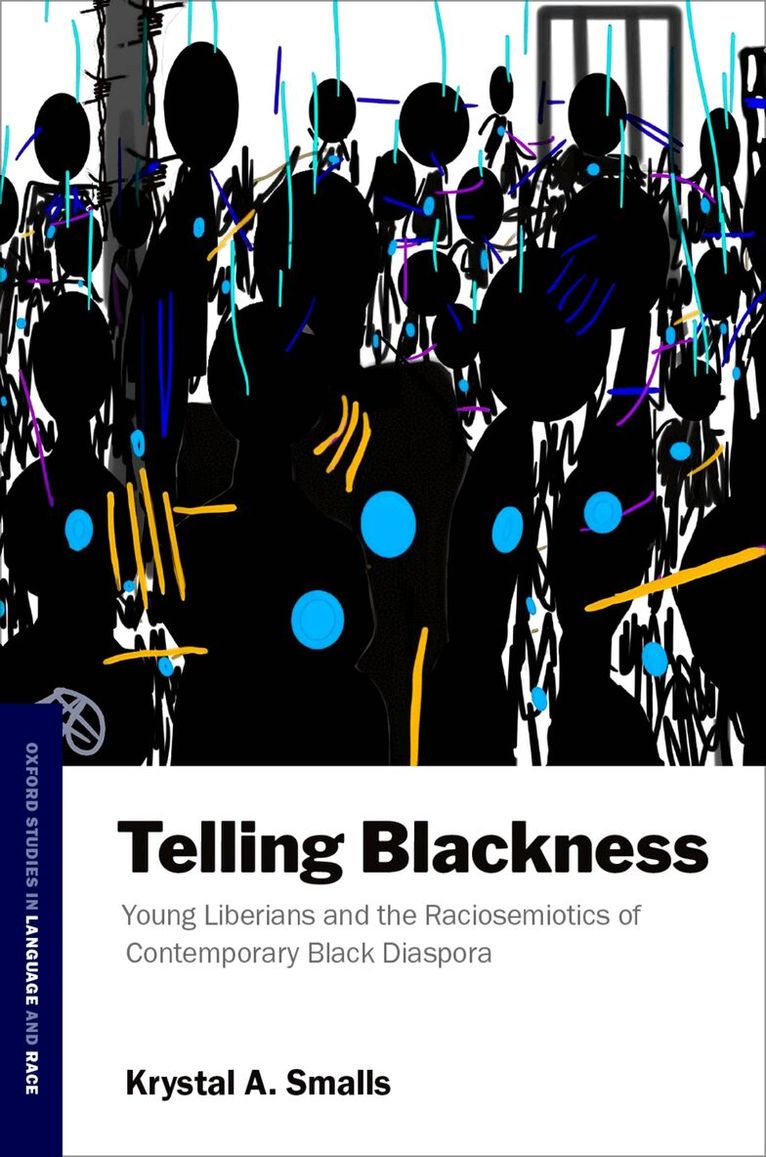
Telling Blackness begins with two simple premises: conventional models of the ways people make meaning of the world fail to account for the particularities of Blackness; and accounts of Black life often miss the significance of the smallest and subtlest acts that sustain it. With this introduction of raciosemiotics, Smalls remaps the field of semiotic anthropology around the specificities of race and the body, and remaps contemporary Black diaspora through the embodied significations of a group of young Liberian women in the US. This transdisciplinary ethnographic account of their lives helps us reimagine their talk, twerks, and tweets as “tellings” that exceed our understandings of narrative and that potentially act on the world of meaning. And, with careful historical contextualization, we see how such acts reproduce, refuse, or powerfully disregard racial logics that have entangled the US and Liberia for two centuries. Led by Black feminist scholarship, Telling Blackness also provides a semiotic glimpse into ways of relating that help create complex diasporic intimacies and that sustain Black life beyond survival.
Telling Blackness
Young Liberians and the Raciosemiotics of Contemporary Black Diaspora
Häftad, Engelska, 2025
278 kr
Skickas inom 5-8 vardagar
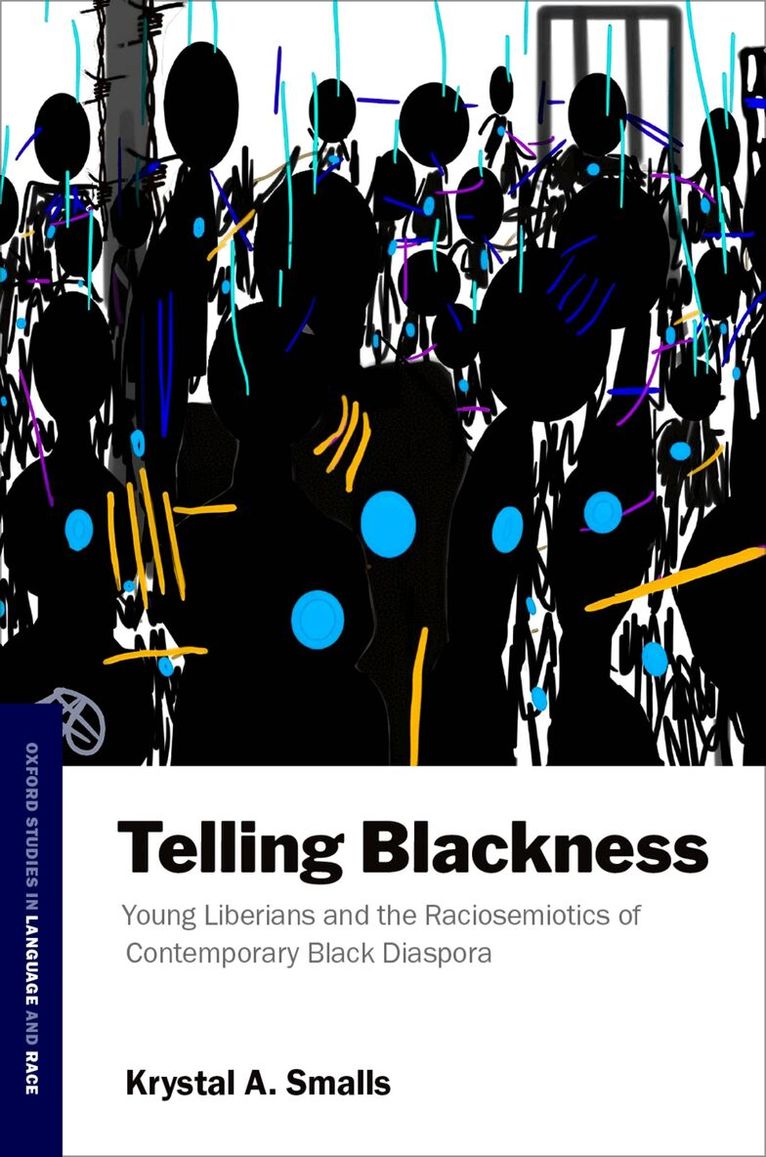
Telling Blackness begins with two simple premises: conventional models of the ways people make meaning of the world fail to account for the particularities of Blackness; and accounts of Black life often miss the significance of the smallest and subtlest acts that sustain it. With this introduction of raciosemiotics, Smalls remaps the field of semiotic anthropology around the specificities of race and the body, and remaps contemporary Black diaspora through the embodied significations of a group of young Liberian women in the US. This transdisciplinary ethnographic account of their lives helps us reimagine their talk, twerks, and tweets as “tellings” that exceed our understandings of narrative and that potentially act on the world of meaning. And, with careful historical contextualization, we see how such acts reproduce, refuse, or powerfully disregard racial logics that have entangled the US and Liberia for two centuries. Led by Black feminist scholarship, Telling Blackness also provides a semiotic glimpse into ways of relating that help create complex diasporic intimacies and that sustain Black life beyond survival.