Oxford Studies in Social and Cultural Anthropology - Cultural Forms – serie
Visar alla böcker i serien Oxford Studies in Social and Cultural Anthropology - Cultural Forms. Handla med fri frakt och snabb leverans.
3 produkter
3 produkter
1 172 kr
Skickas inom 7-10 vardagar
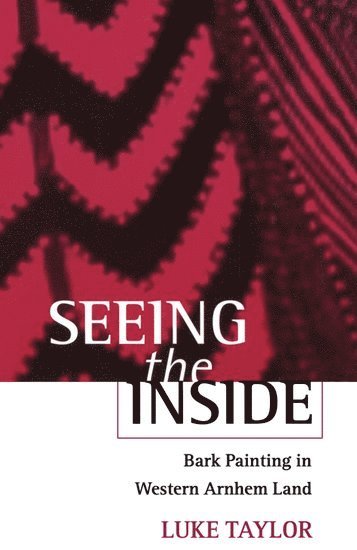
Seeing the Inside is the first detailed study of one of the world's great visual art traditions and its role in the society that produces it. The bark painting of Aboriginal artists in western Arnhem Land is the product of a unique tradition of many thousands of years' duration. In recent years it has attracted enormous interest in the rest of Australia and beyond, with the result that the artists, who live primarily as hunters in this relatively secluded region of northern Australia, now paint for sale to the world art market. Though the richness and power of Aboriginal arts are now, belatedly, finding wide recognition, they remain insufficiently understood. In this thoroughly illustrated book Luke Taylor examines the creative methods of the bark painters and the cultural meaning of their work. He discusses, on the one hand, the arrangements which allow the artists to project their culture on to an international stage, and on the other, the continuing social and religious roles of their paintings within their own society. The result is a remarkable and fascinating picture of artistic creativity in a changing world.
738 kr
Skickas inom 5-8 vardagar
In an age of secularization and the decline of ritual, Christmas has emerged as the most promising candidate for the first global festival, celebrated not only in the Christian West, but in many countries with either a minority or no Christian population. How is it that Christmas is not merely surviving, but actually gaining in importance?This book provides the first comparative study of the Christmas phenomenon, based on direct observation of how the festival is actually celebrated in diverse social contexts. It begins with some general theories of Christmas, including the first full English translation of "Father Christmas Executed" by Claude L´ evi-Strauss, and then focuses on two controversial issues. First, the relationship between Christmas and materialism is examined and interpreted in the United States, Japan, and Trinidad. The second theme is the debate over the place of the family in Christmas celebrations; this section ranges from discussion of quarrels and tensions sparked off by the festival to a study of a deliberately anti- (or non-) nuclear family Christmas, and examines evidence from Sweden, Britain, and the Inupiat of Alaska.Christmas is rapidly becoming the focus for a constellation of activities such as gift-giving, the marking of the seasons, and the celebration of extended family networks which otherwise would have seemed to be in sharp decline. This collection represents a fascinating and significant contribution to understanding how and why Christmas has developed into the global festival celebrated today.
1 762 kr
Skickas inom 7-10 vardagar
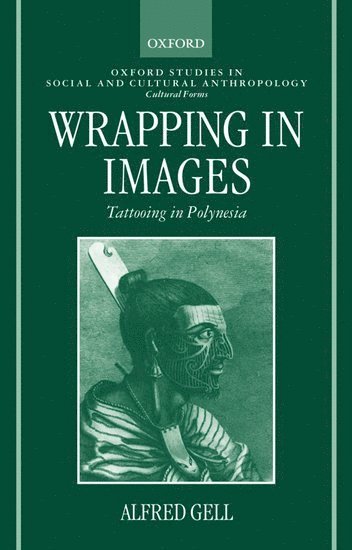
In traditional Polynesian societies, tattooing played a key role in the social construction of the person. This study is the first to provide a comparative analysis of tattooing in its original setting, based on a comprehensive survey of the documentary sources, both written and visual. Drawing on modern social theory, psychoanalysis, and contemporary anthropological studies of Polynesia, Alfred Gell demonstrates that tattooing formed part of a complex array of symbolic techniques for controlling sacredness and protecting the self. This framework is used to elucidate the iconographic meaning of tattoo motifs, as well as the rich corpus of mythology surrounding tattooing in certain Polynesian societies, and the complex rituals associated with the tattooing operation. However, not all ancient Polynesian societies placed an equal emphasis on tattooing, and not all exploited the basic metaphors of tattooing in the same way. Dr Gell provides a wide-ranging comparative political analysis of the main Polynesian societies in order to show consistent correlations between forms of political structure and different tattooing institutions. In this way, Wrapping in Images can be read as a general introduction to Polynesian comparative sociology, viewed from the perspective of body symbolism.