Pacific Economic Monitor – serie
Visar alla böcker i serien Pacific Economic Monitor. Handla med fri frakt och snabb leverans.
11 produkter
Pacific Economic Monitor
July 2020
Häftad, 2020
300 kr
Lägg i varukorg
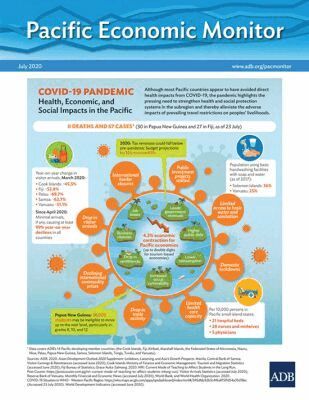
Most Pacific island countries appear to have avoided direct health impacts from the coronavirus disease (COVID-19). Yet, the pandemic highlights the need to strengthen their health and social protection systems. This edition of the Pacific Economic Monitor discusses the impacts of COVID-19 and …
Pacific Economic Monitor
December 2020
Häftad, 2020
300 kr
Lägg i varukorg
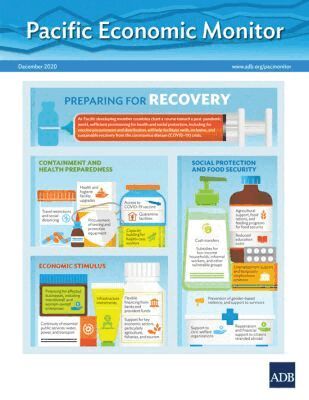
Sufficient provisioning for health and social protection will help support a swift, inclusive recovery in Pacific island countries.This edition of the Pacific Economic Monitor discusses the outlook for 2021 and key issues for recovery from the coronavirus disease (COVID-19) crisis, including …
Pacific Economic Monitor – July 2021
Häftad, 2021
334 kr
Lägg i varukorg
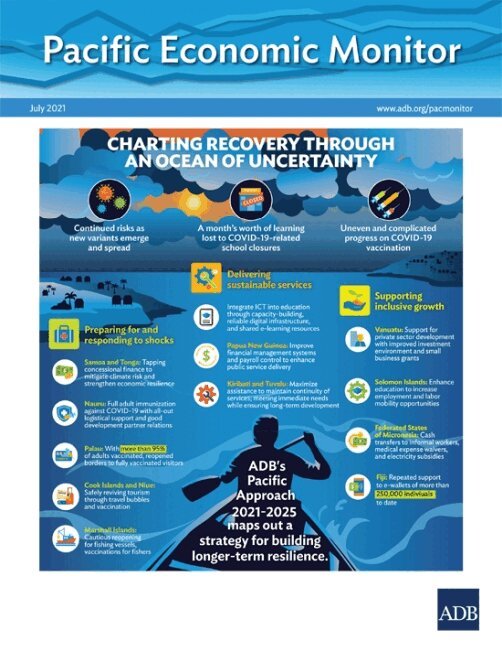
The Pacific is expected to recover with moderate growth of 1.4% in 2021 and 3.8% in 2022, with tourism and widespread vaccination playing key roles.This issue of the Pacific Economic Monitor provides insights on experiences and lessons of Pacific island countries in striking a delicate balance …
Pacific Economic Monitor – December 2021
Av Jindra Nuella Samson, Lotis Quiao m. fl.
Häftad, 2022
320 kr
Lägg i varukorg
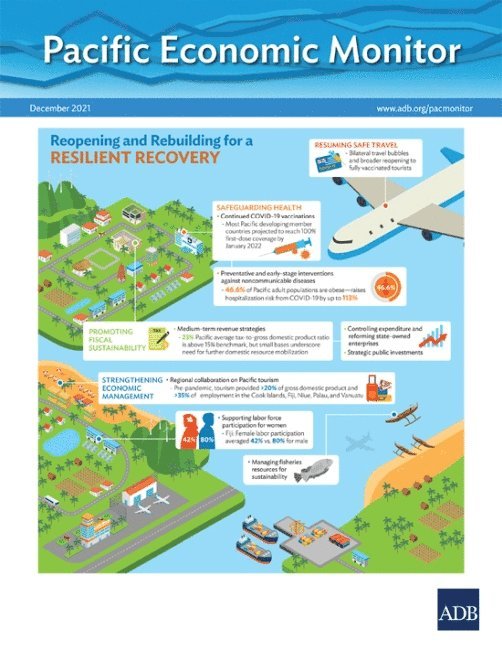
The Pacific region is expected to contract by 0.6% in 2021, and to grow by 4.7% in 2022. This issue of the Pacific Economic Monitor explores how the region can reopen and rebuild. Besides safely resuming travel and protecting health, a resilient recovery will depend on promoting fiscal …
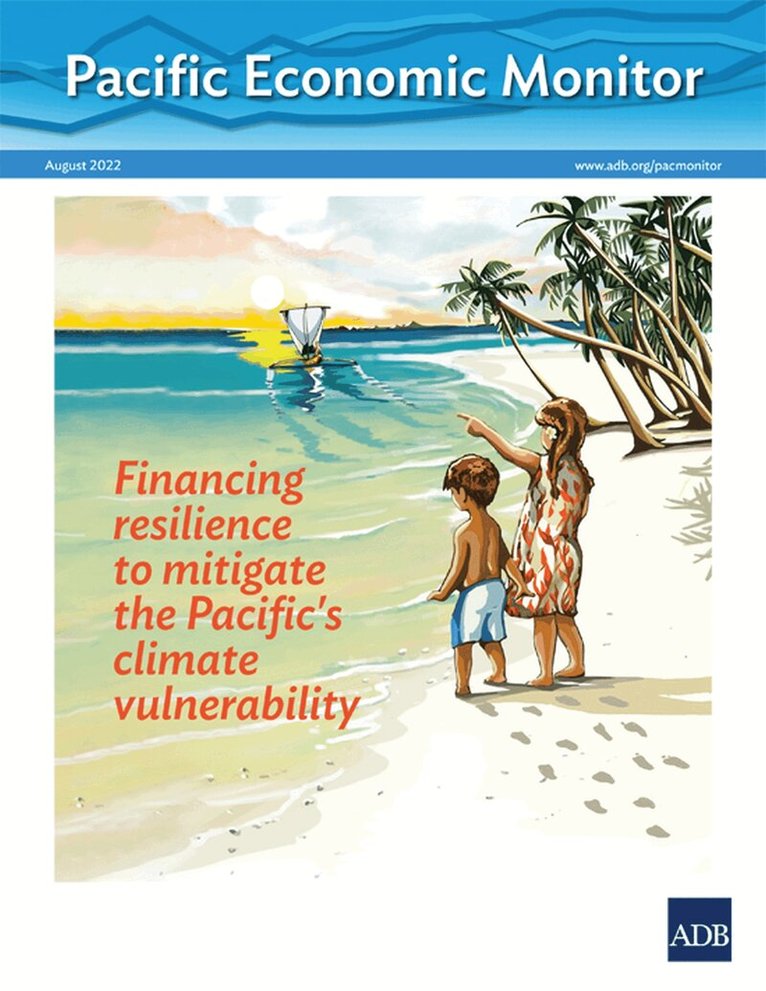
Pacific Economic Monitor - August 2022
Häftad, 2022
327 kr
Lägg i varukorg
The Pacific region is expected to grow by 4.7% in 2022 and 5.4% in 2023 as most economies emerge from the worst of the pandemic-induced downturn.This issue of the Pacific Economic Monitor focuses on building and financing resilience to climate change and disasters. It also explores the impacts on …
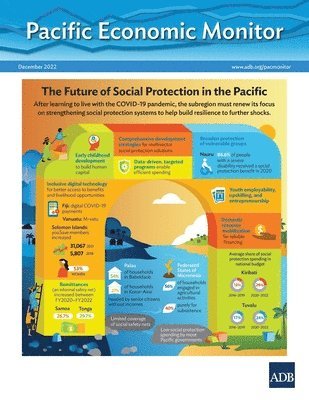
Pacific Economic Monitor - December 2022: the Future of Social Protection in the Pacific
Häftad, 2023
341 kr
Lägg i varukorg
This issue explores how Pacific developing member countries can strengthen their post-pandemic social protection systems to help address long-standing development concerns and boost resilience to further shocks.It assesses individual countries' economies and outlines ways they could improve their …
Pacific Economic Monitor - August 2023
COVID-19 and the Pacific Three Years on
Häftad, 2023
389 kr
Lägg i varukorg
Pacific economies are bouncing back as tourism recovers and infrastructure projects resume, but inflationary pressures and vulnerability to natural hazards remain downside risks.This edition of the Pacific Economic Monitor tracks the rebound of some tourism-dependent economies; explores new …
Pacific Economic Monitor - August 2024
Building Resilience the Pacific Way
Häftad, 2024
393 kr
Lägg i varukorg
This report analyzes challenges and opportunities affecting efforts to build resilience to shocks in the Pacific.This edition of the Pacific Economic Monitor examines efforts to build resilience across a range of areas, including human capital, infrastructure, and public financial management. It …
Pacific Economic Monitor — May 2019
Special 10th Anniversary Issue
Häftad, 2019
238 kr
Tillfälligt slut
This publication provides an update of developments in Pacific economies and explores topical policy issues to date.The 10th edition features policy briefs focusing on the effects of climate change, impacts of natural hazards, income and purchasing power, service delivery, economic empowerment of …
Pacific Economic Monitor — July 2019
Häftad, 2019
252 kr
Tillfälligt slut
The Pacific’s economic outlook remains solid despite the global slowdown. While social development gains in the region have been steady, some big challenges remain.This issue of the Pacific Economic Monitor begins with an overview of international and regional economic developments.It features 13 …
Pacific Economic Monitor – December 2019
Häftad, 2019
245 kr
Tillfälligt slut
The 2019 growth forecast for the Pacific subregion has been raised from 3.5% to 4.2%, driven mainly by higher liquefied natural gas production in Papua New Guinea and increased construction expenditure in Samoa and Solomon Islands, as well as lower-than-projected economic decline in Nauru. However, …