Pauls Social Network - Böcker
Visar alla böcker i serien Pauls Social Network. Handla med fri frakt och snabb leverans.
7 produkter
7 produkter
170 kr
Skickas inom 5-8 vardagar
Human beings are embedded in a set of social relations. A social network is one way of conceiving that set of relations in terms of a number of persons connected to one another by varying degrees of relatedness. In the early Jesus-group documents featuring Paul and coworkers, it takes little effort to envision the apostle's collection of friends and friends of friends that is the Pauline network. The persons who constituted that network are the focus of this set of brief books. For Christians of the Western tradition, these persons are significant ancestors in faith. While each of them is worth knowing by themselves, it is largely because of their standing within that web of social relations woven about and around Paul that they are of lasting interest. Through this series we hope to come to know those persons in ways befitting their first-century Mediterranean culture.Apollos is an enigmatic character whose name appears in only three New Testament writings. Through a social-scientific approach, this study pays attention to four main aspects relative to Apollos: his collectivistic nature as a person of the first-century Mediterranean; his relationship to Corinth and its emerging conflicts; his roots in the city of Alexandria and its contributions to his personality and identity; and, finally, his relationship to Paul and his social network. By gaining insights into a world and culture different from their own, readers will gain a deepened understanding of an important and highly educated member of Paul's social network. The person of Apollos and the entire New Testament will be seen through new lenses and will open readers to new cultural experiences from which they will emerge fuller people.
201 kr
Skickas inom 5-8 vardagar
Human beings are embedded in a set of social relations. A social network is one way of conceiving that set of relations in terms of a number of persons connected to one another by varying degrees of relatedness. In the early Jesus-group documents featuring Paul and coworkers, it takes little effort to envision the apostle's collection of friends and friends of friends that is the Pauline network. The persons who constituted that network are the focus of this set of brief books. For Christians of the Western tradition, these persons are significant ancestors in faith. While each of them is worth knowing by themselves, it is largely because of their standing within that web of social relations woven about and around Paul that they are of lasting interest. Through this series we hope to come to know those persons in ways befitting their first-century Mediterranean culture.Women played a prominent role in the development of the early Jesus communities and formed an essential part of Paul's social network. Lydia was one such woman. Her heart was opened to Paul's message, she responded with faith by being baptized, and she offered her home in hospitality to Paul and his companions. But beyond this not much is known of her. In Lydia: Paul's Cosmopolitan Hostess, Richard S.Ascough constructs an image of Lydia based on what is known about the political, commercial, social, and religious norms of the first-century world. Ascough describes the styles of possible dwellings in which Lydia could have lived, the business opportunities that would have been available to her, and the religious cults that held sway in Philippi at the time. With Ascough, readers will find that the importance of Lydia's story is that she hears the message of God through Paul and responds with faith.
201 kr
Skickas inom 5-8 vardagar
Unlike other New Testament persons described in the Paul's Social Network Series, Peter was a member of Jesus' inner circle during his life and ministry in Galilee. In Peter, Eric Stewart explores the depictions of Peter that appear throughout the New Testament for insights into who he was. Readers will learn what it means that Peter was a villager and a fisherman, a holy person, an authorized change agent, a moral entrepreneur, a healer, a speaker, and a writer. In the end, they will understand Peter's message, and the message of his Master, far more deeply.
170 kr
Skickas inom 5-8 vardagar
Human beings are embedded in a set of social relations. A social network is one way of conceiving that set of relations in terms of a number of persons connected to one another by varying degrees of relatedness. In the early Jesus group documents featuring Paul and coworkers, it takes little effort to envision the apostle's collection of friends and friends of friends that is the Pauline network. The persons who constituted that network are the focus of this set of brief books. For Christians of the Western tradition, these persons are significant ancestors in faith. While each of them is worth knowing by themselves, it is largely because of their standing within that web of social relations woven about and around Paul that they are of lasting interest. Through this series we hope to come to know those persons in ways befitting their first-century Mediterranean culture.Imagine trying to find a window into the life of an individual who lived approximately two thousand years ago in a culture vastly different from our own. Consider the added difficulty when that individual is a woman and the only written record of her consists of two biblical verses (Rom 16:1-2). In this volume Joan C. Campbell takes on the challenge and provides a surprisingly full and rich account of Phoebe of Kenchreai. With Campbell, we visit Phoebe's hometown, we wander the city streets with her, and we meet her associates. Along the way, we gain insight into the social roles that Paul ascribes to her (sister, deacon," and patron) and what these roles entailed in first-century Mediterranean Jesus groups. This book is important reading for anyone interested in the contribution of women to emerging Christianity and for contemporary deacons who seek to understand the biblical roots of their ministry.Joan C. Campbell, CSM, PhD, is a member of the Congregation of Saint Martha of Prince Edward Island, Canada, and assistant professor of New Testament Studies at Atlantic School of Theology in Halifax, Nova Scotia. A major teaching and research interest of hers is the cultural world of first-century Mediterranean Jesus groups and how knowledge of that cultural world can illumine biblical texts that deal with women such as Phoebe. She is the author of Kinship Relations in the Gospel of John."
295 kr
Skickas inom 3-6 vardagar
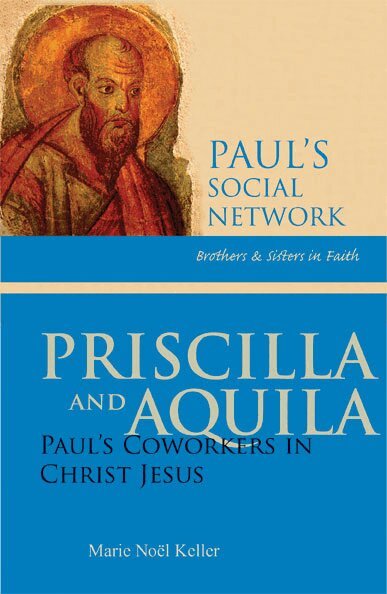
Human beings are embedded in a set of social relations. A social network is one way of conceiving that set of relations in terms of a number of persons connected to one another by varying degrees of relatedness. In the early Jesus group documents featuring Paul and coworkers, it takes little effort to envision the apostle's collection of friends and friends of friends that is the Pauline network. The persons who constituted that network are the focus of this set of books. For Christians of the Western tradition, these persons are significant ancestors in faith. While each of them is worth knowing by themselves, it is largely because of their standing within that web of social relations woven about and around Paul that they are of lasting interest. Through this series we hope to come to know those persons in ways befitting their first-century Mediterranean culture.In her exploration of the texts about Priscilla and Aquila, Marie Noël Keller asks, "What does God want us to learn from their story?" The biblical writings show that they worked, lived, and traveled with Paul. As his trusted coworkers, Priscilla and Aquila provided a presence that strengthened the early Jesus groups. Their mutuality in ministry and their leadership as laypeople can inspire members of church communities today to work together as teachers and preachers of the gospel.
216 kr
Skickas inom 5-8 vardagar
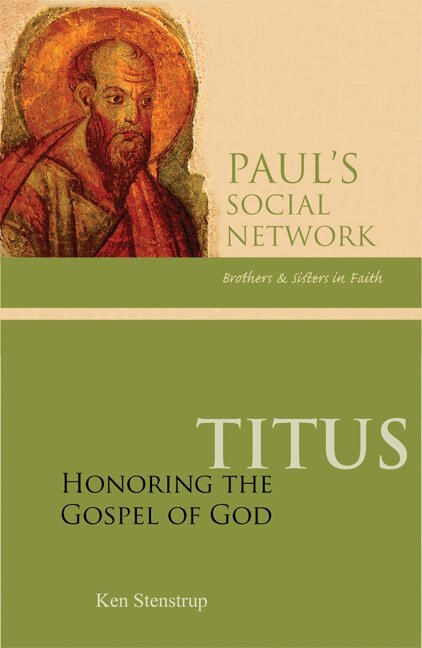
Human beings are embedded in a set of social relations. A social network is one way of conceiving that set of relations in terms of a number of persons connected to one another by varying degrees of relatedness. In the early Jesus group documents featuring Paul and coworkers, it takes little effort to envision the apostle's collection of friends and friends of friends that is the Pauline network. The persons who constituted that network are the focus of this set of books. For Christians of the Western tradition, these persons are significant ancestors in faith. While each of them is worth knowing by themselves, it is largely because of their standing within that web of social relations woven about and around Paul that they are of lasting interest. Through this series we hope to come to know those persons in ways befitting their first-century Mediterranean culture.Paul's network is a complex collection of people, many of whom receive only the slightest acknowledgment in the New Testament. While Titus receives more than a cursory mention, the writings that include him come from different generations of Jesus followers. In Titus: Honoring the Gospel of God, Ken Stenstrup makes the distinction between these generations of writings and, by employing social-scientific methods, uses Titus to shed light on Paul as a change agent and leader. As one of Paul's coworkers, Titus provided stability and guidance to early Jesus groups. He was welcomed by these groups and reported their hospitality toPaul. Stenstrup emphasizes the collectivistic culture of the first century and explains how this influenced the relationships betweenPaul, Titus, and the early Jesus groups.Ken Stenstrup teaches a variety of introductory level Scripture courses at Saint Mary's University of Minnesota. For several years he has been a member of the Social Sciences and New Testament Interpretation task force of the Catholic Biblical Association.
201 kr
Skickas inom 5-8 vardagar
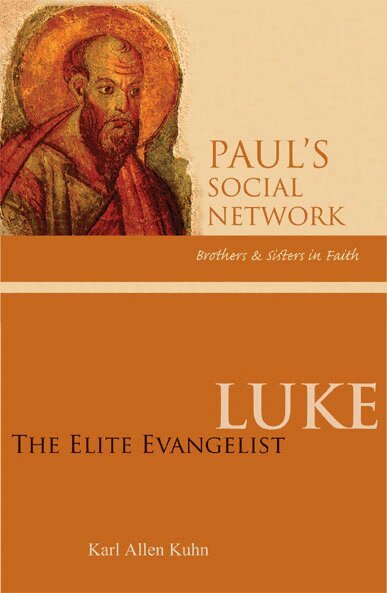
Human beings are embedded in a set of social relations. A social network is one way of conceiving that set of relations in terms of a number of persons connected to one another by varying degrees of relatedness. In the early Jesus group documents featuring Paul and coworkers, it takes little effort to envision the apostle's collection of friends and friends of friends that is the Pauline network. The persons who constituted that network are the focus of this set of books. For Christians of the Western tradition, these persons are significant ancestors in faith. While each of them is worth knowing by themselves, it is largely because of their standing within that web of social relations woven about and around Paul that they are of lasting interest. Through this series we hope to come to know those persons in ways befitting their first-century Mediterranean culture. What can we discover about the author of the third gospel and Acts, the companion of Paul whom tradition names Luke? How might that enable us to better appreciate the writings he produced that comprise roughly a quarter of the New Testament? Using literacy in the Greco-Roman world and Luke's advanced literary acumen as his primary clues, Karl Allen Kuhn argues that the evangelist was a member of the social elite. Social scientific models tell us that as an elite, Luke would have benefited from a highly stratified social and economic hierarchy that ensured the flow of wealth and resources to a few at the expense of the many. And yet, Kuhn argues, scene after scene of Luke's narrative challenge the stratified world shaped by Rome, calling its readers to embrace a new Kingdom and a new Lord. Writing to the most excellent Theophilus," Luke calls upon his fellow elites to join him in leaving behind the world that has given them so much and to devote themselves not to the Emperor but to the true Savior of humankind. Karl Allen Kuhn is associate professor of religion at Lakeland College in Sheboygan, Wisconsin. He is the author of numerous articles on Luke and biblical interpretation, and coauthor of the Lectionary commentary New Proclamation, Year C, 2010. His books include Having Words with God: The Bible as Conversation and The Heart of Biblical Narrative: Rediscovering Biblical Appeal to the Emotions. "