Plains Histories Series - Böcker
Visar alla böcker i serien Plains Histories Series. Handla med fri frakt och snabb leverans.
4 produkter
4 produkter
240 kr
Skickas inom 10-15 vardagar
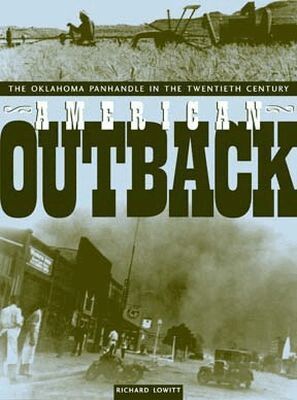
To settle and remain in the American Outback, the unforgiving land of the Oklahoma Panhandle, was an achievement. Prosperity and risk were present in equal measure. Comprising land that Kansas, Colorado, and New Mexico did not want, and that Texas, after entering the Union as a slave state, could not have, the Oklahoma Panhandle was dubbed ""No Mans Land"". This geographical anomaly, 165 miles long and only 35 miles wide, belonged to no one and, before statehood, served as a haven for desperadoes and villains. Only with the creation of the Oklahoma Territory in 1890 was the area finally claimed by a government entity. The history of the Oklahoma Panhandle is an integral part of the history of the Great Plains. In the 1930s the Panhandle attracted attention as the heart of the Dust Bowl. Later the area became a world leader in the production of natural gas, and in the 1990s corporate mega hog farms moved in, creating a new set of challenges. As the twenty-first century unfolds, despite concerns about water, pollution, and population growth, the Panhandle remains the most prosperous part of the state, with wheat, meat, and energy as the largest contributors to its economy. 'A sweeping survey of the Panhandles ups and downs ...a new chapter in the history of a little known geographical anomaly' - ""Kansas History"". 'A carefully researched and readable book that will tell even well-informed Oklahomans something they didn't know about one of the most fascinating parts of the state' - ""Norman Transcript"". 'Richard Lowitt is professor emeritus of history at the University of Oklahoma. He is the author of many works on twentieth-century American history, including ""One Third of a Nation: Lorena Hickock Reports on the Great Depression"" (co-edited with Maurine Beasley).
346 kr
Skickas inom 10-15 vardagar
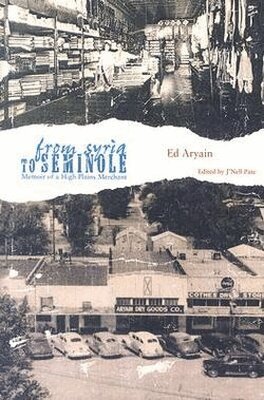
In August of 1897, in the small village of Henna, Syria, eighteen miles from Damascus, Mohammed (Ed) Aryain was born. As far back as he could remember, Ed dreamed of moving to the United States. In the early twentieth century Syria still suffered from high taxation and control under the Ottoman Turks. Ed saw Syrians who had been to America returning home with gold watches and money to purchase land, and he vowed to do the same. Although his parents did not want him to go, eventually they relented and watched fifteen-year-old Ed begin a 120-mile walk to Beirut to board a steamship. He tells of his emotional first view of the Statue of the Liberty and of his traumatic passage through Ellis Island. Joining the network of Syrians who supported themselves by peddling dry goods, Ed travelled across the Great Plains. Later he rented storefronts in wild oil-boom towns in Oklahoma and Texas. Finally he married an American woman and settled in West Texas, living in Littlefield, Sudan, Brownfield, and finally in Seminole, where he operated his own store on the town square until 1952. But even after decades in the United States, a man never forgets his homeland, and after nearly fifty years in America Ed returned briefly to Syria to visit those who remained of the family he had left behind. Eddie and Jameil Aryain, Eds two sons, have each written an afterword, providing their perspectives on this unique piece of Americana. 'A beautifully edited memoir ...that not only puts faces on Syrian emigrants but humanizes them as well' - ""Great Plains Quarterly"". JNell Pate is the author of six books, including, most recently ""Americas Historic Stockyards: Livestock Hotels"", and a weekly history column in her local newspaper. She lives in Azle, Texas.
388 kr
Skickas inom 3-6 vardagar
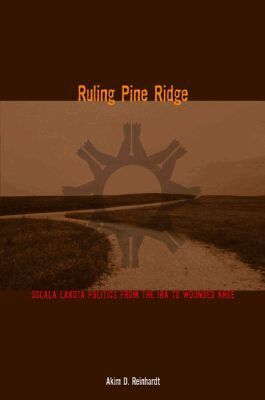
Reinhardt furnishes revealing portraits of Gerald One Feather, Dick Wilson, Russell Means; he offers a telling indictment of Pine Ridges economy. He is one of the few historians who understands the distinction DArcy McNickle made decades ago between loss and defeat. He and the late Vine Deloria, Jr. would have welcomed this volume because of its thorough research and, above all, its unflinching honesty. Writing in 1970 Deloria called for historians to bring historical consciousness to the whole Indian story. ""Ruling Pine Ridge"" achieves that goal. It will be required reading for all who care about not only the indigenous past but as well its connection to the problems of the present and the challenges of the 21st century. Peter Iverson, author of ""Din: A History of the Navajos"". Incorporating previously overlooked materials, including tribal council records, oral histories, and reservation newspapers, ""Ruling Pine Ridge"" explores the political history of South Dakotas Oglala Lakota reservation during the mid-twentieth century. Akim D. Reinhardt examines the reservations transition from the direct colonialism of the pre-1934 era to the indirect colonial policies of the controversial Indian Reorganization Act (IRA). The new federal approach to Indian politics was evident in the advent of the tribal council governing system, which is still in place today on Pine Ridge and on many other reservations. While the structure of the reservations governing body changed dramatically to reflect mainstream American cultural values, certain political equations on the reservation changed very little. In particular, despite promises to the contrary, the new reservation governments authority was still severely constrained by the Bureau of Indian Affairs. In addition, the new governing format led to an aggravation of social divisions on the reservation. Reinhardt then examines the period of 1968-1973, showing that many of the political players on the reservation had changed, and although the tribal council system was well established by this point, deep dissatisfaction with the IRA government persisted on Pine Ridge. This longstanding unhappiness came to a head in 1973, with the occupation and siege of Wounded Knee. Reinhardt demonstrates that the siege is best understood not as a political stunt of the American Indian Movement (AIM), but as a spontaneous, grassroots protest that was at least forty years in the making.
267 kr
Skickas inom 10-15 vardagar
Incorporating previously overlooked materials, including tribal council records, oral histories, and reservation newspapers, ""Ruling Pine Ridge"" explores the political history of South Dakotas Oglala Lakota reservation during the mid-twentieth century. Akim D. Reinhardt examines the reservations transition from the direct colonialism of the pre-1934 era to the indirect colonial policies of the controversial Indian Reorganization Act (IRA) and the advent of the tribal council governing system still in place today on Pine Ridge and on many other reservations. Reinhardt demonstrates how conflicting political values foregrounded by the new governing format led to an aggravation of social divisions on the reservation and eventually came to a head in 1973 with the occupation and siege of Wounded Knee. The siege is best understood, he claims, not as a political stunt of the American Indian Movement (AIM) but as a spontaneous, grassroots protest at least forty years in the making.