Points of View – serie
Visar alla böcker i serien Points of View. Handla med fri frakt och snabb leverans.
6 produkter
6 produkter
207 kr
Skickas inom 3-6 vardagar
174 kr
Kommande
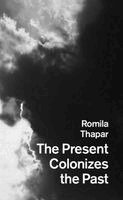
Short, rigorous intervention on history-writing in public life.How does the present reshape what a society chooses to remember as its past? Recent interpretations of India's history have replaced careful inquiry with narratives that mirror contemporary anxieties and ambitions, sidelining the evidence, debate, and plurality that once characterized India’s long intellectual tradition. At stake is a shift from understanding history as a method to treating it as a tool of identity and authority. In The Present Colonizes the Past, Romila Thapar asks: How have cultural and religious identities evolved through interaction rather than isolation? How have dissent and accommodation shaped social change? How have education and public discourse influenced what is accepted as knowledge? And, most urgently, how might weakened institutions and selective pasts redefine our heritage and citizenship?
170 kr
Kommande
A new edition of Benedict Anderson's masterpiece of political and social interpretation, which asks what a rural Thai “hell temple” reveals about Buddhism and modern life.In 1975, political scientist Benedict Anderson encountered Wat Phai Rong Wua, a vast temple complex conceived by the monk Luang Phor Khom. Built as a cautionary museum, it uses striking tableaux, hell scenes, didactic statues, and eclectic displays, to imagine karmic consequence and to draw steady flows of Thai visitors.Returning to the temple over several decades, Anderson treats the site as a travelogue, an ethnographic puzzle, and a social commentary. He asks what kinds of piety, hierarchy, and desire are staged there, and what local community sustains it. The temple also becomes his lens on how capitalism and rural change reshape religious practice in Thailand.
194 kr
Kommande
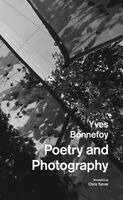
A short, critical text by poet Yves Bonnefoy on the fraught relationship between poetry and photography, masterfully translated by Chris Turner. The international community of letters mourns the recent death of Yves Bonnefoy, universally acclaimed as one of France’s greatest poets of the last half-century. A prolific author, he was often considered a top candidate for the Nobel Prize and published a dozen major collections of poetry in verse and prose, several books of dreamlike tales, and numerous studies of literature and art. This volume introduces Bonnefoy's seminal essay on the intricate connections between poetry and photography as they play out against a background of major works in the history of literature. The activity of the photographer has a direct—and sometimes profound—influence on what poetry is seeking to be. And poets, in turn, are duty-bound to understand what that activity consists of and to express their reservations, worries, or approval when confronted with the varied and perhaps contradictory forms photography has taken since the days of the daguerreotype or of Nadar preserving the gaze of Gérard de Nerval, Marceline Desbordes-Valmore, or Charles Baudelaire. Bonnefoy's compact essay focuses on one of the disturbing effects of the earliest photographs: their introduction of a notion of non-being—if not, indeed, nothingness—into the world of images. But it also foregrounds a tale which seems to have picked up figuratively on this effect and examined its dangers with a sense of horror: Guy de Maupassant’s extraordinary short story “The Night,” one of the nightmarish works of his last period of conscious creation.
169 kr
Kommande
One of the world's leading intellectuals dismantles the political and ethical justifications for institutional torture. In the aftermath of 9/11, the US government approved interrogation tactics for enemy combatant detainees that could be defined as torture, which was outlawed in Europe in the eighteenth century and forbidden by the Geneva Conventions and the United Nations Convention Against Torture. In conjunction with these policies, the Bush administration vocally defended torture as a necessary tool in its Global War on Terror. Though the election of Barack Obama and his signing of the executive order to close the prison at Guantanamo Bay signaled a considerable shift away from the policies of the Bush era, the lessons to be learned from the Global War on Terror will remain relevant and necessary for many years to come. In Torture and the War on Terror, Tzvetan Todorov argues that the use of the terms “war” and “terror” dehumanizes the enemy and permits treatment that would otherwise be impermissible. He examines the implications and corrupting impact of the attempt to impose “good” through violence and spread democratic values by unethical means. Todorov asks: Can violence overcome violence? Does the need to protect one’s own country justify violating human rights? Challenging one by one the political and ethical arguments in favor of torture, Todorov likens institutional torture to a cancer that is eroding our society and undermining the very fundamental democratic ideas of justice and right.
194 kr
Kommande
A collection of Mahasweta Devi's activist essays, reportage, and editorials on rural development and dispossession. What do India’s poorest communities reveal about power, land, and survival? In the late 1970s, writer Mahasweta Devi shifted her focus to the lives of Adivasi (Indigenous peoples of the Indian subcontinent) and Dalit communities in eastern India, especially Bihar and West Bengal. Traveling widely and staying with the communities she wrote about, she drew on these firsthand encounters in her writing. She also edited the Bengali quarterly Bortika, making the journal a space for peasants, laborers, workers, and other marginalized groups to speak for themselves.The Slaves of Palamau and Other Writings brings together a representative selection from her activist prose of the 1980s and early 1990s, drawn from essays, reportage, and editorials. These pieces examine rural development; dispossession and land alienation; environmental damage; and the conditions of landless laborers, sharecroppers, bonded and contract workers, miners, and Indigenous communities, with the steady attention that also informs her fiction.