Benedict Anderson - Böcker
Visar alla böcker från författaren Benedict Anderson. Handla med fri frakt och snabb leverans.
17 produkter
17 produkter
237 kr
Tillfälligt slut
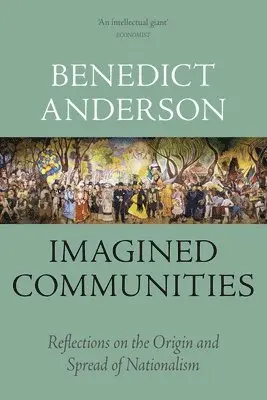
Andersons bok skiljer sig från den omfattande litteraturen i ämnet nationalism genom sina originella infallsvinklar och sitt okonventionella sätt att förhålla sig till den politiska och kulturella verkligheten i andra världsdelar. Anderson avviker från och kritiserar skarpt den sedvanliga eurocentriska synen i den västerländska forskartraditionen ... ... öppnar vårt perspektiv, upptäcker nya sammanhang, hjälper oss att tänka globalt. Den är en inspirerande bok i dagens läge, när stater försvinner och föds, när nationsgränser utplånas och skapas, när den etniska nationalismen och den ekonomiska kosmopolitismen delar samma verklighet och behärskar vår gemensamma föreställningsvärld. /Amanda Peralta, iDAG Typiskt för den nationalistiska föreställningen är att nationen har uråldriga rötter. Nuet är en länk i en kedja som som sträcker sig så långt tillbaka i tiden att den ligger vid det synligas horisont. Men Anderson visar var nationalisternas självbedrägeri ligger - logiken är nämligen precis den omvända. Det är nuet som är utgångspunkten medan det förflutna härleds ur nuet. /Mikael Kosk, Ny Tid
158 kr
Skickas inom 7-10 vardagar
What are the imagined communities that compel men to kill or to die for an idea of a nation? This notion of nationhood had its origins in the founding of the Americas, but was then adopted and transformed by populist movements in nineteenth-century Europe. It became the rallying cry for anti-Imperialism as well as the abiding explanation for colonialism. In this scintillating, groundbreaking work of intellectual history Anderson explores how ideas are formed and reformulated at every level, from high politics to popular culture, and the way that they can make people do extraordinary things. In the twenty-first century, these debates on the nature of the nation state are even more urgent. As new nations rise, vying for influence, and old empires decline, we must understand who we are as a community in the face of history, and change.
691 kr
Skickas inom 10-15 vardagar
Cities are built over the remnants of their past buried beneath their present. We build on what has been built before, whether over foundations formalising previous permanency or over the temporal occupations of ground. But what happens when you shift a city - when you dislodge its occupation of ground towards a new ground, bury it and forget it?Focusing on Berlin’s destruction during World War II and its reconstruction after the end of the war, this book offers a rethinking of how the practices of destruction and burial combine to reform the city through geography and how burying a city is intricately tied to forgetting destruction, ruination and trauma. Created from 25 million cubic meters of rubble produced during World War II, Teufelsberg (Devil's Mountain) is the exemplar of the destroyed city. Its critical journey is chronicled in combination with Berlin’s seven other rubble hills, and their connections to constructing forgetting through burial. Furthermore, the book investigates Berlin’s sublime relation to Albert Speer’s urban vision to rival the ancient cities of Rome and Athens through their now shared geographies of seven hills. Finally, there is a central focus on the role of the citizens who cleared Berlin’s streets of rubble, and the subsequent human relationships between people and ruins.This book is valuable reading for those interested in Architectural Theory, Urban Geography, Modern History and Urban Design.
2 150 kr
Skickas inom 10-15 vardagar
The City in Transgression explores the unacknowledged, neglected, and ill-defined spaces of the built environment and their transition into places of resistance and residence by refugees, asylum seekers, migrants, the homeless, and the disadvantaged. The book draws on urban and spatial theory, socio-economic factors, public space, and architecture to offer an intimate look at how urban sites and infrastructure are transformed into spaces for occupation. Anderson proposes that the varied innovations and adaptations of urban spaces enacted by such marginalized figures – for whom there are no other options – herald a radical new spatial programming of cities. The book explores cities and sites such as Mexico City and London, the Mexican/US border, the Calais Jungle, and Palestinian camps in Beirut and utilizes concepts associated with ‘mobility’ – such as anarchy, vagrancy, and transgression – alongside photography, 3D modelling, and 2D imagery. From this constellation of materials and analysis, a radical spatial picture of the city in transgression emerges.By focusing on the ‘underside of urbanism’, The City in Transgression reveals the potential for new spatial networks that can cultivate the potential for self-organization so as to counter the existing dominant urban models of capital and property and to confront some of the major issues facing cities amid an age of global human mobility.This book is valuable reading for those interested in architectural theory, modern history, human geography and mobility, climate change, urban design, and transformation.
593 kr
Skickas inom 10-15 vardagar
The City in Transgression explores the unacknowledged, neglected, and ill-defined spaces of the built environment and their transition into places of resistance and residence by refugees, asylum seekers, migrants, the homeless, and the disadvantaged. The book draws on urban and spatial theory, socio-economic factors, public space, and architecture to offer an intimate look at how urban sites and infrastructure are transformed into spaces for occupation. Anderson proposes that the varied innovations and adaptations of urban spaces enacted by such marginalized figures – for whom there are no other options – herald a radical new spatial programming of cities. The book explores cities and sites such as Mexico City and London, the Mexican/US border, the Calais Jungle, and Palestinian camps in Beirut and utilizes concepts associated with ‘mobility’ – such as anarchy, vagrancy, and transgression – alongside photography, 3D modelling, and 2D imagery. From this constellation of materials and analysis, a radical spatial picture of the city in transgression emerges.By focusing on the ‘underside of urbanism’, The City in Transgression reveals the potential for new spatial networks that can cultivate the potential for self-organization so as to counter the existing dominant urban models of capital and property and to confront some of the major issues facing cities amid an age of global human mobility.This book is valuable reading for those interested in architectural theory, modern history, human geography and mobility, climate change, urban design, and transformation.
663 kr
Skickas inom 10-15 vardagar
Monumental in scale and epic in development, cities have become the most visible and significant symbol of human progress. The geography on and around which they are constructed, however, has come to be viewed merely in terms of its resources and is often laid to waste once its assets have been stripped. The City in Geography is an urban exploration through this phenomenon, from settlement to city through physical geography, which reveals an incremental progression of removing terrain, topography and geography from the built environment, ushering in and advancing global destruction and instability. This book explains how the fall of geography in relationship to human survival has come through the loss of contact between urban dwellers and physical terrain, and details the radical rethinking required to remedy the separations between the city, its inhabitants and the landscape upon which it was built.
145 kr
Skickas inom 7-10 vardagar
In 1975, when political scientist Benedict Anderson reached Wat Phai Rong Wua, a massive temple complex in rural Thailand conceived by Buddhist monk Luang Phor Khom, he felt he had wandered into a demented Disneyland. One of the world's most bizarre tourist attractions, Wat Phai Rong Wua was designed as a cautionary museum of sorts; its gruesome statues depict violent and torturous scenes that showcase what hell may be like. Over the next few decades, Anderson, who is best known for his work, Imagined Communities, found himself transfixed by this unusual amalgamation of objects, returning several times to see attractions like the largest metal-cast Buddha figure in the world and the Palace of a Hundred Spires. The concrete statuaries and perverse art in Luang Phor's personal museum of hell included, \u201cside by side, an upright human skeleton in a glass cabinet and a life-size replica of Michelangelo's gigantic nude David, wearing fashionable red underpants from the top of which poked part of a swollen, un-Florentine penis,\u201d alongside dozens of statues of evildoers being ferociously punished in their afterlife.In The Fate of Rural Hell, Anderson unravels the intrigue of this strange setting, endeavoring to discover what compels so many Thai visitors to travel to this popular spectacle and what order, if any, inspired its creation. At the same time, he notes in Wat Phai Rong Wua the unexpected effects of the gradual advance of capitalism into the far reaches of rural Asia. Both a one-of-a-kind travelogue and a penetrating look at the community that sustains it, The Fate of Rural Hell is sure to intrigue and inspire conversation as much as Wat Phai Rong Wua itself.
1 953 kr
Skickas inom 10-15 vardagar
Considering sustainability as a flawed and restrictive term in practice, Sustainable Futures for Climate Adaptation argues that we must radically adapt humanity and reform society, cities, buildings, and our approach to migration in order to coexist in harmony with our natural environments.The book conceives an Earth–human coexistence where the world’s regions are shared globally between all people, in contrast to a reality where we have lost touch with the natural world. It is this decoupling of humanity and nature that has brought us to the brink of climate disaster. In response, Benedict Anderson explores the concept of ‘wearing our ecology’, where human mobility is synchronized with the environment, merging people with landscapes, topographies, and geographies. Anderson argues that we need to create new migration routes for people moving between the Global South and North and establish flexible and adaptive living environments. Only by rethinking separations between urban and rural, resource extraction and consumption, racial prejudice and accessibility are we able to forge a closer partnership with nature to adapt to climate change and mitigate the worst of its effects.Touching on themes of adaptive urban design, racial and gender segregation and inequality, and climate apocalypticism, this book will be valuable reading for researchers, scholars, and upper-level students in the fields of urban studies, migration studies, human geography, ecology, politics, and design.
630 kr
Skickas inom 10-15 vardagar
Considering sustainability as a flawed and restrictive term in practice, Sustainable Futures for Climate Adaptation argues that we must radically adapt humanity and reform society, cities, buildings, and our approach to migration in order to coexist in harmony with our natural environments.The book conceives an Earth–human coexistence where the world’s regions are shared globally between all people, in contrast to a reality where we have lost touch with the natural world. It is this decoupling of humanity and nature that has brought us to the brink of climate disaster. In response, Benedict Anderson explores the concept of ‘wearing our ecology’, where human mobility is synchronized with the environment, merging people with landscapes, topographies, and geographies. Anderson argues that we need to create new migration routes for people moving between the Global South and North and establish flexible and adaptive living environments. Only by rethinking separations between urban and rural, resource extraction and consumption, racial prejudice and accessibility are we able to forge a closer partnership with nature to adapt to climate change and mitigate the worst of its effects.Touching on themes of adaptive urban design, racial and gender segregation and inequality, and climate apocalypticism, this book will be valuable reading for researchers, scholars, and upper-level students in the fields of urban studies, migration studies, human geography, ecology, politics, and design.
2 150 kr
Skickas inom 10-15 vardagar
Monumental in scale and epic in development, cities have become the most visible and significant symbol of human progress. The geography on and around which they are constructed, however, has come to be viewed merely in terms of its resources and is often laid to waste once its assets have been stripped. The City in Geography is an urban exploration through this phenomenon, from settlement to city through physical geography, which reveals an incremental progression of removing terrain, topography and geography from the built environment, ushering in and advancing global destruction and instability. This book explains how the fall of geography in relationship to human survival has come through the loss of contact between urban dwellers and physical terrain, and details the radical rethinking required to remedy the separations between the city, its inhabitants and the landscape upon which it was built.
2 150 kr
Skickas inom 10-15 vardagar
Cities are built over the remnants of their past buried beneath their present. We build on what has been built before, whether over foundations formalising previous permanency or over the temporal occupations of ground. But what happens when you shift a city - when you dislodge its occupation of ground towards a new ground, bury it and forget it?Focusing on Berlin’s destruction during World War II and its reconstruction after the end of the war, this book offers a rethinking of how the practices of destruction and burial combine to reform the city through geography and how burying a city is intricately tied to forgetting destruction, ruination and trauma. Created from 25 million cubic meters of rubble produced during World War II, Teufelsberg (Devil's Mountain) is the exemplar of the destroyed city. Its critical journey is chronicled in combination with Berlin’s seven other rubble hills, and their connections to constructing forgetting through burial. Furthermore, the book investigates Berlin’s sublime relation to Albert Speer’s urban vision to rival the ancient cities of Rome and Athens through their now shared geographies of seven hills. Finally, there is a central focus on the role of the citizens who cleared Berlin’s streets of rubble, and the subsequent human relationships between people and ruins.This book is valuable reading for those interested in Architectural Theory, Urban Geography, Modern History and Urban Design.
343 kr
Skickas inom 3-6 vardagar
The exchange of ideas makes history as surely as the exchange of gunfire. The Age of Globalization (previously published as Under Three Flags) is an account of the unlikely connections that made up late nineteenth-century politics and culture. In particular, Benedict Anderson examines the links between militant anarchists in Europe and the Americas and the anti-imperialist uprisings in Cuba, China, and Japan. Told through the complex intellectual interactions of two great Filipino writers-the political novelist José Rizal and the pioneering folklorist Isabelo de los Reyes-The Age of Globalization is a brilliantly original work on how global networks shaped the nationalist movements of the time.
231 kr
Tillfälligt slut
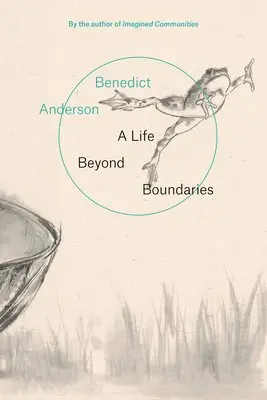
Born in China, Benedict Anderson spent his childhood in California and Ireland, was educated in England and finally found a home at Cornell University, where he immersed himself in the growing field of Southeast Asian studies. He was expelled from Suharto's Indonesia after revealing the military to be behind the attempted coup of 1965, an event which prompted reprisals that killed up to a million communists and their supporters. Banned from the country for thirty-five years, he continued his research in Thailand and the Philippines, producing a very fine study of the Filipino novelist and patriot José Rizal in The Age of Globalization.In A Life Beyond Boundaries, Anderson recounts a life spent open to the world. Here he reveals the joys of learning languages, the importance of fieldwork, the pleasures of translation, the influence of the New Left on global thinking, the satisfactions of teaching, and a love of world literature. He discusses the ideas and inspirations behind his best-known work, Imagined Communities (1983), whose complexities changed the study of nationalism.Benedict Anderson died in Java in December 2015, soon after he had finished correcting the proofs of this book. The tributes that poured in from Asia alone suggest that his work will continue to inspire and stimulate minds young and old.
383 kr
Skickas inom 3-6 vardagar
Benedict Anderson was one of the most respected thinkers on the history of nationalism. His acclaimed Imagined Communities is one of the most cited works in social science.In A Life Beyond Boundaries, Anderson recounts a life spent open to the world. Born in China, he spent his childhood in California and Ireland, was educated in England and finally found a home at Cornell University, where he immersed himself in the growing field of Southeast Asian studies.Here he reveals the joys of learning languages, the importance of fieldwork, the pleasures of translation, the influence of the New Left on global thinking, the satisfactions of teaching, and a love of world literature. He discusses the ideas and inspirations behind his best-known works.
The Fate of Rural Hell: Asceticism and Desire in Buddhist Thailand, New Edition
Häftad, Engelska, 2027
210 kr
Kommande
361 kr
Skickas inom 3-6 vardagar
"'Come, let us build a Third Kingdom, and in this Third Reich, hey, sisters, you will live happily; hey, brothers, you will live happily; hey, kids, you will live happily; hey, you German patriots, you will see Germany sitting enthroned above all the peoples in this world.' How clever Hitler was, brothers and sisters, in depicting these ideals!"Thus the late President Sukarno of Indonesia, an anti-colonial leader, in a public speech while accepting an honorary degree, and viewing Europe and its history through an inverted telescope, as Europeans often regard other parts of the globe. Strange shifts in perspective can take place when Berlin is viewed from Jakarta, or when complex histories of colonial domination strand what counts as the founding work of a national culture in a language its people no longer read. The "spectre of comparisons" arises as nations stir into self awareness, matching themselves against others, and becoming whole through the exercise of the imagination.In this series of profound and eloquent essays, Benedict Anderson, best known for his classic book on nationalism, Imagined Communities, explores these effects as they work their way through politics and culture. Spanning broad accounts of the development of nationalism and identity, and detailed studies of Southeast Asia, the book includes pieces on East Timor, where every Indonesian attempt to suppress national feeling has had the opposite effect; on the Philippines, where it is said that some horses eat better than stable-hands; on Thailand, where so much money can be made in elected posts that candidates regularly kill to get them; on the Filipino nationalist and novelist José Rizal for whom "we mortals are like turtles-we have value and are classified according to our shells;" and a remarkable essay on Mario Vargas Llosa, detailing the fate of indigenous minorities at the hands of the modern state.While The Spectre of Comparisons is an indispensable resource for those interested in Southeast Asia, Anderson also takes up the large issues of the universal grammars of nationalism and ethnicity, the peculiarity of nationalist imagery as replicas without originals, and the mutations of nationalism in an age of mass global migrations and instant electronic communications.
484 kr
Skickas inom 3-6 vardagar