Provocations series - Böcker
Visar alla böcker i serien Provocations series. Handla med fri frakt och snabb leverans.
3 produkter
3 produkter
123 kr
Skickas
On November 16, 1980, the Marxist philosopher Louis Althusser strangled his wife in their Parisian apartment, in a period when she was thinking of leaving him. What do we know about Hélène Legotien today? Almost nothing, except that she was murdered by her illustrious spouse. In a sense, Althusser killed her twice, first, by his own hands and second, by dominating the public space to talk about himself. What then is the political significance of this femicide and the discourse about it which has taken shape in the public space? Delving into the writings of the murderer and his allies in the French intelligentsia, Killer Althusser reasserts the patriarchal violence of the murder, masculine solidarity, and the complacency of a cultural elite.
123 kr
Skickas
How can we explain that Israel, despite its genocidal attacks in Gaza and its violation of international law, remains immune to criticism? Why do many feminists in the Global North, so quick to denounce the impact of "Islamic fundamentalism" on Palestinian women, remain silent when it comes to decrying the gendered impact of Israeli apartheid in Palestine? In Palestine and Feminist Liberation, Palestinian scholar-activist Nada Elia argues that Palestinian women, far from being powerless and submissive, have long played an important role in resisting their people’s dispossession, first by the British Mandate, then by Israel. Elia discusses the challenges diaspora Palestinian feminists face when organizing in Canada, where the dominant discourse has long upheld the Zionist narrative, steeped in Orientalism and anti-Palestinian racism. She articulates a vision for liberation grounded in Indigenous feminism, with its focus on collective empowerment, rather than individual advancement.
111 kr
Skickas
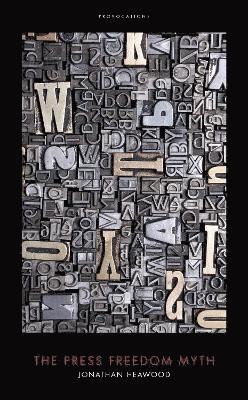
What does press freedom mean in a digital age? Do we have to live with fake news, hate speech and surveillance? Can we deal with these threats without bringing about the end of an open society?In a fast-moving narrative, Heawood moves from the birth of print to the rise of social media. He shows how the core ideas of press freedom emerged out of the upheavals of the seventeenth century, and argues that these ideas have outlived their sell-by date.Heawood draws on his unique experience as a journalist, campaigner and the founder of the UK's first independent press regulator. He describes his own crisis of faith as his commitment to absolute press freedom was rocked - first by phone hacking at the News of the World, and then by the rise of social media.Nonetheless, he argues powerfully against censorship, and instead sets out the five roles that democratic states should play to ensure that people get the best out of the media and mitigate the worst.