RAI Series – Serie
Visar alla böcker i serien RAI Series. Handla med fri frakt och snabb leverans.
3 produkter
3 produkter
1 610 kr
Skickas inom 5-8 vardagar
Del 3 - RAI Series
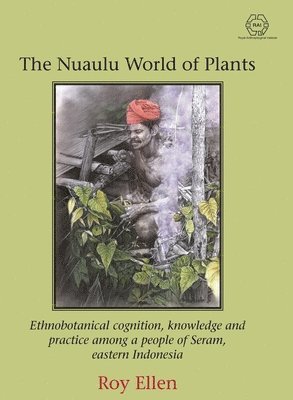
Nuaulu World of Plants
Ethnobotanical cognition, knowledge and practice among a people of Seram, eastern Indonesia
Inbunden, Engelska, 2020
1 564 kr
Skickas inom 5-8 vardagar
Roy Ellen's The Nuaulu World of Plants is the culmination of anthropological fieldwork on the eastern Indonesian island of Seram, and of comparative enquiries into the bases of human classificatory activity through the study of ethnobiological knowledge over a fifty year period. This rich account of the ways plants feature in the worldview and lifeways of the Nuaulu, recognizes that plant knowledge is embedded in plural local and historical contexts: in swiddens, garden crops, managed fallow, village spaces and pathways; in the trees, and the ecological, conceptual and experiential relationships to forest; in plants' roles as healing agents, raw materials, fuels and in ritual; and in historical flux, with the introduction of exotic plants and the impact of colonial and post-colonial ways of seeing the plant world. Ellen's contemporary examination of Nuaulu classificatory practices, in the light of comparable observations made by the seventeenth-century Dutch naturalist Rumphius, allows us to better see how scientific taxonomy emerges from folk knowledge. The comprehensive study of local plant classification based on robust datasets and long-term fieldwork presented here is a rare achievement, and comprises an outstanding resource for regional ethnology. But this book offers a further dimension, evaluating the theoretical consensus on the relationship between so-called 'natural' classifications and utilitarian schemes, and thereby highlights, and addresses, some of the problems of Berlin and Atran's highly influential framework for studying folk knowledge systems. It emphasizes the difficulties of simple claims for universality versus relativity, cultural models versus individual contextual schemata, and of two-dimensional taxonomies. Ellen persuasively argues that classification is a dynamic and living process of cultural cognition that links knowledge to practice, and is not easily reducible to graphical representations or abstract generalizations. Moreover, he draws attention to recent radical approaches to ontology and epistemology, specifically those focusing upon 'convergence metaphysics', arguing these present new challenges for the field. 'This book will undoubtedly become a landmark study in the field of ethnobotany. It represents anthropology at its best ... Roy Ellen has an outstanding reputation and is recognised globally as a leading ethnoscientist, and this rich volume further confirms his status.' Paul Sillitoe FBA, Professor of Anthropology, Durham UniversityThis will be a must read for students interested in conducting ethnobiological fieldwork and, more broadly, comparative analysis of cognition... Nuggets of gold come in every chapter.Thomas Thorton, Associate Professor & Senior Associate Research Fellow, University of Oxford
Del 4 - RAI Series
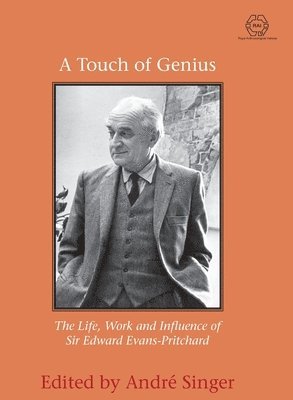
Touch of Genius
The Life, Work and Influence of Sir Edward Evans-Pritchard
Inbunden, Engelska, 2023
2 089 kr
Skickas inom 5-8 vardagar
Evans-Pritchard was perhaps the most influential anthropological scholar of the twentieth century. His extraordinary work in Africa has formed a central foundation to anthropological thought since the 1930s, with generations of anthropologists having read and appreciated his ethnographies of the Azande, Nuer and Sanusi, and his analyses of social structures, belief systems and history. And yet, though so much has been written about his work, a rounded understanding of the person has proved elusive.This volume covers Evans-Pritchard as a promising student, a young graduate in search of career opportunities, an adventurous cultural explorer, a determined officer in the Second World War, and an ambitious department-building professorwith a global reputation. Against a glittering array of contexts and characters – from Malinowski to Marett to the Maharaj of Kutch; from Oxford poets and pubs to Catholic conversion in war-torn Libya – there emerges a fascinating study of a figurewho was much more than an innovative anthropologist.A portrait of the man and his time is composed from personal correspondence, archives and familial recollections, contributions from surviving friends and students, and accounts by those, including contemporary African scholars, who continue todebate and re-evaluate his work in all its complexity. This book is a fitting monument to Evans-Pritchard’s legacy and a landmark in anthropological historiography.