Routledge Series on Economic and Social Transformations in Central and Inner Asia – serie
Visar alla böcker i serien Routledge Series on Economic and Social Transformations in Central and Inner Asia. Handla med fri frakt och snabb leverans.
4 produkter
4 produkter
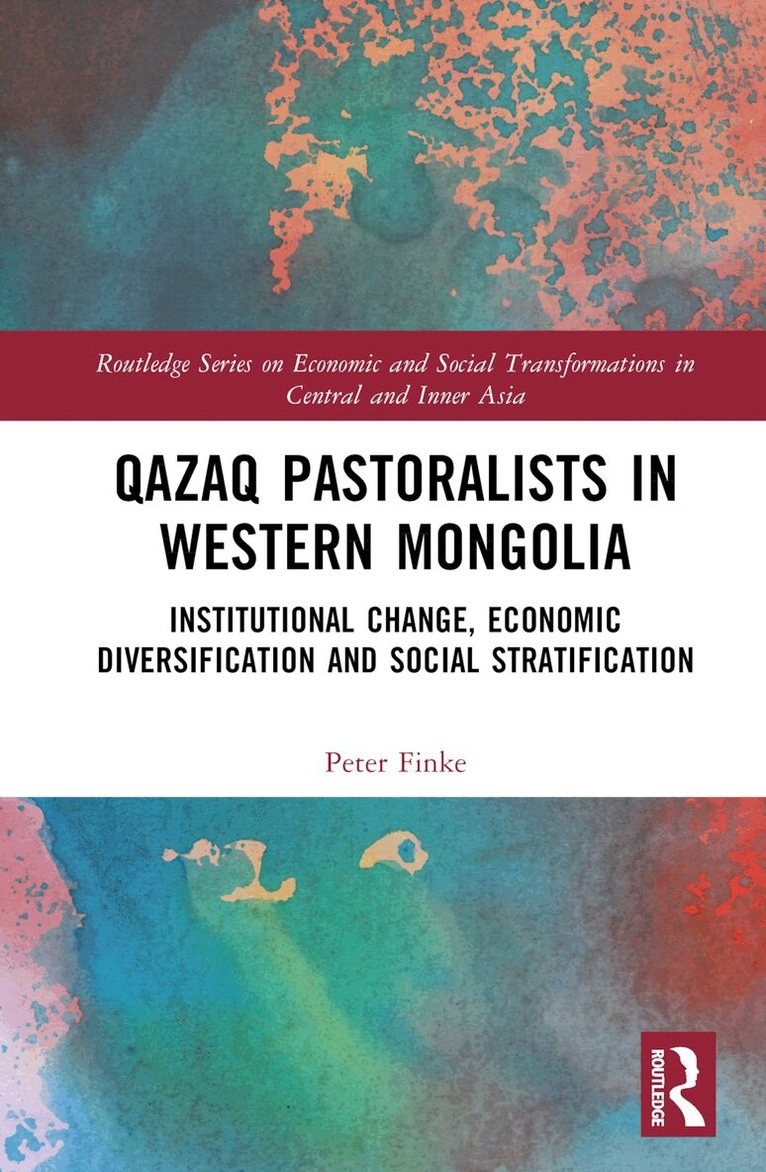
Qazaq Pastoralists in Western Mongolia
Institutional Change, Economic Diversification and Social Stratification
Inbunden, Engelska, 2023
1 977 kr
Skickas inom 10-15 vardagar
Taking the case of Qazaq Pastoralists in Western Mongolia, this book looks at the universal human requirement to balance individual flexibility and strategies designed to make a living with the social expectations that impose particular rules of conduct but also enable mutual trust and cooperation to emerge.Pastoralists in Western Mongolia have experienced dramatic changes in recent decades, including the dismantling of the socialist economy, a series of natural disasters, and an emigration of roughly half of the local Qazaq minority to the newly independent state of Qazaqstan. Four aspects illustrate the chances and challenges that people face. First is the emergence of the market as the dominant mode of production and exchange, a thorny way full of uncertainties. Second is the individual household and its adaptation to the new economic system, creating new opportunities as well as precarities, and resulting in rapid social stratification. Thirdly, patterns of pastoral land allocation highlight problems of collective action and institutional fragmentation in the wake of a retreating state apparatus. Finally, social networks of mutual support and cooperation constitute a key component of pastoral livelihood but are under great pressure due to short time horizons and a lack of trust.The first longitudinal analysis of the Qazaqs in Mongolia in English and a contribution to anthropological theories on human adaptability and decision-making, economic and social inequalities, institutional change and the difficulty of deriving at cooperative solutions, this book will be a standard work and of interest to academics in the field of Central Asian Studies, Anthropology, Human Geography and Development Studies.
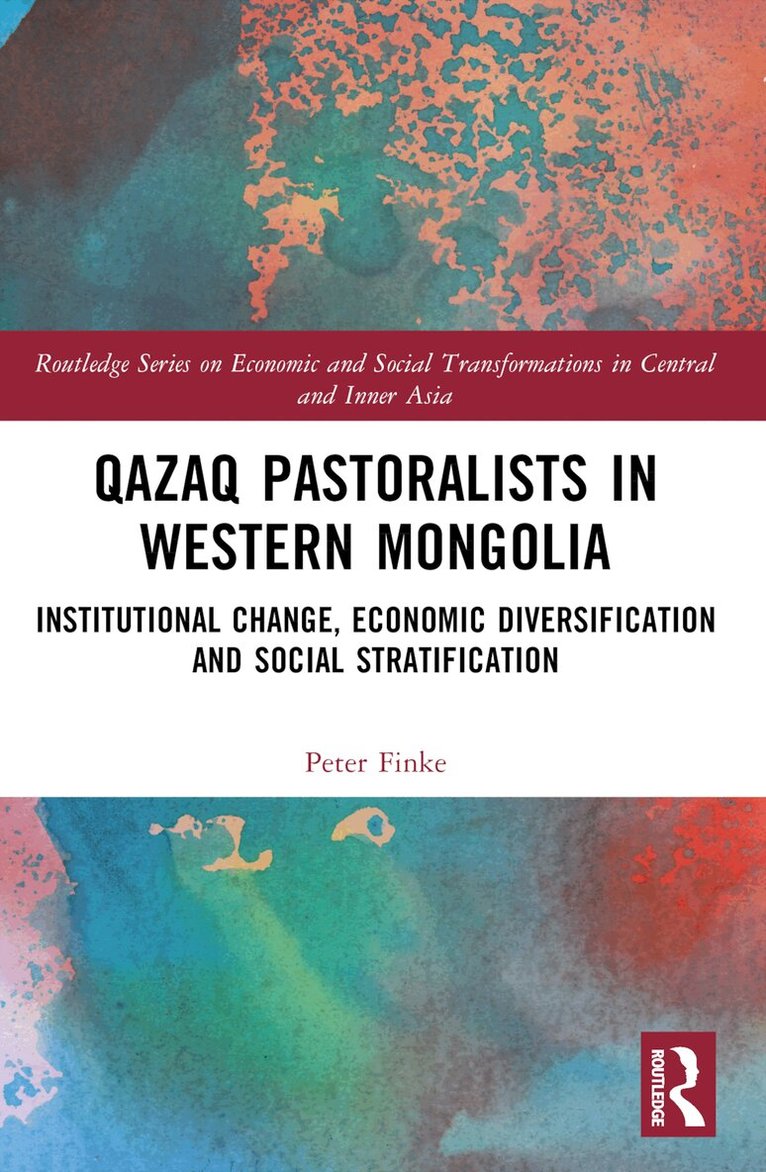
Qazaq Pastoralists in Western Mongolia
Institutional Change, Economic Diversification and Social Stratification
Häftad, Engelska, 2024
578 kr
Skickas inom 10-15 vardagar
Taking the case of Qazaq Pastoralists in Western Mongolia, this book looks at the universal human requirement to balance individual flexibility and strategies designed to make a living with the social expectations that impose particular rules of conduct but also enable mutual trust and cooperation to emerge.Pastoralists in Western Mongolia have experienced dramatic changes in recent decades, including the dismantling of the socialist economy, a series of natural disasters, and an emigration of roughly half of the local Qazaq minority to the newly independent state of Qazaqstan. Four aspects illustrate the chances and challenges that people face. First is the emergence of the market as the dominant mode of production and exchange, a thorny way full of uncertainties. Second is the individual household and its adaptation to the new economic system, creating new opportunities as well as precarities, and resulting in rapid social stratification. Thirdly, patterns of pastoral land allocation highlight problems of collective action and institutional fragmentation in the wake of a retreating state apparatus. Finally, social networks of mutual support and cooperation constitute a key component of pastoral livelihood but are under great pressure due to short time horizons and a lack of trust.The first longitudinal analysis of the Qazaqs in Mongolia in English and a contribution to anthropological theories on human adaptability and decision-making, economic and social inequalities, institutional change and the difficulty of deriving at cooperative solutions, this book will be a standard work and of interest to academics in the field of Central Asian Studies, Anthropology, Human Geography and Development Studies.
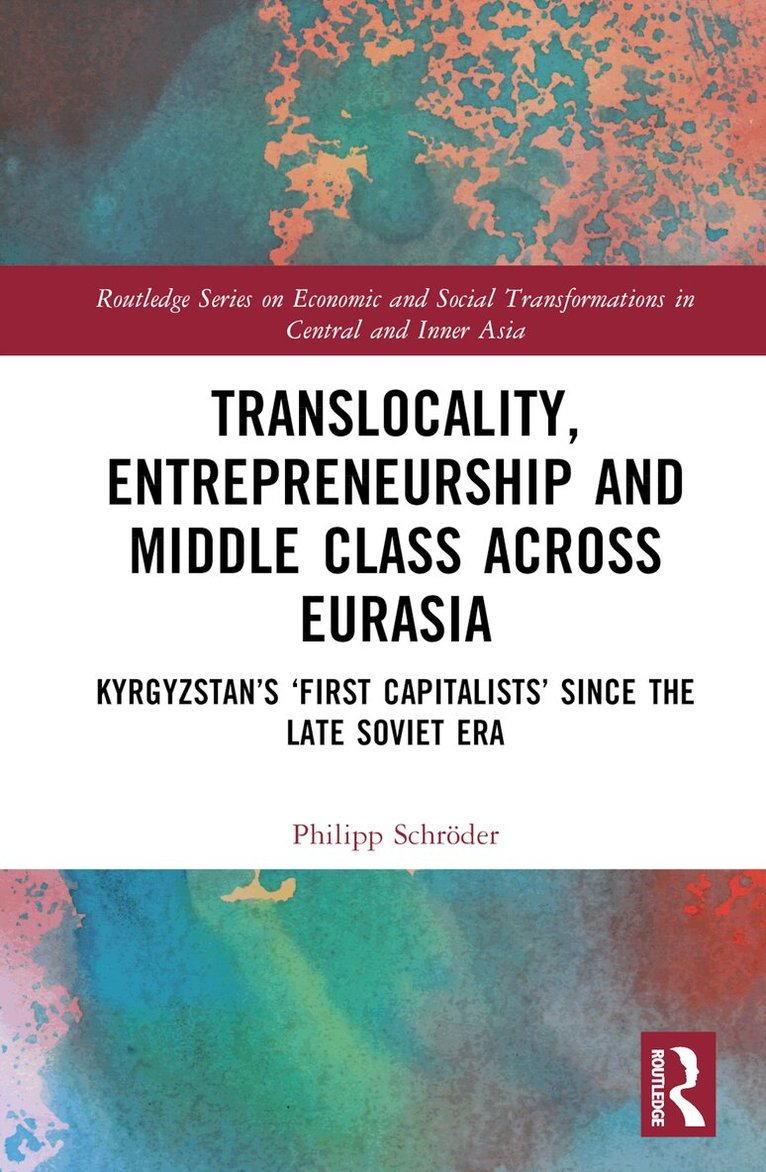
Translocality, Entrepreneurship and Middle Class Across Eurasia
Kyrgyzstan’s ‘First Capitalists’ Since the Late Soviet Era
Inbunden, Engelska, 2024
1 977 kr
Skickas inom 10-15 vardagar
Translocality, Entrepreneurship and Middle Class Across Eurasia is a comprehensive, multi-sited ethnography about the unfolding of capitalism across Eurasia and the advent of a new middle class since the late Soviet era. Based on extensive fieldwork, the book follows three generations of ethnic Kyrgyz in three distinct eras and sites: The early bazaar traders of Novosibirsk (Russia), the post-2000 middlemen operating in Guangzhou (China) and the ‘new entrepreneurs’ who have emerged at home in Kyrgyzstan around 2015. The book advocates translocality as an innovative concept to better understand the dialectic of mobility and emplacement in contemporary livelihoods and value chains that transgress not only political borders, but also less tangible socio-cultural boundaries. Through this lens, the chapters forcefully demonstrate how ways of business-making align or conflict with notions of ethnic belonging, diaspora, sociability or gender, in and in-between various locations.Proposing the imaginary of commercial journeys, the book documents the aspirations, adjustments and struggles of an emergent middle class, whose neoliberal subjectivity is inspired by a flexible entrepreneurial spirit of ‘Kyrgyzness’, and who navigate in a market environment that recently has been shifting towards more actor diversification, service orientation and rule-based formalization. This book will be of interest particularly to scholars in the fields of (economic) anthropology, post-socialist studies, migration, mobility and area studies with a focus on Central Asia and Eurasia.
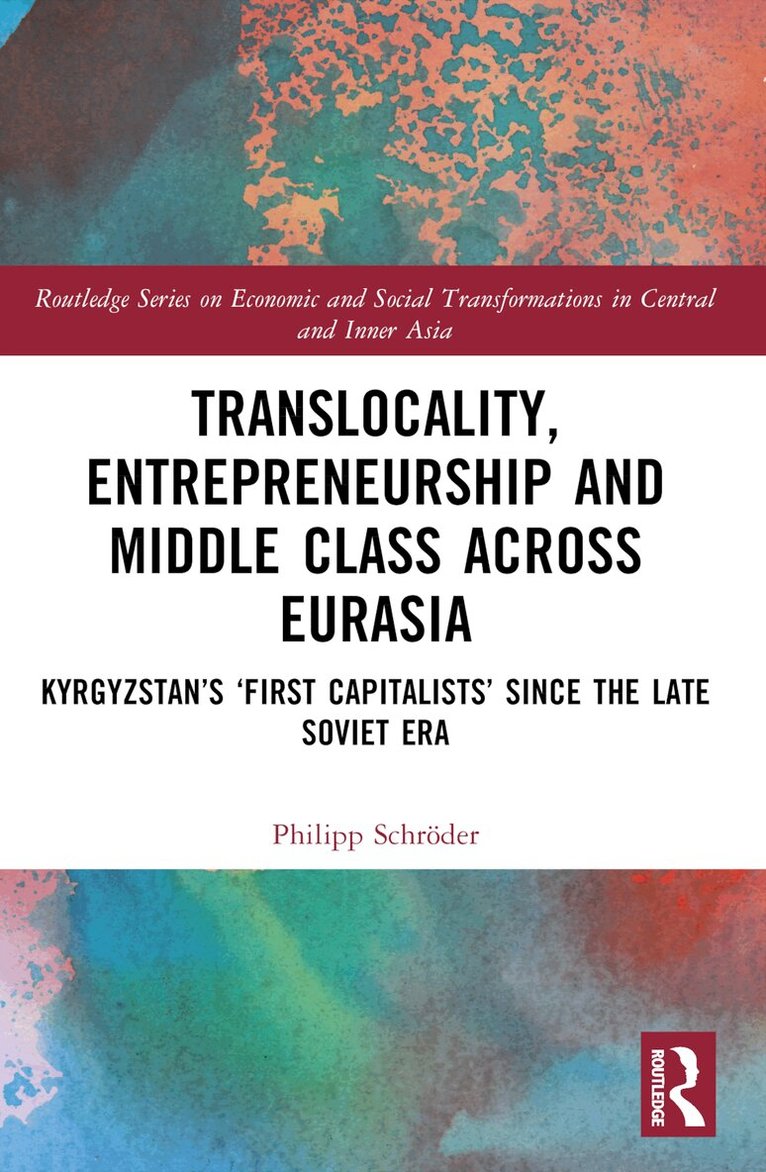
Translocality, Entrepreneurship and Middle Class Across Eurasia
Kyrgyzstan’s ‘First Capitalists’ Since the Late Soviet Era
Häftad, Engelska, 2025
632 kr
Skickas inom 10-15 vardagar
Translocality, Entrepreneurship and Middle Class Across Eurasia is a comprehensive, multi-sited ethnography about the unfolding of capitalism across Eurasia and the advent of a new middle class since the late Soviet era. Based on extensive fieldwork, the book follows three generations of ethnic Kyrgyz in three distinct eras and sites: The early bazaar traders of Novosibirsk (Russia), the post-2000 middlemen operating in Guangzhou (China) and the ‘new entrepreneurs’ who have emerged at home in Kyrgyzstan around 2015. The book advocates translocality as an innovative concept to better understand the dialectic of mobility and emplacement in contemporary livelihoods and value chains that transgress not only political borders, but also less tangible socio-cultural boundaries. Through this lens, the chapters forcefully demonstrate how ways of business-making align or conflict with notions of ethnic belonging, diaspora, sociability or gender, in and in-between various locations.Proposing the imaginary of commercial journeys, the book documents the aspirations, adjustments and struggles of an emergent middle class, whose neoliberal subjectivity is inspired by a flexible entrepreneurial spirit of ‘Kyrgyzness’, and who navigate in a market environment that recently has been shifting towards more actor diversification, service orientation and rule-based formalization. This book will be of interest particularly to scholars in the fields of (economic) anthropology, post-socialist studies, migration, mobility and area studies with a focus on Central Asia and Eurasia.