Routledge Studies in Law and Sustainable Development - Böcker
Visar alla böcker i serien Routledge Studies in Law and Sustainable Development. Handla med fri frakt och snabb leverans.
4 produkter
4 produkter
Genetic Resources as Natural Information
Implications for the Convention on Biological Diversity and Nagoya Protocol
Häftad, Engelska, 2017
669 kr
Skickas inom 10-15 vardagar
Demonstrating the shortcomings of current policy and legal approaches to access and benefit-sharing (ABS) in the Convention on Biological Diversity (CBD), this book recognizes that genetic resources are widely distributed across countries and that bilateral contracts undermine fairness and equity. The book offers a practical and feasible regulatory alternative to ensure the goal of fairness and equity is effectively and efficiently met. Through a legal analysis that also incorporates historic, economic and sociological perspectives, the book argues that genetic resources are not tangible resources but information. It shows that the existing preference for bilateralism and contracts reflects resistance on the part of many of the stakeholders involved in the CBD process to recognize them as such. ABS issues respond very well to the economics of information, yet as the author explains, these have been either sidelined or overlooked.At a time when the Nagoya Protocol on ABS has renewed interest in feasible policy options, the author provides a constructive and provocative critique. The institutional, policy and regulatory framework constitute "bounded openness" under which fairness and equity emerge.
2 006 kr
Skickas inom 10-15 vardagar
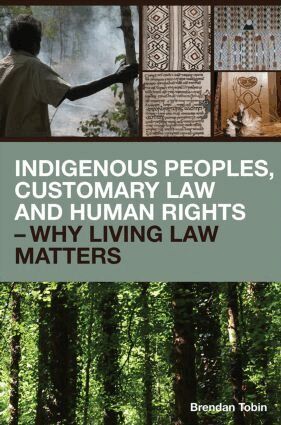
This highly original work demonstrates the fundamental role of customary law for the realization of Indigenous peoples’ human rights and for sound national and international legal governance. The book reviews the legal status of customary law and its relationship with positive and natural law from the time of Plato up to the present. It examines its growing recognition in constitutional and international law and its dependence on and at times strained relationship with human rights law. The author analyzes the role of customary law in tribal, national and international governance of Indigenous peoples’ lands, resources and cultural heritage. He explores the challenges and opportunities for its recognition by courts and alternative dispute resolution mechanisms, including issues of proof of law and conflicts between customary practices and human rights. He throws light on the richness inherent in legal diversity and key principles of customary law and their influence in legal practice and on emerging notions of intercultural equity and justice. He concludes that Indigenous peoples’ rights to their customary legal regimes and states’ obligations to respect and recognize customary law, in order to secure their human rights, are principles of international customary law, and as such binding on all states. At a time when the self-determination, land, resources and cultural heritage of Indigenous peoples are increasingly under threat, this accessible book presents the key issues for both legal and non-legal scholars, practitioners, students of human rights and environmental justice, and Indigenous peoples themselves.
673 kr
Skickas inom 10-15 vardagar
This highly original work demonstrates the fundamental role of customary law for the realization of Indigenous peoples’ human rights and for sound national and international legal governance. The book reviews the legal status of customary law and its relationship with positive and natural law from the time of Plato up to the present. It examines its growing recognition in constitutional and international law and its dependence on and at times strained relationship with human rights law. The author analyzes the role of customary law in tribal, national and international governance of Indigenous peoples’ lands, resources and cultural heritage. He explores the challenges and opportunities for its recognition by courts and alternative dispute resolution mechanisms, including issues of proof of law and conflicts between customary practices and human rights. He throws light on the richness inherent in legal diversity and key principles of customary law and their influence in legal practice and on emerging notions of intercultural equity and justice. He concludes that Indigenous peoples’ rights to their customary legal regimes and states’ obligations to respect and recognize customary law, in order to secure their human rights, are principles of international customary law, and as such binding on all states. At a time when the self-determination, land, resources and cultural heritage of Indigenous peoples are increasingly under threat, this accessible book presents the key issues for both legal and non-legal scholars, practitioners, students of human rights and environmental justice, and Indigenous peoples themselves.
Genetic Resources as Natural Information
Implications for the Convention on Biological Diversity and Nagoya Protocol
Inbunden, Engelska, 2015
2 131 kr
Skickas inom 10-15 vardagar
Demonstrating the shortcomings of current policy and legal approaches to access and benefit-sharing (ABS) in the Convention on Biological Diversity (CBD), this book recognizes that genetic resources are widely distributed across countries and that bilateral contracts undermine fairness and equity. The book offers a practical and feasible regulatory alternative to ensure the goal of fairness and equity is effectively and efficiently met. Through a legal analysis that also incorporates historic, economic and sociological perspectives, the book argues that genetic resources are not tangible resources but information. It shows that the existing preference for bilateralism and contracts reflects resistance on the part of many of the stakeholders involved in the CBD process to recognize them as such. ABS issues respond very well to the economics of information, yet as the author explains, these have been either sidelined or overlooked.At a time when the Nagoya Protocol on ABS has renewed interest in feasible policy options, the author provides a constructive and provocative critique. The institutional, policy and regulatory framework constitute "bounded openness" under which fairness and equity emerge.