Rubicon - Böcker
Visar alla böcker i serien Rubicon. Handla med fri frakt och snabb leverans.
5 produkter
5 produkter
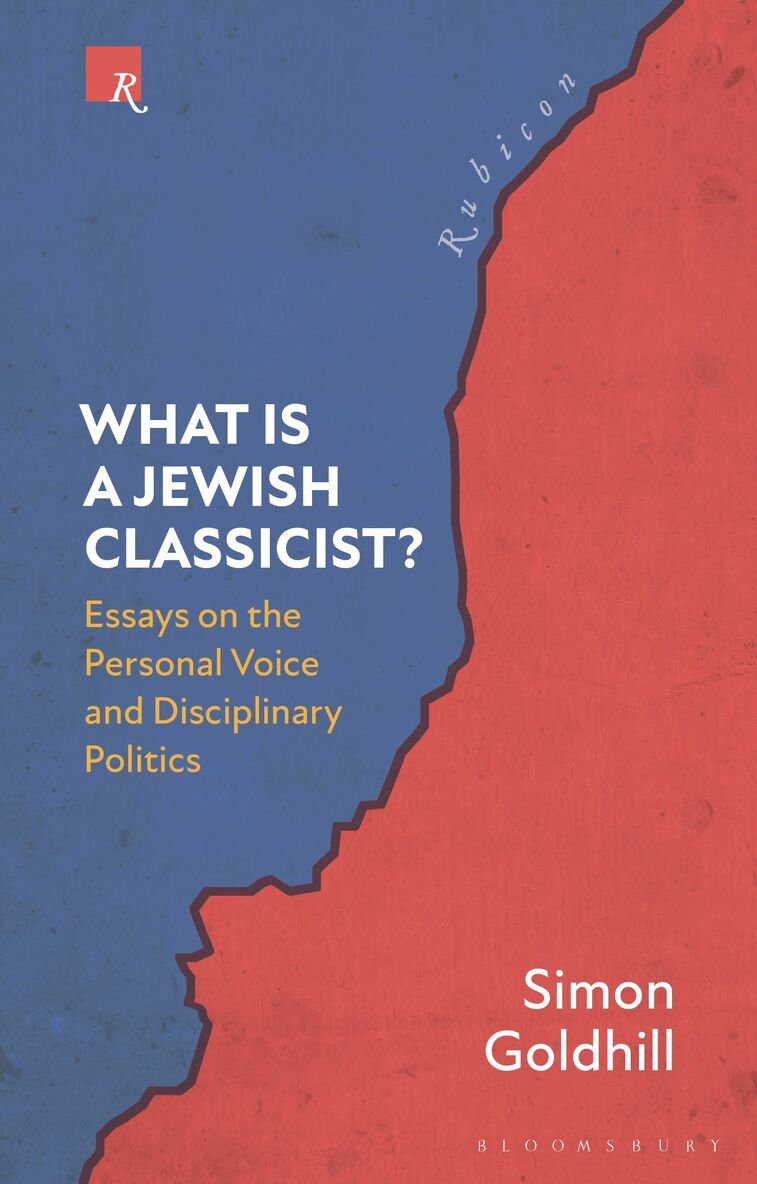
What Is a Jewish Classicist?
Essays on the Personal Voice and Disciplinary Politics
Häftad, Engelska, 2022
261 kr
Skickas
In recent years, there has been no issue that has convulsed academia and its role in society more stridently than the personal politics of its institutions: who has access to education? How does who you are change what you study and how you engage with it? How does scholarship reflect the politics of society – how should it? These new essays from one of the best-known scholars of ancient Greece offer a refreshing and provocative contribution to these discussions.What Is a Jewish Classicist? analyses how the personal voice of a scholar plays a role in scholarship, how religion and cultural identity are acted out within an academic discipline, and how translation, the heart of any engagement with the literature of antiquity, is a transformational practice. Topical, engaging, revelatory, this book opens a sharp and personal perspective on how and why the study of antiquity has become such a battlefield in contemporary culture. The first essay looks at how academics can and should talk about themselves, and how such positionality affects a scholar’s work – can anyone can tell his or her own story with enough self-consciousness, sophistication and care? The second essay, which gives the book its title, takes a more socio-anthropological approach to the discipline, and asks how its patterns of inclusion and exclusion, its strategies of identification and recognition, have contributed to the shape of the discipline of classics. This initial enquiry opens into a fascinating history of change – how Jews were excluded from the discipline for many years but gradually after the Second World war became more easily assimilated into it. This in turn raises difficult questions for the current focus on race and colour as the defining aspects of personal identification, and about how academia reflects or contributes to the broader politics of society. The third essay takes a different historical approach and looks at the infrastructure or technology of the discipline through one of its integral and time-honoured practices, namely, translation. It discusses how translation, far from being a mere technique, is a transformational activity that helps make each classicist what they are. Indeed, each generation needs its own translations as each era redefines its relation to antiquity.
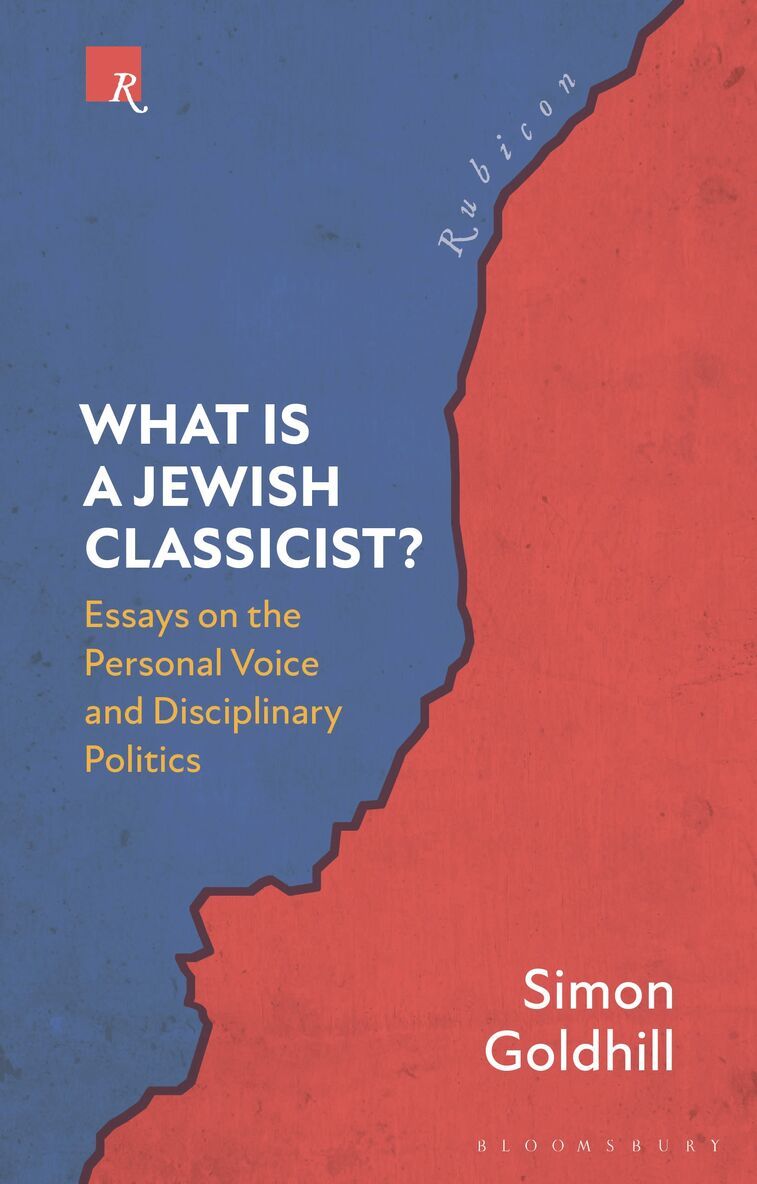
What Is a Jewish Classicist?
Essays on the Personal Voice and Disciplinary Politics
Inbunden, Engelska, 2022
563 kr
Skickas
In recent years, there has been no issue that has convulsed academia and its role in society more stridently than the personal politics of its institutions: who has access to education? How does who you are change what you study and how you engage with it? How does scholarship reflect the politics of society – how should it? These new essays from one of the best-known scholars of ancient Greece offer a refreshing and provocative contribution to these discussions.What Is a Jewish Classicist? analyses how the personal voice of a scholar plays a role in scholarship, how religion and cultural identity are acted out within an academic discipline, and how translation, the heart of any engagement with the literature of antiquity, is a transformational practice. Topical, engaging, revelatory, this book opens a sharp and personal perspective on how and why the study of antiquity has become such a battlefield in contemporary culture. The first essay looks at how academics can and should talk about themselves, and how such positionality affects a scholar’s work – can anyone can tell his or her own story with enough self-consciousness, sophistication and care? The second essay, which gives the book its title, takes a more socio-anthropological approach to the discipline, and asks how its patterns of inclusion and exclusion, its strategies of identification and recognition, have contributed to the shape of the discipline of classics. This initial enquiry opens into a fascinating history of change – how Jews were excluded from the discipline for many years but gradually after the Second World war became more easily assimilated into it. This in turn raises difficult questions for the current focus on race and colour as the defining aspects of personal identification, and about how academia reflects or contributes to the broader politics of society. The third essay takes a different historical approach and looks at the infrastructure or technology of the discipline through one of its integral and time-honoured practices, namely, translation. It discusses how translation, far from being a mere technique, is a transformational activity that helps make each classicist what they are. Indeed, each generation needs its own translations as each era redefines its relation to antiquity.
764 kr
Skickas inom 10-15 vardagar
What kind of language is Latin, and who is it for? Contrary to most accounts, this book tells the story of Latin as a language of ordinary people. Surveying the whole span of the language’s history, it explores the evidence that exists for everyday Latin around the Roman world, arguing that this material is just as worthy of readers’ attention as the famous classics. Those classics are reassessed in the light of popular concerns, as works of art that evoke ancient, sustainable and communal ways of living, encompassing broad and diverse traditions of readers through time.This account also revisits what happened to the language after the Roman empire, tracing its twin streams – intellectual lingua franca and a series of Romance languages – into the twenty-first century. What emerges is a human chain stretching back thousands of years and still in existence today, a story of workers and weavers, violets and roses, storytellers and musicians – a common and democratic archive of world history. Kerrigan's strong and attractive case for a new conception of Latin sends out a call to arms to re-evaluate the place of Latin in history. On the one hand, an interesting and readable history of the language, on the other, this book sets out to provoke questions for readers, students and teachers of Latin, as well as anyone interested in the ancient Mediterranean world. Latin was and should always be for all.
250 kr
Skickas inom 7-10 vardagar
What kind of language is Latin, and who is it for? Contrary to most accounts, this book tells the story of Latin as a language of ordinary people. Surveying the whole span of the language’s history, it explores the evidence that exists for ordinary Latin around the Roman world, arguing that this material is just as worthy of readers’ attention as the famous classics. Those classics are reassessed in the light of popular concerns, as works of art that evoke ancient, sustainable, and communal ways of living, encompassing broad and diverse traditions of readers through time.And of course Latin lived on: this account revisits what happened to the language after the Roman empire, tracing its twin streams — intellectual lingua franca and a series of Romance languages — into the twenty-first century. What emerges is a human chain stretching back thousands of years and still in existence today, a story of workers and weavers, violets and roses, storytellers and musicians, a common and democratic archive of world history.Kerrigan's strong and attractive case for a new conception of Latin sends out a call to arms to reevaluate the place of Latin in history. On the one hand, an interesting and readable history of the language, on the other, this book sets out to provoke questions for readers, students, and teachers of Latin, as well as anyone interested in the ancient Mediterranean world. Latin was and should always be for all.
127 kr
Skickas inom 5-8 vardagar