Secular Studies - Böcker
Visar alla böcker i serien Secular Studies. Handla med fri frakt och snabb leverans.
12 produkter
12 produkter
954 kr
Skickas inom 10-15 vardagar
Choice Outstanding Academic Title 2023A radically new way of understanding secularism which explains why being secular can seem so strangely religiousFor much of America's rapidly growing secular population, religion is an inescapable source of skepticism and discomfort. It shows up in politics and in holidays, but also in common events like weddings and funerals. In The Secular Paradox, Joseph Blankholm argues that, despite their desire to avoid religion, nonbelievers often seem religious because Christianity influences the culture around them so deeply. Relying on several years of ethnographic research among secular activists and organized nonbelievers in the United States, the volume explores how very secular people are ambivalent toward belief, community, ritual, conversion, and tradition. As they try to embrace what they share, secular people encounter, again and again, that they are becoming too religious. And as they reject religion, they feel they have lost too much. Trying to strike the right balance, secular people alternate between the two sides of their ambiguous condition: absolutely not religious and part of a religion-like secular tradition.Blankholm relies heavily on the voices of women and people of color to understand what it means to live with the secular paradox. The struggles of secular misfits—the people who mis-fit normative secularism in the United States—show that becoming secular means rejecting parts of life that resemble Christianity and embracing a European tradition that emphasizes reason and avoids emotion. Women, people of color, and secular people who have left non-Christian religions work against the limits and contradictions of secularism to create new ways of being secular that are transforming the American religious landscape. They are pioneering the most interesting and important forms of secular "religiosity" in America today.
375 kr
Skickas inom 7-10 vardagar
Choice Outstanding Academic Title 2023A radically new way of understanding secularism which explains why being secular can seem so strangely religiousFor much of America's rapidly growing secular population, religion is an inescapable source of skepticism and discomfort. It shows up in politics and in holidays, but also in common events like weddings and funerals. In The Secular Paradox, Joseph Blankholm argues that, despite their desire to avoid religion, nonbelievers often seem religious because Christianity influences the culture around them so deeply. Relying on several years of ethnographic research among secular activists and organized nonbelievers in the United States, the volume explores how very secular people are ambivalent toward belief, community, ritual, conversion, and tradition. As they try to embrace what they share, secular people encounter, again and again, that they are becoming too religious. And as they reject religion, they feel they have lost too much. Trying to strike the right balance, secular people alternate between the two sides of their ambiguous condition: absolutely not religious and part of a religion-like secular tradition.Blankholm relies heavily on the voices of women and people of color to understand what it means to live with the secular paradox. The struggles of secular misfits—the people who mis-fit normative secularism in the United States—show that becoming secular means rejecting parts of life that resemble Christianity and embracing a European tradition that emphasizes reason and avoids emotion. Women, people of color, and secular people who have left non-Christian religions work against the limits and contradictions of secularism to create new ways of being secular that are transforming the American religious landscape. They are pioneering the most interesting and important forms of secular "religiosity" in America today.
954 kr
Skickas inom 10-15 vardagar
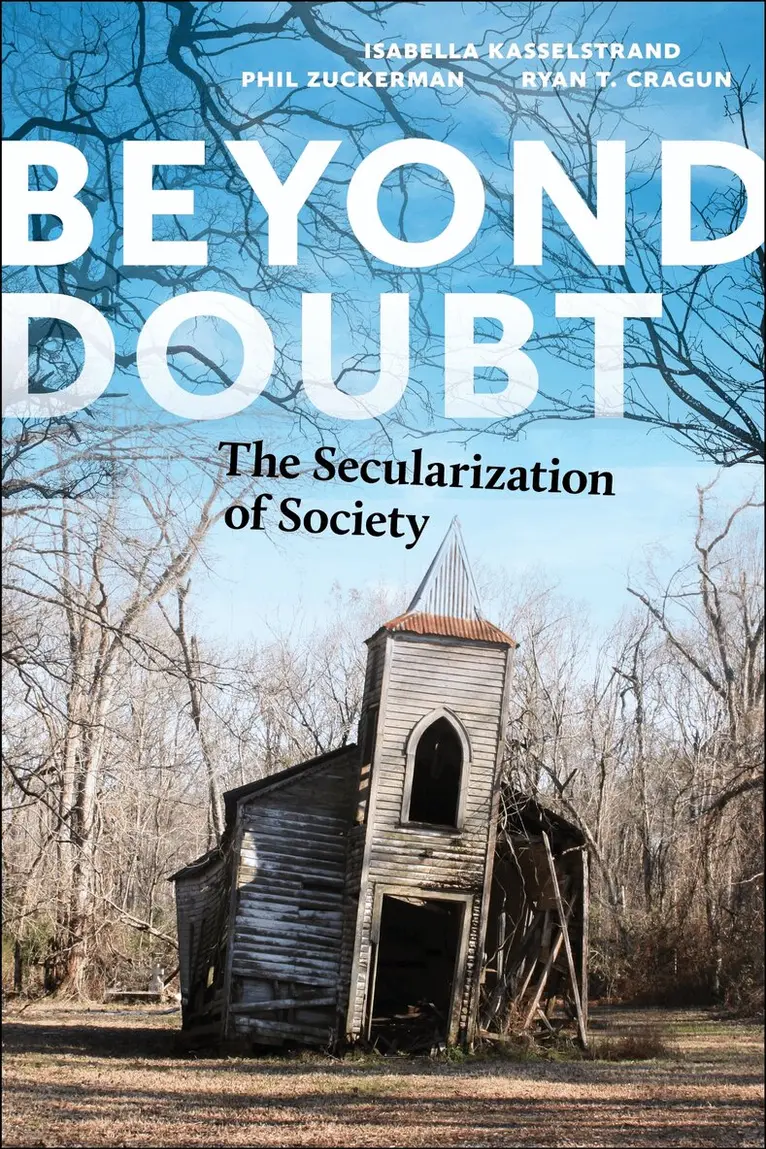
Demonstrates definitively that the secularization thesis is correct, and religion is losing its grip on societies worldwideIn the decades since its introduction, secularization theory has been subjected to doubt and criticism from a number of leading scholars, who have variously claimed that it is wrong, flawed, or incomplete. In Beyond Doubt, Isabella Kasselstrand, Phil Zuckerman, and Ryan T. Cragun mount a strong defense for the theory, providing compelling evidence that religion is indeed declining globally as a result of modernization. Though defenses of secularization theory have been mounted in the past, we now have many years' worth of empirical data to illuminate trends, and can trace changes not just at a given point in time but over a trajectory. Drawing on extensive survey data from nations around the world, the book demonstrates that, in spite of its many detractors, there is robust empirical support for secularization theory. It also engages with the most prominent criticisms levied against the theory, showing that data that are said to refute the narrative of religious decline are easily explainable and in keeping with the broader tendency toward secularization. Beyond simply defending secularization theory, the authors endeavor to formalize it, offering clear definitions of relevant terms and creating propositions that can be repeatedly and accurately tested. Beyond Doubt offers the strongest argument to date for the existence of a global secularization trend, and will be a vital resource for students and scholars alike who study religion and secularism.
327 kr
Skickas inom 10-15 vardagar
Demonstrates definitively that the secularization thesis is correct, and religion is losing its grip on societies worldwideIn the decades since its introduction, secularization theory has been subjected to doubt and criticism from a number of leading scholars, who have variously claimed that it is wrong, flawed, or incomplete. In Beyond Doubt, Isabella Kasselstrand, Phil Zuckerman, and Ryan T. Cragun mount a strong defense for the theory, providing compelling evidence that religion is indeed declining globally as a result of modernization. Though defenses of secularization theory have been mounted in the past, we now have many years' worth of empirical data to illuminate trends, and can trace changes not just at a given point in time but over a trajectory. Drawing on extensive survey data from nations around the world, the book demonstrates that, in spite of its many detractors, there is robust empirical support for secularization theory. It also engages with the most prominent criticisms levied against the theory, showing that data that are said to refute the narrative of religious decline are easily explainable and in keeping with the broader tendency toward secularization. Beyond simply defending secularization theory, the authors endeavor to formalize it, offering clear definitions of relevant terms and creating propositions that can be repeatedly and accurately tested. Beyond Doubt offers the strongest argument to date for the existence of a global secularization trend, and will be a vital resource for students and scholars alike who study religion and secularism.
1 007 kr
Skickas inom 10-15 vardagar
Compares secular attitudes characterizing "religious nones" in the United States and CanadaAlmost a quarter of American and Canadian adults are nonreligious, while teens and young adults are even less likely to identify religiously. None of the Above explores the growing phenomenon of "religious nones" in North America. Who are the religious nones? Why, and where, is this population growing? While there has been increased attention on secularism in both Europe and the United States, little work to date has focused on Canada. Joel Thiessen and Sarah Wilkins-Laflamme turn to survey and interview data to explore how a nonreligious identity impacts a variety of aspects of daily life in the US and Canada in sometimes similar and sometimes different ways, offering insights to illuminate societal and political trends. With numbers of nonreligious people even higher in Canada than in the US, some believe that secular currents to the north foreshadow what will happen in the US. None of the Above asserts that a growing divide between religious and nonreligious populations could engender a greater distance in moral and political values and behaviors. At once provocative and insightful, this book tackles questions of coexistence, religious tolerance, and spirituality, as American and Canadian society accelerate toward a more secular future.
1 061 kr
Skickas inom 10-15 vardagar
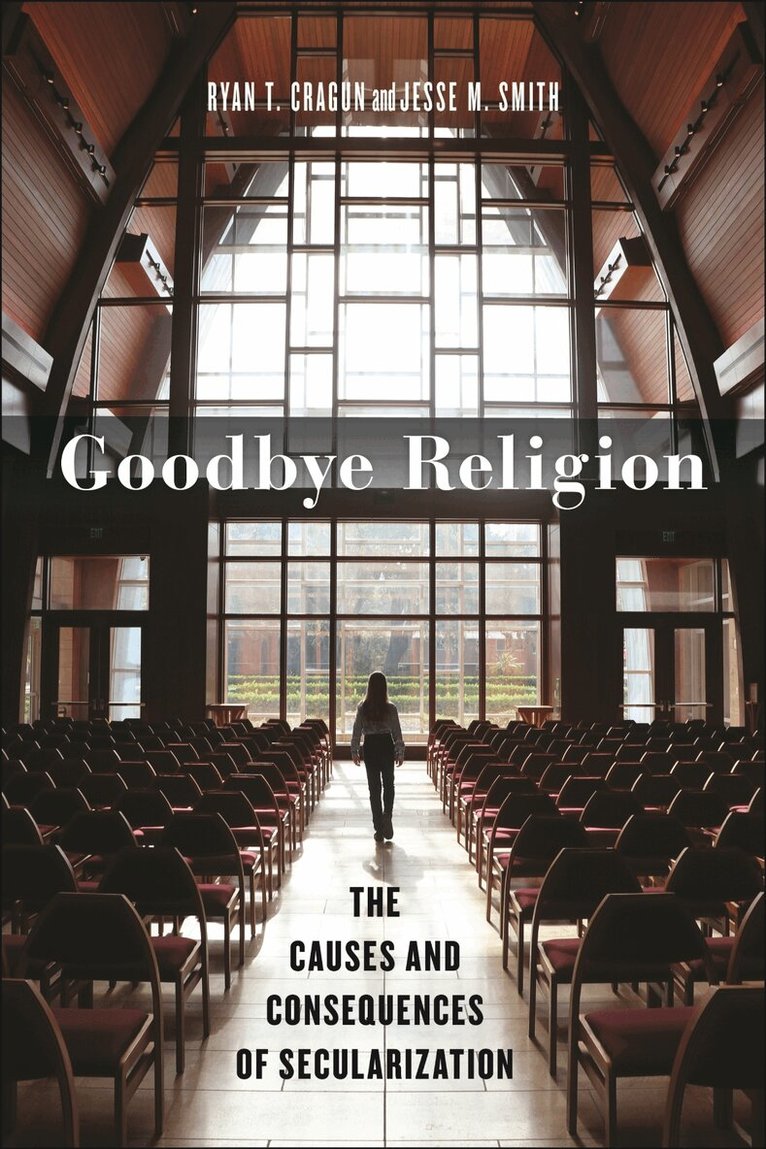
Examines why so many are leaving religion, and what that means for American society One of the largest changes in American culture over the last fifty years has been the increase in people exiting religion. Goodbye Religion explores why there has been such an upswing among those who identify as nonreligious, and what the societal implications are of this move towards less religiosity. Utilizing nationally representative data and more than a hundred in-depth interviews with people who leave their religion behind, Ryan T. Cragun and Jesse M. Smith examine the variety of social, psychological, and environmental conditions behind the exiting process, as well as what people do with the time they used to devote to religious observance. They show that for most people who leave, abandoning religion is not a crisis, and does not generally disrupt their health, charitable giving, or volunteering. Drawing on the data, Cragun and Smith argue that the fears among some that massive religious exit will result in a decline in family values or less civic engagement are unfounded, and that those who become nonreligious remain engaged in society and continue to strive to make the world a better place. At a time where more and more individuals are questioning the implications of our increasingly secular society, Goodbye Religion offers an engaging and fascinating analysis into what religious exiting—and secularization broadly—means for American society.
362 kr
Skickas inom 7-10 vardagar
Examines why so many are leaving religion, and what that means for American society One of the largest changes in American culture over the last fifty years has been the increase in people exiting religion. Goodbye Religion explores why there has been such an upswing among those who identify as nonreligious, and what the societal implications are of this move towards less religiosity. Utilizing nationally representative data and more than a hundred in-depth interviews with people who leave their religion behind, Ryan T. Cragun and Jesse M. Smith examine the variety of social, psychological, and environmental conditions behind the exiting process, as well as what people do with the time they used to devote to religious observance. They show that for most people who leave, abandoning religion is not a crisis, and does not generally disrupt their health, charitable giving, or volunteering. Drawing on the data, Cragun and Smith argue that the fears among some that massive religious exit will result in a decline in family values or less civic engagement are unfounded, and that those who become nonreligious remain engaged in society and continue to strive to make the world a better place. At a time where more and more individuals are questioning the implications of our increasingly secular society, Goodbye Religion offers an engaging and fascinating analysis into what religious exiting—and secularization broadly—means for American society.
349 kr
Skickas inom 7-10 vardagar
Compares secular attitudes characterizing "religious nones" in the United States and CanadaAlmost a quarter of American and Canadian adults are nonreligious, while teens and young adults are even less likely to identify religiously. None of the Above explores the growing phenomenon of "religious nones" in North America. Who are the religious nones? Why, and where, is this population growing? While there has been increased attention on secularism in both Europe and the United States, little work to date has focused on Canada. Joel Thiessen and Sarah Wilkins-Laflamme turn to survey and interview data to explore how a nonreligious identity impacts a variety of aspects of daily life in the US and Canada in sometimes similar and sometimes different ways, offering insights to illuminate societal and political trends. With numbers of nonreligious people even higher in Canada than in the US, some believe that secular currents to the north foreshadow what will happen in the US. None of the Above asserts that a growing divide between religious and nonreligious populations could engender a greater distance in moral and political values and behaviors. At once provocative and insightful, this book tackles questions of coexistence, religious tolerance, and spirituality, as American and Canadian society accelerate toward a more secular future.
954 kr
Skickas inom 10-15 vardagar
A fascinating exploration of the breadth of social, emotional, and spiritual experiences of atheists in America Self-identified atheists make up roughly 5 percent of the American religious landscape, comprising a larger population than Jehovah's Witnesses, Orthodox Christians, Muslims, Buddhists, and Hindus combined. In spite of their relatively significant presence in society, atheists are one of the most stigmatized groups in the United States, frequently portrayed as immoral, unhappy, or even outright angry. Yet we know very little about what their lives are actually like as they live among their largely religious, and sometimes hostile, fellow citizens. In this book, Jerome P. Baggett listens to what atheists have to say about their own lives and viewpoints. Drawing on questionnaires and interviews with more than five hundred American atheists scattered across the country, The Varieties of Nonreligious Experience uncovers what they think about morality, what gives meaning to their lives, how they feel about religious people, and what they think and know about religion itself. Though the wider public routinely understands atheists in negative terms, as people who do not believe in God, Baggett pushes readers to view them in a different light. Rather than simply rejecting God and religion, atheists actually embrace something much more substantive—lives marked by greater integrity, open-mindedness, and progress.Beyond just talking about or to American atheists, the time is overdue to let them speak for themselves. This book is a must-read for anyone interested in joining the conversation.
1 154 kr
Skickas inom 10-15 vardagar
Examines how "Religious Nones" negotiate tensions with those who think they ought to provide their children with a religious upbringingThe fastest growing religion in America is—none! One fifth of Americans now list their religion as "none," up from only 7 percent two decades ago. Among adults under 30, those poised to be the parents of the next generation, fully one third are religiously unaffiliated. Yet these "Nones," especially parents, still face prejudice in a culture where religion is widely seen as good for your kids. What do Nones believe, and how do they negotiate tensions with those convinced that they ought to provide their children with a religious upbringing?Drawing on survey data and in-depth personal interviews with religiously unaffiliated parents across the country, Christel Manning provides important demographic data on American "Nones" and offers critical nuance to our understanding of the term. She shows that context is crucial in understanding how those without religious ties define themselves and raise their families. Indeed, she demonstrates that Nones hold a wide variety of worldviews, ranging from deeply religious to highly secular, and transmit them in diverse ways. What ties them all together is a commitment to spiritual choice—a belief in the moral equivalence of religions and secular worldviews and in the individual's right to choose—and it is that choice they seek to pass on to their children.The volume weaves in stories from the author's interviews throughout, showing how non-religious parents grapple with pressure from their community and how they think about religious issues. Engagingly written and thoroughly researched, Losing Our Religion will appeal to scholars, parents, and anyone interested in understanding the changing American religious landscape.
362 kr
Skickas inom 7-10 vardagar
Examines how "Religious Nones" negotiate tensions with those who think they ought to provide their children with a religious upbringingThe fastest growing religion in America is—none! One fifth of Americans now list their religion as "none," up from only 7 percent two decades ago. Among adults under 30, those poised to be the parents of the next generation, fully one third are religiously unaffiliated. Yet these "Nones," especially parents, still face prejudice in a culture where religion is widely seen as good for your kids. What do Nones believe, and how do they negotiate tensions with those convinced that they ought to provide their children with a religious upbringing?Drawing on survey data and in-depth personal interviews with religiously unaffiliated parents across the country, Christel Manning provides important demographic data on American "Nones" and offers critical nuance to our understanding of the term. She shows that context is crucial in understanding how those without religious ties define themselves and raise their families. Indeed, she demonstrates that Nones hold a wide variety of worldviews, ranging from deeply religious to highly secular, and transmit them in diverse ways. What ties them all together is a commitment to spiritual choice—a belief in the moral equivalence of religions and secular worldviews and in the individual's right to choose—and it is that choice they seek to pass on to their children.The volume weaves in stories from the author's interviews throughout, showing how non-religious parents grapple with pressure from their community and how they think about religious issues. Engagingly written and thoroughly researched, Losing Our Religion will appeal to scholars, parents, and anyone interested in understanding the changing American religious landscape.
362 kr
Skickas inom 7-10 vardagar
A fascinating exploration of the breadth of social, emotional, and spiritual experiences of atheists in America Self-identified atheists make up roughly 5 percent of the American religious landscape, comprising a larger population than Jehovah's Witnesses, Orthodox Christians, Muslims, Buddhists, and Hindus combined. In spite of their relatively significant presence in society, atheists are one of the most stigmatized groups in the United States, frequently portrayed as immoral, unhappy, or even outright angry. Yet we know very little about what their lives are actually like as they live among their largely religious, and sometimes hostile, fellow citizens. In this book, Jerome P. Baggett listens to what atheists have to say about their own lives and viewpoints. Drawing on questionnaires and interviews with more than five hundred American atheists scattered across the country, The Varieties of Nonreligious Experience uncovers what they think about morality, what gives meaning to their lives, how they feel about religious people, and what they think and know about religion itself. Though the wider public routinely understands atheists in negative terms, as people who do not believe in God, Baggett pushes readers to view them in a different light. Rather than simply rejecting God and religion, atheists actually embrace something much more substantive—lives marked by greater integrity, open-mindedness, and progress.Beyond just talking about or to American atheists, the time is overdue to let them speak for themselves. This book is a must-read for anyone interested in joining the conversation.