Series in Computational Biophysics – Serie
Visar alla böcker i serien Series in Computational Biophysics. Handla med fri frakt och snabb leverans.
14 produkter
14 produkter
Molecular Modeling at the Atomic Scale
Methods and Applications in Quantitative Biology
Häftad, Engelska, 2020
700 kr
Skickas inom 10-15 vardagar
Although molecular modeling has been around for a while, the groundbreaking advancement of massively parallel supercomputers and novel algorithms for parallelization is shaping this field into an exciting new area. Developments in molecular modeling from experimental and computational techniques have enabled a wide range of biological applications. Responding to this renaissance, Molecular Modeling at the Atomic Scale: Methods and Applications in Quantitative Biology includes discussions of advanced techniques of molecular modeling and the latest research advancements in biomolecular applications from leading experts.The book begins with a brief introduction of major methods and applications, then covers the development of cutting-edge methods/algorithms, new polarizable force fields, and massively parallel computing techniques, followed by descriptions of how these novel techniques can be applied in various research areas in molecular biology. It also examines the self-assembly of biomacromolecules, including protein folding, RNA folding, amyloid peptide aggregation, and membrane lipid bilayer formation. Additional topics highlight biomolecular interactions, including protein interactions with DNA/RNA, membrane, ligands, and nanoparticles. Discussion of emerging topics in biomolecular modeling such as DNA sequencing with solid-state nanopores and biological water under nanoconfinement round out the coverage.This timely summary contains the perspectives of leading experts on this transformation in molecular biology and includes state-of-the-art examples of how molecular modeling approaches are being applied to critical questions in modern quantitative biology. It pulls together the latest research and applications of molecular modeling and real-world expertise that can boost your research and development of applications in this rapidly changing field.
673 kr
Skickas inom 10-15 vardagar
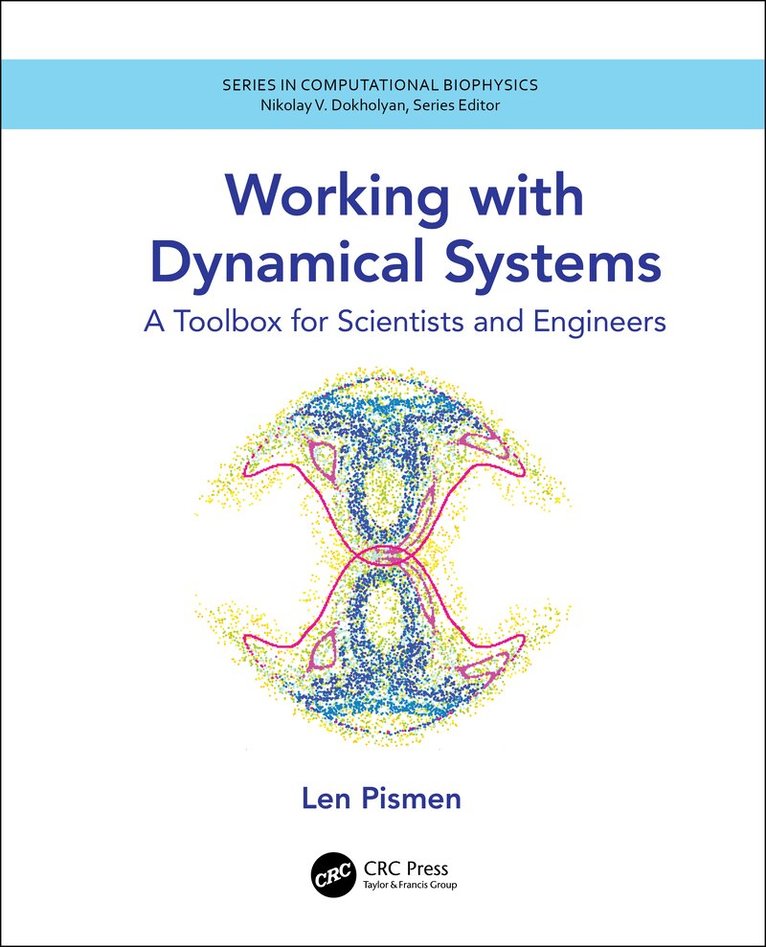
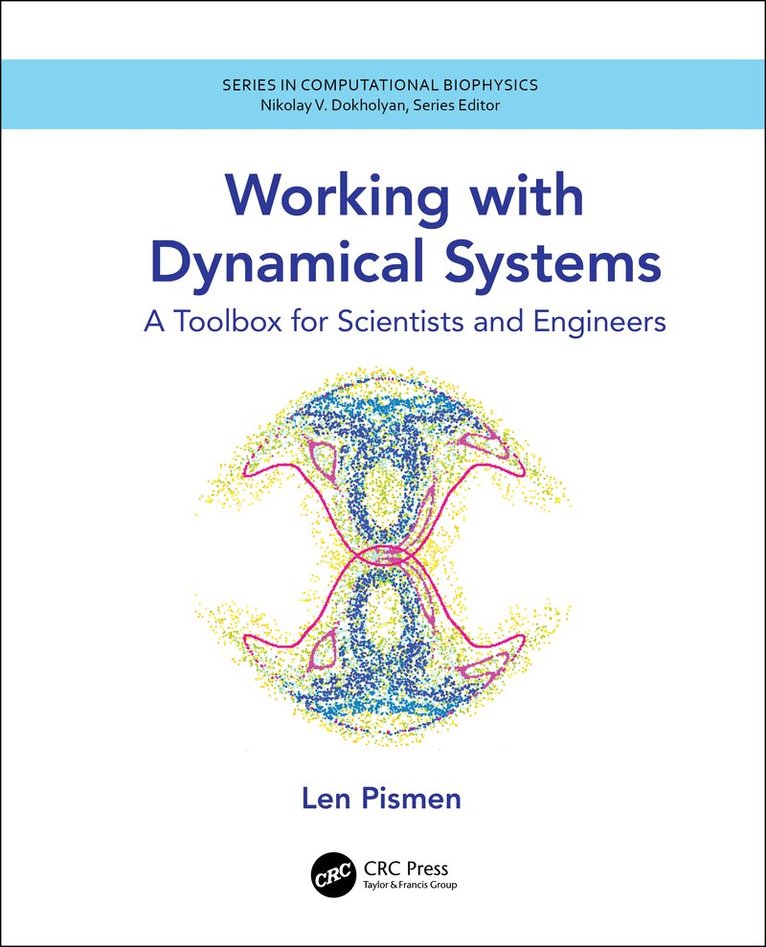
This book provides working tools for the study and design of nonlinear dynamical systems applicable in physics and engineering. It offers a broad-based introduction to this challenging area of study, taking an applications-oriented approach that emphasizes qualitative analysis and approximations rather than formal mathematics or simulation. The author, an internationally recognized authority in the field, makes extensive use of examples and includes executable Mathematica notebooks that may be used to generate new examples as hands-on exercises. The coverage includes discussion of mechanical models, chemical and ecological interactions, nonlinear oscillations and chaos, forcing and synchronization, spatial patterns and waves.Key Features:Written for a broad audience, avoiding dependence on mathematical formulations in favor of qualitative, constructive treatmentExtensive use of physical and engineering applicationsIncorporates Mathematica notebooks for simulations and hands-on self-studyProvides a gentle but rigorous introduction to real-world nonlinear problemsFeatures a final chapter dedicated to applications of dynamical systems to spatial patternsThe book is aimed at student and researchers in applied mathematics and mathematical modelling of physical and engineering problems. It teaches to see common features in systems of different origins, and to apply common methods of study without losing sight of complications and uncertainties related to their physical origin.
809 kr
Skickas inom 10-15 vardagar
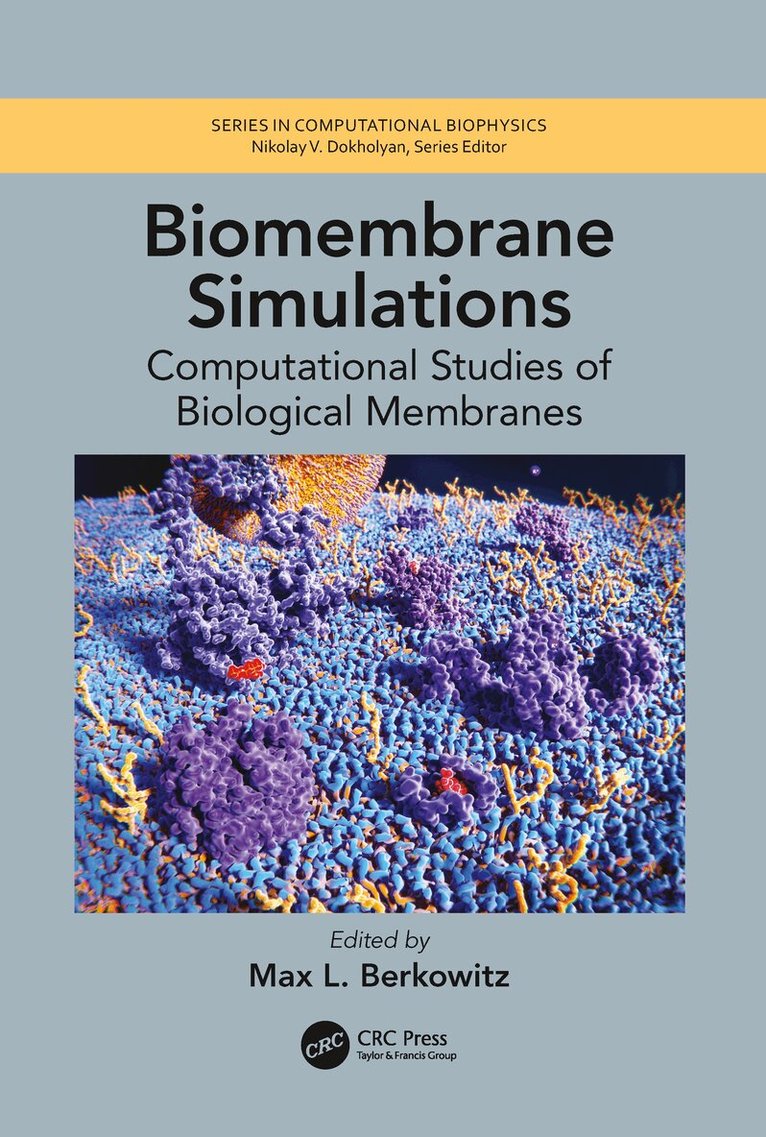
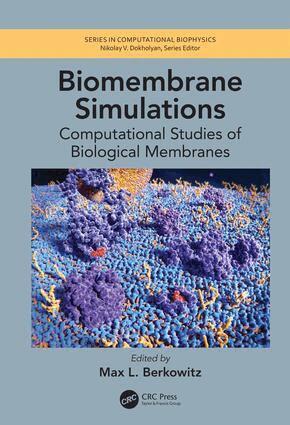
Due to recent advancements in the development of numerical algorithms and computational hardware, computer simulations of biological membranes, often requiring use of substantial computational resources, are now reaching a mature stage. Since molecular processes in membranes occur on a multitude of spatial and time scales, molecular simulations of membranes can also serve as a testing ground for use of multi-scale simulation techniques. This book addresses some of the important issues related to understanding properties and behavior of model biological membranes and it Shows how simulations improve our understanding of biological membranes and makes connections with experimental results. Presents a careful discussion of the force fields used in the membrane simulations including detailed all-atom fields and coarse-grained fields. Presents a continuum description of membranes. Discusses a variety of issues such as influence of membrane surfaces on properties of water, interaction between membranes across water, nanoparticle permeation across the membrane, action of anesthetics and creation of inhomogeneous regions in membranes. Discusses important methodological issues when using simulations to examine phenomena such as pore creation and permeation across membranes. Discusses progress recently achieved in modeling bacterial membranes. It will be a valuable resource for graduate students, researchers and instructors in biochemistry, biophysics, pharmacology, physiology, and computational biology.
754 kr
Skickas inom 10-15 vardagar
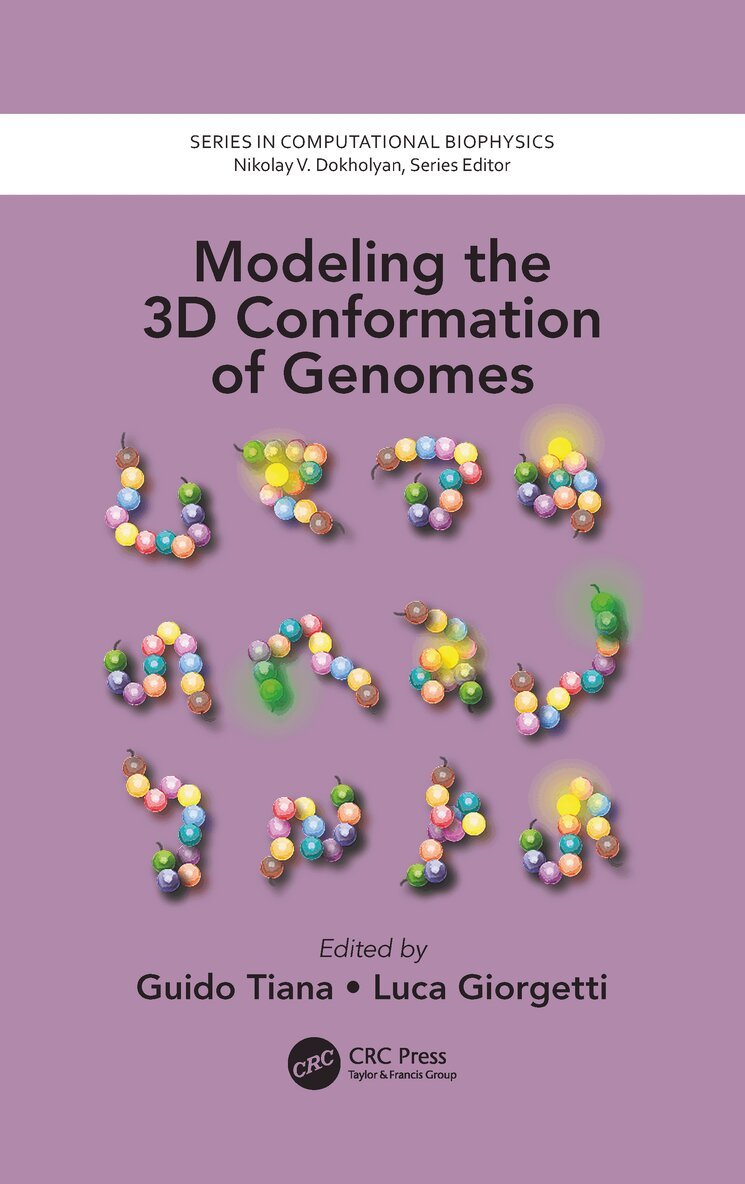
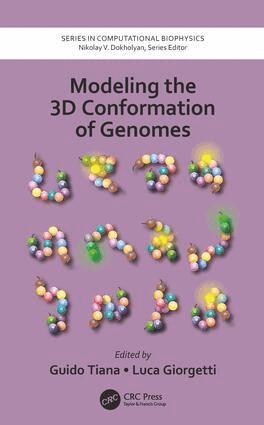
This book provides a timely summary of physical modeling approaches applied to biological datasets that describe conformational properties of chromosomes in the cell nucleus. Chapters explain how to convert raw experimental data into 3D conformations, and how to use models to better understand biophysical mechanisms that control chromosome conformation. The coverage ranges from introductory chapters to modeling aspects related to polymer physics, and data-driven models for genomic domains, the entire human genome, epigenome folding, chromosome structure and dynamics, and predicting 3D genome structure.
700 kr
Skickas inom 10-15 vardagar
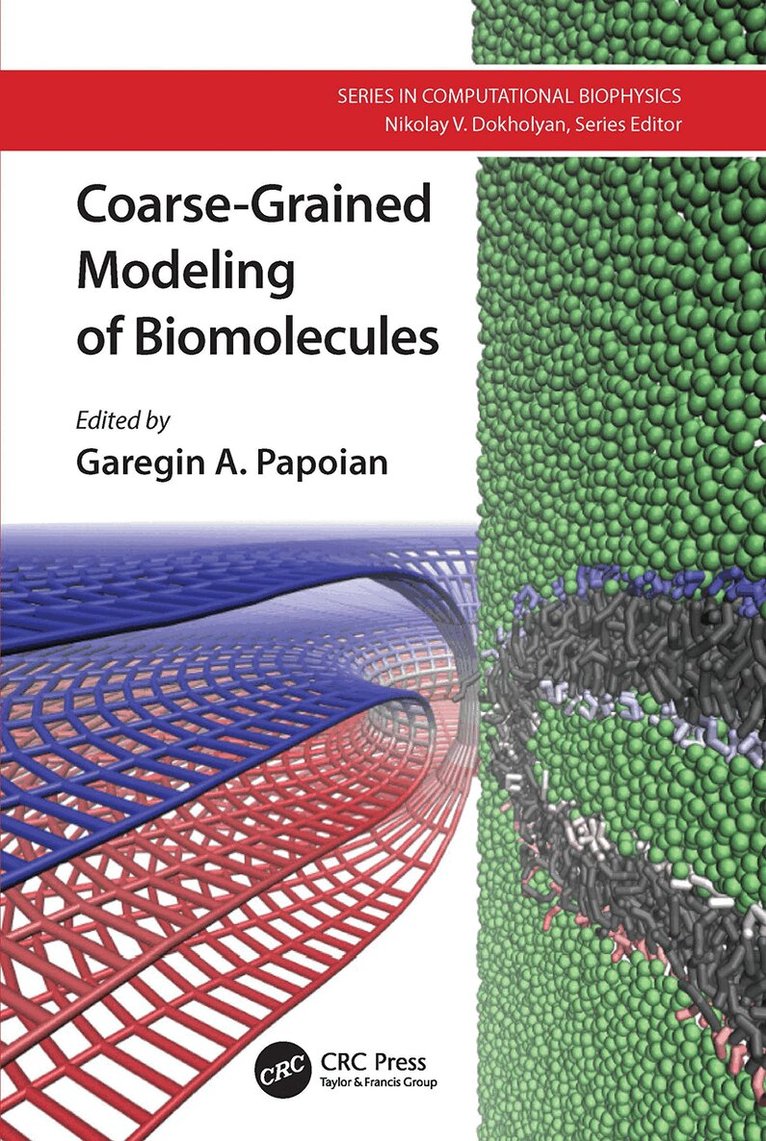
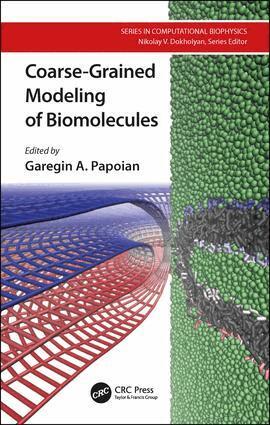
"The chapters in this book survey the progress in simulating biomolecular dynamics…. The images conjured up by this work are not yet universally loved, but are beginning to bring new insights into the study of biological structure and function. The future will decide whether this scientific movement can bring forth its Picasso or Modigliani." –from the Foreword by Peter G. Wolynes, Bullard-Welch Foundation Professor of Science, Rice UniversityThis book highlights the state-of-art in coarse-grained modeling of biomolecules, covering both fundamentals as well as various cutting edge applications. Coarse-graining of biomolecules is an area of rapid advances, with numerous new force fields having appeared recently and significant progress made in developing a systematic theory of coarse-graining. The contents start with first fundamental principles based on physics, then survey specific state-of-art coarse-grained force fields of proteins and nucleic acids, and provide examples of exciting biological problems that are at large scale, and hence, only amenable to coarse-grained modeling. Introduces coarse-grained models of proteins and nucleic acids. Showcases applications such as genome packaging in nuclei and understanding ribosome dynamics Gives the physical foundations of coarse-graining Demonstrates use of models for large-scale assemblies in modern studies Garegin A. Papoian is the first Monroe Martin Associate Professor with appointments in the Department of Chemistry and Biochemistry and the Institute for Physical Science and Technology at the University of Maryland.
2 045 kr
Skickas inom 10-15 vardagar
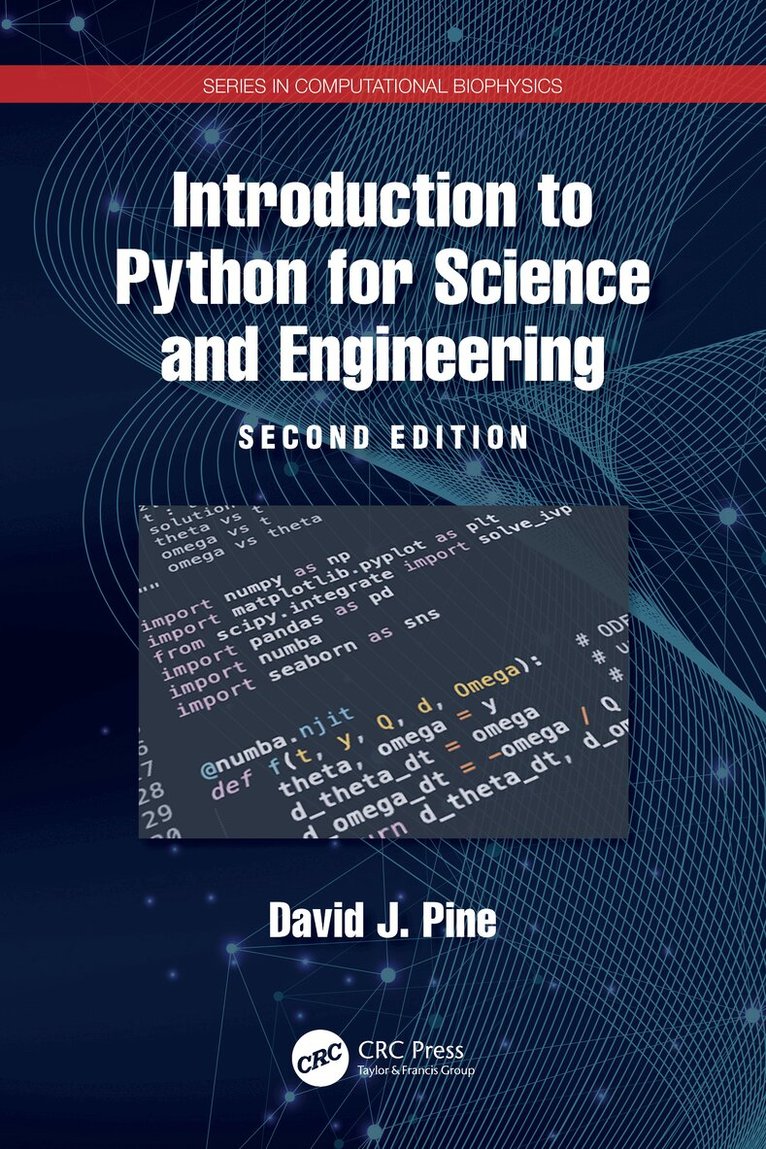
Introduction to Python for Science and Engineering offers a quick and incisive introduction to the Python programming language for use in any science or engineering discipline. The approach is pedagogical and “bottom up,” which means starting with examples and extracting more general principles from that experience. No prior programming experience is assumed.Readers will learn the basics of Python syntax, data structures, input and output, conditionals and loops, user-defined functions, plotting, animation, and visualization. They will also learn how to use Python for numerical analysis, including curve fitting, random numbers, linear algebra, solutions to nonlinear equations, numerical integration, solutions to differential equations, and fast Fourier transforms.Readers learn how to interact and program with Python using JupyterLab and Spyder, two simple and widely used integrated development environments.All the major Python libraries for science and engineering are covered, including NumPy, SciPy, Matplotlib, and Pandas. Other packages are also introduced, including Numba, which can render Python numerical calculations as fast as compiled computer languages such as C but without their complex overhead.
768 kr
Skickas inom 10-15 vardagar
Introduction to Python for Science and Engineering offers a quick and incisive introduction to the Python programming language for use in any science or engineering discipline. The approach is pedagogical and “bottom up,” which means starting with examples and extracting more general principles from that experience. No prior programming experience is assumed.Readers will learn the basics of Python syntax, data structures, input and output, conditionals and loops, user-defined functions, plotting, animation, and visualization. They will also learn how to use Python for numerical analysis, including curve fitting, random numbers, linear algebra, solutions to nonlinear equations, numerical integration, solutions to differential equations, and fast Fourier transforms.Readers learn how to interact and program with Python using JupyterLab and Spyder, two simple and widely used integrated development environments.All the major Python libraries for science and engineering are covered, including NumPy, SciPy, Matplotlib, and Pandas. Other packages are also introduced, including Numba, which can render Python numerical calculations as fast as compiled computer languages such as C but without their complex overhead.
Computational Approaches to Protein Dynamics
From Quantum to Coarse-Grained Methods
Häftad, Engelska, 2018
1 112 kr
Skickas inom 10-15 vardagar
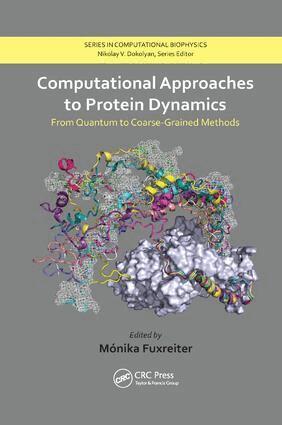
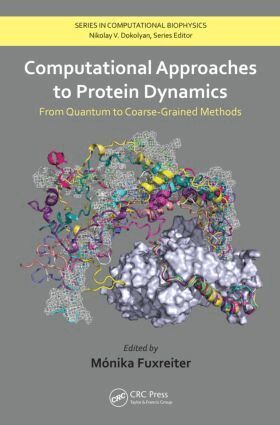
The Latest Developments on the Role of Dynamics in Protein FunctionsComputational Approaches to Protein Dynamics: From Quantum to Coarse-Grained Methods presents modern biomolecular computational techniques that address protein flexibility/dynamics at all levels of theory. An international contingent of leading researchers in chemistry, physics, and biology show how these advanced methods provide insights into dynamic aspects of biochemical processes. A particular focus is on intrinsically disordered proteins (IDPs), which lack a well-defined three-dimensional structure and function as dynamic ensembles.The book covers a wide spectrum of dynamics, from electronic structure-based to coarse-grained techniques via multiscaling at different levels. After an introduction to dynamics and historical overview of basic methodologies, the book addresses the following issues:Is there a quantitative relationship between enzymatic catalysis and protein dynamics?Which are the functionally relevant motions of proteins?How can structural properties and partner recognition mechanisms of IDPs be simulated?How can we speed up molecular dynamics? How can we describe conformational ensembles by the synergistic effort of computations and experiments?While dynamics is now considered essential for interpreting protein action, it is not yet an integral component in establishing structure–function relationships of proteins. Helping to reshape this classical view in biochemistry, this groundbreaking book explores advances in computational methodology and contributes to the new, ensemble way of studying proteins.
2 588 kr
Skickas inom 10-15 vardagar
This book provides a timely summary of physical modeling approaches applied to biological datasets that describe conformational properties of chromosomes in the cell nucleus. Chapters explain how to convert raw experimental data into 3D conformations, and how to use models to better understand biophysical mechanisms that control chromosome conformation. The coverage ranges from introductory chapters to modeling aspects related to polymer physics, and data-driven models for genomic domains, the entire human genome, epigenome folding, chromosome structure and dynamics, and predicting 3D genome structure.
1 909 kr
Skickas inom 10-15 vardagar
This book provides working tools for the study and design of nonlinear dynamical systems applicable in physics and engineering. It offers a broad-based introduction to this challenging area of study, taking an applications-oriented approach that emphasizes qualitative analysis and approximations rather than formal mathematics or simulation. The author, an internationally recognized authority in the field, makes extensive use of examples and includes executable Mathematica notebooks that may be used to generate new examples as hands-on exercises. The coverage includes discussion of mechanical models, chemical and ecological interactions, nonlinear oscillations and chaos, forcing and synchronization, spatial patterns and waves.Key Features:Written for a broad audience, avoiding dependence on mathematical formulations in favor of qualitative, constructive treatmentExtensive use of physical and engineering applicationsIncorporates Mathematica notebooks for simulations and hands-on self-studyProvides a gentle but rigorous introduction to real-world nonlinear problemsFeatures a final chapter dedicated to applications of dynamical systems to spatial patternsThe book is aimed at student and researchers in applied mathematics and mathematical modelling of physical and engineering problems. It teaches to see common features in systems of different origins, and to apply common methods of study without losing sight of complications and uncertainties related to their physical origin.
Computational Approaches to Protein Dynamics
From Quantum to Coarse-Grained Methods
Inbunden, Engelska, 2014
2 996 kr
Skickas inom 10-15 vardagar
The Latest Developments on the Role of Dynamics in Protein FunctionsComputational Approaches to Protein Dynamics: From Quantum to Coarse-Grained Methods presents modern biomolecular computational techniques that address protein flexibility/dynamics at all levels of theory. An international contingent of leading researchers in chemistry, physics, and biology show how these advanced methods provide insights into dynamic aspects of biochemical processes. A particular focus is on intrinsically disordered proteins (IDPs), which lack a well-defined three-dimensional structure and function as dynamic ensembles.The book covers a wide spectrum of dynamics, from electronic structure-based to coarse-grained techniques via multiscaling at different levels. After an introduction to dynamics and historical overview of basic methodologies, the book addresses the following issues:Is there a quantitative relationship between enzymatic catalysis and protein dynamics?Which are the functionally relevant motions of proteins?How can structural properties and partner recognition mechanisms of IDPs be simulated?How can we speed up molecular dynamics? How can we describe conformational ensembles by the synergistic effort of computations and experiments?While dynamics is now considered essential for interpreting protein action, it is not yet an integral component in establishing structure–function relationships of proteins. Helping to reshape this classical view in biochemistry, this groundbreaking book explores advances in computational methodology and contributes to the new, ensemble way of studying proteins.
Molecular Modeling at the Atomic Scale
Methods and Applications in Quantitative Biology
Inbunden, Engelska, 2014
1 909 kr
Skickas inom 10-15 vardagar
Although molecular modeling has been around for a while, the groundbreaking advancement of massively parallel supercomputers and novel algorithms for parallelization is shaping this field into an exciting new area. Developments in molecular modeling from experimental and computational techniques have enabled a wide range of biological applications. Responding to this renaissance, Molecular Modeling at the Atomic Scale: Methods and Applications in Quantitative Biology includes discussions of advanced techniques of molecular modeling and the latest research advancements in biomolecular applications from leading experts.The book begins with a brief introduction of major methods and applications, then covers the development of cutting-edge methods/algorithms, new polarizable force fields, and massively parallel computing techniques, followed by descriptions of how these novel techniques can be applied in various research areas in molecular biology. It also examines the self-assembly of biomacromolecules, including protein folding, RNA folding, amyloid peptide aggregation, and membrane lipid bilayer formation. Additional topics highlight biomolecular interactions, including protein interactions with DNA/RNA, membrane, ligands, and nanoparticles. Discussion of emerging topics in biomolecular modeling such as DNA sequencing with solid-state nanopores and biological water under nanoconfinement round out the coverage.This timely summary contains the perspectives of leading experts on this transformation in molecular biology and includes state-of-the-art examples of how molecular modeling approaches are being applied to critical questions in modern quantitative biology. It pulls together the latest research and applications of molecular modeling and real-world expertise that can boost your research and development of applications in this rapidly changing field.
2 724 kr
Skickas inom 10-15 vardagar
"The chapters in this book survey the progress in simulating biomolecular dynamics…. The images conjured up by this work are not yet universally loved, but are beginning to bring new insights into the study of biological structure and function. The future will decide whether this scientific movement can bring forth its Picasso or Modigliani." –from the Foreword by Peter G. Wolynes, Bullard-Welch Foundation Professor of Science, Rice UniversityThis book highlights the state-of-art in coarse-grained modeling of biomolecules, covering both fundamentals as well as various cutting edge applications. Coarse-graining of biomolecules is an area of rapid advances, with numerous new force fields having appeared recently and significant progress made in developing a systematic theory of coarse-graining. The contents start with first fundamental principles based on physics, then survey specific state-of-art coarse-grained force fields of proteins and nucleic acids, and provide examples of exciting biological problems that are at large scale, and hence, only amenable to coarse-grained modeling. Introduces coarse-grained models of proteins and nucleic acids. Showcases applications such as genome packaging in nuclei and understanding ribosome dynamics Gives the physical foundations of coarse-graining Demonstrates use of models for large-scale assemblies in modern studiesGaregin A. Papoian is the first Monroe Martin Associate Professor with appointments in the Department of Chemistry and Biochemistry and the Institute for Physical Science and Technology at the University of Maryland.
2 317 kr
Skickas inom 10-15 vardagar
Due to recent advancements in the development of numerical algorithms and computational hardware, computer simulations of biological membranes, often requiring use of substantial computational resources, are now reaching a mature stage. Since molecular processes in membranes occur on a multitude of spatial and time scales, molecular simulations of membranes can also serve as a testing ground for use of multi-scale simulation techniques. This book addresses some of the important issues related to understanding properties and behavior of model biological membranes and it Shows how simulations improve our understanding of biological membranes and makes connections with experimental results. Presents a careful discussion of the force fields used in the membrane simulations including detailed all-atom fields and coarse-grained fields. Presents a continuum description of membranes. Discusses a variety of issues such as influence of membrane surfaces on properties of water, interaction between membranes across water, nanoparticle permeation across the membrane, action of anesthetics and creation of inhomogeneous regions in membranes. Discusses important methodological issues when using simulations to examine phenomena such as pore creation and permeation across membranes. Discusses progress recently achieved in modeling bacterial membranes.It will be a valuable resource for graduate students, researchers and instructors in biochemistry, biophysics, pharmacology, physiology, and computational biology.