Small Battles – serie
Visar alla böcker i serien Small Battles. Handla med fri frakt och snabb leverans.
6 produkter
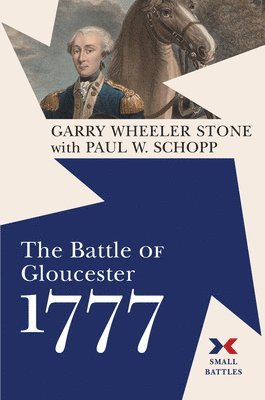
Battle of Gloucester, 1777
Inbunden, 2022
330 kr
Lägg i varukorg
The Marquis de Lafayette, a nineteen-year-old French youth, arrived in Philadelphia at the end of July 1777. He was a rich aristocrat, but he was unpretentious, charming, and eager to learn. Introduced to George Washington, he joined the commander-in-chief at the Battle of Brandywine in September, …
Battle of Musgrove's Mill, 1780
Inbunden, 2022
360 kr
Lägg i varukorg
On August 19, 1780, near a ford of the Enoree River in northwest South Carolina, a short and savage encounter occurred between Rebel militia and a combined force of Loyalist militia and Provincial regulars. Despite the Rebel’s being outnumbered more than two to one, it was an overwhelming victory …
Battle of Harlem Heights, 1776
Av David Price
Inbunden, 2023
360 kr
Lägg i varukorg
The Battle of Harlem Heights is an underappreciated milestone in American military history. The engagement on upper Manhattan Island on September 16, 1776, was the first successful battle for George Washington’s troops in the quest for independence from Great Britain and presaged the emergence of …
Battle of Upper Sandusky, 1782
Av Eric Sterner
Inbunden, 2023
389 kr
Lägg i varukorg
In May 1782, Colonel William Crawford led over 450 volunteers across Ohio to attack British-allied Native Americans who had been raiding the frontiers of Pennsylvania and Virginia for years. An experienced yet reluctant commander, Crawford and his men clashed with a similarly sized force of British …
Battles of Fort Watson and Fort Motte, 1781
Inbunden, 2024
339 kr
Lägg i varukorg
On May 9, 1781, American general Nathanael Greene and his Continental army were outside of British-held Camden, South Carolina. Greene was despondent and contemplating resigning his commission, believing he could not force the British out of the fortified village. His compatriot Francis Marion, …
Battles of Spencer's Ordinary and Green Spring, 1781
Inbunden, 2025
339 kr
Lägg i varukorg
The decisive Yorktown campaign of 1781 in Virginia, in which an American and French army and navy forced the surrender of the last major British field force in America, was the final Patriot victory of the Revolutionary War. The campaign was an immense and complicated series of operations, a …