Smart Cities - Böcker
Untangling Smart Cities
From Utopian Dreams to Innovation Systems for a Technology-Enabled Urban Sustainability
1 202 kr
Skickas inom 7-10 vardagar
Untangling Smart Cities: From Utopian Dreams to Innovation Systems for a Technology-Enabled Urban Sustainability helps all key stakeholders understand the complex and often conflicting nature of smart city research, offering valuable insights for designing and implementing strategies to improve the smart city decision-making processes. The book drives the reader to a better theoretical and practical comprehension of smart city development, beginning with a thorough and systematic analysis of the research literature published to date. It addition, it provides an in-depth understanding of the entire smart city knowledge domain, revealing a deeply rooted division in its cognitive-epistemological structure as identified by bibliometric insights.
Users will find a book that fills the knowledge gap between theory and practice using case study research and empirical evidence drawn from cities considered leaders in innovative smart city practices.
Provides clarity on smart city concepts and strategies Presents a systematic literature analysis on the state-of-the-art of smart cities' research using bibliometrics combined with practical applications Offers a comprehensive and systematic analysis of smart cities research produced during its first three decades Generates a strong connection between theory and practice by providing the scientific knowledge necessary to approach the complex nature of smart cities Documents five main development pathways for smart cities development, serving the needs of city managers and policymakers with concrete advice and guidance1 177 kr
Skickas inom 7-10 vardagar
Smart City Emergence: Cases from around the World analyzes how smart cities are currently being conceptualized and implemented, examining the theoretical underpinnings and technologies that connect theory with tangible practice achievements. Using numerous cities from different regions around the globe, the book compares how smart cities of different sizes are evolving in different countries and continents. In addition, it examines the challenges cities face as they adopt the smart city concept, separating fact from fiction, with insights from scholars, government officials and vendors currently involved in smart city implementation.
Utilizes a sound and systematic research methodology Includes a review of the latest research developments Contains, in each chapter, a brief summary of the case, an illustration of the theoretical context that lies behind the case, the case study itself, and conclusions showing learned outcomes Examines smart cities in relation to climate change, sustainability, natural disasters and community resiliency1 202 kr
Skickas inom 7-10 vardagar
Smart City Governance examines public domain activities and services in the digital age, evaluating all facets of smart city e-governance that fosters a cohesive understanding for the emerging generation of advanced "digital natives.� Exploring the tensions between political science and jurisprudence theories with the principles of societies and their alignment with legal systems, the book examines how governance systems can translate into the digital domain, addressing both the technical and legal dimensions. It offers a model for the technological foundation of governance, discussing existing technological components. The book concludes with a section on outlooks for further research.
Explores the development of sustainable governance by examining how public domain governance can leverage the full potential of smart city technologies Provides insights on the technical side of smart city governance Fuels discussions on how tomorrow's urban public institutions can contribute to a more inclusive and participatory society Provides a system architecture blueprint based on the insights and lessons learnedSmart Cities and Artificial Intelligence
Convergent Systems for Planning, Design, and Operations
1 202 kr
Skickas inom 7-10 vardagar
Smart Cities and Artificial Intelligence offers a comprehensive view of how cities are evolving as smart ecosystems through the convergence of technologies incorporating machine learning and neural network capabilities, geospatial intelligence, data analytics and visualization, sensors, and smart connected objects. These recent advances in AI move us closer to developing urban operating systems that simulate human, machine, and environmental patterns from transportation infrastructure to communication networks. Exploring cities as real-time, living, dynamic systems, and providing tools and formats including generative design and living lab models that support cities to become self-regulating, this book provides readers with a conceptual and practical knowledge base to grasp and apply the key principles required in the planning, design, and operations of smart cities.
Smart Cities and Artificial Intelligence brings a multidisciplinary, integrated approach, examining how the digital and physical worlds are converging, and how a new combination of human and machine intelligence is transforming the experience of�the urban environment. It presents a fresh holistic understanding of smart cities through an interconnected stream of theory, planning and design methodologies, system architecture, and the application of smart city functions, with the ultimate purpose of making cities more liveable, sustainable, and self-sufficient.
Explores concepts in smart city design and development and the transformation of cities through the convergence of human, machine, and natural systems enabled by Artificial Intelligence (AI) Includes numerous diagrams to illustrate and explain complex smart city systems and solutions Features diverse smart city examples and initiatives from around the globeShaping Smart for Better Cities
Rethinking and Shaping Relationships between Urban Space and Digital Technologies
1 202 kr
Skickas inom 7-10 vardagar
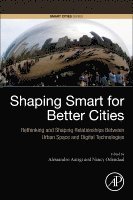
Shaping Smart for Better Cities powerfully demonstrates the range of theoretical and practical challenges, opportunities and success factors involved in successfully deploying digital technologies in cities, focusing on the importance of recognizing local context and multi-layered urban relationships in designing successful urban interventions. The first section, 'Rethinking Smart (in) Places' interrogates the smart city from a theoretical vantage point. The second part, 'Shaping Smart Places' examines various case studies critically. Hence the volume offers an intellectual resource that expands on the current literature, but also provides a pedagogical resource to universities as well as a reflective opportunity for practitioners. The cases allow for an examination of the practical implications of smart interventions in space, whilst the theoretical reflections enable expansion of the literature. Students are encouraged to learn from case studies and apply that learning in design. Academics will gain from the learning embedded in the documentation of the case studies in different geographic contexts, while practitioners can apply their learning to the conceptualisation of new forms of technology use.
Demonstrates how to adapt smart urban interventions for hyper-local context in geographic parameters, spatial relationships, and socio-political characteristics Provides a problem-solving approach based on specific smart place examples, applicable to real-life urban management Offers insights from numerous case studies of smart cities interventions in real civic spaces1 202 kr
Skickas inom 7-10 vardagar
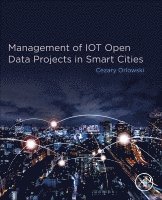
Management of IoT Open Data Projects in Smart Cities demonstrates a key project management methodology for the implementation of Smart Cities projects: Principles and Regulations for Smart Cities (PaRSC). This methodology adopts a basis in classic Scrum soft management methods with carefully considered expansions. These include design principals for high-level architecture design and recommendations for design at the level of project teams. This approach enables the deployment of rule-based linguistic models for IoT project management, supporting the design of high-level architecture and providing rules for Scrum Smart Cities team.
After reading this book, the reader will have a thorough grounding in IoT nodes and methods of their design, the acquisition and use of open data, and the use of project management methods to collect open data and build business models based on them.
Presents a unified method for smart urban interventions based on the adjustment of Scrum to the complexity of smart city projects Establishes a key model for intelligent systems verification in Smart Cities projects Demonstrates how practitioners can gain from the adoption of rule-based linguistic modelsSmart Cities for Technological and Social Innovation
Case Studies, Current Trends, and Future Steps
1 202 kr
Skickas inom 7-10 vardagar
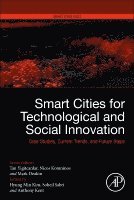
Smart Cities for Technological and Social Innovation establishes a key theoretical framework to understand the implementation and development of smart cities as innovation drivers, in terms of lasting impacts on productivity, livability and sustainability of specific initiatives. This framework is based on empirical analysis of 12 case studies, including pioneer projects from Europe, Asia, the Middle East, and more. It explores how successful smart cities initiatives nurture both technological and social innovation using a combination of regulatory governance and private agency. Typologies of smart city-making approaches are explored in depth. Integrative analysis identifies key success factors in establishing innovation relating to the effectiveness of social systems, institutional thickness, governance, the role of human capital, and streamlining funding of urban development projects.
Cases from a range of geographies, scales, social and economic contexts Explores how smart cities can promote technological and social innovation in terms of direct impacts on livability, productivity and sustainability Establishes an integrative framework based on empirical evidence to develop more innovative smart city initiatives Investigates the role of governments in coordinating, fostering and guiding innovations resulting from smart city developments Interrogates the policies and governance structures which have been effective in supporting the development and deployment of smart citiesHumane and Sustainable Smart Cities
A Personal Roadmap to Transform Your City After the Pandemic
1 202 kr
Skickas inom 7-10 vardagar
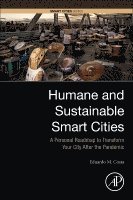
Humane and Sustainable Smart Cities explores how to develop emergent smart cities that are rooted in humane, innovative and sustainable values (CHIS). The book considers the move from technocratic and idealized smart metropole to humane cities as a product of fundamental demographic changes, the development of a usage-based rather than an ownership economy, the novel implications of digitalization, decentralization and decarbonization, and Internet-enabled changes in public opinion towards democratization and participation. The book's authors explore seven dimensions and characteristics of humane, sustainable and innovative cities in the developing world: the economy, people, the place, energy and the environment, mobility, social inclusion and governance.
Additional sections the operationalization of the CHIS concept into formal planning, policy implementation, and impact assessment considerations. Final discussions center on building a roadmap for planners seeking to design development policies conducive to human values and long-term social viability.
Provides an axiological framework for the development of humane, innovative and sustainable cities Examines how that framework can be operationalized into formal planning, policy implementation and impact assessment Explores humane, innovative and sustainable cities in terms of seven dimensions, including the economy, people, the place, energy and the environment, mobility, social inclusion and governance Explores proven paths for promoting effective community engagement in developing humane cities Provides a practical roadmap to design development policies conducive to human values and long-term social viabilitySmart City Code
Governance Handbook for Digital Transformation Managers in the Public Sector
1 324 kr
Skickas inom 7-10 vardagar
1 324 kr
Kommande
Digitally Disrupted Space
Proximity and New Development Opportunities for Regions and Cities
1 177 kr
Skickas inom 7-10 vardagar
Digitally Disrupted Space: Proximity and New Development Opportunities for Regions and Cities develops an analytical framework of the key structural elements in relation to the digital space and its impact on existing spatial interactions at a regional and urban level. The book puts forth the argument that the digital space is a new form of space acting complementary to existing spatial structures and creating novel interactions between and/or within them. It explores how digital space enhances connected intelligence by combining knowledge-intensive activities, cooperation between organizational and institutional actors, and smart environments of knowledge creation and diffusion.Academics and researchers will find insights into how cities and regions can adopt this new developmental paradigm; how to organize connected intelligence within regional and urban environments; and how to sustain productivity, resilience and inclusion through the use of digital space. Digital transformation managers in the public sector and entrepreneurs in private organizations can leverage the opportunities offered from this transition process, not only by identifying actions and strategies for boosting their productivity, but also for making them more resilient during socio-economic, environmental and health crises.
Thoroughly analyzes the role of digital space to complement existing structures and generate new interactions and networks, revealing the digital elements that are essential for the rise of new dynamics, connectors and routinesPositions the digital space emergence under the framework of a multi-level transition perspective, shedding light on how digital space reshapes transition processesExplores the potential challenges and opportunities arising from the emergence of the digital space for regional development1 177 kr
Skickas inom 7-10 vardagar
Scaling the Smart City engages with the smart city as a problem of scale. It disentangles the smart city from its corporate and technocratic stronghold by presenting an accessible design framework that productively aligns philosophical thinking on technology with foundational technical understandings of urban technology and smart system design.The knowledge and know-how to design and create urban technologies and smart cities are steadily moving from a niche field to a core industry competency. This book outlines a cross-scalar design framework, developed to teach smart city design to designers and engineers. It unpacks smart city initiatives and demystifies physical computing system design concepts, while complementing and mediating between critical social theory perspectives of the smart city and technically comprehensive case studies. The book’s analysis of real-world case examples and design prototypes demonstrates how design thinking and practice can better engage with the ethical implications of creating urban technologies and smart systems for society. It uses a clear, accessible, and instructive style of writing that synthesizes relevant scholarship and concepts to develop the reader’s foundational understanding of the contemporary smart city paradigm.This book is an invaluable resource for readers in the established fields and professions of design, architecture, urban design, and city planning, as well as the emerging fields of urban technology and urban interaction design.
Connects theory and practice to extend understanding of urban technologies and smart citiesLeverages real-world case examples and design prototypes to explore critical philosophical and ethical questions around the implications of technology in the urban and built environmentProvides an accessible and illustrative guide to technical principles of urban sensing and sense making apparatus foundational to the design of urban technology and smart citiesUtilizes visual iconography and diagramming to illustrate urban technology concepts, configurations, sequences, interactivity, and technical systemsThe Metaverse and Smart Cities
Urban Environments in the Age of Digital Connectivity
1 239 kr
Skickas inom 7-10 vardagar
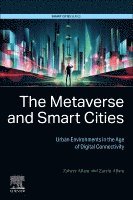
The Metaverse and Smart Cities: Urban Environments in the Age of Digital Connectivity explores the intersection between the rapidly growing metaverse and the future of cities. The metaverse is a virtual world that is increasingly gaining attention as a new frontier for human interaction and commerce. At the same time, cities are undergoing significant transformation as they face challenges such as population growth, urbanization, and environmental degradation. Urban planners and city administrators will find valuable insights on how the metaverse can be integrated into the planning and development of smart, sustainable, and future cities.The book begins with an introduction to the concepts and technology of the metaverse as well as its history. It then sheds light on the current and future challenges and opportunities that the metaverse presents to cities and the quality of life of urban dwellers. It delves into the ways in which the metaverse can change cities, both in terms of their physical and virtual environments, and the impact it can have on the lives of those who live in them. It brings together the latest research and perspectives from experts in the fields of virtual reality, urban planning, and sustainability, to provide a comprehensive and up-to-date picture of this rapidly evolving field.
Provides a comprehensive and in-depth examination of the relationship between the metaverse and cities, recognizing the role that virtual environments will play in shaping the future of urban lifePresents practical examples and case studies to demonstrate the possibilities and challenges of the metaverse in citiesIncludes the historical foundations necessary for understanding the current challenges and potential future trajectories of the technologySmart Cities and Artificial Intelligence
Convergent Systems for Planning, Design, and Operations
1 239 kr
Skickas inom 7-10 vardagar
Smart Cities and Artificial Intelligence: Convergent Systems for Planning, Design, and Operations, Second Edition presents an integrated perspective on how cities are evolving as intelligent ecosystems shaped by the convergence of human, technological, and environmental systems. Drawing on developments in machine learning, neural networks, geospatial intelligence, data analytics and visualization, sensors, and smart connected objects, the book explains how these elements combine to form a new urban collective intelligence. By framing cities as real-time, adaptive, living systems, and by introducing tools such as generative design and living lab models, the book equips readers with the conceptual and practical foundation needed to plan, design, and operate next-generation smart cities. Adopting a multidisciplinary and systems-based approach, it provides a holistic understanding of smart cities through interconnected theory, planning and design methodologies, system architecture, and applied smart city functions, all aimed at enabling more liveable, sustainable, and self-regulating urban environments.The second edition introduces a new section in each chapter framed as reflections and projections, offering insights across the ten-year window from 2020, when the first edition was published, through 2030. These additions align the book with recent developments in AI and urban technologies and include an expanded comparison of global smart cities in the City DNA section, examining how different cities evolve, adopt technology, and shape distinctive global identities and competitive positions. Additional updates include new material on Digital Twins and the Metaverse as emerging extensions of the smart city operating system, select new use cases, refreshed references, and an expanded glossary to improve clarity and accessibility. Together, these enhancements ensure that the book remains current and useful for practitioners, policymakers, researchers, and educators shaping the future of urban intelligence.
Features diverse smart city examples and initiatives from around the globeIncludes best practices and guidelines for planning, designing, and implementing smart city projects, as well as how to measure and evaluate their effectivenessProvides numerous diagrams to illustrate and explain complex smart city systems and solutionsDiscusses the role of citizens and communities in the design and implementation of smart city initiatives and citizen-centric smart citiesNew to the second edition: Revised content throughout the book, including updated references, refreshed case studies, and an expanded glossary of terms. The second edition also strengthens several core discussions-reflecting the rapid acceleration of AI since the first edition-and introduces new material on Digital Twins, the Metaverse, and reflections/projections on convergence spanning 2020-2025-2030. Together, these updates support a broader perspective on how cities are evolving toward more adaptive, citizen-centric, and self-regulating systemsMeeting SDGs in Smart City Infrastructures
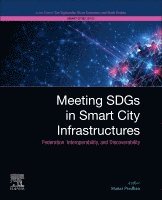
Federation, Interoperability, and Discoverability
1 349 kr
Skickas inom 7-10 vardagar
Assembling Smart Cyber-Physical Systems
Heterogeneous, Diffuse and Green Technological Infrastructures for Cities and Industries
1 251 kr
Kommande
Digital Twins for Smart Metabolic Circular Cities
Innovations in Planning and Climate Resilience
1 215 kr
Skickas inom 7-10 vardagar
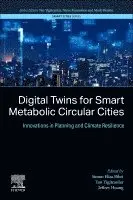
Digital Twins for Smart Metabolic Circular Cities: Innovations in Planning and Climate Resilience explores the advanced convergence of smart city technologies, digital twin applications, smart urban metabolism, and circular economy principles. This comprehensive resource offers insights into sustainable urban practices and innovative approaches to address the multifaceted challenges posed by rapid urbanization, environmental degradation, and climate change. In a rapidly changing world, this book provides a detailed understanding of how digital twin technologies and smart urban metabolism frameworks can be applied to foster sustainable urban development. This holistic perspective bridges urban planning, environmental sustainability, and the transformative potential of digital twins.The book equips readers with practical insights and solutions to navigate contemporary urban development complexities. It is an invaluable resource for urban planners, environmental scientists, policymakers, and technology experts interested in sustainable practices. Through real-world applications, foundational theory, and forward-thinking strategies, it empowers readers with the knowledge to address pressing environmental and infrastructural challenges associated with the future of smart cities.
Utilizes practical insights and case studies to demonstrate the application of digital twins, geospatial mapping tools, and smart urban metabolism frameworks in real-world scenariosOffers a comprehensive understanding of the potential benefits and challenges associated with the integration of digital twin and circular metabolism platforms, aiding informed decision-making for sustainable policiesFocuses on circular economy principles, providing actionable strategies for minimizing waste, optimizing resource usage, and fostering sustainable practices1 173 kr
Skickas inom 7-10 vardagar
1 995 kr
Skickas inom 7-10 vardagar