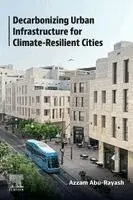
Häftad, Engelska, 2027
Decarbonizing Urban Infrastructure for Climate-Resilient Cities
1380 kr
Kommande
Beskrivning
Decarbonizing Urban Infrastructure for Climate-Resilient Cities delivers actionable strategies to meet the urgent decarbonization challenge head-on. Accounting for over 70% of the world’s CO? emissions, urban centers face an urgent mandate: decarbonize infrastructure rapidly while building resilience to escalating climate disruptions. Drawing from cutting-edge municipal projects, this book bridges the gap between ambition and execution, offering a blueprint for slashing emissions by 40-60% through integrated energy systems, policy innovation, and smart technologies.
From combined heat and power (CHP) networks and waste heat recovery to renewable energy integration and digitalized infrastructure management, the book translates technical concepts into scalable solutions. Real-world case studies such as district heating projects reducing emissions by 30% and cost-saving energy retrofits highlight what works, while chapters on governance, financing, and metrics equip leaders to turn plans into progress.
For urban policymakers, engineers, and planners, this book is a roadmap to transform cities into zero-carbon hubs of resilience, equity, and innovation. By combining technical rigor with governance strategies and financial models, this book empowers cities to move from pledges to progress. It is a vital resource for professionals tasked with delivering on climate resilience and a call to action for cities to lead the zero-carbon transition.
From combined heat and power (CHP) networks and waste heat recovery to renewable energy integration and digitalized infrastructure management, the book translates technical concepts into scalable solutions. Real-world case studies such as district heating projects reducing emissions by 30% and cost-saving energy retrofits highlight what works, while chapters on governance, financing, and metrics equip leaders to turn plans into progress.
For urban policymakers, engineers, and planners, this book is a roadmap to transform cities into zero-carbon hubs of resilience, equity, and innovation. By combining technical rigor with governance strategies and financial models, this book empowers cities to move from pledges to progress. It is a vital resource for professionals tasked with delivering on climate resilience and a call to action for cities to lead the zero-carbon transition.
- Combines policy, technology, and finance into cohesive strategies, addressing siloed approaches that hinder progress to enable cross-sector collaboration and holistic planning
- Features global real-world case studies, such as municipal CHP projects reducing emissions by 30% and energy retrofits saving USD/kWh, to provide replicable blueprints and evidence-based KPIs to benchmark success
- Covers emerging tech such as hydrogen storage and AI-driven grids, as well as adaptive governance models, to address evolving climate risks, equipping cities to phase in innovations while maintaining existing infrastructure
Produktinformation
- Utgivningsdatum: 2027-06-01
- Mått: 152 x 229 x undefined mm
- Vikt: 450 g
- Format: Häftad
- Språk: Engelska
- Serie: Smart Cities
- Antal sidor: 286
- Förlag: Elsevier Science
- ISBN: 9780443453250
Utforska kategorier
Betyg & recensioner
0 recensioner
Inga recensioner tillgängliga.