Society for Classical Studies Texts & Commentaries - Böcker
Visar alla böcker i serien Society for Classical Studies Texts & Commentaries. Handla med fri frakt och snabb leverans.
7 produkter
7 produkter
1 901 kr
Skickas inom 5-8 vardagar
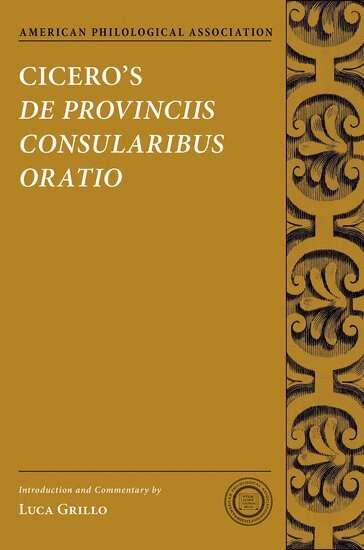
Perhaps no other single Roman speech exemplifies the connection between oratory, politics and imperialism better than Cicero's De Provinciis Consularibus, pronounced to the senate in 56 BC. Cicero puts his talents at the service of the powerful "triumviri" (Caesar, Crassus and Pompey), whose aims he advances by appealing to the senators' imperialistic and chauvinistic ideology. This oration, then, yields precious insights into several areas of late republican life: international relations between Rome and the provinces (Gaul, Macedonia and Judaea); the senators' view on governors, publicani (tax-farmers) and foreigners; the dirty mechanics of high politics in the 50s, driven by lust for domination and money; and Cicero's own role in that political choreography. This speech also exemplifies the exceptional range of Cicero's oratory: the invective against Piso and Gabinius calls for biting irony, the praise of Caesar displays high rhetoric, the rejection of other senators' recommendations is a tour de force of logical and sophisticated argument, and Cicero's justification for his own conduct is embedded in the self-fashioning narrative which is typical of his post reditum speeches. This new commentary includes an updated introduction, which provides the readers with a historical, rhetorical and stylistic background to appreciate the complexities of Cicero's oration, as well as indexes and maps.
558 kr
Skickas inom 5-8 vardagar
Perhaps no other single Roman speech exemplifies the connection between oratory, politics and imperialism better than Cicero's De Provinciis Consularibus, pronounced to the senate in 56 BC. Cicero puts his talents at the service of the powerful "triumviri" (Caesar, Crassus and Pompey), whose aims he advances by appealing to the senators' imperialistic and chauvinistic ideology. This oration, then, yields precious insights into several areas of late republican life: international relations between Rome and the provinces (Gaul, Macedonia and Judaea); the senators' view on governors, publicani (tax-farmers) and foreigners; the dirty mechanics of high politics in the 50s, driven by lust for domination and money; and Cicero's own role in that political choreography. This speech also exemplifies the exceptional range of Cicero's oratory: the invective against Piso and Gabinius calls for biting irony, the praise of Caesar displays high rhetoric, the rejection of other senators' recommendations is a tour de force of logical and sophisticated argument, and Cicero's justification for his own conduct is embedded in the self-fashioning narrative which is typical of his post reditum speeches. This new commentary includes an updated introduction, which provides the readers with a historical, rhetorical and stylistic background to appreciate the complexities of Cicero's oration, as well as indexes and maps.
488 kr
Skickas inom 5-8 vardagar
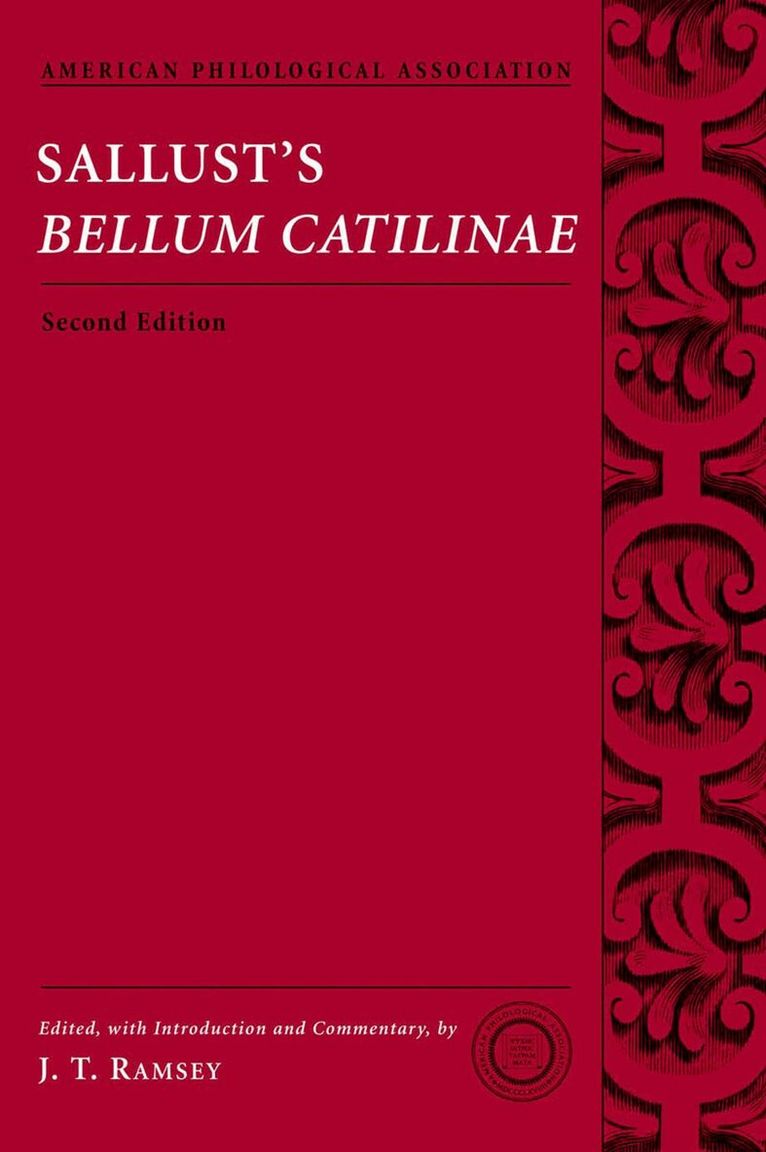
In his Bellum Catilinae, C. Sallustius Crispus or Sallust (86-35/34 B.C.E.) recounts the dramatic events of the year 63 B.C.E. when a disgruntled and impoverished nobleman, L. Sergius Catilina, after two electoral defeats, made himself the leader of a group of heavily indebted young aristocrats and the Roman poor and tried to kill his rival Cicero and overthrow the government. With his trademark archaizing style, Sallust skillfully captures the drama of the times, including an early morning raid and the emotionally charged debate in which Caesar and Cato the Younger fight over the lives of the arrested conspirators. Sallust wrote while the Roman Republic was being transformed into an empire during in the turbulent first century BCE. The work is well-suited for second-year or advanced Latin study and gives a fair idea of the richness of Latin literature while also pointing the way to a critical investigation of late-Republican government and historiography. Ramsey's introduction and commentary bring the text to life for Latin students. This new edition includes two maps and two city plans, an updated and now annotated bibliography, a list of divergences from the 1991 Oxford Classical Text of Sallust, and minor revisions in the commentary.
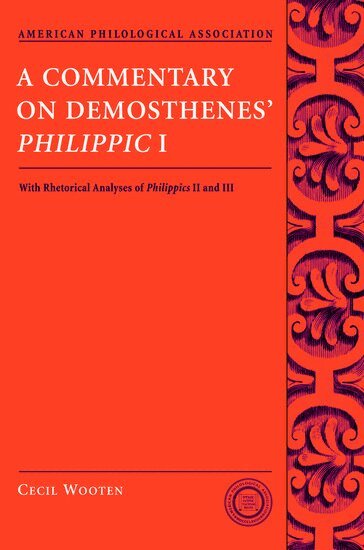
A Commentary on Demosthenes' Philippic I
with Rhetorical Analysis of PhilippicsI and III
Inbunden, Engelska, 2008
1 400 kr
Skickas inom 5-8 vardagar
Demosthenes' Philippic I, delivered between 351 B.C. - 350 B.C., was the first speech by a prominent politician against the growing power of Philip II of Macedon. Along with the other Philippics of Demostheses, it is arguably one of the finest deliberative speeches from antiquity. The present volume provides the first commentary in English on the Philippics since 1907 and promises to encourage more study of this essential Greek orator. Aiming his commentary at advanced undergraduates and first-year graduate students, Cecil Wooten addresses rhetorical and stylistic matters, historical background, and grammatical problems. In addition to a full commentary on Philippic I , this volume includes essays that outline Philippics II and III, set them in their historical context, and emphasize the differences between these later speeches and the first.
A Commentary on Demosthenes' Philippic I
with Rhetorical Analysis of Philippics II and III
Häftad, Engelska, 2008
444 kr
Skickas inom 5-8 vardagar
Philippic I, delivered between 351 B.C. - 350 B.C., was the first speech by a prominent politician against the growing power of Philip II of Macedon. Along with the other Philippics of Demosthenes, it is arguably one of the finest deliberative speeches from antiquity. The present volume provides the first commentary in English on the Philippics since 1907 and promises to encourage more study of this essential Greek orator. Aiming his commentary at advanced undergraduates and first-year graduate students, Cecil Wooten addresses rhetorical and stylistic matters, historical background, and grammatical problems. In addition to a full commentary on Philippic I, this volume includes essays that outline Philippics II and III, set them in their historical context, and emphasize the differences between these later speeches and the first.
2 021 kr
Skickas inom 5-8 vardagar
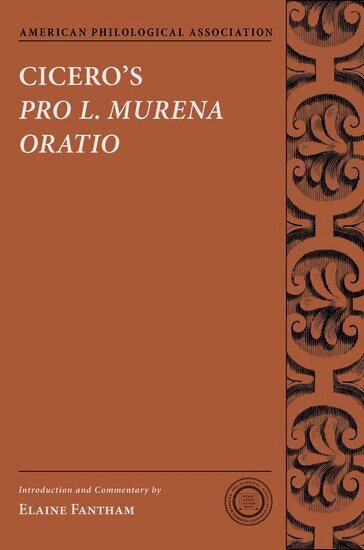
Cicero's speech on behalf of L. Lucinius Murena, newly elected to the consulship of 62 BCE but immediately prosecuted for electoral bribery, is especially famous for its digressions and valuable for its insights into the complex political wrangles of the late 60s. It is, however, a speech more commonly excerpted and cited than read in its entirety, though whether the absence of an English-language commentary is a cause or effect of that situation remains uncertain. In short, a pedagogical commentary on this important and strange speech is long overdue. Distinguished Latinist Elaine Fantham's commentary is noteworthy for its ability to elucidate not only the rhetorical structure of this speech but the rationale behind Cicero's strategic decisions in creating that structure. It also calls attention to the stylistic features like word choice, rhetorical figures, and rhythmic effects that make the speech so effective, and explains with care and precision the political, social, and historical considerations that shaped the prosecution and defense of the somewhat hapless defendant. This commentary includes the kind of grammatical explication required to make its riches accessible to undergraduate students of Latin.
462 kr
Skickas inom 5-8 vardagar
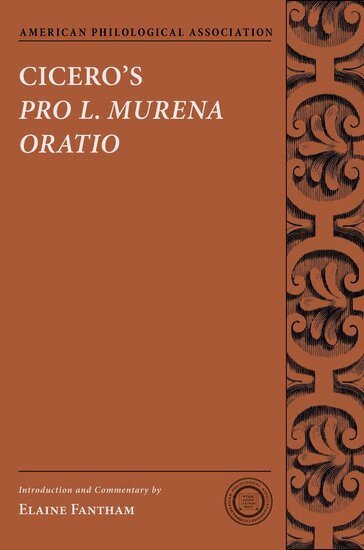
Cicero's speech on behalf of L. Lucinius Murena, newly elected to the consulship of 62 BCE but immediately prosecuted for electoral bribery, is especially famous for its digressions and valuable for its insights into the complex political wrangles of the late 60s. It is, however, a speech more commonly excerpted and cited than read in its entirety, though whether the absence of an English-language commentary is a cause or effect of that situation remains uncertain. In short, a pedagogical commentary on this important and strange speech is long overdue. Distinguished Latinist Elaine Fantham's commentary is noteworthy for its ability to elucidate not only the rhetorical structure of this speech but the rationale behind Cicero's strategic decisions in creating that structure. It also calls attention to the stylistic features like word choice, rhetorical figures, and rhythmic effects that make the speech so effective, and explains with care and precision the political, social, and historical considerations that shaped the prosecution and defense of the somewhat hapless defendant. This commentary includes the kind of grammatical explication required to make its riches accessible to undergraduate students of Latin.